The late 1980’s was an interesting period in Ozzy Osbourne’s career, with changes and rearrangements being made on the fly, often on the whim of Ozzy’s management and generally in the name of discourse. Following the dismissal of Jake E. Lee after the tour to promote “The Ultimate Sin” album, Zakk Wylde was hired as guitarist and Bob Daisley returned as bass guitarist and co-writer for the follow up album “No Rest for the Wicked”. Once the album was completed, Daisley was (once again) informed his services were no longer required, and Ozzy’s former Sabbath bass guitarist Geezer Butler came on board to perform those duties on the tour that followed. At the time it was seen as massive news. Ozzy and Geezer back in the same band, at the same time that Black Sabbath was still recording and touring with Tony Iommi.
This is another of those live albums that has a questionable heritage. Given that the sleeve of the album suggests that this recording was taken from a performance at London's Brixton Academy in November 1989 it makes it difficult to believe, given there are no known tour dates that correspond to this. The final gig of the tour was when they played in Moscow in August of that year. There is then then the appearance that the music has been re-recorded and mixed at Electric Lady Studios in New York with engineer Adam Yellin, with the audience noise and some tracks kept from the original live recording. So, in many ways it is a mystery as to when and when this compilation comes from.
As with those other questionable ‘live’ albums from other bands over the years, does it really matter whether or not it is a true full live performance? That’s an individual thing, but for me it isn’t something that is worth losing sleep over. If it sounds great, then as a music lover that is all that matters. Does this EP fit that bill? Well... I guess that is open to question.
When you go about reviewing an EP, the episode is by natural causes going to be a shorter and less informative affair. There are less songs for a start. And when it comes to an EP that is also full of live songs, then there is no new material in which to pontificate over. And to be perfectly honest i could have skipped this release and I don’t think anyone would have been the poorer for it. But seeing as you are here, and you are expecting something amazing, I’ll give you the best I’ve got with the material available.
Three of the tracks here are from the band’s latest album that they were touring on at the time, “No Rest for the Wicked”. And as it turns out, all three are great stomping tracks that sound brilliant on the original album and do so again here. Zakk’s squealing guitar opening of “Miracle Man” is just as potent here as it is on the album. “Bloodbath in Paradise” is another wild ride that again accentuates Zakk’s wonderful guitaring in particular, and “Tattooed Dancer” sound great musically, but perhaps is lacking in the same power in the vocal live. It is also interesting that Geezer’s bass guitar seems lost in the mix, not as prevalent or as powerful as you would normally associate it. Now, this could have been a mixing issue, or it may just be that because he didn’t write the bass to these songs – that was Bob Daisley, whose style is significantly different from Gezer’s - that perhaps his influence here on these tracks is not as significant.
The fourth song of these six is “Shot in the Dark” from “The Ultimate Sin” album. And it sounds great here, it’s a terrific song and definitely is a live song. However, given the history of the song and its background, one feels that the Osbourne camp are now ruing the fact that they put it on this EP. The original song was composed by a band called Wildfire, of whom bass guitarist Phil Soussan was a member. It was never released, and when Soussan joined the Osbourne camp they reconfigured it to appear on “The Ultimate Sin” album, credited to Ozzy and Soussan, and not the original writers. Since then, after Soussan’s departure, the Osbournes tried to buy out his rights to the song, to which he refused, and numerous court cases followed (sound familiar?), and as a result, both “The Ultimate Sin” and “Just Say Ozzy” were deleted from the Osbourne catalogue in 2002. They really don’t like sharing royalties. Anyway, that’s the background. If this song hadn’t been added to this EP, it would still be out there available for you to buy.
The final two tracks are, as ever, Black Sabbath cover songs. To this point, Ozzy had made a habit of covering Iron Man, Children of the Grave and Paranoid in his set lists. However, with Geezer now in his band, they decided to bring in some new (old) material, and play “Sweet Leaf” and “War Pigs”, two of that other bands biggest tracks with biting lyrics from Geezer. And those songs are good versions here, as you would expect. However, as a fan, on a live album that is only an EP with a limited number of songs, would you not prefer to hear two other Ozzy Osbourne songs that had not been released on a live album to this point in time? Something else from “The Ultimate Sin”? Or from “Bark at the Moon”? Would that not have been a better use of the space provided than hearing those Sabbath songs live again? No doubt they felt this would be a selling point for the EP, and I’m sure they were right. But for me, as much as this is worth listening to, I think it could have been better without those songs.
In the awesome year that 1990 was for music releases, this was one of the first, though I didn’t get it until a few months after it came out. It wasn’t until I bought my own stereo in mid-1990 with my first CD player in it that I went out and began to buy CDs as well, and this was one of those. And I guess it got played a lot at the time mainly because it was a short sharp jolt (well... to be fair it was 30 minutes of music which isn’t really an EP at all) and so I would play it back-to-back for some time rather than change CDs. No five stacker in those days, just the single file only thank you!
I enjoyed this at the time, but like a lot of people I guess what we wanted was a full live album, not a part-time one. Ozzy had released the Randy Rhoads Tribute album just 2.5 years earlier, but that had been recorded even before Diary of a Madman was released, so there was a lot of material that could have been put on a new full length live album. As it turns out, we only had to wait another two years before “Live and Loud” came out, which did make up for that entirely.
There really isn’t a lot more to be said about this release. It is almost a forgotten album in the Ozzy discography, mainly because it had been made redundant and without any re-releases over the years because of the aforementioned trouble over one song. And is it really an absolute necessity to either listen to or own this EP. I wouldn’t think so, except for completionists such as myself. I honestly cannot remember the last time I put this CD on and listened to it. It hasn’t been while living in this house where we have been for 15 years. It wasn’t at our first house we purchased, where we lived for the ten years prior to that. In all probability, I would doubt I have listened to this anytime since 1992. That’s a long time to have owned an album and not listened to it, and I guess that shows how forgotten it has become, for me as well. Because it doesn’t exist on any streaming service either, that makes it even more difficult.
So I’ve taken it out over the last couple of days, and I have played it four times in those two days. And yes, it has been enjoyable. “Miracle Man” and “Shot in the Dark” both appear on “Live and Loud”, but this is the only official live release for “Bloodbath in Paradise” and “Tattooed Dancer”, so for those two songs alone, it was worth the relisten again.
The changes kept on coming following this. Geezer left after this tour, and soon reunited with Iommi, Dio and Appice to record the “Dehumanizer” album under the Black Sabbath name. Bob Daisley returned to Ozzy’s band – again – to play on their next album “No More Tears” - before being dismissed – again – this time for the final time, as Mike Inez joined to play on what Ozzy announced would be his final ever tour – not the last time that would occur, before they all converged on the final gig of Ozzy’s “No More Tours” tour, and the original foursome of Black Sabbath played together for the first time since Live Aid in 1985. A busy time indeed. Sort of makes this EP feel a bit insignificant in the long run, doesn’t it?
One middle-aged headbanger goes where no man has gone before. This is an attempt to listen to and review every album I own, from A to Z. This could take a lifetime...
Podcast - Latest Episode
Tuesday, July 24, 2012
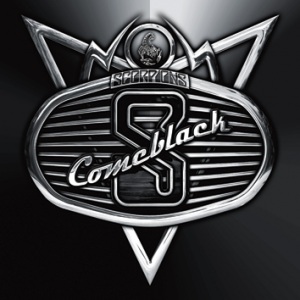
629. Scorpions / Comeblack. 2011. 3/5
With the news a couple of years ago that
Scorpions were going to release their final album, and then follow that
up with their final tour, there was expectation and weariness. Sting in the Tail
came and went, another average release with that good ol' Scorpions
sound. And then this arrives on the doorstep, and the initial thoughts
are, 'mid-tour filler?' Well, the answer is, for the most part, yes.
Scorpions have had any number of greatest hits albums. I think I have five or six of them myself. How many generations of listeners do you have to try and lure in with yet another compilation, when in all likelihood you've dragged in all the fans you can muster?
The lure of Comeblack is the twofold set-up of the album. The first half contains several of the band's most popular hits, re-recorded in the current day and given a spit polish with a modern edge. And it is a veritable best of - "Rhythm of Love", "No One Like You", "The Zoo", "Rock You Like A Hurricane", "Blackout", "Wind of Change" and "Still Loving You". These are the songs that made Scorpions the band they are. They all sound great. But we've heard it all before. Could this not have been an opportunity, given that this is supposedly the swansong for the band, to drag up some rarities, some gems that aren't as well known, and up date them well and give them some exposure to fans who may well not know they even existed? Did it really need yet another shot at "Rock You Like A Hurricane" to get people to buy this album? It's great to listen to, but I think it was an opportunity lost.
The second half of the album are cover versions of songs that the band enjoy or drew inspiration from. It is an eclectic mix. The Gloria Jones song (though made much more famous by Soft Cell's version in the early 80's) "Tainted Love" is given a funky do-over, and is probably the best version of the secondary part of the album. T.Rex's well known and well covered "Children of the Revolution" is another standout. The other artists to be honored here are The Beatles' with "Across the Universe", Small Faces' "Tin Soldier", The Kinks' "All Day and All of the Night" and The Rolling Stones' "Ruby Tuesday", and all of these versions have a bit of the Scorpions sound injected into them.
While the album is done well, performed well, and produced well, it's a novelty. The Scorpions songs will always be better in their original album environment, because that's what we remember them as. The cover songs are like all bands who do cover albums - these versions sound OK for a few listens, but if the songs are any good, you will always drift back to the original versions because of that. Worth a listen, but in the end it's a stocking filler.
Scorpions have had any number of greatest hits albums. I think I have five or six of them myself. How many generations of listeners do you have to try and lure in with yet another compilation, when in all likelihood you've dragged in all the fans you can muster?
The lure of Comeblack is the twofold set-up of the album. The first half contains several of the band's most popular hits, re-recorded in the current day and given a spit polish with a modern edge. And it is a veritable best of - "Rhythm of Love", "No One Like You", "The Zoo", "Rock You Like A Hurricane", "Blackout", "Wind of Change" and "Still Loving You". These are the songs that made Scorpions the band they are. They all sound great. But we've heard it all before. Could this not have been an opportunity, given that this is supposedly the swansong for the band, to drag up some rarities, some gems that aren't as well known, and up date them well and give them some exposure to fans who may well not know they even existed? Did it really need yet another shot at "Rock You Like A Hurricane" to get people to buy this album? It's great to listen to, but I think it was an opportunity lost.
The second half of the album are cover versions of songs that the band enjoy or drew inspiration from. It is an eclectic mix. The Gloria Jones song (though made much more famous by Soft Cell's version in the early 80's) "Tainted Love" is given a funky do-over, and is probably the best version of the secondary part of the album. T.Rex's well known and well covered "Children of the Revolution" is another standout. The other artists to be honored here are The Beatles' with "Across the Universe", Small Faces' "Tin Soldier", The Kinks' "All Day and All of the Night" and The Rolling Stones' "Ruby Tuesday", and all of these versions have a bit of the Scorpions sound injected into them.
While the album is done well, performed well, and produced well, it's a novelty. The Scorpions songs will always be better in their original album environment, because that's what we remember them as. The cover songs are like all bands who do cover albums - these versions sound OK for a few listens, but if the songs are any good, you will always drift back to the original versions because of that. Worth a listen, but in the end it's a stocking filler.
Thursday, July 19, 2012
628. Testament / The Legacy. 1987. 4.5/5
Plenty will argue about what are the best
debut albums of bands ever released. There will be widely differing
opinions, and many will point to their favourite band as having supplied
the answer to the question. If asked, high on my list would be The Legacy, as it ticks just about every box possible in delivering a wonderful album.
"Over the Hill" is just an awesome opening song, a real smash-you-in-the-face welcoming. "We are Testament, now take this!" This is what thrash metal was all about, heavy blazing guitars, great drum work and a driving forceful vocalist. "The Haunting" continues in this trend. Guitarists Alex Skolnick and Eric Peterson, who wrote almost all of the music for this album, are in great form, keeping these songs at maximum tempo. I love "Burnt Offerings", which is the song that follows, but its one flaw is that it does feel sometimes that it is just oe riff being played for five minutes straight. Not necessarily a bad thing, but compared to the rest of the album it is a little unusual. "Raging Waters" has the speed of the other songs, but is... how should I put this... a little 'lighter in substance' than the others. If you had only listened this far into the album, you may well think that Testament were a bit 'samey'. This is relieved by "C.O.T.L.O.D." (Curse of the Legions of Death), which restores the real Testament legacy (no pun intended) to the forefront.
"First Strike is Deadly' is still a brilliant song, one of Testament's best ever. It careers along at headbanging pace, with Chuck Billy's vocals menacing over some brilliant guitar work, especially in the solo break where true Iron Maiden-esque great harmony guitars prove that these guys are not just a one trick pony. "Do or Die" ups the pace even more, complemented by another brilliant solo break. "Alone in the Dark" follows up and does exactly the same, thrashing along with all elements pefectly in alignment. But then comes "Apocalyptic City", the riff-lined, bass-thumping, drum-induced closer to the album, that ramps it all up to eleven. There's no time to rest. You start moshing from the start, and there is no respite. It is a crime to finish the album on this song, as it leaves you so amped up that you just need to start it again from the start. Brilliant stuff.
All the great elements of the thrash genre are here - super duelling and co-operative guitarists going at it hell for leather, with a great bass and drum rhythm section perfectly in sync with their partners, while Billy's vocals at times monster through the speakers at you. Peterson and Skolnick can rightly be compared to Hannerman and King, and Hetfield and Hammett on this album. They are just superb. If you are a confessed headbanger, you already own this album. If you are wondering what the deal is with thrash metal, then beginning with this album wouldn't be such a bad idea.
"Over the Hill" is just an awesome opening song, a real smash-you-in-the-face welcoming. "We are Testament, now take this!" This is what thrash metal was all about, heavy blazing guitars, great drum work and a driving forceful vocalist. "The Haunting" continues in this trend. Guitarists Alex Skolnick and Eric Peterson, who wrote almost all of the music for this album, are in great form, keeping these songs at maximum tempo. I love "Burnt Offerings", which is the song that follows, but its one flaw is that it does feel sometimes that it is just oe riff being played for five minutes straight. Not necessarily a bad thing, but compared to the rest of the album it is a little unusual. "Raging Waters" has the speed of the other songs, but is... how should I put this... a little 'lighter in substance' than the others. If you had only listened this far into the album, you may well think that Testament were a bit 'samey'. This is relieved by "C.O.T.L.O.D." (Curse of the Legions of Death), which restores the real Testament legacy (no pun intended) to the forefront.
"First Strike is Deadly' is still a brilliant song, one of Testament's best ever. It careers along at headbanging pace, with Chuck Billy's vocals menacing over some brilliant guitar work, especially in the solo break where true Iron Maiden-esque great harmony guitars prove that these guys are not just a one trick pony. "Do or Die" ups the pace even more, complemented by another brilliant solo break. "Alone in the Dark" follows up and does exactly the same, thrashing along with all elements pefectly in alignment. But then comes "Apocalyptic City", the riff-lined, bass-thumping, drum-induced closer to the album, that ramps it all up to eleven. There's no time to rest. You start moshing from the start, and there is no respite. It is a crime to finish the album on this song, as it leaves you so amped up that you just need to start it again from the start. Brilliant stuff.
All the great elements of the thrash genre are here - super duelling and co-operative guitarists going at it hell for leather, with a great bass and drum rhythm section perfectly in sync with their partners, while Billy's vocals at times monster through the speakers at you. Peterson and Skolnick can rightly be compared to Hannerman and King, and Hetfield and Hammett on this album. They are just superb. If you are a confessed headbanger, you already own this album. If you are wondering what the deal is with thrash metal, then beginning with this album wouldn't be such a bad idea.
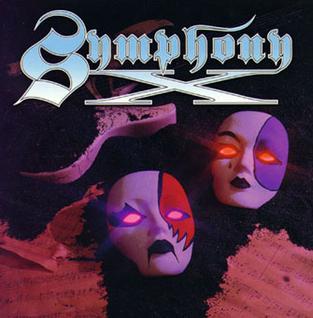
627. Symphony X / Symphony X. 1994. 3/5
Guitarist Michael Romeo had been gigging in bands such as Gemini and Phantom’s Opera in the late 1980’s and early 1990’s without managing to create much traction for the work he was doing. In 1992 he recorded a demo tape in his apartment in New Jersey to send out to as many record labels as he could in order to attract some attention and hopefully secure a record deal. This it eventually did, with a record company called Zero Corporation, based in Japan, a country that was well renown to have fans tolerant of the kind of guitar material that Romeo was producing. This led to the demo being re-recorded (with all instruments being played by Romeo himself, except for one track that had keyboards played by Michael Pinnella) and released as Michael Romeo’s first instrumental album titled “The Dark Chapter”. Zero Corporation then asked Romeo if he had a band that played music of a similar genre, and if so, they would be interested in releasing an album of their material. This isn’t the kind of offer you are going to turn down, and so Romeo went about putting together his ‘band’. Firstly, he brought in Pinnella to again be the keyboardist, before also recruiting bass guitarist Thomas Miller, drummer Jason Rullo and lead vocalist Rod Tyler. The newly formed band recorded a demo tape titled “Danse Macabre” in early 1994, and though it is not clear whether or not the demo was sent to other record companies, it was Zero Corporation who green lit a record contract for the band on the basis of its contents.
With a contract in hand, the band had to come up with a name. Romeo explained in an interview with the website theheaviestmatteroftheuniverse.com in 2008 that "the music we were coming up with had the keyboard thing and the guitar, and some classical elements, so the word 'Symphony' came up and ... then, somebody said 'Symphony X' and we were like, 'yeah, that's cool' it is that kinda thing, and the 'X' is the unknown and all the other stuff we do."
From here the band entered the studio to write and record their debut album in August and September of 1994 at The Hit Factory in New York City, which became the self-titled “Symphony X”, and was released in December 1994.
Symphony X's debut came at a time when grunge was beginning its fade and morphing into several other music genres, and complex guitar and keyboard composing bands were again rising in estimation of the music listening world populi. It was certainly the case in Europe where power metal and speed metal were mixing with progressive rock and metal, and Symphony X’s appearance in the US came on the back of fellow Americans Dream Theater’s rise to prominence. What does become apparent is that as soon as you put on the album there are the unmistakable influences of bands such as Yngwie Malmsteen, Dream Theater and the Michael Schenker Group, not only musically but even vocally. Rod Tyler's vocals are very similar in pitch to the half a dozen vocalists that Malmsteen has used through his career. Michael Romeo's guitaring and Michael Pinnella's keyboards are also heavily influenced by these bands, so the comparison is a reasonable one.
The opening intro of the musical instrumental "Into the Dementia" leads into "The Raging Season", mixing together all of the elements of progressive metal as it was known at the time, synth and keyboards, a faster guitar riff overlaid with very Brian May-eque solo chords, and power metal vocal effects. This song isn't sure if it is going to be a fast riff-fest or a more power metal trade-off between the main instruments, and so it combines both. Jason Rullo’s drumming has an immediately noticeable impact, along with the trading of solos from Pinnella and Romeo on keys and guitar. "Premonition" is led by Pinnella's keys and synths, with Tyler’s vocals lending solid support. It is a solid track that mirrors the elements of the power metal and prog metal gernes, sounds great without providing anything that stands out to capture the imagination. "Masquerade" almost falls into a 1980's pop rock direction, and apart from the solo (which really doesn't fit the rest of the pattern of the song) the guitar is buried by the keyboards. This song was later re-recorded on the “Prelude to the Millennium” album and sounds much better in that mix. Closing out side one of the album is "Absinthe and Rue", kicking off with a very progressive nature of heavy guitar riff and prominent atmospheric keyboards, along with the double kick driving the song along. Then Michael comes in with a great heavy riff that seems to be heading to taking this song into a true heavy metal direction, but instead it climbs back to the atypical progressive metal route of keyboards on top of the song. It’s a good song, but I feel as though they may have missed a trick here.
There is no pretence on the opening track of side two however. "Shades of Gray" is a power ballad without a shadow of a doubt. For bands of this genre this is almost a given on every album, and when they are done well, they can add to the enjoyment of the album. Down the track, Symphony X are extremely adept at this. And while I can see why some fans would enjoy this particular song, to me it just bogs the album down at an inopportune time. "Taunting the Notorious" tries to restore the balance to the album, coming back in faster and heavier, while Tyler certainly tries to put some oomph in the vocals, which in this case come across really well. The lead out of the song, combining the fast paced double kick from Rullo, the trading solos from Pinnella and Romeo and soaring vocals from Tyler make this a terrific track. It is also extremely short for a band of this genre, at only 3 minutes and 20 seconds. "Rapture or Pain" has a good feel to it as well, but again sounds as though it is missing an element that would make it a memorable song rather than just the next song on the album to be played. "Thorns of Sorrow" could have almost been pulled off an Yngwie Malmsteen album. The opening salvo of drums and synth, and then the introduction of Tyler’s vocals, has a very Malmsteen feel about the track, only missing any true guitar until the back half of the song. It is definitely the keyboards here that dominate rather than the blazing guitar riff.
The album is then concluded with the lengthy epic "A Lesson Before Dying", which combines every essence of progressive metal. We have the dominating keys, we have the ninety seven changes in tempo and song parts, we have the bass given its chance to harmonise, we have the soaring vocals, and eventually the flailing of guitar. In the end, it feels as though five different songs have been morphed together to form one twelve minute monster, and ends in a way that leaves you in two minds of how you feel about it.
My first taste of Symphony X didn’t come until 2004, at a time when I was slowly working my way through every band I could come across to discover. I had recently bought Dream Theater’s new album “Train of Thought” and was a little obsessed with it at the time, and I wanted to find other bands of a similar nature to discover and listen to. Some research into the project gave me a few names, some of which I had already garnered and others I had not, and one of those names was Symphony X. So I found their latest album, which was 2002’s “The Odyssey”, and I was hooked. An amazing album with many amazing songs, but it was the heavier and faster elements of the progressive metal music that I enjoyed most. So having digested this album, it was time to go back and discover the albums of their discography.
As it turns out, my thoughts on first listening to this album some twenty years ago and listening to it again today haven’t changed much. This album is fine, but it is not a patch on what the band achieved after this. Rod Tyler’s vocals are good, and in some instances remind you of the man who took his job after this album Russell Allen, but nowhere near as powerful as Russell is. And the songs are all okay – I mean, you can hear the bones on this album being created, sourcing out the right way to go about fleshing them out – but that doesn’t come here. Take a listen to this album, and then take a listen to just about any song from any of the following albums, and you will definitely hear the difference in the quality and genius of the songs. The progression that the band makes following this debut album is pronounced, and it does leave this album sounding like an early demo rather than a first fully fleshed out debut album. And having first heard the band on the album “The Odyssey” and then gone back to listen to this AFTER that quite amazing album, it does leave this in the shade quite a bit. In the shade of a planet about to collide with Earth. Yes, it’s a damn big shadow.
As good as the other musicians are here, the star was always going to be Michael Romeo, and there just isn’t enough of him on this album. It is surprising how much his guitar is not as prominent as the keys and drums that seem to dominate most of the songs here. And these songs also need the presence of a big voice, one that can drive and carry the heavy lines and the softer lines, and while Rod Tyler is a good singer, he is not a frontman in the way these songs need. Listening to the album again today, those points are all quite noticeable to any fan of the band.
As I mentioned, Tyler moved on after this album and was replaced by the person who he actually introduced the band to, Russell Allen. At this stage of their career the band wasn’t even touring or playing gigs, an interesting situation that came to a head sometime down the track.
This album is ‘fine’. In ranking all of Symphony X’s nine studio albums, I would certainly rank this as 9. Every album after this soars above it and showcases the best of the wonderful musicians that make up this band. Not all debut albums can be the unforgettable ground breakers, can they? The best was most definitely yet to come.
With a contract in hand, the band had to come up with a name. Romeo explained in an interview with the website theheaviestmatteroftheuniverse.com in 2008 that "the music we were coming up with had the keyboard thing and the guitar, and some classical elements, so the word 'Symphony' came up and ... then, somebody said 'Symphony X' and we were like, 'yeah, that's cool' it is that kinda thing, and the 'X' is the unknown and all the other stuff we do."
From here the band entered the studio to write and record their debut album in August and September of 1994 at The Hit Factory in New York City, which became the self-titled “Symphony X”, and was released in December 1994.
Symphony X's debut came at a time when grunge was beginning its fade and morphing into several other music genres, and complex guitar and keyboard composing bands were again rising in estimation of the music listening world populi. It was certainly the case in Europe where power metal and speed metal were mixing with progressive rock and metal, and Symphony X’s appearance in the US came on the back of fellow Americans Dream Theater’s rise to prominence. What does become apparent is that as soon as you put on the album there are the unmistakable influences of bands such as Yngwie Malmsteen, Dream Theater and the Michael Schenker Group, not only musically but even vocally. Rod Tyler's vocals are very similar in pitch to the half a dozen vocalists that Malmsteen has used through his career. Michael Romeo's guitaring and Michael Pinnella's keyboards are also heavily influenced by these bands, so the comparison is a reasonable one.
The opening intro of the musical instrumental "Into the Dementia" leads into "The Raging Season", mixing together all of the elements of progressive metal as it was known at the time, synth and keyboards, a faster guitar riff overlaid with very Brian May-eque solo chords, and power metal vocal effects. This song isn't sure if it is going to be a fast riff-fest or a more power metal trade-off between the main instruments, and so it combines both. Jason Rullo’s drumming has an immediately noticeable impact, along with the trading of solos from Pinnella and Romeo on keys and guitar. "Premonition" is led by Pinnella's keys and synths, with Tyler’s vocals lending solid support. It is a solid track that mirrors the elements of the power metal and prog metal gernes, sounds great without providing anything that stands out to capture the imagination. "Masquerade" almost falls into a 1980's pop rock direction, and apart from the solo (which really doesn't fit the rest of the pattern of the song) the guitar is buried by the keyboards. This song was later re-recorded on the “Prelude to the Millennium” album and sounds much better in that mix. Closing out side one of the album is "Absinthe and Rue", kicking off with a very progressive nature of heavy guitar riff and prominent atmospheric keyboards, along with the double kick driving the song along. Then Michael comes in with a great heavy riff that seems to be heading to taking this song into a true heavy metal direction, but instead it climbs back to the atypical progressive metal route of keyboards on top of the song. It’s a good song, but I feel as though they may have missed a trick here.
There is no pretence on the opening track of side two however. "Shades of Gray" is a power ballad without a shadow of a doubt. For bands of this genre this is almost a given on every album, and when they are done well, they can add to the enjoyment of the album. Down the track, Symphony X are extremely adept at this. And while I can see why some fans would enjoy this particular song, to me it just bogs the album down at an inopportune time. "Taunting the Notorious" tries to restore the balance to the album, coming back in faster and heavier, while Tyler certainly tries to put some oomph in the vocals, which in this case come across really well. The lead out of the song, combining the fast paced double kick from Rullo, the trading solos from Pinnella and Romeo and soaring vocals from Tyler make this a terrific track. It is also extremely short for a band of this genre, at only 3 minutes and 20 seconds. "Rapture or Pain" has a good feel to it as well, but again sounds as though it is missing an element that would make it a memorable song rather than just the next song on the album to be played. "Thorns of Sorrow" could have almost been pulled off an Yngwie Malmsteen album. The opening salvo of drums and synth, and then the introduction of Tyler’s vocals, has a very Malmsteen feel about the track, only missing any true guitar until the back half of the song. It is definitely the keyboards here that dominate rather than the blazing guitar riff.
The album is then concluded with the lengthy epic "A Lesson Before Dying", which combines every essence of progressive metal. We have the dominating keys, we have the ninety seven changes in tempo and song parts, we have the bass given its chance to harmonise, we have the soaring vocals, and eventually the flailing of guitar. In the end, it feels as though five different songs have been morphed together to form one twelve minute monster, and ends in a way that leaves you in two minds of how you feel about it.
My first taste of Symphony X didn’t come until 2004, at a time when I was slowly working my way through every band I could come across to discover. I had recently bought Dream Theater’s new album “Train of Thought” and was a little obsessed with it at the time, and I wanted to find other bands of a similar nature to discover and listen to. Some research into the project gave me a few names, some of which I had already garnered and others I had not, and one of those names was Symphony X. So I found their latest album, which was 2002’s “The Odyssey”, and I was hooked. An amazing album with many amazing songs, but it was the heavier and faster elements of the progressive metal music that I enjoyed most. So having digested this album, it was time to go back and discover the albums of their discography.
As it turns out, my thoughts on first listening to this album some twenty years ago and listening to it again today haven’t changed much. This album is fine, but it is not a patch on what the band achieved after this. Rod Tyler’s vocals are good, and in some instances remind you of the man who took his job after this album Russell Allen, but nowhere near as powerful as Russell is. And the songs are all okay – I mean, you can hear the bones on this album being created, sourcing out the right way to go about fleshing them out – but that doesn’t come here. Take a listen to this album, and then take a listen to just about any song from any of the following albums, and you will definitely hear the difference in the quality and genius of the songs. The progression that the band makes following this debut album is pronounced, and it does leave this album sounding like an early demo rather than a first fully fleshed out debut album. And having first heard the band on the album “The Odyssey” and then gone back to listen to this AFTER that quite amazing album, it does leave this in the shade quite a bit. In the shade of a planet about to collide with Earth. Yes, it’s a damn big shadow.
As good as the other musicians are here, the star was always going to be Michael Romeo, and there just isn’t enough of him on this album. It is surprising how much his guitar is not as prominent as the keys and drums that seem to dominate most of the songs here. And these songs also need the presence of a big voice, one that can drive and carry the heavy lines and the softer lines, and while Rod Tyler is a good singer, he is not a frontman in the way these songs need. Listening to the album again today, those points are all quite noticeable to any fan of the band.
As I mentioned, Tyler moved on after this album and was replaced by the person who he actually introduced the band to, Russell Allen. At this stage of their career the band wasn’t even touring or playing gigs, an interesting situation that came to a head sometime down the track.
This album is ‘fine’. In ranking all of Symphony X’s nine studio albums, I would certainly rank this as 9. Every album after this soars above it and showcases the best of the wonderful musicians that make up this band. Not all debut albums can be the unforgettable ground breakers, can they? The best was most definitely yet to come.
Monday, July 16, 2012
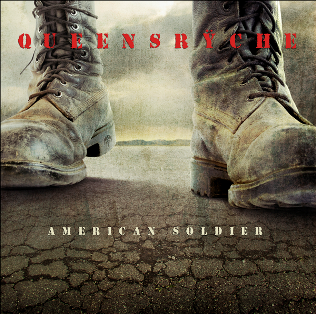
626. Queensrÿche / American Soldier. 2009. 1/5
Given the improved success of their obvious attention-grabbing previous album, the sequel named Operation: Mindcrime II
the writing core of the Queensrÿche band obviously decided that they
were on a roll, and that the next step was... another concept album.
Because lightning always strikes twice, or three times. No... wait...
Anyway, this is the direction they went in. That's fine. Nothing wrong with having a theme or story running through an album. More important of course is that the creative process is in place, and that the lyrics are sustainable, and that the music itself is enjoyable to the fans. In pretty much every one of these facets, this album falls apart, and badly. There is nothing particularly wrong with the concept, that being focused on the events of war in general, but American Soldier is a flawed concept in all areas of song writing. The songs all struggle their way through at a melancholy, even funereal pace. Lyrically it just seems to repeat itself over and over. Songs are permeated with the interviews of actual soldiers, which is fine if you want to listen to actual soldiers giving their own stories. Honestly, in a song-listening mood, they are just a hinderance. Or in most cases this would be true, but when you have the unimaginative instrumental creations that you have here it doesn't really detract that much. Why would you create such boring, banal music which creates no enthusiasm for the listener? As I said, it is all and fine to set out a story within the framework of an album, but if the music does not inspire or enthuse or ROCK the listener, then how can you possibly hope to retain your fan base?!
The music here is definitely leaning towards a grunge element. In many places it sounds like Soundgarden or Nirvana or Alice in Chains - but without their killer hooks and sponteneity. This just plods along from song to song, barely discernable from one to the next, and not really giving you any real motivation to even try and make the effort to find out. Where are the brilliant duelling guitars that punctuated Queensryche's earlier work? Where is the scintillating drumwork that drove the songs, not just kept a solemn beat in the background? They may as well have had a drum machine in the background for all the use they get out of Scott Rockenfield. Why is this happening? What has caused this enormous change in focus direction with this band's music? There is simply nothing here to get enthused about musically or lyrically.
I revisited this because of the recent break-up within the Queensryche band, and the rhetoric that is going back and forth as to whom was responisble for the direction of the music in the band and who was writing what. No matter what the outcome, it is obvious that this album at least was driven forward by Geoff Tate and his co-writers, who are not a part of the band.
In the long run, this album is just a major disappointment and completely out of synch with the best music that this band has written and performed at its peak. There is no doubt that Tate's voice is still just wonderful, and that the msuicianship is crisp and clear. The songwriting is just of such a boring and uninspiring standard that it is difficult to believe this is the product of the Queensryche brand. Something needs to change if they are to rediscover their mojo, or they will be left to wallow in mediocrity forever.
Anyway, this is the direction they went in. That's fine. Nothing wrong with having a theme or story running through an album. More important of course is that the creative process is in place, and that the lyrics are sustainable, and that the music itself is enjoyable to the fans. In pretty much every one of these facets, this album falls apart, and badly. There is nothing particularly wrong with the concept, that being focused on the events of war in general, but American Soldier is a flawed concept in all areas of song writing. The songs all struggle their way through at a melancholy, even funereal pace. Lyrically it just seems to repeat itself over and over. Songs are permeated with the interviews of actual soldiers, which is fine if you want to listen to actual soldiers giving their own stories. Honestly, in a song-listening mood, they are just a hinderance. Or in most cases this would be true, but when you have the unimaginative instrumental creations that you have here it doesn't really detract that much. Why would you create such boring, banal music which creates no enthusiasm for the listener? As I said, it is all and fine to set out a story within the framework of an album, but if the music does not inspire or enthuse or ROCK the listener, then how can you possibly hope to retain your fan base?!
The music here is definitely leaning towards a grunge element. In many places it sounds like Soundgarden or Nirvana or Alice in Chains - but without their killer hooks and sponteneity. This just plods along from song to song, barely discernable from one to the next, and not really giving you any real motivation to even try and make the effort to find out. Where are the brilliant duelling guitars that punctuated Queensryche's earlier work? Where is the scintillating drumwork that drove the songs, not just kept a solemn beat in the background? They may as well have had a drum machine in the background for all the use they get out of Scott Rockenfield. Why is this happening? What has caused this enormous change in focus direction with this band's music? There is simply nothing here to get enthused about musically or lyrically.
I revisited this because of the recent break-up within the Queensryche band, and the rhetoric that is going back and forth as to whom was responisble for the direction of the music in the band and who was writing what. No matter what the outcome, it is obvious that this album at least was driven forward by Geoff Tate and his co-writers, who are not a part of the band.
In the long run, this album is just a major disappointment and completely out of synch with the best music that this band has written and performed at its peak. There is no doubt that Tate's voice is still just wonderful, and that the msuicianship is crisp and clear. The songwriting is just of such a boring and uninspiring standard that it is difficult to believe this is the product of the Queensryche brand. Something needs to change if they are to rediscover their mojo, or they will be left to wallow in mediocrity forever.
625. Edguy / Age of the Joker. 2011. 1/5
With Tobias Sammet bouncing between engagements with Edguy, and with the success of the expansionistic episodes of Avantasia's The Wicked Symphony and Angel of Babylon
as well as the live tour and album that followed, it was always going
to be interesting to see what he had left in the tank inspiration-wise
for his number one act. Not only whether it could live up to what Edguy
had done in the past, but whether it could pull itself out of the
massive shadow that the multi-starred Avantasia was casting.
What they were thinking when they put "Robin Hood" as the lead-off song here though, I have no idea. This was also the single lifted from the album (albeit a radio friendly 4 minute version), but at over eight minutes in length it is about five minutes too long. It could have had the chaff sifted out and shortened significantly to make it a more appealing song. This song also enhances the opinion that the band has left behind the power metal of wonderful albums like Mandrake and Hellfire Club and progressed closer towards a rock direction.
"Nobody's Hero" is like a throwaway song, something written as a B-side of a single, not the second song of a major album. "Rock of Cashel" sounds like it is trying to be a Blind Guardian song, without the pace and power of a Blind Guardian song. It is quite bland and uninteresting while bringing in the mandolins to try and create an old medievil fair sound. Not good.
More is to come. The steel guitars come out in "Pandora's Box", which, seriously, should never appear in a song by a power metal band. It just isn't right at all, and while experimentation is fine, surely not in this way. A power metal ballad featuring steel and slide guitars makes this a dreadfully awful track with no redeeming features.
"Breathe" tries to come back to something close to Edguy's classic speed and power metal roots, before the almost gagworthy soft rock ballad "Two Out of Seven" drags the album back into the sickly mire of mediocrity. Is this all Tobi has left? It is repulsive.
"Faces in the Darkness" tries hard to restore some semblance of order but is still too close to the previous song to really enjoy. Finally, "The Arcane Guild" comes, bringing a pacey guitar riff and vocals that more closely resemble the Edguy of old. This is the pick of the album by a country mile.
Of course, it was too good to last, and "Fire on the Downline", despite great vocals from Tobi, is just another power rock ballad with little substance or heart, as if the guitar section of the band had been completely forgotten about.
"Behind the Gates to Midnight World" isn't a completely lost cause, and it does have its moments, though it isn't able to hold onto its momentum all the way through. However, all this is offset by the lacklustre and weak effort of "Every Night Without You". The closing song on the album is a close fought tussle of worst ever Edguy song. This is pretty much like a really awful Bryan Adams ballad, except that the Bryan Adams ballad would be better than this piece of shite. Truly, truly awful uninspiring crap.
I was so looking forward to this album when it was released, and have rarely been as let down by an album as I was by Age of the Joker. As a power metal band from the continent, Edguy has been one of the leaders in the first half of the previous decade. In recent times they have slipped a little, and whether that can be attributed to the amount of time their leader has spent with his 'side project', and that his creative juices have been used more thoroughly on Avantasia than Edguy is perhaps up in the air. Whatever the reason, this isn't what I was looking for nor hoping for from a band who I have a lot of time and respect for.
What they were thinking when they put "Robin Hood" as the lead-off song here though, I have no idea. This was also the single lifted from the album (albeit a radio friendly 4 minute version), but at over eight minutes in length it is about five minutes too long. It could have had the chaff sifted out and shortened significantly to make it a more appealing song. This song also enhances the opinion that the band has left behind the power metal of wonderful albums like Mandrake and Hellfire Club and progressed closer towards a rock direction.
"Nobody's Hero" is like a throwaway song, something written as a B-side of a single, not the second song of a major album. "Rock of Cashel" sounds like it is trying to be a Blind Guardian song, without the pace and power of a Blind Guardian song. It is quite bland and uninteresting while bringing in the mandolins to try and create an old medievil fair sound. Not good.
More is to come. The steel guitars come out in "Pandora's Box", which, seriously, should never appear in a song by a power metal band. It just isn't right at all, and while experimentation is fine, surely not in this way. A power metal ballad featuring steel and slide guitars makes this a dreadfully awful track with no redeeming features.
"Breathe" tries to come back to something close to Edguy's classic speed and power metal roots, before the almost gagworthy soft rock ballad "Two Out of Seven" drags the album back into the sickly mire of mediocrity. Is this all Tobi has left? It is repulsive.
"Faces in the Darkness" tries hard to restore some semblance of order but is still too close to the previous song to really enjoy. Finally, "The Arcane Guild" comes, bringing a pacey guitar riff and vocals that more closely resemble the Edguy of old. This is the pick of the album by a country mile.
Of course, it was too good to last, and "Fire on the Downline", despite great vocals from Tobi, is just another power rock ballad with little substance or heart, as if the guitar section of the band had been completely forgotten about.
"Behind the Gates to Midnight World" isn't a completely lost cause, and it does have its moments, though it isn't able to hold onto its momentum all the way through. However, all this is offset by the lacklustre and weak effort of "Every Night Without You". The closing song on the album is a close fought tussle of worst ever Edguy song. This is pretty much like a really awful Bryan Adams ballad, except that the Bryan Adams ballad would be better than this piece of shite. Truly, truly awful uninspiring crap.
I was so looking forward to this album when it was released, and have rarely been as let down by an album as I was by Age of the Joker. As a power metal band from the continent, Edguy has been one of the leaders in the first half of the previous decade. In recent times they have slipped a little, and whether that can be attributed to the amount of time their leader has spent with his 'side project', and that his creative juices have been used more thoroughly on Avantasia than Edguy is perhaps up in the air. Whatever the reason, this isn't what I was looking for nor hoping for from a band who I have a lot of time and respect for.
Thursday, July 12, 2012
624. Dream Theater / A Dramatic Turn of Events. 2011. 3/5
The lead-up to this album being written,
recorded and released was overshadowed by the circumstances regarding
drummer Mike Portnoy quitting the band he had helped to form. The months
spent producing the album had stories passing back and forth over what
had happened and why. In the long run, despite his obvious importance to
most parts of the Dream Theater machine, it was going to be interesting
to see what the band would produce given that his sway had now left the
process.
I think every Dream Theater album is beginning to morph into each other, such is the similar nature of the song structure and sound of the songs on them all. The opening track "On the Backs of Angels" is a good song, but it's in the same element as most of their opening songs. James La Brie even seems to be singing in the same pitch location. What are they doing, just bringing out the same mold each time and casting the same elements? That's not quite accurate of course, but in many ways it's a lot closer to the truth. "Build Me Up, Break Me Down" and "Lost Not Forgotten" are also atypical Dream Theater movements, combining the melding of keyboards and guitar whilst the bass holds the song together underneath these elements.
From here on in though, it becomes really hard work. I know Dream Theater have made an art form of 10 minute plus compositions, but truly, unless you have enough in them to retain the interest, you begin to look for the 'skip' button. On past albums they have done it in magnificent fashion on any number of songs - "A Change of Seasons", "The Glass Prison" and pretty much the entire Train of Thought album - but here I confess it just seems like the songs drag on forever, and begin to blend from one to the next. "Bridges in the Sky", "Outcry" and "Breaking All Illusions" are only broken up by dis-interesting ballad "Far From Heaven", before finishing with the less than inspiring "Beneath the Surface".
I've no doubt that the hard core Dream Theater fans will again consider this album to be a triumph and praise its claims to the heavens. Personally I have struggled to be completely enthused about a Dream Theater album since in the imperial Train of Thought. While the musicianship continues to be of the highest class, the songs to me just aren't holding my interest throughout. Comparing this to fellow progressive metal outfit Symphony X's last two album's, Paradise Lost and Iconoclast they just aren't in the same street. I'm not proclaiming that the end is nigh for Dream Theater, but I know where my preferences have switched to in recent years, and I'm not sure whether they can be retrieved from that direction. This is not a bad album by any means, but it just isn't a super one that you expect from this band.
I think every Dream Theater album is beginning to morph into each other, such is the similar nature of the song structure and sound of the songs on them all. The opening track "On the Backs of Angels" is a good song, but it's in the same element as most of their opening songs. James La Brie even seems to be singing in the same pitch location. What are they doing, just bringing out the same mold each time and casting the same elements? That's not quite accurate of course, but in many ways it's a lot closer to the truth. "Build Me Up, Break Me Down" and "Lost Not Forgotten" are also atypical Dream Theater movements, combining the melding of keyboards and guitar whilst the bass holds the song together underneath these elements.
From here on in though, it becomes really hard work. I know Dream Theater have made an art form of 10 minute plus compositions, but truly, unless you have enough in them to retain the interest, you begin to look for the 'skip' button. On past albums they have done it in magnificent fashion on any number of songs - "A Change of Seasons", "The Glass Prison" and pretty much the entire Train of Thought album - but here I confess it just seems like the songs drag on forever, and begin to blend from one to the next. "Bridges in the Sky", "Outcry" and "Breaking All Illusions" are only broken up by dis-interesting ballad "Far From Heaven", before finishing with the less than inspiring "Beneath the Surface".
I've no doubt that the hard core Dream Theater fans will again consider this album to be a triumph and praise its claims to the heavens. Personally I have struggled to be completely enthused about a Dream Theater album since in the imperial Train of Thought. While the musicianship continues to be of the highest class, the songs to me just aren't holding my interest throughout. Comparing this to fellow progressive metal outfit Symphony X's last two album's, Paradise Lost and Iconoclast they just aren't in the same street. I'm not proclaiming that the end is nigh for Dream Theater, but I know where my preferences have switched to in recent years, and I'm not sure whether they can be retrieved from that direction. This is not a bad album by any means, but it just isn't a super one that you expect from this band.
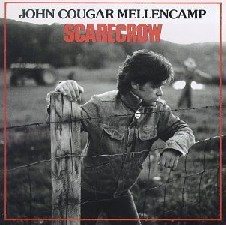
623. John Mellencamp / Scarecrow. 1985. 2.5/5
The fact that I own this album at all is
perhaps a miracle, and certainly testament to the power of the music
that crowded the radio airwaves in my high school years. In that
mid-1980's period there was four albums that dominated the landscape for
those of us in high school - Dire Strait's Brothers in Arms, Bruce Springsteen's Born in the U.S.A, Bryan Adams' Reckless, and John Cougar Mellencamp's Scarecrow.
No one who was in school during those years could deny that they did
not know these albums, or the songs they produced. Whether you liked
them or not, everyone still knows the words and tunes to all of them.
And while in many cases it is the obscure unknown songs on an album that
can end up being the best and favourite tracks, here it is the singles
released from the album that are the obvious stand-outs.
The album starts off with "Rain on the Scarecrow". a song whose underlying guitar bridge I have always liked, providing the basis for the song's framework. It is an understated yet dramatic beginning, unusual for most opening songs. The short and sweet "Grandma's Theme" follows, featuring Mellencamp's grandmother, before moving swiftly into another of the album's singles hits, "Small Town". This is another mid tempo song dominated by the country style guitar and Mellencamp's moody vocals. "Minutes to Memories" continues in this vein, leading into another of the popular singles releases "Lonely Ol' Night".
Following the singles laden first half of the album, the second half is... well... not quite a wasteland, but it is a barren landscape. While Mellencamp's most popular and well-known songs are at best country rock at a solid tempo, there seems less inspiration, less drive, less urgency on these tracks. OK, they are boring. There isn't much there to keep those that aren't a hard core fan interested.
The final song on the album, "R.O.C.K. in the U.S.A." has almost always annoyed me, but not because of the track itself, which is the most upbeat on the whole album. The reason it always twisted my nerves in high school was because all of these teeny bopping kids would jump around singing the song with glee, shouting the chorus at the top of their voices. Yeah - but we live in AUSTRALIA not the USA! Why would that annoy me so much? Because I was 15 and believed they should change the lyrics to "R.O.C.K. in Oz-tray-li-ya!" It didn't matter that I knew what the song was about and why it was titled and chorused so, it was still annoying. Great to be an opinionated teenager. LOL.
I haven't heard a lot of stuff from Mellencamp apart from this album - sure, there are the other singles out there that everyone knows, but as to listening to his other albums, well I've had other priorities. Country rock, of which category his music falls into, is not really my scene. As I said at the start, I own this and know this because of its prominence during my high school years. Certainly I still don't mind a lot of it and appreciate it for what it is, but I've never had any inclination to move beyond it and listen to any of his other work.
The album starts off with "Rain on the Scarecrow". a song whose underlying guitar bridge I have always liked, providing the basis for the song's framework. It is an understated yet dramatic beginning, unusual for most opening songs. The short and sweet "Grandma's Theme" follows, featuring Mellencamp's grandmother, before moving swiftly into another of the album's singles hits, "Small Town". This is another mid tempo song dominated by the country style guitar and Mellencamp's moody vocals. "Minutes to Memories" continues in this vein, leading into another of the popular singles releases "Lonely Ol' Night".
Following the singles laden first half of the album, the second half is... well... not quite a wasteland, but it is a barren landscape. While Mellencamp's most popular and well-known songs are at best country rock at a solid tempo, there seems less inspiration, less drive, less urgency on these tracks. OK, they are boring. There isn't much there to keep those that aren't a hard core fan interested.
The final song on the album, "R.O.C.K. in the U.S.A." has almost always annoyed me, but not because of the track itself, which is the most upbeat on the whole album. The reason it always twisted my nerves in high school was because all of these teeny bopping kids would jump around singing the song with glee, shouting the chorus at the top of their voices. Yeah - but we live in AUSTRALIA not the USA! Why would that annoy me so much? Because I was 15 and believed they should change the lyrics to "R.O.C.K. in Oz-tray-li-ya!" It didn't matter that I knew what the song was about and why it was titled and chorused so, it was still annoying. Great to be an opinionated teenager. LOL.
I haven't heard a lot of stuff from Mellencamp apart from this album - sure, there are the other singles out there that everyone knows, but as to listening to his other albums, well I've had other priorities. Country rock, of which category his music falls into, is not really my scene. As I said at the start, I own this and know this because of its prominence during my high school years. Certainly I still don't mind a lot of it and appreciate it for what it is, but I've never had any inclination to move beyond it and listen to any of his other work.
Thursday, July 05, 2012
622. Black Sabbath / Master of Reality. 1971. 4.5/5
It's a tough call to try and back up for your
third album, especially when those first two albums are your seminal
eponymous debut album, and the soon-to-be-legendary second album. In the
case of Black Sabbath, the pioneers of the new music genre 'heavy
metal', they were only just warming up.
Both guitars on this album are tuned down, the story being that it made it easier for Tony Iommi to play his guitar, given the accident he had suffered some years earlier to the fingers on his right hand. With Geezer Butler tuning his bass guitar down to suit, it adds to the renewed sense of doom and foreboding in the music on this album.
Hacking coughing starts off the album, before bursting into the mud buzzing anthem of "Sweet Leaf". The strength of the song is in its three major parts - the head bouncing primary riff on which the vocals are laid, the thematic bridging riff between verses, and the harried and violent solo riff where all three musicians are basically doing their own solo break and mashing them together. Great stuff.
"After Forever", if you pay attention to the lyrics, almost comes across as Sabbath's attempt to deflect from the assertion that they are a satanic band. this would be to the detriment of lyricist Butler, whose religious upbringing hold sway here. No matter in the long run, the song itself is terrific with another assortment of great riffs (NB Biohazard's cover version on Nativity in Black: A Tribute to Black Sabbath is awesome).
Following Iommi's instrumental "Embryo" comes one of the band's all time classics, "Children of the Grave". The magnificent rumbling build-up before exploding into its heavy thumping riff is still one of the best beginnings to a song ever written. Lyrically it is still as hard hitting as it was when it was recorded, and Ozzy gives a stunning vocal performance.
Another Iommi instrumental called "Orchid" opens up the second half of the album, before "Lord of this World" storms in, featuring more great work from Geezer and Bill Ward. It is amazing that these two can pretty much play their own solo pieces, and weave it into the framework of the songs without it sounding like they are all out of time or all over the place.
The one weak moment of the album follows this. "Solitude" incorporates both flute and piano, as well as a different vocal performance by Ozzy, allowing him to show his versatility as well. All this is fine, but the song itself stretches to five minutes, and it really takes the sting out of the album. If it had been reeled back into about three minutes maximum, well, the impact may not have been so great. It's great to hear Black Sabbath able to do these kind of songs, but not so long and not within this framework.
Saving the end of the album is the legendary "Into the Void", which comes back to remind everyone of where this band is really heading, driven along with Iommi and Geezer's bloodletting riff work over Ward's unrelenting drumming and under Ozzy's rising vocals.
Master of Reality continues the progression of Black Sabbath, from small time local band to world domination. Five classic and legendary songs feature here, and though they are done well it is only the slower instrumental pieces that bring the rating down from out of the ceiling.
Both guitars on this album are tuned down, the story being that it made it easier for Tony Iommi to play his guitar, given the accident he had suffered some years earlier to the fingers on his right hand. With Geezer Butler tuning his bass guitar down to suit, it adds to the renewed sense of doom and foreboding in the music on this album.
Hacking coughing starts off the album, before bursting into the mud buzzing anthem of "Sweet Leaf". The strength of the song is in its three major parts - the head bouncing primary riff on which the vocals are laid, the thematic bridging riff between verses, and the harried and violent solo riff where all three musicians are basically doing their own solo break and mashing them together. Great stuff.
"After Forever", if you pay attention to the lyrics, almost comes across as Sabbath's attempt to deflect from the assertion that they are a satanic band. this would be to the detriment of lyricist Butler, whose religious upbringing hold sway here. No matter in the long run, the song itself is terrific with another assortment of great riffs (NB Biohazard's cover version on Nativity in Black: A Tribute to Black Sabbath is awesome).
Following Iommi's instrumental "Embryo" comes one of the band's all time classics, "Children of the Grave". The magnificent rumbling build-up before exploding into its heavy thumping riff is still one of the best beginnings to a song ever written. Lyrically it is still as hard hitting as it was when it was recorded, and Ozzy gives a stunning vocal performance.
Another Iommi instrumental called "Orchid" opens up the second half of the album, before "Lord of this World" storms in, featuring more great work from Geezer and Bill Ward. It is amazing that these two can pretty much play their own solo pieces, and weave it into the framework of the songs without it sounding like they are all out of time or all over the place.
The one weak moment of the album follows this. "Solitude" incorporates both flute and piano, as well as a different vocal performance by Ozzy, allowing him to show his versatility as well. All this is fine, but the song itself stretches to five minutes, and it really takes the sting out of the album. If it had been reeled back into about three minutes maximum, well, the impact may not have been so great. It's great to hear Black Sabbath able to do these kind of songs, but not so long and not within this framework.
Saving the end of the album is the legendary "Into the Void", which comes back to remind everyone of where this band is really heading, driven along with Iommi and Geezer's bloodletting riff work over Ward's unrelenting drumming and under Ozzy's rising vocals.
Master of Reality continues the progression of Black Sabbath, from small time local band to world domination. Five classic and legendary songs feature here, and though they are done well it is only the slower instrumental pieces that bring the rating down from out of the ceiling.
Sunday, July 01, 2012
621. Iced Earth / Something Wicked This Way Comes. 1998. 3/5
For an album that many believe is the best in
the Iced Earth discography, to me it just seems a little two-paced to
have that mantle laid upon it.
"Burning Times" is a good opening song, though I must admit it sounds much better live on the Alive in Athens album. Ditto for the second song, "Melancholy (Holy Martyr)" which benefits in a live setting from being faster and more aggressive than it is here.
"Disciples of the Lie" starts off the way an Iced Earth song should, at a cracking pace with the flailing drums and guitars, and Barlow reaching his range with his vocals, but even then in the middle of the song we have the keyboards that become the prominant part of the song - and why? Just get on with it already! Even more mystifying, we then head into "Watching Over Me", a power ballad with acoustic guitars and soft vocals mixed with hints of powered up guitar. As power ballads go it isn't the worst, but it just halts the progress of the album again, and we're only up to song four. It makes it almost impossible to get into the mood of the album because it is in constant flux.
Back into the action, as "Stand Alone" crashes the party and brings us back into the true Iced Earth makeup. Short, sharp and to the point, "Stand Alone" reasserts the album in the right direction. But then, by god, let's chuck in another slow starter with moody vocals and acoustic guitar. "Consequences" is that song, and by now, you have to suspect that this was a delibertae arrangement for the album, because you surely could have this set up by accident. Which then begs the question - WHY did they do it this way?! It must work on some fans level I guess, but all it does is piss me off because there is absolutely no consistency. You get up and jump around and sing at the top of your voice for one song, and the next you are slumped back down in the armschair waiting for something to happen. Anyway...
Yep, you guessed it. "My Own Savior" returns the tempo to that faster double-kick driven guitar sound, before "Reaping Stone" draws on a later Sabbath tempo before picking up towards the end of the song.
"1776" is an instrumental interlude which (bugger me!) moves politely into a(nother) power ballad in "Blessed Are You". Honestly, how is this good balance in an album? (except for the fact that it's one fast, one slow, that is).
The album is closed out by the Something Wicked Trilogy, "Prophecy", "Birth of the Wicked" and "The Coming Curse". "Prophecy" makes a slow start before hitting its form halfway through. "Birth of the Wicked" is a good track, while following the somewhat inexplicable piano beginning for about a minute of "The Coming Curse", it also kicks into gear and delivers the goods.
This is quite a mystifying album. I fail to understand how it was put together in such a fashion. To the listener it just doesn't allow you to get a straight vibe of the album, so changeable is the format. When it is on song, with tracks such as "Burning Times", "Stand Alone", "My Own Savior" and the most part of the trilogy, this is a terrific album. In the other places, bogged down as they are like potholes on a freeway, it stops all cohesion. While the good material is good, the slow material holds the album right back in my opinion.
"Burning Times" is a good opening song, though I must admit it sounds much better live on the Alive in Athens album. Ditto for the second song, "Melancholy (Holy Martyr)" which benefits in a live setting from being faster and more aggressive than it is here.
"Disciples of the Lie" starts off the way an Iced Earth song should, at a cracking pace with the flailing drums and guitars, and Barlow reaching his range with his vocals, but even then in the middle of the song we have the keyboards that become the prominant part of the song - and why? Just get on with it already! Even more mystifying, we then head into "Watching Over Me", a power ballad with acoustic guitars and soft vocals mixed with hints of powered up guitar. As power ballads go it isn't the worst, but it just halts the progress of the album again, and we're only up to song four. It makes it almost impossible to get into the mood of the album because it is in constant flux.
Back into the action, as "Stand Alone" crashes the party and brings us back into the true Iced Earth makeup. Short, sharp and to the point, "Stand Alone" reasserts the album in the right direction. But then, by god, let's chuck in another slow starter with moody vocals and acoustic guitar. "Consequences" is that song, and by now, you have to suspect that this was a delibertae arrangement for the album, because you surely could have this set up by accident. Which then begs the question - WHY did they do it this way?! It must work on some fans level I guess, but all it does is piss me off because there is absolutely no consistency. You get up and jump around and sing at the top of your voice for one song, and the next you are slumped back down in the armschair waiting for something to happen. Anyway...
Yep, you guessed it. "My Own Savior" returns the tempo to that faster double-kick driven guitar sound, before "Reaping Stone" draws on a later Sabbath tempo before picking up towards the end of the song.
"1776" is an instrumental interlude which (bugger me!) moves politely into a(nother) power ballad in "Blessed Are You". Honestly, how is this good balance in an album? (except for the fact that it's one fast, one slow, that is).
The album is closed out by the Something Wicked Trilogy, "Prophecy", "Birth of the Wicked" and "The Coming Curse". "Prophecy" makes a slow start before hitting its form halfway through. "Birth of the Wicked" is a good track, while following the somewhat inexplicable piano beginning for about a minute of "The Coming Curse", it also kicks into gear and delivers the goods.
This is quite a mystifying album. I fail to understand how it was put together in such a fashion. To the listener it just doesn't allow you to get a straight vibe of the album, so changeable is the format. When it is on song, with tracks such as "Burning Times", "Stand Alone", "My Own Savior" and the most part of the trilogy, this is a terrific album. In the other places, bogged down as they are like potholes on a freeway, it stops all cohesion. While the good material is good, the slow material holds the album right back in my opinion.
Subscribe to:
Posts (Atom)