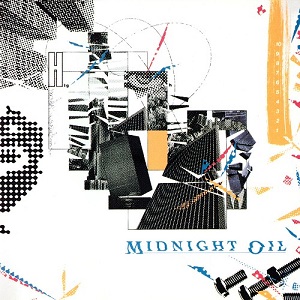
Midnight Oil’s growing popularity out of the late 1970’s on the back of their first two albums, their self-titled debut and the follow up “Head Injuries”, had come on the back of constant touring and the hard working ethic shown in their concerts, where nothing was left when they finally left the stage. They began to break through on the Australian charts with their EP “Bird Noises”, recently reviewed on episode 168 of this podcast, and then the follow up album “Place Without a Postcard” which went to #12 on the Australian albums chart. However, it was the release of 1982’s “10-1” that saw the band top that wave and become the band that their fans always knew they could be. The songs that became tinged with lyrics that spoke of the world around them, of the causes they believed in and the political situations at home and abroad, began to burst forth, with singles such as “Read About It”, “US Forces” and “The Power and the Passion” taking on a life of their own. The album went to number 3 in Australia, and was then followed by “Red Sails in the Sunset” in 1984, which became their first number 1 album, with a continuation of their lyrical exposes and descriptions. Despite being a controversial entity in some places and corners, the ideology of the band spoke to the times they were living in, and their fan base was growing as they became as much a mouthpiece with their music as a popular band in itself.
In September of 1985, the band headed to the studio for four days to put down four new tracks that had been put together over their touring for that album. On the back of the success that “Bird Noises” had crested five years earlier, they looked to release a new EP rather than release another song off the album as a single release. It also gave the ban the chance to further bring their current stories to song, and to have a new release for the fans rather than a song from an album they had released a year earlier. This came Midnight Oil’s second EP and one that created history for the band, provocatively titled “Species Deceases”.
Like their previous EP, this one again comes with just the four tracks, and each is targeting a different piece of the world that the band sees as worthy of being spotlighted. “Progress” lyrically comes at the way that everything seems ot have to make way for progress, to push forward at the expense of the environment all for the betterment of industry or government. Musically it has moved away from the experimental side that the band had used over the previous two album and settled into a contemporary sound that is stripped back a little from what they have been offering. “Hercules” is the big song off the EP, one that is still played on radio and music video around the world. The mid-1980's in the South Pacific with nuclear testing happening and the rise of Greenpeace to protest it in particular influence the lyrical content of the song. Lead singer Peter Garrett had recently run for the Australian Senate as a member of the Nuclear Disarmament Party, something he narrowly failed to achieve, but it advertised heavily his thoughts on this subject in particular, and this song heavily pushed that theme here.
“Blossom and Blood” speaks about the nuclear argument again, here referencing Hiroshima and discussing the outward fallibility of talking about peace while preparing for war. The words here from Rob Hirst and Jim Moginie are compelling as always. Finally we have “Pictures”, outwardly about the nuclear apocalypse and the desire to not be a part of one. Lines such as “I just want to watch the paradise, I just want to see that clear, clear light, Don't want to be a member of a species that's deceasing, Keep on making those promises that they aren't keeping”. And also “Oh, I was a talking to the people next door, They said don't want to die in a nuclear war” - are pretty reflective of what the band is suggesting here.
The EP’s title is fairly specific just what the band has proposed here on these four tracks. Each speaks of their belief of the destruction of the environment and of the nuclear desolation that awaits if things don’t change. And it is very reflective of the time. The mid-1980's was a time where nuclear exchanges were considered to be a ‘not if, but when’ proposition, something that 40 years on might appear to be an overreaction from this point in time, but growing up and living in the time it was much more real that it might appear. And albums such as this weren’t as rare as you might think either. The fact that the band released this as a statement piece, a short retort to what they saw occurring on their (and our) doorstep, is perhaps the most important and compelling part about “Species Deceases”.
I still very much remember when this EP was first released. It was a couple of days before we had our Year 10 graduation dance at high school at the end of 1985. The previous week we had been on a school camp to Bundanoon in the NSW southern highlands, and discussion at the time was of the impending arrival of a new Midnight Oil release. On the night of this dance, there was a band who kept promising that they would be playing lots of great songs that were popular at the time, a promise that was most definitely not kept. However, the one thing they did do was, during the break in their set, whoever was doing their PA put on the brand-new release from Midnight Oil, and it got the biggest reaction of the night from the congregation.
This came out at the exact same moment as my heavy metal revelation, which more or less began at the camp that I just mentioned that was a week before this EP was released. But the popularity and exposure that this EP received is still very bright in my memory. It was everywhere at the time, on the radio, on the music TV shows, and of course in the school yard when we returned to school in February. And it went to #1 on the Australian singles charts, and remained there for six weeks over the Xmas period. It was also the only time the band had a number one single, which in retrospect seems incredible.
I did not get this EP on its release. As I said, this was literally when Iron Maiden was dropped into my lap, and that obsession took over everything for a long time afterwards. I heard the songs on the radio but didn’t feel the need to acquire it. That would come eventually, as I bought up the entire Midnight Oil discography. And listening to it again this week has been fun. It brings back a lot of memories of that time, of when I was on the cusp of moving into the senior years of high school. And it was a great reminder of songs that don’t always get recognised now in the Midnight Oil catalogue. Everyone knows “Hercules”, but the other three are somewhat forgotten. This week has been a good reminder for me of their excellence as well. Something that always makes these podcast episodes worthwhile in more ways than one.
One middle-aged headbanger goes where no man has gone before. This is an attempt to listen to and review every album I own, from A to Z. This could take a lifetime...
Podcast - Latest Episode
Showing posts with label Midnight Oil. Show all posts
Wednesday, November 26, 2025
Wednesday, November 01, 2023
1227. Midnight Oil / Midnight Oil. 1978. 4/5
Midnight Oil the band was formed over a number of years, with the original members coming together from a variety of backgrounds. The original trio of drummer Rob Hirst, bass guitarist Andrew James, and keyboard player/lead guitarist Jim Moginie performed together in a band called "Farm" as far back as 1972, and played cover version of songs by bands such as Cream, Creedence Clearwater Revival and Led Zeppelin. Eventually they decided to advertise for other players to come on board, an advert that was answered by Peter Garrett, who came to the band as lead vocalist and synth player. Garrett was studying in Canberra which made the band really a part-time gig, as the others were all based in Sydney. Having started playing on Sydney’s north shore, by 1975 the band was touring the Australian east coast on a regular basis. This then led to Garrett moving to Sydney the following year to complete his law degree, but also allowing the band to become a whole group rather than working in dispatches from different cities. It also led to the four piece deciding to change their name to Midnight Oil.
Following this, the group began to refine their sound, and began to develop a more aggressive, hard rock sound that was being more sought after in the Sydney pub rock scene. To help increase this, Martin Rotsey joined in 1977 to become the second guitarist with the band and Midnight Oil, with their manager Gary Morris, established their own record label Powderworks. The band had built a dedicated fan base in Sydney, which grew through constant touring, performing around 200 gigs in their first year as Midnight Oil. They became known for their furious live performances, and when they entered the studio to record their debut album, the hope was that they could transfer that energy onto vinyl. Sometimes that is not easy thing to do.
The album opens with “Powderworks”, a fast-paced rocker that sets the tone for the rest of the album. The song features a catchy riff, a driving rhythm section, and Peter Garrett’s distinctive vocals. The lyrics are about the band’s frustration with the music industry and their desire to make their own music. This is followed by “Head Over Heels”, a slower and more melodic track that showcases Jim Moginie’s keyboard skills. The song is a love song with a twist, as Garrett sings about a woman who is “head over heels in love with herself”.
The third track on the album is “Dust”, a dark and atmospheric song that deals with environmental issues. The song features a haunting synthesizer melody, a heavy bass line, and Garrett’s ominous vocals. The lyrics focus on the effects of pollution and nuclear war on the planet. The song is one of the earliest examples of the band’s social and political commentary, which would become more prominent in their later albums. “Used and Abused” is a hard-hitting punk rock styled song that criticizes consumerism and materialism. It features a fast tempo, a distorted guitar sound, and Garrett’s angry vocals. The lyrics are about the exploitation of the average person by corporations and advertisers, and how they waste their lives chasing after money and possessions.
Opening up the second side of the album is “Surfing with a Spoon”, a fun and upbeat song that celebrates surfing and freedom. The song features a catchy chorus, a surf rock guitar sound, and Garrett’s playful vocals, based around escaping from the pressures of society and enjoying life on the beach.
“Run by Night”, the band’s first single and one of their most popular songs, features another catchy hook, a grooved bass line, and Garrett’s confident vocals singing about living on the edge and taking risks in life.
The closing track is “Nothing Lost - Nothing Gained”, a complex and progressive rock song that features a long instrumental section, with various changes in tempo, mood, and style. The song showcases the band’s musical skills and versatility, as well as their experimental side. The lyrics are about finding balance and harmony in life, and accepting the consequences of one’s actions.
The album is an impressive debut that introduces the band’s unique sound and vision while displaying the band’s talent, creativity, and passion for music. Mixed with this the album also suffers from some flaws, such as uneven production quality, lack of cohesion in the tracks, and does not fully reflect the band’s live potential at the time, something that many fans of the day were disappointed with, and which would be rectified in their subsequent albums.
Growing up in Australia, Midnight Oil is a right of passage. And people can guess your age from which album you choose to offer as your favourite. Those older than me will often suggest Blue Sky Mining or Diesel and Dust as the ultimate. Those younger than me will likely to choose an album such as “Head Injuries” as the one that showcased them best. For me, it has always been “10-1” that is the go to album. All of this is to suggest that I had well and truly digested most of Midnight Oil’s great albums before I eventually got around to listening to this album. And I don’t really know if that was a good thing or a bad thing. Because even from the first time I listened to this album I really enjoyed it, but also knew that their material further along the road was more polished, more intense and more amazing overall.
I wasn’t old enough to see them in concert in their early days, in sweaty Sydney pubs where the walls would bleed from the energy perspiring from band and crowd. Those that did generally found this album to be a tame imitation of the band they knew, which was always going to be a problem when trying to replicate that in the studio.
Looking back though, and listening to the album now, all of the bones are there for what was built upon this first foray onto vinyl. The experimenting of the sound in each song perhaps doesn’t give a true indication of what the band was when this was released back in 1978, but it gave the band its start, and the ability to widen their fan base, and push on to become the band they became.
For the fan of the band there is still lots to like about this album. It isn’t one of their biggest albums, and certainly not their most commercial, but if you turn it up loud and just let it come at you, then the misgivings of youth will still find you in the music.
Following this, the group began to refine their sound, and began to develop a more aggressive, hard rock sound that was being more sought after in the Sydney pub rock scene. To help increase this, Martin Rotsey joined in 1977 to become the second guitarist with the band and Midnight Oil, with their manager Gary Morris, established their own record label Powderworks. The band had built a dedicated fan base in Sydney, which grew through constant touring, performing around 200 gigs in their first year as Midnight Oil. They became known for their furious live performances, and when they entered the studio to record their debut album, the hope was that they could transfer that energy onto vinyl. Sometimes that is not easy thing to do.
The album opens with “Powderworks”, a fast-paced rocker that sets the tone for the rest of the album. The song features a catchy riff, a driving rhythm section, and Peter Garrett’s distinctive vocals. The lyrics are about the band’s frustration with the music industry and their desire to make their own music. This is followed by “Head Over Heels”, a slower and more melodic track that showcases Jim Moginie’s keyboard skills. The song is a love song with a twist, as Garrett sings about a woman who is “head over heels in love with herself”.
The third track on the album is “Dust”, a dark and atmospheric song that deals with environmental issues. The song features a haunting synthesizer melody, a heavy bass line, and Garrett’s ominous vocals. The lyrics focus on the effects of pollution and nuclear war on the planet. The song is one of the earliest examples of the band’s social and political commentary, which would become more prominent in their later albums. “Used and Abused” is a hard-hitting punk rock styled song that criticizes consumerism and materialism. It features a fast tempo, a distorted guitar sound, and Garrett’s angry vocals. The lyrics are about the exploitation of the average person by corporations and advertisers, and how they waste their lives chasing after money and possessions.
Opening up the second side of the album is “Surfing with a Spoon”, a fun and upbeat song that celebrates surfing and freedom. The song features a catchy chorus, a surf rock guitar sound, and Garrett’s playful vocals, based around escaping from the pressures of society and enjoying life on the beach.
“Run by Night”, the band’s first single and one of their most popular songs, features another catchy hook, a grooved bass line, and Garrett’s confident vocals singing about living on the edge and taking risks in life.
The closing track is “Nothing Lost - Nothing Gained”, a complex and progressive rock song that features a long instrumental section, with various changes in tempo, mood, and style. The song showcases the band’s musical skills and versatility, as well as their experimental side. The lyrics are about finding balance and harmony in life, and accepting the consequences of one’s actions.
The album is an impressive debut that introduces the band’s unique sound and vision while displaying the band’s talent, creativity, and passion for music. Mixed with this the album also suffers from some flaws, such as uneven production quality, lack of cohesion in the tracks, and does not fully reflect the band’s live potential at the time, something that many fans of the day were disappointed with, and which would be rectified in their subsequent albums.
Growing up in Australia, Midnight Oil is a right of passage. And people can guess your age from which album you choose to offer as your favourite. Those older than me will often suggest Blue Sky Mining or Diesel and Dust as the ultimate. Those younger than me will likely to choose an album such as “Head Injuries” as the one that showcased them best. For me, it has always been “10-1” that is the go to album. All of this is to suggest that I had well and truly digested most of Midnight Oil’s great albums before I eventually got around to listening to this album. And I don’t really know if that was a good thing or a bad thing. Because even from the first time I listened to this album I really enjoyed it, but also knew that their material further along the road was more polished, more intense and more amazing overall.
I wasn’t old enough to see them in concert in their early days, in sweaty Sydney pubs where the walls would bleed from the energy perspiring from band and crowd. Those that did generally found this album to be a tame imitation of the band they knew, which was always going to be a problem when trying to replicate that in the studio.
Looking back though, and listening to the album now, all of the bones are there for what was built upon this first foray onto vinyl. The experimenting of the sound in each song perhaps doesn’t give a true indication of what the band was when this was released back in 1978, but it gave the band its start, and the ability to widen their fan base, and push on to become the band they became.
For the fan of the band there is still lots to like about this album. It isn’t one of their biggest albums, and certainly not their most commercial, but if you turn it up loud and just let it come at you, then the misgivings of youth will still find you in the music.
Thursday, September 25, 2014
715. Midnight Oil / Red Sails in the Sunset. 1984. 3/5
Midnight Oil had been on an increasing trajectory since their emergence on the music scene in 1976, and the release of their self-titled debut album two years later. Beginning as an underground surfer scene band, the quintet had gained footholds into the Australian music scene over the course of those passing years, refining and redefining the landscape around them, and in the process finding their voice both musically and lyrically. Through their albums such as “Head Injuries”, “Place Without a Postcard” and their genre and chart crashing “10, 9, 8, 7, 6, 5, 4, 3, 2, 1”, Midnight Oil had found its audience and was beginning to reveal just what their key issues were, utilising their music to promote those to the world.
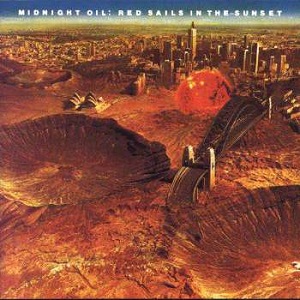
The aforementioned “10 to 1” album had brought the band its biggest success to that point, showing that they were not just a one trick pony, incorporating some different styles and experimenting with the music they produced. For the follow up to that album, the band decided to record in Japan with Nick Launay staying on as producer. Their record company apparently pushed for the band to record a more commercial single so that they could push for better opportunities in the US, something about which drummer Rob Hirst was quoted as saying “this is the album, take it or leave it”. The opportunity was there for the band to continue with their bold statements, and this was certainly the case for the album cover, designed by Japanese artist Tsunehisa Kimura, which depicts Sydney Harbour after a hypothetical nuclear strike. It is a stark image, and one that stood out in the record racks in the music stores. The end result was an album that again pushed the band’s boundaries, and also became their first number one album in Australia, and also charted in the US. And thus came the album that was appropriately named “Red Sails in the Sunset”.
The majority of “Red Sails in the Sunset” is not as outwardly energised or powerfully belligerent musically as the previous album. Though while the music may be more progressive and experimental, the messages in the lyrics don’t hold back. The opening two tracks are the singles released from the album, starting with “When the Generals Talk”, one of only two Midnight Oil songs where drummer Rob Hirst takes on the lead vocal role. This then explodes into “Best of Both Worlds”, one of only two songs on this album that could be said to draw upon the frantic live sound the band had performed with to this point of their career. It’s still a great song, combining all the best parts of the band in one belligerent hit. This then leads into a different kind of theater. On “Sleep,” the band reflects on the struggles faced by indigenous Australians, touching on themes of land rights, cultural identity, and the impact of colonization something that would continue down the track. Peter Garrett, as he often does, is almost speaking directly to you through the speakers. “Minutes to Midnight” refers to the doomsday clock, which is set in regard to how close the world is to either the threat of nuclear war or catastrophic destruction. The lyrics evoke an urgency, to remember our past and take meaningful action now. This is a song performed almost acoustically throughout, allowing the vocal merging harmonies to dominate the track over the drums and guitars. “Jimmy Sharman’s Boxers” tells the story of the travelling boxing troupe led by the eponymously named promotor in the early 20th century, and how his indigenous boxers were mistreated and the hard life they led as a result. The song itself draws out beyond seven minutes, rising and falling as the story is told, riding the wave of the anger and despair throughout. Side One then closes out with the horns and brass instrumental of “Bakerman”.
Side Two begins with “Who Can Stand in the Way” that covers the gamut of issues that the band is concerned by and wants to see action on - First nations people's rights and abuses, environmental issues, the rich still getting richer, and the power and abuse of the media. All of these issues are covered in other songs over the years. From here the album moves to arguably its finest moment, “Kosciusko”, a great combination of all guitars acoustic and electric, those amazing drums, and the combination of voices led by Rob Hirst again as lead vocalist for only the second time. Again speaking of the harsh existence that the first nations people have suffered, the energy and power and emotion of this track makes it an all-time classic. One of the greats. “Helps Me Helps You” comes at you in describing the idea of ‘you wash my back and I’ll wash yours’, but how the quid pro quo is not always returned. The three final songs on the album settle right back into a slow and maudlin style. “Harrisburg” reflects on the Three Mile Island nuclear reactor incident near Harrisburg, Pennsylvania, which occurred in 1979, and centres on the band’s theme that nuclear disarmament is one of their key principles. "Bells and Horns in the Back of Beyond" laments the loss of our amazing green spaces and natural landscapes to development, while pushing for consideration to be taken in how this affects us all. And the final track “Shipyards of New Zealand” moves into an atmospheric trance in discussing ambition and reality, and the quest for purpose and fulfillment. It is a defining way to finish the album, with a much slower and less momentous attack than the band has done in the past.
When this album was released, it was enormous. It exploded through Kiama High School where I was in Year 9, and the world outside that. People praised it to the high heavens, the singles were wash boarded over the radio, and it was lauded as a continuing rising high-water mark in the band’s career.
I didn’t like it.
1984 for me saw bands like Queen and The Police as big influences in my life, and dominating my listening. I adored the previous album, and was still listening to it often when this was released. And in many ways I guess that is what was a problem for me, because while the lyrical messages here were just as important and concerning, the absolute anger and passion outwardly that they had come with on the previous album was missing, and for me that was a big thing. It was confirmation for me that I was looking for something more out of music generally by this stage of my young life, that I wanted more energy and momentum in my music, something I would find some 12 or so months later in a different genre altogether. So when I heard this album on its release, given that the majority of the tracks here are so different from what I had loved on the previous album, I felt rather ambivalent about it.
Eventually, many years later, and older and perhaps more open to the kind of music that this album holds, I found it far better to listen to, but the same feelings I had when I was 14 still survive today.
I listen to this album today and I find it fine. It feels like it is aimed at my current age generation. It feels more like an easy listening album compared to the albums that preceded it, and also what was yet to come. The singles were the most outlandish of the tracks along with “Kosciusko”, and the ones that still light this album up when you listen to it.
I’m sure there are many people out there who are of a different opinion to me when it comes to this album, given its immense popularity at the time. But as much as I love this band and some of the songs off this album, “Red Sails in the Sunset” never quite fit for me.
The aforementioned “10 to 1” album had brought the band its biggest success to that point, showing that they were not just a one trick pony, incorporating some different styles and experimenting with the music they produced. For the follow up to that album, the band decided to record in Japan with Nick Launay staying on as producer. Their record company apparently pushed for the band to record a more commercial single so that they could push for better opportunities in the US, something about which drummer Rob Hirst was quoted as saying “this is the album, take it or leave it”. The opportunity was there for the band to continue with their bold statements, and this was certainly the case for the album cover, designed by Japanese artist Tsunehisa Kimura, which depicts Sydney Harbour after a hypothetical nuclear strike. It is a stark image, and one that stood out in the record racks in the music stores. The end result was an album that again pushed the band’s boundaries, and also became their first number one album in Australia, and also charted in the US. And thus came the album that was appropriately named “Red Sails in the Sunset”.
The majority of “Red Sails in the Sunset” is not as outwardly energised or powerfully belligerent musically as the previous album. Though while the music may be more progressive and experimental, the messages in the lyrics don’t hold back. The opening two tracks are the singles released from the album, starting with “When the Generals Talk”, one of only two Midnight Oil songs where drummer Rob Hirst takes on the lead vocal role. This then explodes into “Best of Both Worlds”, one of only two songs on this album that could be said to draw upon the frantic live sound the band had performed with to this point of their career. It’s still a great song, combining all the best parts of the band in one belligerent hit. This then leads into a different kind of theater. On “Sleep,” the band reflects on the struggles faced by indigenous Australians, touching on themes of land rights, cultural identity, and the impact of colonization something that would continue down the track. Peter Garrett, as he often does, is almost speaking directly to you through the speakers. “Minutes to Midnight” refers to the doomsday clock, which is set in regard to how close the world is to either the threat of nuclear war or catastrophic destruction. The lyrics evoke an urgency, to remember our past and take meaningful action now. This is a song performed almost acoustically throughout, allowing the vocal merging harmonies to dominate the track over the drums and guitars. “Jimmy Sharman’s Boxers” tells the story of the travelling boxing troupe led by the eponymously named promotor in the early 20th century, and how his indigenous boxers were mistreated and the hard life they led as a result. The song itself draws out beyond seven minutes, rising and falling as the story is told, riding the wave of the anger and despair throughout. Side One then closes out with the horns and brass instrumental of “Bakerman”.
Side Two begins with “Who Can Stand in the Way” that covers the gamut of issues that the band is concerned by and wants to see action on - First nations people's rights and abuses, environmental issues, the rich still getting richer, and the power and abuse of the media. All of these issues are covered in other songs over the years. From here the album moves to arguably its finest moment, “Kosciusko”, a great combination of all guitars acoustic and electric, those amazing drums, and the combination of voices led by Rob Hirst again as lead vocalist for only the second time. Again speaking of the harsh existence that the first nations people have suffered, the energy and power and emotion of this track makes it an all-time classic. One of the greats. “Helps Me Helps You” comes at you in describing the idea of ‘you wash my back and I’ll wash yours’, but how the quid pro quo is not always returned. The three final songs on the album settle right back into a slow and maudlin style. “Harrisburg” reflects on the Three Mile Island nuclear reactor incident near Harrisburg, Pennsylvania, which occurred in 1979, and centres on the band’s theme that nuclear disarmament is one of their key principles. "Bells and Horns in the Back of Beyond" laments the loss of our amazing green spaces and natural landscapes to development, while pushing for consideration to be taken in how this affects us all. And the final track “Shipyards of New Zealand” moves into an atmospheric trance in discussing ambition and reality, and the quest for purpose and fulfillment. It is a defining way to finish the album, with a much slower and less momentous attack than the band has done in the past.
When this album was released, it was enormous. It exploded through Kiama High School where I was in Year 9, and the world outside that. People praised it to the high heavens, the singles were wash boarded over the radio, and it was lauded as a continuing rising high-water mark in the band’s career.
I didn’t like it.
1984 for me saw bands like Queen and The Police as big influences in my life, and dominating my listening. I adored the previous album, and was still listening to it often when this was released. And in many ways I guess that is what was a problem for me, because while the lyrical messages here were just as important and concerning, the absolute anger and passion outwardly that they had come with on the previous album was missing, and for me that was a big thing. It was confirmation for me that I was looking for something more out of music generally by this stage of my young life, that I wanted more energy and momentum in my music, something I would find some 12 or so months later in a different genre altogether. So when I heard this album on its release, given that the majority of the tracks here are so different from what I had loved on the previous album, I felt rather ambivalent about it.
Eventually, many years later, and older and perhaps more open to the kind of music that this album holds, I found it far better to listen to, but the same feelings I had when I was 14 still survive today.
I listen to this album today and I find it fine. It feels like it is aimed at my current age generation. It feels more like an easy listening album compared to the albums that preceded it, and also what was yet to come. The singles were the most outlandish of the tracks along with “Kosciusko”, and the ones that still light this album up when you listen to it.
I’m sure there are many people out there who are of a different opinion to me when it comes to this album, given its immense popularity at the time. But as much as I love this band and some of the songs off this album, “Red Sails in the Sunset” never quite fit for me.
Saturday, July 12, 2008
511. Midnight Oil / 20,000 Watt R.S.L. 1997. 4.5/5
Given that the band has an enormous following
not only in Australia but around the world, and a whole bunch of album
packed full of great songs, it makes it difficult to try and put
together a greatest hits album that truly brings together the best the
band has done. And, as always, the final song selection will find
individuals decrying the leaving out of this song or that song. Personal
opinion can only be sated so often.
In my opinion, that fact does raise its head here, but it is not an overwhelming demand. The song selection here finds the majority of their biggest hits on board, covering the majority of their albums. It would be a harsh critic to suggest that any of the songs here don't deserve their place. Of course, I am a harsh critic, and I don't think songs such as "What Goes On", "White Skin Black Heart" and "Surf's Up Tonight" could possibly be regarded as better songs than "No Time for Games", "Short Memory" and "Read About It".
Despite this, 20,000 Watt R.S.L. is a wonderful collection from the career of a terrific band. For the Johnny-come-lately, this is a pretty good place to start if you want to learn about Midnight Oil. For the fan, it's a great trip down memory lane.
In my opinion, that fact does raise its head here, but it is not an overwhelming demand. The song selection here finds the majority of their biggest hits on board, covering the majority of their albums. It would be a harsh critic to suggest that any of the songs here don't deserve their place. Of course, I am a harsh critic, and I don't think songs such as "What Goes On", "White Skin Black Heart" and "Surf's Up Tonight" could possibly be regarded as better songs than "No Time for Games", "Short Memory" and "Read About It".
Despite this, 20,000 Watt R.S.L. is a wonderful collection from the career of a terrific band. For the Johnny-come-lately, this is a pretty good place to start if you want to learn about Midnight Oil. For the fan, it's a great trip down memory lane.
Tuesday, June 03, 2008
471. Midnight Oil / Head Injuries. 1979. 3.5/5
Midnight Oil had been one of those long term overnight sensations, leading up to the release of their self-titled debut album in 1978. That story is related in the episode dedicated to that album in Season 5 of this podcast. That album had been the first steps for the band, but had been somewhat criticised by fans and the media alike for not being able to live up to the energy and passion that the band showed on stage, that the studio recorded sessions sounded good but lacked the fire that the band emitted when playing live. No doubt this was something that the band hoped to rectify with their sophomore effort.
Along with this, the band also looked to progress their sound to the next level. Whereas the band had had a reputation for combining their surf rock roots with the growing punk phase that was occurring around them at the time that their first album was released, as they moved into this second album there appears to be a move towards prog rock and then the post punk sound that was by then beginning to be incorporated into the Australian pub rock scene.
The band retained the same line up for their second album and looked to build on the strengths of the band’s music. The powerful guitar riffs and soling from Jim Moginie and Martin Rotsey, with added keyboard trills from Moginie in the mix, the thumping bass lines of Andrew James, the frenetic controlled frenzy that is the drumming of Rob Hirst, and the unique vocal stylings of Peter Garrett. Midnight Oil could have remained a surf rock band, they could have morphed into a punk band, they could have moved into a Oz pub rock band. Rather than any of those things, Midnight Oil cherry picked pieces of all of those genres and mixed it together with what they were creating themselves. And the result of that was what became “Head Injuries”, an album that still stands the test of time 45 years after its release.
Along with this, the band also looked to progress their sound to the next level. Whereas the band had had a reputation for combining their surf rock roots with the growing punk phase that was occurring around them at the time that their first album was released, as they moved into this second album there appears to be a move towards prog rock and then the post punk sound that was by then beginning to be incorporated into the Australian pub rock scene.
The band retained the same line up for their second album and looked to build on the strengths of the band’s music. The powerful guitar riffs and soling from Jim Moginie and Martin Rotsey, with added keyboard trills from Moginie in the mix, the thumping bass lines of Andrew James, the frenetic controlled frenzy that is the drumming of Rob Hirst, and the unique vocal stylings of Peter Garrett. Midnight Oil could have remained a surf rock band, they could have morphed into a punk band, they could have moved into a Oz pub rock band. Rather than any of those things, Midnight Oil cherry picked pieces of all of those genres and mixed it together with what they were creating themselves. And the result of that was what became “Head Injuries”, an album that still stands the test of time 45 years after its release.
The album opens with ‘Cold Cold Change’, led out by the great melodic harmonised guitars backed by the driving bass and distinctive vocals which immediately mirror the guitar hook, and then an interesting solo break through the middle. it’s a solid opening track that probably doesn’t bust out as much as it threatens to do with that opening riff, but it still has some great vocals from Garrett and the guitars working hard. “Section 5 (Bus to Bondi)” then breaks in, a more zany and out-there track than is expected. The synth piece from Moginie through the middle of the track is almost like the band Madness in style, as are Garrett’s vocals in places. It is a frantic song through the verses before slowing to a more normally designed chorus section. It is the main song on this album that shows a distinct merging of genres within the band’s music. “Naked Flame” follows, and showcases Garrett and his amazing changeable vocal style from the outset with the imperfect wailing something that only he could achieve and not be mocked for. Once again, this song has an interesting mixture of styles and Moginie’s synth also being a more dominating influence. Then comes “Back on the Borderline” that opens with a great riff and drum roll from Hirst, kicks off at a higher tempo and energy, and with a great drive and chord progression along with the catchy lyrics expertly sung by Garrett, this is where part of the template of where Midnight Oil was heading was captured. The first side of the album closes out with “Koala Sprint”, which opens with a spoken statement from Garrett and then revels in its surf rock origins of singing about leaving the suburbs and road tripping up the coast. It is the longest song on the album, and one that delves to the band’s beginnings lyrically and even musically, again stretching between genres throughout its five plus minutes.
The album’s second half is decidedly darker lyrically and perhaps musically, and with a string of the album’s most politically charged homages, the first of which being 'No Reaction', which features the closest thing to an AC/DC riff this album has to offer. 'Stand In Line' speaks about the government losing touch with the everyday working class people, a song that came in the middle of the Fraser years of the Australian parliament and seems directly firmly in their direction. Penultimate track 'Profiteers' is essentially a protest song with singsong vocals that sound delivered through a megaphone, and a sonic aesthetic that would fit on other like-minded albums of the era. These three tracks perfectly embody Midnight Oil’s uncompromising approach at this point in their career, even if it meant forgoing commercial success at the time. The album then closes dramatically with the huge 'Is It Now?', which features some of the album’s most satisfying melodies. These build to the album’s massive climax in the middle of the song, in which Garett rants and shrieks over those great guitar leads, before an instrumental section fades the album out.
While it may not be their most well-known album, and although they didn’t see international success for a few years yet, Midnight Oil delivered some of their most catchy and impassioned material on “Head Injuries”, and is a shining example of why people should give Midnight Oil’s earlier releases a chance.
During my high school years, when I began to become more interested in the music of Midnight Oil, the story that I heard on most occasions from those people who had been fans of the band prior to my discovery of them was that “Head Injuries” was by far the best album that Midnight Oil had released. When “Diesel and Dust” and then “Blue Sky Mining” were released later on, the same people continued to say the same thing. And I understand why those people kept proclaiming that, because there was a seismic shift in the music that Midnight Oil began composing after this album, starting to move away from the surf rock tones that still touch tracks on this album, the ones that drew in those initial fans from Sydney’s North Shore and eastern suburbs.
And the charms of this album are that the music comes from that era. The debut album didn’t quite capture the energy that the band gave off on stage (of this you will have to trust me, as I was far too young to have seen them at that point of their career), but here the production tried to take into account the frenetic power that was the stage presence of Midnight Oil, and that it was important to be able to bleed that into the studio to record these songs that would soon be released into the world.
I was exposed to this album at several different times during my life, but never actually owned a copy of the album until a decade ago, when I went out and purchased every Midnight Oil album I didn’t already own at that stage. So it really wasn’t until that point that I began to seriously listen to it and take it all in. And while that was an error on my part, as I should have been doing that many years beforehand, I have found that it was almost like finding a new album that was already 30 years old.
It has been an interesting couple of weeks now revisiting it once again, but for probably the first time in my life listening intently to gather what I can from it, and judge just what it is about this album that I love or loathe. The music on this album is very much different from what they expanded into during the 1980’s decade, but it isn’t any less interesting. And I think I truly discovered it at an appropriate time. If it had been back in the mid-1980's where my musical focus began to turn to heavy metal, I could well have lost this album, much as I explained that I did with “Diesel and Dust” on the episode I did last year on that album. Instead I truly found it at a time where my focus wasn’t all on one genre of music, and I could appreciate it for what it is and not for what I wanted it to be.
Midnight Oil went forth from this release, and dominated the Australia charts through the following decade. And while younger fans may not be as aware of their first two albums as those of us who grew up with that music in their ears, “Head Injuries” is an important album to digest when deciphering the succession of what became the band’s golden years.
The album’s second half is decidedly darker lyrically and perhaps musically, and with a string of the album’s most politically charged homages, the first of which being 'No Reaction', which features the closest thing to an AC/DC riff this album has to offer. 'Stand In Line' speaks about the government losing touch with the everyday working class people, a song that came in the middle of the Fraser years of the Australian parliament and seems directly firmly in their direction. Penultimate track 'Profiteers' is essentially a protest song with singsong vocals that sound delivered through a megaphone, and a sonic aesthetic that would fit on other like-minded albums of the era. These three tracks perfectly embody Midnight Oil’s uncompromising approach at this point in their career, even if it meant forgoing commercial success at the time. The album then closes dramatically with the huge 'Is It Now?', which features some of the album’s most satisfying melodies. These build to the album’s massive climax in the middle of the song, in which Garett rants and shrieks over those great guitar leads, before an instrumental section fades the album out.
While it may not be their most well-known album, and although they didn’t see international success for a few years yet, Midnight Oil delivered some of their most catchy and impassioned material on “Head Injuries”, and is a shining example of why people should give Midnight Oil’s earlier releases a chance.
During my high school years, when I began to become more interested in the music of Midnight Oil, the story that I heard on most occasions from those people who had been fans of the band prior to my discovery of them was that “Head Injuries” was by far the best album that Midnight Oil had released. When “Diesel and Dust” and then “Blue Sky Mining” were released later on, the same people continued to say the same thing. And I understand why those people kept proclaiming that, because there was a seismic shift in the music that Midnight Oil began composing after this album, starting to move away from the surf rock tones that still touch tracks on this album, the ones that drew in those initial fans from Sydney’s North Shore and eastern suburbs.
And the charms of this album are that the music comes from that era. The debut album didn’t quite capture the energy that the band gave off on stage (of this you will have to trust me, as I was far too young to have seen them at that point of their career), but here the production tried to take into account the frenetic power that was the stage presence of Midnight Oil, and that it was important to be able to bleed that into the studio to record these songs that would soon be released into the world.
I was exposed to this album at several different times during my life, but never actually owned a copy of the album until a decade ago, when I went out and purchased every Midnight Oil album I didn’t already own at that stage. So it really wasn’t until that point that I began to seriously listen to it and take it all in. And while that was an error on my part, as I should have been doing that many years beforehand, I have found that it was almost like finding a new album that was already 30 years old.
It has been an interesting couple of weeks now revisiting it once again, but for probably the first time in my life listening intently to gather what I can from it, and judge just what it is about this album that I love or loathe. The music on this album is very much different from what they expanded into during the 1980’s decade, but it isn’t any less interesting. And I think I truly discovered it at an appropriate time. If it had been back in the mid-1980's where my musical focus began to turn to heavy metal, I could well have lost this album, much as I explained that I did with “Diesel and Dust” on the episode I did last year on that album. Instead I truly found it at a time where my focus wasn’t all on one genre of music, and I could appreciate it for what it is and not for what I wanted it to be.
Midnight Oil went forth from this release, and dominated the Australia charts through the following decade. And while younger fans may not be as aware of their first two albums as those of us who grew up with that music in their ears, “Head Injuries” is an important album to digest when deciphering the succession of what became the band’s golden years.
Friday, March 07, 2008
354. Midnight Oil / Diesel And Dust. 1987. 4/5
If you are Australian, and you grew up through the 1980’s, then you know the band Midnight Oil. On the back of extensive and furious clubbing in their early days to garner their reputation, the band had chart topping success with both albums and singles throughout the 1980’s decade. Albums like “10 to 1”, “Red Sails in the Sunset” and the EP “Species Deceases” were enormous for teenagers like me and 20-something adults, who all bolted on to those big singles that dominated the airwaves, and the albums that were played over and over in lounge rooms and bedrooms. People would try and dance like Peter Garrett, and manically play the drums like Rob Hirst. And, sometimes without even knowing, they would learn some things about the world, as the band’s intelligent and thoughtful lyrics exposed the holes in governments and industry and other wrongs being perpetrated in the world.
Prior to the writing of the “Diesel and Dust” album, Midnight Oil went out on the road on the so-titled Blackfella/Whitefella tour, which included indigenous bands the Warumpi Band and Gondwanaland, which focused on touring remote Aboriginal communities. For several months of 1986 the band saw first-hand the seriousness of the issues that existed in both health and living standards in these communities. When it came to writing and recording their new album, it was these experiences that the band drew upon, and became the basis of “Diesel and Dust”. The band members in interviews at the time expressed that the album was focused on the need for governments and so-called ‘white Australia’ to recognise the past injustices involving the First Nations, and the need for a reconciliation between the two on all levels. And it is obvious when you listen to the album that this message is quite passionately exclaimed throughout every song.
The four singles released from the album are the best known tracks, but it is perhaps the other tracks on the album that reveal the changing style of the band at this time of their career. Having been known for their high octane live gigs and songs with amazing energy and passion that had drawn in their fan base over a period of over a decade, some of the songs here reveal the bands' ability to write and record songs that didn’t lose their passion or appeal, and that the power of the music could remain even though they brought it back to a slower, softer and somewhat quieter level. “Arctic World” is a prime example of this, focused more on keyboards and Garrett’s vocals with other instruments non existent or muted. This segues almost unnoticed into “Warakurna” which is a beautifully understated song musically, restrained even. It allows the lyrics to grow their full meaning, be the prominent part of the track in an easy singalong style, with the music there to contribute but not to dominate. It is a great example of the way Midnight Oil were changing their style to incorporate tracks like this, not to bombard as they do on stage but to offer their thoughts in an open light. “Whoah” offers a light takedown of several issues hiding in plain view at the time. “Bullroarer” is another great song, again understated musically, not pushing the boundaries of the group’s former high energy output, but instead invokes the lyrics that are being sung. It’s another song invoking the altered style of the band and performed beautifully. “Sell My Soul” and “Sometimes” and “Gunbarrel Highway” all paint their own pictures, perhaps in a more traditional Oils fashion with more Garrett passion in the vocals, more percussion beats in Hirst’s drumming, and more hard hitting on the guitar strings by Moginie and Rotsey.
You know the singles here, or if you don’t you have been on another planet. “Dreamworld” is the bright and fast track that the Oils have always produced in their energetic frame. “Put Down That Weapon” is the anti-arms track of the album, a step away from the ideology and stories of the majority of the songs on the album to keep listeners know they still have an ear and eye on the outside world. “The Dead Heart” is the most prominent of the change in styled songs form the album, released as the first single prior to the album being composed for the tour that preceded it. And of course “Beds Are Burning” which became arguably the band’s biggest ever song, and one that was played on radios... well... still I guess.
I’ve spoken of 1987 often on this blog, the year I finished high school, and how so many albums released in this year have ingrained themselves on me, that remind me of this time of my life because of it. As it turns out, this album reminds me of a different time, of a decade later. Why? Well, when this album was released, my music tastes were dominated by heavy metal. Any type of heavy metal. I was discovering all of these new great bands, and they were my main focus. So when “Diesel and Dust” was released, and those that loved pure rock more than metal began to play it, I listened to it as well. But it just didn’t take. For me, “10 to1” was my template, that album was what I believed Midnight Oil was, and it was that album that I judged everything else they released on. And it is quite clear that early listens to this album didn’t fit that template for me at all. The quiet and soft songs were... quiet and soft... and I didn’t have any motivation to sit down and listen to that at that time of my life. And so I bypassed it, noticing that it sold amazing numbers and the singles were played to death on the radio, and that’s it. Until, as I said, about a decade later, when my wife and I went on a month long trip of the UK, and in the car we had almost all Australian artists to listen to as we drove around the countries. And it was Midnight Oil that struck home hardest on that trip, and the stories they told and the music they played. It was instrumental in my return to the band in a big way. And on revisiting “Diesel and Dust” at that time, I discovered what I had missed in my teenage years. In essence, I was now ready to hear it, and embrace it, without only having to have thrash guitars and double kick drums traipsing through every song I listened to. And now, when I listen to this album, as I have once again a couple of dozen times in the last few weeks, it reminds me of driving around the UK, and how Australian music had kept us company on our overseas journey.
More recently, a few years ago my family and our friends family journeyed through the Aussie outback to Uluru and experienced first hand the magic that this monument exudes, which was a truly amazing experience. And what did we listen to while staying out there while we enjoyed our evening beer? Why, “Diesel and Dust” of course, because this album is the soundtrack to Uluru, the outback, the First People's nations. It is even now a most remarkable album. “10 to 1” will always be my favourite Oils album, but this album continues to grow in significance and importance – and brilliance – the more I listen to it. It is one that everyone should listen to, to hear the lyrics and feel the mood of each song, because they are all entwined in the story being told, and that story is no less important today than it was 35 years ago.
Prior to the writing of the “Diesel and Dust” album, Midnight Oil went out on the road on the so-titled Blackfella/Whitefella tour, which included indigenous bands the Warumpi Band and Gondwanaland, which focused on touring remote Aboriginal communities. For several months of 1986 the band saw first-hand the seriousness of the issues that existed in both health and living standards in these communities. When it came to writing and recording their new album, it was these experiences that the band drew upon, and became the basis of “Diesel and Dust”. The band members in interviews at the time expressed that the album was focused on the need for governments and so-called ‘white Australia’ to recognise the past injustices involving the First Nations, and the need for a reconciliation between the two on all levels. And it is obvious when you listen to the album that this message is quite passionately exclaimed throughout every song.
The four singles released from the album are the best known tracks, but it is perhaps the other tracks on the album that reveal the changing style of the band at this time of their career. Having been known for their high octane live gigs and songs with amazing energy and passion that had drawn in their fan base over a period of over a decade, some of the songs here reveal the bands' ability to write and record songs that didn’t lose their passion or appeal, and that the power of the music could remain even though they brought it back to a slower, softer and somewhat quieter level. “Arctic World” is a prime example of this, focused more on keyboards and Garrett’s vocals with other instruments non existent or muted. This segues almost unnoticed into “Warakurna” which is a beautifully understated song musically, restrained even. It allows the lyrics to grow their full meaning, be the prominent part of the track in an easy singalong style, with the music there to contribute but not to dominate. It is a great example of the way Midnight Oil were changing their style to incorporate tracks like this, not to bombard as they do on stage but to offer their thoughts in an open light. “Whoah” offers a light takedown of several issues hiding in plain view at the time. “Bullroarer” is another great song, again understated musically, not pushing the boundaries of the group’s former high energy output, but instead invokes the lyrics that are being sung. It’s another song invoking the altered style of the band and performed beautifully. “Sell My Soul” and “Sometimes” and “Gunbarrel Highway” all paint their own pictures, perhaps in a more traditional Oils fashion with more Garrett passion in the vocals, more percussion beats in Hirst’s drumming, and more hard hitting on the guitar strings by Moginie and Rotsey.
You know the singles here, or if you don’t you have been on another planet. “Dreamworld” is the bright and fast track that the Oils have always produced in their energetic frame. “Put Down That Weapon” is the anti-arms track of the album, a step away from the ideology and stories of the majority of the songs on the album to keep listeners know they still have an ear and eye on the outside world. “The Dead Heart” is the most prominent of the change in styled songs form the album, released as the first single prior to the album being composed for the tour that preceded it. And of course “Beds Are Burning” which became arguably the band’s biggest ever song, and one that was played on radios... well... still I guess.
I’ve spoken of 1987 often on this blog, the year I finished high school, and how so many albums released in this year have ingrained themselves on me, that remind me of this time of my life because of it. As it turns out, this album reminds me of a different time, of a decade later. Why? Well, when this album was released, my music tastes were dominated by heavy metal. Any type of heavy metal. I was discovering all of these new great bands, and they were my main focus. So when “Diesel and Dust” was released, and those that loved pure rock more than metal began to play it, I listened to it as well. But it just didn’t take. For me, “10 to1” was my template, that album was what I believed Midnight Oil was, and it was that album that I judged everything else they released on. And it is quite clear that early listens to this album didn’t fit that template for me at all. The quiet and soft songs were... quiet and soft... and I didn’t have any motivation to sit down and listen to that at that time of my life. And so I bypassed it, noticing that it sold amazing numbers and the singles were played to death on the radio, and that’s it. Until, as I said, about a decade later, when my wife and I went on a month long trip of the UK, and in the car we had almost all Australian artists to listen to as we drove around the countries. And it was Midnight Oil that struck home hardest on that trip, and the stories they told and the music they played. It was instrumental in my return to the band in a big way. And on revisiting “Diesel and Dust” at that time, I discovered what I had missed in my teenage years. In essence, I was now ready to hear it, and embrace it, without only having to have thrash guitars and double kick drums traipsing through every song I listened to. And now, when I listen to this album, as I have once again a couple of dozen times in the last few weeks, it reminds me of driving around the UK, and how Australian music had kept us company on our overseas journey.
More recently, a few years ago my family and our friends family journeyed through the Aussie outback to Uluru and experienced first hand the magic that this monument exudes, which was a truly amazing experience. And what did we listen to while staying out there while we enjoyed our evening beer? Why, “Diesel and Dust” of course, because this album is the soundtrack to Uluru, the outback, the First People's nations. It is even now a most remarkable album. “10 to 1” will always be my favourite Oils album, but this album continues to grow in significance and importance – and brilliance – the more I listen to it. It is one that everyone should listen to, to hear the lyrics and feel the mood of each song, because they are all entwined in the story being told, and that story is no less important today than it was 35 years ago.
Wednesday, February 27, 2008
328. Midnight Oil / Capricornia. 2002. 3/5.
Everything I have written about Midnight Oil’s album since Blue Sky Mining pretty much relates again here. This being the final release for the Oils doesn’t add any nostalgia.
You can’t blame a band whose musical direction changes, or mellows, over time, especially when that band has been around for as long as Midnight Oil has been. The writing changes, the style changes with it, and the members of the group are of course also changing. Many people may think it’s a change for the better, many will think that the change is unfortunate.
My own personal opinion is that, while the music has changed a ways since their initial albums, so have I, and perhaps my changes have moved me further down the spectrum too.
What we’ve moved into here is easy listening. You don’t jump and down and dance anymore. You sit in your comfy sofa chair and listen with a cup of tea. The songs are still good, and mostly listenable, but they don’t have the same fire anymore.
Best here for me are “Golden Age”, "Been Away Too Long" and “Mosquito March”.
Rating: The end probably came at the right time. 3/5.
You can’t blame a band whose musical direction changes, or mellows, over time, especially when that band has been around for as long as Midnight Oil has been. The writing changes, the style changes with it, and the members of the group are of course also changing. Many people may think it’s a change for the better, many will think that the change is unfortunate.
My own personal opinion is that, while the music has changed a ways since their initial albums, so have I, and perhaps my changes have moved me further down the spectrum too.
What we’ve moved into here is easy listening. You don’t jump and down and dance anymore. You sit in your comfy sofa chair and listen with a cup of tea. The songs are still good, and mostly listenable, but they don’t have the same fire anymore.
Best here for me are “Golden Age”, "Been Away Too Long" and “Mosquito March”.
Rating: The end probably came at the right time. 3/5.
Tuesday, February 26, 2008
324. Midnight Oil / Breathe. 1996. 3/5.
Unlike the firey, politically driven hard Aussie rock songs of the previous decade, Midnight Oil have toned their music down over recent albums, and by the mid-1990’s had reached their own middle-age with this release, Breathe.
Unlike most of their best songs from the previous decade, this album is a lot softer, a lot slower, and a bit more reflective in music style. Whereas with their early albums you imagine the whole band jumping around and rocking out while playing, you can almost see the whole band sitting comfortably in their armchairs as they recorded this album. It’s a real change in style for the group, and though the album is not a bad one, it really does miss the vibrancy that previous releases are full of. Perhaps they were just going with their hearts – their ageing hearts – or perhaps this was the mood they were looking for. Overall, as a fan of the band, I am disappointed in the direction.
Sure, I can put the album on and listen to it. Actually, if I’ve got people over, it is the perfect background music, because it doesn’t take away the focus of the conversation. Probably not a good advertisement for the album itself, but it gives you an idea of its style and performance.
Rating: Not so bad, but not a screamer either. Elevator music, anyone? 3/5.
Unlike most of their best songs from the previous decade, this album is a lot softer, a lot slower, and a bit more reflective in music style. Whereas with their early albums you imagine the whole band jumping around and rocking out while playing, you can almost see the whole band sitting comfortably in their armchairs as they recorded this album. It’s a real change in style for the group, and though the album is not a bad one, it really does miss the vibrancy that previous releases are full of. Perhaps they were just going with their hearts – their ageing hearts – or perhaps this was the mood they were looking for. Overall, as a fan of the band, I am disappointed in the direction.
Sure, I can put the album on and listen to it. Actually, if I’ve got people over, it is the perfect background music, because it doesn’t take away the focus of the conversation. Probably not a good advertisement for the album itself, but it gives you an idea of its style and performance.
Rating: Not so bad, but not a screamer either. Elevator music, anyone? 3/5.
Monday, February 25, 2008
319. Midnight OIl / Blue Sky Mining. 1990. 4/5.
It would be a reasonable argument to make that up until 1987, when Midnight Oil’s previous album “Diesel and Dust” was released, they had been Australia’s band and that their sphere of influence remained predominantly inside Australian borders. While the subject matter of their songs took on influences from around the world the way those events were handled was more in a way that affected Australia and those who lived here rather than the world population as a whole. From “Diesel and Dust” onwards, although the subject matter actually became more intimate with the problems that faced Australia internally in climate change and social disorder and indigenous rights, it felt as though that influence became an international journey, with a gain in audience from many other nations around the world. That is only a personal view, and one perhaps judged from how I viewed the band up until 1987, and how I viewed it following this.
The band had toured extensively following the release of “Diesel and Dust” and had other major events going on during this time as well. Following the 1988 American tour in support of Diesel and Dust, on which they had taken Australian band Yothu Yindi with them as their support, Midnight Oil launched the album “Building Bridges – Australia Has A Black History”. This had many high profile artists contributing including Paul Kelly, Hunters & Collectors, James Reyne, The Saints, Crowded House, and INXS, with all sales proceeds being donated to the National Coalition of Aboriginal Organisations. Along with this, lead singer Peter Garrett was the President of the Australian Conservation Foundation, a position that was the forerunner of him joining the International Board of Greenpeace in 1993.
The band convened in Sydney to begin the writing and recording of their follow up album in June 1989, a process that took four months from start to finish. Following up the success of “Diesel and Dust” was always going to be a challenge. While Midnight Oil had already had an impressive career up to this point, “Diesel and Dust” had brought further international recognition, and this is something that they would have been hoping to not only replicate but surpass. Many would be of the opinion that they succeeded in this with “Blue Sky Mining”.
From the amazing opening of guitar and synth into harmonica and then drums and the wonderful bass line that takes us through the whole of the song and really highlights everything that is great about the track – the first moment for new bass guitarist Bones Hillman - the title track sets the mood of the album from the very outset. Peter Garrett’s dulcet vocal tones draw you into the song before the power of Hirst and Moginie’s backing vocals bring home the story being lived in the lyrics. The song itself addresses the exploitation of workers in the mining industry, particularly referencing the Wittenoom asbestos mines in Western Australia. It highlights the dangerous working conditions and the impact on miners' health. Lyrics such as “If I yell out at night, there's a reply of blue silence, the screen is no comfort, I can't speak my sentence, they blew the lights at heaven's gate and I don't know why” and “And the company takes what the company wants, and nothing’s as precious as a hole in the ground” show the take the band takes on these matters. Powerful, hard hitting and leaving no one in any doubt about their thoughts on the choices that were made between making money and their workers safety. The title track doesn’t have the hard rock stylings of their most famous protest songs of the past, but it is of the new era, where the music is a more mainstream commercial take where the anger is toned down but the rhetoric is not.
“Stars of Warburton” begins immediately following this with guitar and drums and Garrett’s vocals. The wonderful lyrics are an overall collection of the band’s most important values they fight against – overdevelopment of cities and countries, the advent of consumerism and reliance on technology, the environmental consequences of all of these action and the need to retain our open lands and peoples. The song is packed with these references, and the music conveys it beautifully, and the key words of hope from the song being “I couldn’t believe the stars of Warburton were waiting for me”. This is another of their moderately paced and less furious musically based tracks but suits this phase of their existence.
Rob Hirst’s “Bedlam Bridge” is full of lyrics that speak of the urban decay and social issues that affect so many cities large and small, touching on themes like poverty, crime, and marginalised communities. It is a song full of amazing imagery, none of it in a positive aspect, and was written by Hirst having taken a long walk around a certain US city and he drew what he witnessed into this song. Musically it reflects the desperation and starkness of the lyrics, and yet it is a most beautifully sung song by Garrett. An amazing track.
What then follows is the antithesis of this musically. “Forgotten Years” is performed as an uplifting piece. The message of the track is one that tries to talk of rectifying a feeling that those who served the armed forces overseas were forgotten, because war never truly touched our shores for the majority of the conflicts Australia has participated in, and this is a song that serves as a tribute to those men and women who did indeed serve to protect our country despite that. And the music from the song itself is such a mood lifter, and the words are sung with such passion that it has become a tribute in that way. It doesn’t serve to look on the dark side of those events, but as something that promotes pride in the chest and as a nationalistic call to arms to recognise those feats. It has been one of the band’s best songs for many years.
Rob Hirst is back again with another bleak vision of the world in “Mountains of Burma”. The music again moves along in a slow tempo heavy on the bass, explosive Zeppelin-esque guitar pieces and a very moody feeling throughout. His lyrics such as “Pack your bags full of ammunition, bills fall due for the industrial revolution, scorch the earth till the earth surrenders” are damning words, and are fully felt in Garrett’s vocal style. It is a sobering song but one that is still so wonderful because of its power of words and music.
The popular single release “King of the Mountain” has had an interesting existence, often used as a promotion of the biggest car race in Australia, the Bathurst 1000 held in October every year, and in reference to the man that is called the King of the Mountain, Peter Brock. As it turns out, this isn’t the case, as the lyrics suggest. Rob Hirst said in an interview that it is in fact inspired by a footrace that takes place up Mt Cooroora outside Noosa, and the lyrics describe the surrounding beauty of where the race is run. It has since become a multiple sports anthem in Australia and is one of the band’s most popular tracks.
“River Runs Red” addresses environmental and social impacts of industrial pollution, particularly focusing on mining operations. What an amazing mood the band creates for this song. It sends shivers down the spine every time I listen to it. The message of the lyrics is clear, but the music composed to convey that message is truly amazing. Once again, this is away from the harder style of music they used earlier in their career to stick it to the protagonists in their songs, but here the still and yet growing problem with industry in, as the lyrics say “So you cut all the tall trees down, you poisoned the sky and the sea, you've taken what's good from the ground, but you've left precious little for me” is mirrored in the music here, and it is a haunting song in so many ways.
“Shakers and Movers” is perhaps the most open to interpretation lyric wise on the album, generally floating around the same subjects that have been covered already on previous songs. This is followed by “One Country”, a song that emphasizes themes of national identity, unity, and social justice. It calls for reconciliation and a collective vision for the future, highlighting the importance of coming together as one nation with shared values and goals. Reflecting on the idea of creating a society where everyone has equal opportunities and rights, and where people can live harmoniously without divisions. It's a powerful message about the potential for positive change and the need for collective action.
The song rises from the acoustic guitar beginning to the piano joining in, and the song builds in passion. Then there is Bones Hillman’s amazing vocal line of ‘country one’ which Garrett follows with his increasingly rising passionate call to arms, that is increased by Rob Hirst’s marching snare drum evoking an image of a march down the street, with millions of people following the band in support of the message of the song, as Garret sings “One vision, one people, one landmass”. It is powerful throughout, though 35 years on our recent history proves that, despite a referendum that looked to be one step in the right direction that was struck down by fearmongering with no basis behind it, Australia as a nation still harbours much that holds us back from being the true lucky country.
"Antarctica" closes out the album, a song that once again reflects on the environment, the changes that are met by the industrialised nations, and not only harp on, as the lyrics suggest “There must be one place left in this world, where the mountains meet the seas, there must be one place left in this world, where the water’s real and clean” but also that even the last of the frontier lands of Antarctica are not immune to the progress of humanity.
A case can be made that by the release of this album, Midnight Oil as a band was beginning to fight a one band battle against the world as they saw it. A part of that was the way they now wrote their songs of protest. Lyrically it was still hard hitting and making sure that their target was known, but the music itself was not as belligerent as it had been even half a decade earlier. The songs here on “Blue Sky Mining” come across as more thoughtful more so perhaps because the tempo of the music is drawn back and comes across as less intense as it did on those first albums. Songs such as “Stars of Warburton”, “Bedlam Bridge”, “Mountains of Burma” and “River Runs Red”, along with “One Country”, are all in this category, giving the listener plenty of scope to hear and understand the lyrics and the meaning behind them. Mixed with the singles from the album, the one that gained the radio airplay to siphon the listeners into buying the album and then hearing these wonderful and important songs, it makes for an outstanding album.
For me though, it took some time to get to this point of the journey. In 1990, I was in a furious love affair with everything heavy metal, and pretty much everything else had taken a back seat. Even Midnight Oil, with whom I had enjoyed throughout my teenage years, were unable to keep up. The singles were all over the radio, and at that time I remember thinking they were okay. But those biases that have occasionally cropped up during my music listening life – you know, where songs are so popular that I began to shun them and the bands who produced them because I wanted the artists that I loved to get their chance at that kind of popularity – certainly hit for me on the release of this album. “Blue Sky Mine”, “Forgotten Years”, “King of the Mountain” – they were all good songs that I enjoyed when the occasion arose. But none of my friends or acquaintances followed Midnight Oil at that time of their career either, so I wasn’t getting exposure to the album or albums wherever I went.
In 1998 my lovely wife Helen and I travelled to England for her lovely sister Linda’s wedding, and afterwards spent almost three weeks driving around England and Scotland in a hired car. Helen had procured some Aussie artists to listen to in the car as we drove, and one of those was Midnight Oil, specifically their then current best of album “20,000 Watt RSL”, which got plenty of rotation and singalong vibes along the way. On our return to Australia, I then also saw the band at the Enmore Theatre on that tour, where to choose the songs of the set list they used a giant chocolate wheel on stage with all of their song titles on it, and spun it to see what they would play. It was amazing, three hours of great memories and great music. So, after both of those events, it sparked me into deciding I had to go back and listen to those albums I knew from the past, but also check out the ones that I did not. And “Blue Sky Mining” was one of those.
Now this was not a miracle rebirth and immediate love of this album. It was a slow burn, over several years. It came from growing older, and of starting a family. I had ideals but was rather blasé about how I felt about them. Having children tends to change the mindset. And so the lyrical content of this album became more important to me, and the maturing of my music tastes also brought this album more into focus. It might sound like a strange thing to say. Surely you either like an album or you don’t. That remains true. But the melding of everything by my mid-30’s meant that I was in a better place to appreciate this album lyrically and musically. Which is exactly what I did.
This review has taken me some time to compose. I felt it was important to not just give a throwaway breakdown of the album and suggest it is important without being able to express that in a way that shows the journey I have had with it. This has taken weeks rather than days, and close to 20 rotations of the CD and streams on a walk to get to this point. Almost each listen has brought something different to me from a song or part of a song. It is impossible not to rave about Peter Garratt’s vocals, Jim Moginie’s wonderful guitaring and keyboards, and Martin Rotsey’s guitar as well. What stands out most for me however is Rob Hirst’s drumming – again. But Bones Hillman, on his first Midnight Oil album, is supreme. The bass sound on this album, and the importance of it in practically every song here, is enormous. And his backing vocals, especially on the aforementioned “One Country”, are tremendous.
Of the 13 full length studio albums in the Midnight Oil discography, this for me ranks fifth amongst them. There is very little between a number of albums in this section, but I think for me fifth is a reasonable assessment of its quality. And it remains an album that everyone should experience, preferably while reading the lyrics sheet in their hands as they do. It is a terrific album musically, and a learning experience through the stories being told.
The band had toured extensively following the release of “Diesel and Dust” and had other major events going on during this time as well. Following the 1988 American tour in support of Diesel and Dust, on which they had taken Australian band Yothu Yindi with them as their support, Midnight Oil launched the album “Building Bridges – Australia Has A Black History”. This had many high profile artists contributing including Paul Kelly, Hunters & Collectors, James Reyne, The Saints, Crowded House, and INXS, with all sales proceeds being donated to the National Coalition of Aboriginal Organisations. Along with this, lead singer Peter Garrett was the President of the Australian Conservation Foundation, a position that was the forerunner of him joining the International Board of Greenpeace in 1993.
The band convened in Sydney to begin the writing and recording of their follow up album in June 1989, a process that took four months from start to finish. Following up the success of “Diesel and Dust” was always going to be a challenge. While Midnight Oil had already had an impressive career up to this point, “Diesel and Dust” had brought further international recognition, and this is something that they would have been hoping to not only replicate but surpass. Many would be of the opinion that they succeeded in this with “Blue Sky Mining”.
From the amazing opening of guitar and synth into harmonica and then drums and the wonderful bass line that takes us through the whole of the song and really highlights everything that is great about the track – the first moment for new bass guitarist Bones Hillman - the title track sets the mood of the album from the very outset. Peter Garrett’s dulcet vocal tones draw you into the song before the power of Hirst and Moginie’s backing vocals bring home the story being lived in the lyrics. The song itself addresses the exploitation of workers in the mining industry, particularly referencing the Wittenoom asbestos mines in Western Australia. It highlights the dangerous working conditions and the impact on miners' health. Lyrics such as “If I yell out at night, there's a reply of blue silence, the screen is no comfort, I can't speak my sentence, they blew the lights at heaven's gate and I don't know why” and “And the company takes what the company wants, and nothing’s as precious as a hole in the ground” show the take the band takes on these matters. Powerful, hard hitting and leaving no one in any doubt about their thoughts on the choices that were made between making money and their workers safety. The title track doesn’t have the hard rock stylings of their most famous protest songs of the past, but it is of the new era, where the music is a more mainstream commercial take where the anger is toned down but the rhetoric is not.
“Stars of Warburton” begins immediately following this with guitar and drums and Garrett’s vocals. The wonderful lyrics are an overall collection of the band’s most important values they fight against – overdevelopment of cities and countries, the advent of consumerism and reliance on technology, the environmental consequences of all of these action and the need to retain our open lands and peoples. The song is packed with these references, and the music conveys it beautifully, and the key words of hope from the song being “I couldn’t believe the stars of Warburton were waiting for me”. This is another of their moderately paced and less furious musically based tracks but suits this phase of their existence.
Rob Hirst’s “Bedlam Bridge” is full of lyrics that speak of the urban decay and social issues that affect so many cities large and small, touching on themes like poverty, crime, and marginalised communities. It is a song full of amazing imagery, none of it in a positive aspect, and was written by Hirst having taken a long walk around a certain US city and he drew what he witnessed into this song. Musically it reflects the desperation and starkness of the lyrics, and yet it is a most beautifully sung song by Garrett. An amazing track.
What then follows is the antithesis of this musically. “Forgotten Years” is performed as an uplifting piece. The message of the track is one that tries to talk of rectifying a feeling that those who served the armed forces overseas were forgotten, because war never truly touched our shores for the majority of the conflicts Australia has participated in, and this is a song that serves as a tribute to those men and women who did indeed serve to protect our country despite that. And the music from the song itself is such a mood lifter, and the words are sung with such passion that it has become a tribute in that way. It doesn’t serve to look on the dark side of those events, but as something that promotes pride in the chest and as a nationalistic call to arms to recognise those feats. It has been one of the band’s best songs for many years.
Rob Hirst is back again with another bleak vision of the world in “Mountains of Burma”. The music again moves along in a slow tempo heavy on the bass, explosive Zeppelin-esque guitar pieces and a very moody feeling throughout. His lyrics such as “Pack your bags full of ammunition, bills fall due for the industrial revolution, scorch the earth till the earth surrenders” are damning words, and are fully felt in Garrett’s vocal style. It is a sobering song but one that is still so wonderful because of its power of words and music.
The popular single release “King of the Mountain” has had an interesting existence, often used as a promotion of the biggest car race in Australia, the Bathurst 1000 held in October every year, and in reference to the man that is called the King of the Mountain, Peter Brock. As it turns out, this isn’t the case, as the lyrics suggest. Rob Hirst said in an interview that it is in fact inspired by a footrace that takes place up Mt Cooroora outside Noosa, and the lyrics describe the surrounding beauty of where the race is run. It has since become a multiple sports anthem in Australia and is one of the band’s most popular tracks.
“River Runs Red” addresses environmental and social impacts of industrial pollution, particularly focusing on mining operations. What an amazing mood the band creates for this song. It sends shivers down the spine every time I listen to it. The message of the lyrics is clear, but the music composed to convey that message is truly amazing. Once again, this is away from the harder style of music they used earlier in their career to stick it to the protagonists in their songs, but here the still and yet growing problem with industry in, as the lyrics say “So you cut all the tall trees down, you poisoned the sky and the sea, you've taken what's good from the ground, but you've left precious little for me” is mirrored in the music here, and it is a haunting song in so many ways.
“Shakers and Movers” is perhaps the most open to interpretation lyric wise on the album, generally floating around the same subjects that have been covered already on previous songs. This is followed by “One Country”, a song that emphasizes themes of national identity, unity, and social justice. It calls for reconciliation and a collective vision for the future, highlighting the importance of coming together as one nation with shared values and goals. Reflecting on the idea of creating a society where everyone has equal opportunities and rights, and where people can live harmoniously without divisions. It's a powerful message about the potential for positive change and the need for collective action.
The song rises from the acoustic guitar beginning to the piano joining in, and the song builds in passion. Then there is Bones Hillman’s amazing vocal line of ‘country one’ which Garrett follows with his increasingly rising passionate call to arms, that is increased by Rob Hirst’s marching snare drum evoking an image of a march down the street, with millions of people following the band in support of the message of the song, as Garret sings “One vision, one people, one landmass”. It is powerful throughout, though 35 years on our recent history proves that, despite a referendum that looked to be one step in the right direction that was struck down by fearmongering with no basis behind it, Australia as a nation still harbours much that holds us back from being the true lucky country.
"Antarctica" closes out the album, a song that once again reflects on the environment, the changes that are met by the industrialised nations, and not only harp on, as the lyrics suggest “There must be one place left in this world, where the mountains meet the seas, there must be one place left in this world, where the water’s real and clean” but also that even the last of the frontier lands of Antarctica are not immune to the progress of humanity.
A case can be made that by the release of this album, Midnight Oil as a band was beginning to fight a one band battle against the world as they saw it. A part of that was the way they now wrote their songs of protest. Lyrically it was still hard hitting and making sure that their target was known, but the music itself was not as belligerent as it had been even half a decade earlier. The songs here on “Blue Sky Mining” come across as more thoughtful more so perhaps because the tempo of the music is drawn back and comes across as less intense as it did on those first albums. Songs such as “Stars of Warburton”, “Bedlam Bridge”, “Mountains of Burma” and “River Runs Red”, along with “One Country”, are all in this category, giving the listener plenty of scope to hear and understand the lyrics and the meaning behind them. Mixed with the singles from the album, the one that gained the radio airplay to siphon the listeners into buying the album and then hearing these wonderful and important songs, it makes for an outstanding album.
For me though, it took some time to get to this point of the journey. In 1990, I was in a furious love affair with everything heavy metal, and pretty much everything else had taken a back seat. Even Midnight Oil, with whom I had enjoyed throughout my teenage years, were unable to keep up. The singles were all over the radio, and at that time I remember thinking they were okay. But those biases that have occasionally cropped up during my music listening life – you know, where songs are so popular that I began to shun them and the bands who produced them because I wanted the artists that I loved to get their chance at that kind of popularity – certainly hit for me on the release of this album. “Blue Sky Mine”, “Forgotten Years”, “King of the Mountain” – they were all good songs that I enjoyed when the occasion arose. But none of my friends or acquaintances followed Midnight Oil at that time of their career either, so I wasn’t getting exposure to the album or albums wherever I went.
In 1998 my lovely wife Helen and I travelled to England for her lovely sister Linda’s wedding, and afterwards spent almost three weeks driving around England and Scotland in a hired car. Helen had procured some Aussie artists to listen to in the car as we drove, and one of those was Midnight Oil, specifically their then current best of album “20,000 Watt RSL”, which got plenty of rotation and singalong vibes along the way. On our return to Australia, I then also saw the band at the Enmore Theatre on that tour, where to choose the songs of the set list they used a giant chocolate wheel on stage with all of their song titles on it, and spun it to see what they would play. It was amazing, three hours of great memories and great music. So, after both of those events, it sparked me into deciding I had to go back and listen to those albums I knew from the past, but also check out the ones that I did not. And “Blue Sky Mining” was one of those.
Now this was not a miracle rebirth and immediate love of this album. It was a slow burn, over several years. It came from growing older, and of starting a family. I had ideals but was rather blasé about how I felt about them. Having children tends to change the mindset. And so the lyrical content of this album became more important to me, and the maturing of my music tastes also brought this album more into focus. It might sound like a strange thing to say. Surely you either like an album or you don’t. That remains true. But the melding of everything by my mid-30’s meant that I was in a better place to appreciate this album lyrically and musically. Which is exactly what I did.
This review has taken me some time to compose. I felt it was important to not just give a throwaway breakdown of the album and suggest it is important without being able to express that in a way that shows the journey I have had with it. This has taken weeks rather than days, and close to 20 rotations of the CD and streams on a walk to get to this point. Almost each listen has brought something different to me from a song or part of a song. It is impossible not to rave about Peter Garratt’s vocals, Jim Moginie’s wonderful guitaring and keyboards, and Martin Rotsey’s guitar as well. What stands out most for me however is Rob Hirst’s drumming – again. But Bones Hillman, on his first Midnight Oil album, is supreme. The bass sound on this album, and the importance of it in practically every song here, is enormous. And his backing vocals, especially on the aforementioned “One Country”, are tremendous.
Of the 13 full length studio albums in the Midnight Oil discography, this for me ranks fifth amongst them. There is very little between a number of albums in this section, but I think for me fifth is a reasonable assessment of its quality. And it remains an album that everyone should experience, preferably while reading the lyrics sheet in their hands as they do. It is a terrific album musically, and a learning experience through the stories being told.
Friday, February 22, 2008
311. Midnight Oil / Bird Noises [EP]. 1980. 4/5
From their inception through to the start of the new decade, Midnight Oil had made a habit of bumping heads with authority, of making their own rules when they felt it was necessary and of sticking to their own sound when it was suggested they might do better commercially if they were to follow a different path. Their blend of surf rock with post punk and other mandatory styles saw them create a following that began at small cult-like numbers and progressive built to bigger number.
Their self-titled debut album had brought them to notice, though some argued that it did not showcase the heat and passion that the band emitted in the live environment. This was something that was focused on for their follow up, 1979’s “Head Injuries”, which along with the increasing intensity of their newer songs also brought that fire and energy to the recording studio. The band toured extensively in support of the album, which saw it reach #36 on the Australian albums charts.
In April 1980, founding bass guitarist Andrew James left the band because of ill-health. His replacement was Peter Gifford, who would go on to be an integral part of the band for its influential albums over the next seven years.
In July of 1980 the band spent two days at Music Farm Studio in Byron Bay, laying down four new tracks that had not appeared on their first two albums. Why it took so long for those sessions to see the light of day is not something I can answer, but when they did arrive it was in the form of a four track EP, one that came at a close enough time to be considered a wonderful present to be purchased for Christmas, and to leap into the charts for the holiday period. The EP was titled “Bird Noises”, and it proved to be another fascinating step forward in the journey of the band to national and international recognition.
With just four songs it's a short sharp attack here, with four different attitudes. “No Time for Games” is the true star of the EP, bringing to focus the best parts of what the band offered on “Head Injuries” and ramping that up a fraction more, both musically and lyrically. The mood and tempo switches up a number of times through the song. At times you think it is going to break into a fast paced heavy monster, before it pulls itself back toe introspectively observe the character of the song. The bassline throughout from Peter Gifford is wonderful, and it dominates the mood of the track, while the squealing guitars riffs emphasise much of what is great about the band. It is a terrific song.
“Knife’s Edge” pushes off with a similar start, once again a great bassline throughout the song is accentuated by Moginie and Rotsey’s great guitaring, the way they settle off each other through the middle of the track in a great mid tempo track that incorporates the surf rock of the band musically with a more pertinent message lyrically. Again it probably doesn’t have the huge energy output you might expect when first listening to the song but it still packs a punch with that opening line of “On a knife edge razor day, if you listen long enough they've got nothing to say”.
"Wedding Cake Island” is the instrumental of the EP, and title referencing the small rock y outpost in Sydney seems almost perfect encapsulated by the music written and performed here by the band. It gives you an almost dreamy feel about the song, like spending a summers day on said Island and enjoying the serenity. The song does capture that feeling nicely. And finally “I’ve Got the Cure” has Garrett’s lyrics punching at the top of the song, nicely formulated into the circuitry of the music, and then the second half of the track mirrors the instrumental feel of the EP, just the band offering a different vision and soundscape of the back of the track, giving the end of the EP the conclusion it needed.
Midnight Oil came in to focus for me from their consistent release of singles, which got increasing airplay on our local radio stations through the early 1980’s. This eventually led me to buying their 1982 album “10-1”, one of the first albums I ever bought. It may have been the only one I owned for some time, though I would still hear, note and collate their songs from the radio as they were released over the years.
I still remember the first time I ever heard this EP with a clarity that probably should not be the case almost 40 years on from that moment. I was over at a mates house with a couple of other mutual friends, and the discussion somehow got around to Midnight Oil, most likely over their then new release ”Diesel and Dust”. My mate didn’t completely talk down the new album as such but he made clear that his preference was for their earlier material, and in particular he said, which I still remember to this day, “They’ll never make another ‘No Time for Games’”. I, in my apparent ignorance, said “What the hell is ‘No Time for Games’?” After some derisive comments about how could I not know what the hell ‘No Time for Games’ was, my mate dived for his cassettes and proceeded to put on the EP “Bird Noises”, and its wonderful guitar riff opening of ‘No Time for Games’. And yep, I was hooked from about 30 seconds in. And then I think I didn’t hear it again for another five years. That’s what happens I guess when heavy metal has taken over your soul.
I did of course rectify this situation, and bought my own copy of the EP, the one I have taken off the shelves again this week in order to experience its marvellous tones once again. And yes, it has been more than worth it. There isn’t a bad song here – which is a good thing because there are only four. And it is true that I don’t play this very often, because it is an EP. It’s like grabbing a single in this day and age – putting that on and then taking it off again five minutes later, that’s just ludicrous. But, every time I put this on, I love it all over again, and I do tend to just listen to it multiple times back to back. Which is exactly what I have done this week. It is still terrific to listen to, with that emerging sound that the Oils had in the early 1980’s. And, as my mate said all those years ago, have they ever made another ‘No Time for Games’?
Their self-titled debut album had brought them to notice, though some argued that it did not showcase the heat and passion that the band emitted in the live environment. This was something that was focused on for their follow up, 1979’s “Head Injuries”, which along with the increasing intensity of their newer songs also brought that fire and energy to the recording studio. The band toured extensively in support of the album, which saw it reach #36 on the Australian albums charts.
In April 1980, founding bass guitarist Andrew James left the band because of ill-health. His replacement was Peter Gifford, who would go on to be an integral part of the band for its influential albums over the next seven years.
In July of 1980 the band spent two days at Music Farm Studio in Byron Bay, laying down four new tracks that had not appeared on their first two albums. Why it took so long for those sessions to see the light of day is not something I can answer, but when they did arrive it was in the form of a four track EP, one that came at a close enough time to be considered a wonderful present to be purchased for Christmas, and to leap into the charts for the holiday period. The EP was titled “Bird Noises”, and it proved to be another fascinating step forward in the journey of the band to national and international recognition.
With just four songs it's a short sharp attack here, with four different attitudes. “No Time for Games” is the true star of the EP, bringing to focus the best parts of what the band offered on “Head Injuries” and ramping that up a fraction more, both musically and lyrically. The mood and tempo switches up a number of times through the song. At times you think it is going to break into a fast paced heavy monster, before it pulls itself back toe introspectively observe the character of the song. The bassline throughout from Peter Gifford is wonderful, and it dominates the mood of the track, while the squealing guitars riffs emphasise much of what is great about the band. It is a terrific song.
“Knife’s Edge” pushes off with a similar start, once again a great bassline throughout the song is accentuated by Moginie and Rotsey’s great guitaring, the way they settle off each other through the middle of the track in a great mid tempo track that incorporates the surf rock of the band musically with a more pertinent message lyrically. Again it probably doesn’t have the huge energy output you might expect when first listening to the song but it still packs a punch with that opening line of “On a knife edge razor day, if you listen long enough they've got nothing to say”.
"Wedding Cake Island” is the instrumental of the EP, and title referencing the small rock y outpost in Sydney seems almost perfect encapsulated by the music written and performed here by the band. It gives you an almost dreamy feel about the song, like spending a summers day on said Island and enjoying the serenity. The song does capture that feeling nicely. And finally “I’ve Got the Cure” has Garrett’s lyrics punching at the top of the song, nicely formulated into the circuitry of the music, and then the second half of the track mirrors the instrumental feel of the EP, just the band offering a different vision and soundscape of the back of the track, giving the end of the EP the conclusion it needed.
Midnight Oil came in to focus for me from their consistent release of singles, which got increasing airplay on our local radio stations through the early 1980’s. This eventually led me to buying their 1982 album “10-1”, one of the first albums I ever bought. It may have been the only one I owned for some time, though I would still hear, note and collate their songs from the radio as they were released over the years.
I still remember the first time I ever heard this EP with a clarity that probably should not be the case almost 40 years on from that moment. I was over at a mates house with a couple of other mutual friends, and the discussion somehow got around to Midnight Oil, most likely over their then new release ”Diesel and Dust”. My mate didn’t completely talk down the new album as such but he made clear that his preference was for their earlier material, and in particular he said, which I still remember to this day, “They’ll never make another ‘No Time for Games’”. I, in my apparent ignorance, said “What the hell is ‘No Time for Games’?” After some derisive comments about how could I not know what the hell ‘No Time for Games’ was, my mate dived for his cassettes and proceeded to put on the EP “Bird Noises”, and its wonderful guitar riff opening of ‘No Time for Games’. And yep, I was hooked from about 30 seconds in. And then I think I didn’t hear it again for another five years. That’s what happens I guess when heavy metal has taken over your soul.
I did of course rectify this situation, and bought my own copy of the EP, the one I have taken off the shelves again this week in order to experience its marvellous tones once again. And yes, it has been more than worth it. There isn’t a bad song here – which is a good thing because there are only four. And it is true that I don’t play this very often, because it is an EP. It’s like grabbing a single in this day and age – putting that on and then taking it off again five minutes later, that’s just ludicrous. But, every time I put this on, I love it all over again, and I do tend to just listen to it multiple times back to back. Which is exactly what I have done this week. It is still terrific to listen to, with that emerging sound that the Oils had in the early 1980’s. And, as my mate said all those years ago, have they ever made another ‘No Time for Games’?
Wednesday, October 26, 2005
3. Midnight Oil / 10, 9, 8, 7, 6, 5, 4, 3, 2, 1. 1982. 4/5.
This was one of the first four or five albums
I ever purchased, having first become intrigued by the singles being
played on the radio and the music videos being played on "Sounds" and
"Countdown". Even at that time of my life it was the hard rock side of
music that was luring me in, and Australian pub rock was one of those
things it was probably cool to listen to for a teenage male. But, with
the advent of videos, how could you not be drawn in by the fury that was
Midnight Oil? Some of their most lasting anthems come from this album.
Once I actually had the album, there was even more to it than that. The moody opening song "Outside World" really lulls you in, without even knowing with the keys and Peter Garrett's vocals strangely efficient. Its sereneness is followed by the more frantic and demanding nature of "Only the Strong", often leading to my being "locked in my room... and I just wanna screeeeeeeeaaaaammm!!!" whilst listening to it.
The heart of the album follows, and it stacks up against the middle of any album ever recorded. "Short Memory", my all-time favourite Midnight Oil song "Read About It", "Scream In Blue", "U.S Forces" and "Power and the Passion" are all songs that everyone of Generation X know the words to - certainly in Australia. Just fabulous songs, all with their own message, and still all brilliantly enjoyable. They all still hold up as well today as when they were recorded 30 years ago.
This is all a tough act to follow, and the end of the album for me suffers a little because of it. However, "Tin Legs and Tin Mines" still has quirkiness that makes it endearing.
All in all this is one of the finest albums to come out of Australia. While some believe Diesel and Dust or Blue Sky Mining rank above it, this to me will always be Midnight Oils' finest moment.
Once I actually had the album, there was even more to it than that. The moody opening song "Outside World" really lulls you in, without even knowing with the keys and Peter Garrett's vocals strangely efficient. Its sereneness is followed by the more frantic and demanding nature of "Only the Strong", often leading to my being "locked in my room... and I just wanna screeeeeeeeaaaaammm!!!" whilst listening to it.
The heart of the album follows, and it stacks up against the middle of any album ever recorded. "Short Memory", my all-time favourite Midnight Oil song "Read About It", "Scream In Blue", "U.S Forces" and "Power and the Passion" are all songs that everyone of Generation X know the words to - certainly in Australia. Just fabulous songs, all with their own message, and still all brilliantly enjoyable. They all still hold up as well today as when they were recorded 30 years ago.
This is all a tough act to follow, and the end of the album for me suffers a little because of it. However, "Tin Legs and Tin Mines" still has quirkiness that makes it endearing.
All in all this is one of the finest albums to come out of Australia. While some believe Diesel and Dust or Blue Sky Mining rank above it, this to me will always be Midnight Oils' finest moment.
Subscribe to:
Posts (Atom)