Well, it's been a long time coming, but I
have finally gotten around to checking out a Lacuna Coil album. I could
(and maybe should) have checked out an earlier release of theirs to ease
my way in, but when the opportunity came along to grab their new album I
decided to take it. I had heard fair reports on their music, and was
absolutely taken by Cristina Scabbia's guest vocal on Megadeth's "A Tout
le Monde (Set Me Free)". Thus the time had arrived.
The album is
catchy from the start, in a hard rock alternative kind, certainly not a
metal kind of way. there are obvious similarities to draw between
Lacuna Coil and Evanescence in their sound. "Trip the Darkness" and
"Against You" kickstart the album at the right pace, while "Kill the
Light" is another rocking song. I think the main thing these songs are
missing is a bit of grunt, a real kick in the guitars, drums and vocals
to really bring the maximum out of them. They're good rock songs, but
they need a metal injection to increase their work load.
"Give Me
Something More" is lacking something more, while "Upsidedown" has too
much of Andrea on vocal in his monotonal chords. "End of Time" is the
power ballad every band feels obliged to include on every album, while
"I Don't Believe in Tomorrow" has the band trying to do a weak
impression of a Therapy? inspired song - or so it sounds to my ears. It
doesn't come off at all.
"Intoxicated" returns the album to a better
standard, and this is supported by "The Army Inside", both a little
faster paced with better riff work, and more of Cristina on vocals. The
reworked R.E.M. cover "Losing My Religion" doesn't really work for me,
but in reality it was a brave song to try and cover. "Fire" follows the
improvement of the last few songs on the album, while "My Spirit" tries
to be a bit too moody and soulful, and really just drags out the
conclusion of the piece.
The one thing I can absolutely discern
is that this band is a 70 to 80% better sounding band when Cristina is
on vocals rather than when Andrea takes over. The duelling vocals style
of the band is not one that I adverse to, but the exacting differences
in their vocal approach and pitch is what really irritates me. It's not
as if it is really terrible, but it is simply that the songs sound
better and more in the correct pitch when Cristina is singing.
This
isn't all bad, and does show potential in places. But in the end, it
will probably not progress any further in my collection than something
that can act as background music while I'm working.
One middle-aged headbanger goes where no man has gone before. This is an attempt to listen to and review every album I own, from A to Z. This could take a lifetime...
Podcast - Latest Episode
Sunday, August 19, 2012
Tuesday, August 14, 2012
639. Devin Townsend Project / Ghost. 2011. 0.5/5
About ten years ago my wife went out and bought a double CD called Open Space: The Classic Chillout Album,
which was exactly as the title suggested. It contains about 40 songs
that all sound exactly the same, in supposedly calming nature which is
meant to be enjoyed in a relaxed, quiet atmosphere to help the listener
to 'chill out'. Quite honestly, it is up there with some of the worst
albums it has ever been my misfortune to have to listen to. It is
possibly even more vile than those champions of crap, Echobrain and Lulu.
The reason I bring this up is because when I first put on Ghost I thought I had inadvertently put on Open Space: The Classic Chillout Album by mistake.
Ghost is an exercise by Devin Townsend to complete a four album stint which apparently showcases the four parts of his personality or some such crap. So do you describe this album as his soft and sensitive side, or his boring as shit, crap, lobotomised side? How harsh in judgement can you be? Quite clearly, this album is not to my taste in music, and despite the fact that it is a part of a quadrilogy of set styles, should I be bagging it? Well... yes, I can. Because if Iron Maiden came out and did this album, I would be roasting them. If Metallica came out and did this album, well, I guess we'd all shrug our shoulders and just expect it.
There is no question that the quality of the playing and production is top notch. That has never been in question in Devin's work. But I can't swallow this bile. Obviously there are any number of people who will enjoy this album, many of them who would have nothing to do with Devin's other work. If you are into new age or ambient music, this may in fact be your Abbey Road. But as a conclusion to his Project, it is even more disconcerting than what has come before it.
The reason I bring this up is because when I first put on Ghost I thought I had inadvertently put on Open Space: The Classic Chillout Album by mistake.
Ghost is an exercise by Devin Townsend to complete a four album stint which apparently showcases the four parts of his personality or some such crap. So do you describe this album as his soft and sensitive side, or his boring as shit, crap, lobotomised side? How harsh in judgement can you be? Quite clearly, this album is not to my taste in music, and despite the fact that it is a part of a quadrilogy of set styles, should I be bagging it? Well... yes, I can. Because if Iron Maiden came out and did this album, I would be roasting them. If Metallica came out and did this album, well, I guess we'd all shrug our shoulders and just expect it.
There is no question that the quality of the playing and production is top notch. That has never been in question in Devin's work. But I can't swallow this bile. Obviously there are any number of people who will enjoy this album, many of them who would have nothing to do with Devin's other work. If you are into new age or ambient music, this may in fact be your Abbey Road. But as a conclusion to his Project, it is even more disconcerting than what has come before it.
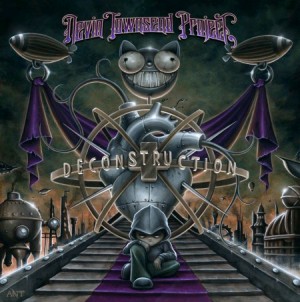
638. Devin Townsend Project / Deconstruction. 2011. 1.5/5
It was only at a friend's insistence that I
“must listen to his new albums” that I decided to revisit Devin Townsend
and his work. It has been some time since I had listened to Strapping
Young Lad's Alien album, which had both
intrigued and bored me at the same time. In short, his style of manic
mayhem does not sit in my sphere of music listening enjoyment. However,
having had the albums forced into my hands and told to report back with
“how much you loved them”, I decided to delve into its mystique.
As with most of his stuff, this is really out there. It is the kind of music that I can imagine some parents listening to for about thirty seconds and then calling up for the priest to perform an exorcism. It truly is a wall of sound, punctuated by periods of morose acoustic musings. Some of these songs (“Juular” in particular, and half of “The Mighty Masturbator”) almost sound like he’s trying to write a carnival song - albeit an extreme type of carnival song. There’s a bit of everything here, and while that will no doubt please his followers, it really just confuses me.
I appreciate Devin’s undoubted talents, all the way back to his version of Judas Priest’s “Sinner” on A Tribute to Judas Priest: Legends of Metal tribute album. But his own music and style just doesn’t sit with me at all. Deconstruction to me is a little like sitting in the dentist’s chair – the soft mood music is the edginess before it all starts, and the frantic wave of noise is the dentist’s drill as it hacks into your molars. I can absolutely see why fans of Devin Townsend would love this, because it is much like his other material. To be honest, I will at some stage have to check out the first two albums in this four piece set just to satisfy my curiosity, but I no longer need to dwell on this album, nor its successor Ghost.
As with most of his stuff, this is really out there. It is the kind of music that I can imagine some parents listening to for about thirty seconds and then calling up for the priest to perform an exorcism. It truly is a wall of sound, punctuated by periods of morose acoustic musings. Some of these songs (“Juular” in particular, and half of “The Mighty Masturbator”) almost sound like he’s trying to write a carnival song - albeit an extreme type of carnival song. There’s a bit of everything here, and while that will no doubt please his followers, it really just confuses me.
I appreciate Devin’s undoubted talents, all the way back to his version of Judas Priest’s “Sinner” on A Tribute to Judas Priest: Legends of Metal tribute album. But his own music and style just doesn’t sit with me at all. Deconstruction to me is a little like sitting in the dentist’s chair – the soft mood music is the edginess before it all starts, and the frantic wave of noise is the dentist’s drill as it hacks into your molars. I can absolutely see why fans of Devin Townsend would love this, because it is much like his other material. To be honest, I will at some stage have to check out the first two albums in this four piece set just to satisfy my curiosity, but I no longer need to dwell on this album, nor its successor Ghost.
Sunday, August 05, 2012
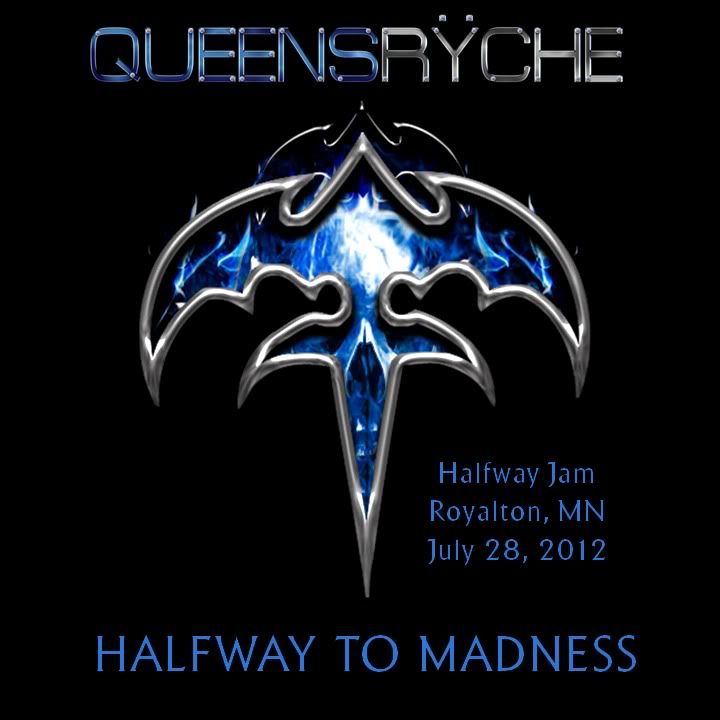
637. Queensrÿche / Halfway Jam 28-7-2012 [Bootleg]. 2012. 4/5
After all of the bickering, after all of the bad blood, after all of the court injunctions over who owned the rights to names and music and so forth... finally, it came back to the music. This bootleg album records the first official performance of Queensrÿche with new singer Todd La Torre, and for that alone it is an historical and significant recording.
The setlist is pretty much confined to all of their album up to 1991's Empire, songs that the band portion of Queensrÿche had claimed that Geoff Tate had no interest in ever revisiting. Whether that is accurate or not, the performance of these classic tracks gives La Torre a perfect opportunity to show off his wares to his new band's fan base. What it proves is that he has a pretty fair set of pipes, and his vocals are not unlike his predecessor, which while it may be limiting in some ways probably doesn't hurt him in this instance.
This is a particularly good audience bootleg of a B+ standard. While the vocals may be a little down in the mix, it still is good enough to appreciate both La Torre's vocals along with the performance of the band itself, and both are excellent. La Torre in particular makes very few key errors, and as a live performance it is excellent.
In the long run, it is great to hear Queensryche as a band can still play. Their most important duty from ll of the turbulence of the last few months will be to prove that they can indeed live up to their end of the bargain, and go back to writing material like what they have played on this bootleg. It has been the fans' biggest bugbear in the last 15 years. Now that the band itself believes they have identified what the problem was, they have to prove they are as good as their word.
The playlist here is as follows:
01 Intro (1:23)
02 Queen Of The Reich (4:18)
03 Speak (4:23)
04 Neue Regel (4:48)
05 Walk In The Shadows (3:39)
06 En Force (5:19)
07 I Don't Believe In Love (4:42)
08 Child Of Fire (5:56)
09 The Whisper (3:54)
10 Warning (4:52)
11 Spreading The Disease (4:28)
12 The Needle Lies (3:29)
13 Prophecy (4:06)
14 Take Hold Of The Flame (4:56)
15 My Empty Room (1:48)
16 Eyes Of A Stranger (6:44)
17 Empire (5:34)
18 Encore Break (2:58)
19 Wrathchild [Iron Maiden cover] (3:09)
20 Jet City Woman (5:51)
21 Roads To Madness (10:35)
Download link can be found here : http://turbobit.net/j72id6nsxsb4.html
The setlist is pretty much confined to all of their album up to 1991's Empire, songs that the band portion of Queensrÿche had claimed that Geoff Tate had no interest in ever revisiting. Whether that is accurate or not, the performance of these classic tracks gives La Torre a perfect opportunity to show off his wares to his new band's fan base. What it proves is that he has a pretty fair set of pipes, and his vocals are not unlike his predecessor, which while it may be limiting in some ways probably doesn't hurt him in this instance.
This is a particularly good audience bootleg of a B+ standard. While the vocals may be a little down in the mix, it still is good enough to appreciate both La Torre's vocals along with the performance of the band itself, and both are excellent. La Torre in particular makes very few key errors, and as a live performance it is excellent.
In the long run, it is great to hear Queensryche as a band can still play. Their most important duty from ll of the turbulence of the last few months will be to prove that they can indeed live up to their end of the bargain, and go back to writing material like what they have played on this bootleg. It has been the fans' biggest bugbear in the last 15 years. Now that the band itself believes they have identified what the problem was, they have to prove they are as good as their word.
The playlist here is as follows:
01 Intro (1:23)
02 Queen Of The Reich (4:18)
03 Speak (4:23)
04 Neue Regel (4:48)
05 Walk In The Shadows (3:39)
06 En Force (5:19)
07 I Don't Believe In Love (4:42)
08 Child Of Fire (5:56)
09 The Whisper (3:54)
10 Warning (4:52)
11 Spreading The Disease (4:28)
12 The Needle Lies (3:29)
13 Prophecy (4:06)
14 Take Hold Of The Flame (4:56)
15 My Empty Room (1:48)
16 Eyes Of A Stranger (6:44)
17 Empire (5:34)
18 Encore Break (2:58)
19 Wrathchild [Iron Maiden cover] (3:09)
20 Jet City Woman (5:51)
21 Roads To Madness (10:35)
Download link can be found here : http://turbobit.net/j72id6nsxsb4.html
636. Sixx:A.M. / This Is Gonna Hurt. 2011. 2/5.
Another Nikki Sixx side project that shows
potential without really ever getting into gear. I was intrigued with
his previous effort, Brides of Destruction, and got well and truly
burned by it. I wasn't sure what to expect on this occasion.
I honestly cannot put my finger on what it is that stops me from completely liking this release. Is it the fact that it is almost in the vein of commercial hard rock such as the abhorred Nickelback? Is it that James Michael's vocals are just a little too much like they are honey coated, and perhaps closing in to be similar to the vocals in the abhorred Nickelback and also to Myles Kennedy? Is it just that the style of music is not to my preferred heavy metal taste? Is it that this is yet another release that has prgrammed drum tracks rather than the real thing being played? You can take all of those answers and you still wouldn't be quite correct, but you'd be closer to the outcome.
The opener "This Is Gonna Hurt" is catchy, and it is the song that encouraged me to give the album a chance. The follow up songs "Lies of the Beautiful People" and "Are You With Me" also have their moments. "Live Forever" is where things start to head in the wrong direction. It has a very commercialised rock feel to the song both vocally and musically, and it does not sit right with me. Worse is to follow on "Sure Feels Right", the rock ballad that is directed at people who have musical taste a full 180 degrees apart from me. Cliched rubbish. "Deadlihood" is in much the same fashion as "Live Forever" as a very average type of hard rock song. "Smile" is the next ballad on the album (not even a power ballad or a rock ballad. It's just a ballad). Woeful.
Well, I guess you are starting to get the idea. It's not as if I thought i was going to get a superstar album, something that was going to blow me away with raw power and aggression. What we have is actually a fairly slickly written, recorded and produced hard rock album that is competently played and sung. And no doubt there is an audience out there that will lap it up. But the combination of standardised rock and ballad compositions really does little for me in the long run. It is missing a couple of vital ingredients that could make it someting worth talking about. In the end, apart from a couple of entries, it is rather run of the mill.
I honestly cannot put my finger on what it is that stops me from completely liking this release. Is it the fact that it is almost in the vein of commercial hard rock such as the abhorred Nickelback? Is it that James Michael's vocals are just a little too much like they are honey coated, and perhaps closing in to be similar to the vocals in the abhorred Nickelback and also to Myles Kennedy? Is it just that the style of music is not to my preferred heavy metal taste? Is it that this is yet another release that has prgrammed drum tracks rather than the real thing being played? You can take all of those answers and you still wouldn't be quite correct, but you'd be closer to the outcome.
The opener "This Is Gonna Hurt" is catchy, and it is the song that encouraged me to give the album a chance. The follow up songs "Lies of the Beautiful People" and "Are You With Me" also have their moments. "Live Forever" is where things start to head in the wrong direction. It has a very commercialised rock feel to the song both vocally and musically, and it does not sit right with me. Worse is to follow on "Sure Feels Right", the rock ballad that is directed at people who have musical taste a full 180 degrees apart from me. Cliched rubbish. "Deadlihood" is in much the same fashion as "Live Forever" as a very average type of hard rock song. "Smile" is the next ballad on the album (not even a power ballad or a rock ballad. It's just a ballad). Woeful.
Well, I guess you are starting to get the idea. It's not as if I thought i was going to get a superstar album, something that was going to blow me away with raw power and aggression. What we have is actually a fairly slickly written, recorded and produced hard rock album that is competently played and sung. And no doubt there is an audience out there that will lap it up. But the combination of standardised rock and ballad compositions really does little for me in the long run. It is missing a couple of vital ingredients that could make it someting worth talking about. In the end, apart from a couple of entries, it is rather run of the mill.
635. Fear Factory / The Industrialist. 2012. 3/5
The return of Fear Factory with their eighth
release was always going to be an interesting time. With Burton and Dino
still reunited, but without any other semblance of band members, how
was the writing and recording process going to go, and could it continue
the revival of the Fear Factory brand?
I couldn't help but like this from the very start. Dino and Burton haven't strayed far from the tried and true Fear factory handbook, with heavy screaming vocals surrounded by the standard guitar riffs and double kick, double time drums. "The Industrial", "Recharger" and "New Messiah" are all solid tracks.
After two or three songs though, you just feel that the drums are almost mechanical, with a similarity of all of the rolls and fills througout most of the songs. It came as no surprise then to finally discover that the band (Dino and Burton) had actually programmed the drums on the album. Sure it might sound good for the most part, but it is a little disappointing. Perhaps they felt they had to bow to using a machine to get the most out of what they wanted for the album, but does that mean you resort to the same machine when you tour? Do they become basically a karaoke band, with just vocals and guitar standing in front of machinery on stage providing the rhythm section? Some love of the album is therefore lost because not only does it sound mechanised (no pun intended on the name of previous album), it actually is. Maybe they felt it was to much effort to find a drummer to produce what they wanted, but the result is that it now just feels too produced.
Even given this, I think it is a step up from Mechanize again. It most certainly has nothing new involved. Burton and Dino have gone back to grabbing the essence of what made Fear Factory the band they are, and drip fed it into the writing process to produce another solid effort.
"God Eater" is a different tempo from the opening tracks that grows on you after a few listens. "Depraved Mind Murder" and "Virus of Faith" restores the pace and vibrancy of the album, kicking along at a rate of knots. It is only when Burton's clear vocals come in that the songs seem to lose some of their gloss, it just feels as though it softens the output of these songs when that occurs.
"Difference Engine" starts off as true Fear Factory metal gold, hard guitars and vocals growling with intent. Great stuff. "Dissemble" is just as good, punching out the heavy guitar and vocals almost to the completion of the song.
But what is with the eleven minutes of rubbish that closes the album? OK, it's a concept album, and the last two songs, "Religion Is Flawed Because Man Is Flawed" and "Human Augmentation" is telling the closure of the tale. But nothing actually HAPPENS! What on earth is the point of doing that if the songs aren't't actually songs, it is eleven minutes of metallic industrial silence? They have effectively written a song that has been placed on an album that no one will EVER listen to again after their first playing. Good enough idea, but just far too long and unnecessary in the full scheme of an album to deal with again.
So there it is. Nothing new, different, ground breaking or sensational from the band. Fans will find enough here to keep them satisfied, while there is also enough here for the novice Fear factory listener to think it might be worthwhile checking out their back catalogue.
I couldn't help but like this from the very start. Dino and Burton haven't strayed far from the tried and true Fear factory handbook, with heavy screaming vocals surrounded by the standard guitar riffs and double kick, double time drums. "The Industrial", "Recharger" and "New Messiah" are all solid tracks.
After two or three songs though, you just feel that the drums are almost mechanical, with a similarity of all of the rolls and fills througout most of the songs. It came as no surprise then to finally discover that the band (Dino and Burton) had actually programmed the drums on the album. Sure it might sound good for the most part, but it is a little disappointing. Perhaps they felt they had to bow to using a machine to get the most out of what they wanted for the album, but does that mean you resort to the same machine when you tour? Do they become basically a karaoke band, with just vocals and guitar standing in front of machinery on stage providing the rhythm section? Some love of the album is therefore lost because not only does it sound mechanised (no pun intended on the name of previous album), it actually is. Maybe they felt it was to much effort to find a drummer to produce what they wanted, but the result is that it now just feels too produced.
Even given this, I think it is a step up from Mechanize again. It most certainly has nothing new involved. Burton and Dino have gone back to grabbing the essence of what made Fear Factory the band they are, and drip fed it into the writing process to produce another solid effort.
"God Eater" is a different tempo from the opening tracks that grows on you after a few listens. "Depraved Mind Murder" and "Virus of Faith" restores the pace and vibrancy of the album, kicking along at a rate of knots. It is only when Burton's clear vocals come in that the songs seem to lose some of their gloss, it just feels as though it softens the output of these songs when that occurs.
"Difference Engine" starts off as true Fear Factory metal gold, hard guitars and vocals growling with intent. Great stuff. "Dissemble" is just as good, punching out the heavy guitar and vocals almost to the completion of the song.
But what is with the eleven minutes of rubbish that closes the album? OK, it's a concept album, and the last two songs, "Religion Is Flawed Because Man Is Flawed" and "Human Augmentation" is telling the closure of the tale. But nothing actually HAPPENS! What on earth is the point of doing that if the songs aren't't actually songs, it is eleven minutes of metallic industrial silence? They have effectively written a song that has been placed on an album that no one will EVER listen to again after their first playing. Good enough idea, but just far too long and unnecessary in the full scheme of an album to deal with again.
So there it is. Nothing new, different, ground breaking or sensational from the band. Fans will find enough here to keep them satisfied, while there is also enough here for the novice Fear factory listener to think it might be worthwhile checking out their back catalogue.
Monday, July 30, 2012
634. Tim "Ripper" Owens / Play My Game. 2009. 2.5/5
After a career to this point that consisted
of singing in about half a dozen bands, including giants Judas Priest
and Iced Earth and Yngwie Malmsteen, this is Ripper's first solo
release. As he was also the major contributer to writing all of the
songs, it is also an interesting insight into how his vision of his
music is sighted.
For me, from the very beginning, these songs are just far too slow in tempo, and they appear to be that way in order to showcase the strength of Ripper's voice than to actually write a good song. "Starting Over" should be a belter as it has the right bones, but the fire just doesn't take as the song drifts along without catching. In "Believe" Ripper seems to be trying too hard to be passionate where there is no passion in the song. It just ends up stretching a boring song to lengths unnecessary, without any hooks. "The Cover Up" is poorly put together. Once again the song melody is just all wrong, especially when Ripper now decides it is time to hit his higher range when really the song dictates that he should be down lower with the heavier type vocal range. And what is with the lyrics? Wow. Jeff Loomis does save the song a little, but there isn't much help there. "Is It Me" and "No Good Goodbyes" sound like they want to be a cross between Alice in Chains and Judas Priest without being able to pull off the sense of power and angst that such a combination would produce. They both have flaws but are listenable.
"The World is Blind" is another in a bland, boring song arrangement. Ripper tries to do the mournful, ballad type of vocals over music that does nothing, and gets closer to sending you to sleep with its repetition than feeling any emotion. Very average, especially considering artists as talented as Doug Aldrich, Billy Sheehan and Simon Wright play on the song.
"To Live Again" gets closer to what you would expect, a punchier song with Michael Wilton and Dave Ellefson contributing heavily in the mix. Junior's bassline is the best part of the song. But there is still a mystifying lull in the middle of the song that just sucks the guts out of it, with Ripper slowing up the pace again by trying to over-emote in his vocals, and in the long run ties it to the rest of the tunes on this album. The same goes with "The Light", the song just doesn't get out of first gear and give itself a chance. We get the full complement of Ripper's range here, somewhat layered over each other, but it just lacks strength.
"Play My Game" is probably one of the better songs on the album, but it too suffers from having any progress the song had made stopped dead in its tracks by the middle of the song, which rips the heart out some great guitar work which tries to get the song going before Ripper starts chanting in slow motion.
"Death Race" is how this album SHOULD have sounded. A great guitar riff starts off the song in the right fashion, and Ripper gets going with his best work, not only singing some worthwhile lyrics, but testing his range without feeling as though he is trying too hard. This is all complemented by great guitar solos in the middle of the song, and Ripper wins on this occasion. This is by far the best song on the album, and if only this had been the basis for how the whole album was written, we would all have been far more impressed and happy.
Unfortunately, the lesson has not been completely learned, as with "The Shadows Are Alive" the band try to put together a memorable closer which doesn't come off as they would have liked, despite some nice guitar work towards the end of the song. Why they had to make the song so slow in taking off is beyond me, because the end does start to come together. Make the whole song with the intensity of the second half of the song and it would have been so much better.
Play My Game really is a disappointment. It could have been a real talking point, an effort that showcased exactly what Ripper can do in a fast heavy environment. Instead, for the most part it plods along without a great deal of life. Is he destined to go through his career as a 'singer for hire' lead vocalist without really establishing himself as an artist of repute? It's possible, and there's no great shame in that, but you would just like to see someone who has a voice like Ripper really put out some killer albums and get the respect and plaudits he deserves.
For me, from the very beginning, these songs are just far too slow in tempo, and they appear to be that way in order to showcase the strength of Ripper's voice than to actually write a good song. "Starting Over" should be a belter as it has the right bones, but the fire just doesn't take as the song drifts along without catching. In "Believe" Ripper seems to be trying too hard to be passionate where there is no passion in the song. It just ends up stretching a boring song to lengths unnecessary, without any hooks. "The Cover Up" is poorly put together. Once again the song melody is just all wrong, especially when Ripper now decides it is time to hit his higher range when really the song dictates that he should be down lower with the heavier type vocal range. And what is with the lyrics? Wow. Jeff Loomis does save the song a little, but there isn't much help there. "Is It Me" and "No Good Goodbyes" sound like they want to be a cross between Alice in Chains and Judas Priest without being able to pull off the sense of power and angst that such a combination would produce. They both have flaws but are listenable.
"The World is Blind" is another in a bland, boring song arrangement. Ripper tries to do the mournful, ballad type of vocals over music that does nothing, and gets closer to sending you to sleep with its repetition than feeling any emotion. Very average, especially considering artists as talented as Doug Aldrich, Billy Sheehan and Simon Wright play on the song.
"To Live Again" gets closer to what you would expect, a punchier song with Michael Wilton and Dave Ellefson contributing heavily in the mix. Junior's bassline is the best part of the song. But there is still a mystifying lull in the middle of the song that just sucks the guts out of it, with Ripper slowing up the pace again by trying to over-emote in his vocals, and in the long run ties it to the rest of the tunes on this album. The same goes with "The Light", the song just doesn't get out of first gear and give itself a chance. We get the full complement of Ripper's range here, somewhat layered over each other, but it just lacks strength.
"Play My Game" is probably one of the better songs on the album, but it too suffers from having any progress the song had made stopped dead in its tracks by the middle of the song, which rips the heart out some great guitar work which tries to get the song going before Ripper starts chanting in slow motion.
"Death Race" is how this album SHOULD have sounded. A great guitar riff starts off the song in the right fashion, and Ripper gets going with his best work, not only singing some worthwhile lyrics, but testing his range without feeling as though he is trying too hard. This is all complemented by great guitar solos in the middle of the song, and Ripper wins on this occasion. This is by far the best song on the album, and if only this had been the basis for how the whole album was written, we would all have been far more impressed and happy.
Unfortunately, the lesson has not been completely learned, as with "The Shadows Are Alive" the band try to put together a memorable closer which doesn't come off as they would have liked, despite some nice guitar work towards the end of the song. Why they had to make the song so slow in taking off is beyond me, because the end does start to come together. Make the whole song with the intensity of the second half of the song and it would have been so much better.
Play My Game really is a disappointment. It could have been a real talking point, an effort that showcased exactly what Ripper can do in a fast heavy environment. Instead, for the most part it plods along without a great deal of life. Is he destined to go through his career as a 'singer for hire' lead vocalist without really establishing himself as an artist of repute? It's possible, and there's no great shame in that, but you would just like to see someone who has a voice like Ripper really put out some killer albums and get the respect and plaudits he deserves.
633. Helloween / Master of the Rings. 1994. 4.5/5
After the critically panned reviews and sales failure (although they got my money) of the massive musical changes that came from the album “Chameleon”, it was obvious that Helloween had a lot of work to do to regain the faith of their fans and the heavy metal community as a whole. The complete change of direction of that album caused fans (particularly myself) a lot of heartache, and one could only wonder if they could ever return to the heady position they had once held through the second half of the 1980’s decade.
The fallout from all of this was reasonably swift. Drummer Ingo Schwichtenberg, who had not been a part of the writing process for that album, and had memorably reviewed one of their own songs from that album “Windmill” as “Shitmill”, was the first to fall. Increasingly over the years Ingo had faced problems with drugs and alcohol, but also having been diagnosed with schizophrenia he would often refuse or forget to take his medication, all of which led to an increasing deterioration with his mental state and drumming skills live on tour. Michael Weikath had to make the difficult phone call to inform Ingo that until he could get all of his troubles under control, that he could not continue to be a part of Helloween. His tragic passing 18 months following this is still one of the saddest stories in music.
The second to fall was lead vocalist Michael Kiske. The band was now playing to half-full venues, Kiske was concerned about his throat and his singing and stage presence was at odds with what his bandmates were looking for in order to promote the band in the best way. Many of the European dates for the tour to promote “Chameleon” were cancelled through either poor ticket sales or through Kiske’s illness, and it was obvious that there was still much dissention within the band. At the end of 1993, Kiske was fired from Helloween. In the years since, given his outspoken annoyance with heavy metal and his own following of a direction in much softer forms of music in his solo projects, Kiske was lumbered with much of the blame for the direction and performance of the “Pink Bubbles Go Ape” and “Chameleon” albums, a blame that perhaps has truthful elements but is in no way a fair comment.
With two keys members of the band to replace, the trio of Weikath, guitarist Roland Grapow and bass guitarist Marcus Grosskopf also negotiated out of their record contract with EMI and had moved to the smaller yet more comfortable settings of Castle Communications. The band then hired Andi Deris, lead vocalist for the band Pink Cream 69 and also an accomplished song writer. Andi had had passing contact with band over the years, and was a good fit to bring into the band. On drums they picked up Uli Kusch, whose previous gig had been with Gamma Ray. By the time Uli came on board, the song writing had almost been completed, and he was in time to commence the recording of the new album. Both Andi and Uli recorded the album under the notion of being temporary members of the band, a situation that was resolved a month after the album was released, at which point they were appointed as permanent members of Helloween, and thus came the album that signalled the band’s return to the world stage, “Master of the Rings”.
The instrumental intro of "Irritation" kicks off the album, in a callback to the glory days of the band on the Keeper albums, before the raucous beginning of "Sole Survivor" signs on with intent the revival of Helloween from the outset. The superb drum fill from Uli Kusch that opens the album, and his first recording on a Helloween album, is superb. It is a great piece, though it does become the most interesting and difficult piece of drumming he does on the album. No matter, better was to come on albums down the track. The heavy guitar riff from Weikath blasts the album immediately into the right direction. Andi Deris announces his arrival in emphatic fashion, his vocals punching through with passion, and the album is off to a great start. "Where the Rain Grows" is a great follow up, again played at a great pace, and the real "happy" guitars that made Helloween what they were in the late 1980's. You get that old uplifting feeling from these early tunes, a quality that had gone missing on the previous couple of releases. "Why?" comes out as a rather scathing lyrically based song, questioning why it is that if an omnipotent being exists, why does it not stop all of the harm that is occurring in the world. As Andi Deris' first stand alone composition for his new band, it makes quite a statement. The same is true of "Mr Ego (Take Me Down)", another lyrically hard hitting song that is backed up by great music, though on a less vibrant note. At over seven minutes it is progressive not only in style but in length, and perhaps it overstays its welcome a little. What really comes through on these songs is that not only has the band begun to rediscover some of their early mojo, they still have the ability to make a statement without ramming it down your throat. The fact that this song, when released as a single, was dedicated to Michael Kiske, gives you the impression that the scars over that bad blood had not yet healed over.
"Perfect Gentleman" is not only the most surprising song on “Master of the Rings”, it is also quite possibly the best. It mixes heavy guitar with light keyboards, genuine enthusiasm with pointed lyrics, and sung in the blinded belief of the honest opinion. The performance of Andi Deris, playing the part of the 'genuine man' is marvellous and makes the song a gem because of it. You can only imagine that this was a biography of someone the author of the song knew.
Even given the highest quality that the first half of this album provides, the terrific songs keep coming into the second half. "The Game is On", "Secret Alibi" and "Take Me Home" are all good songs that don't quite reach the heights of those earlier, but are more than just average songs.
As someone with an avowed distaste of power ballads on any metal album, it comes as much of a shock to me than anyone else that I love "In the Middle of a Heartbeat", as big a power ballad as you could ever hope to hear. And yet, it is performed so well, and sung with such passion that you cannot help but like it. On an album full of surprises, this was a pleasant one. I did spend a long time when I first got this album trying to find a way to not like this song, and failed. The album then concludes with "Still We Go", another almost biographical song that comments on the rise, and fall, and (hopeful) rise again of the band. Roland Grapow excels in these types of songs, and here he is at his best. Great stuff.
The fallout from all of this was reasonably swift. Drummer Ingo Schwichtenberg, who had not been a part of the writing process for that album, and had memorably reviewed one of their own songs from that album “Windmill” as “Shitmill”, was the first to fall. Increasingly over the years Ingo had faced problems with drugs and alcohol, but also having been diagnosed with schizophrenia he would often refuse or forget to take his medication, all of which led to an increasing deterioration with his mental state and drumming skills live on tour. Michael Weikath had to make the difficult phone call to inform Ingo that until he could get all of his troubles under control, that he could not continue to be a part of Helloween. His tragic passing 18 months following this is still one of the saddest stories in music.
The second to fall was lead vocalist Michael Kiske. The band was now playing to half-full venues, Kiske was concerned about his throat and his singing and stage presence was at odds with what his bandmates were looking for in order to promote the band in the best way. Many of the European dates for the tour to promote “Chameleon” were cancelled through either poor ticket sales or through Kiske’s illness, and it was obvious that there was still much dissention within the band. At the end of 1993, Kiske was fired from Helloween. In the years since, given his outspoken annoyance with heavy metal and his own following of a direction in much softer forms of music in his solo projects, Kiske was lumbered with much of the blame for the direction and performance of the “Pink Bubbles Go Ape” and “Chameleon” albums, a blame that perhaps has truthful elements but is in no way a fair comment.
With two keys members of the band to replace, the trio of Weikath, guitarist Roland Grapow and bass guitarist Marcus Grosskopf also negotiated out of their record contract with EMI and had moved to the smaller yet more comfortable settings of Castle Communications. The band then hired Andi Deris, lead vocalist for the band Pink Cream 69 and also an accomplished song writer. Andi had had passing contact with band over the years, and was a good fit to bring into the band. On drums they picked up Uli Kusch, whose previous gig had been with Gamma Ray. By the time Uli came on board, the song writing had almost been completed, and he was in time to commence the recording of the new album. Both Andi and Uli recorded the album under the notion of being temporary members of the band, a situation that was resolved a month after the album was released, at which point they were appointed as permanent members of Helloween, and thus came the album that signalled the band’s return to the world stage, “Master of the Rings”.
The instrumental intro of "Irritation" kicks off the album, in a callback to the glory days of the band on the Keeper albums, before the raucous beginning of "Sole Survivor" signs on with intent the revival of Helloween from the outset. The superb drum fill from Uli Kusch that opens the album, and his first recording on a Helloween album, is superb. It is a great piece, though it does become the most interesting and difficult piece of drumming he does on the album. No matter, better was to come on albums down the track. The heavy guitar riff from Weikath blasts the album immediately into the right direction. Andi Deris announces his arrival in emphatic fashion, his vocals punching through with passion, and the album is off to a great start. "Where the Rain Grows" is a great follow up, again played at a great pace, and the real "happy" guitars that made Helloween what they were in the late 1980's. You get that old uplifting feeling from these early tunes, a quality that had gone missing on the previous couple of releases. "Why?" comes out as a rather scathing lyrically based song, questioning why it is that if an omnipotent being exists, why does it not stop all of the harm that is occurring in the world. As Andi Deris' first stand alone composition for his new band, it makes quite a statement. The same is true of "Mr Ego (Take Me Down)", another lyrically hard hitting song that is backed up by great music, though on a less vibrant note. At over seven minutes it is progressive not only in style but in length, and perhaps it overstays its welcome a little. What really comes through on these songs is that not only has the band begun to rediscover some of their early mojo, they still have the ability to make a statement without ramming it down your throat. The fact that this song, when released as a single, was dedicated to Michael Kiske, gives you the impression that the scars over that bad blood had not yet healed over.
"Perfect Gentleman" is not only the most surprising song on “Master of the Rings”, it is also quite possibly the best. It mixes heavy guitar with light keyboards, genuine enthusiasm with pointed lyrics, and sung in the blinded belief of the honest opinion. The performance of Andi Deris, playing the part of the 'genuine man' is marvellous and makes the song a gem because of it. You can only imagine that this was a biography of someone the author of the song knew.
Even given the highest quality that the first half of this album provides, the terrific songs keep coming into the second half. "The Game is On", "Secret Alibi" and "Take Me Home" are all good songs that don't quite reach the heights of those earlier, but are more than just average songs.
As someone with an avowed distaste of power ballads on any metal album, it comes as much of a shock to me than anyone else that I love "In the Middle of a Heartbeat", as big a power ballad as you could ever hope to hear. And yet, it is performed so well, and sung with such passion that you cannot help but like it. On an album full of surprises, this was a pleasant one. I did spend a long time when I first got this album trying to find a way to not like this song, and failed. The album then concludes with "Still We Go", another almost biographical song that comments on the rise, and fall, and (hopeful) rise again of the band. Roland Grapow excels in these types of songs, and here he is at his best. Great stuff.
Given my love for the early albums of this bands – nay, not love, obsession – you would expect that I was waiting expectantly on my local record stores doorstep waiting for the door to open on the day that this was released. Well, you would be well mistaken. Because after the release of “Chameleon”, I gave up on Helloween ever recovering, and promptly dismissed them from my mind. Then the terrible years of 1994 and 1995 took two years from my life, and it wasn’t until late in 1996 that I actually returned to my favourite record store, Utopia Records, with a life in balance and money in my account ready to spend on some new albums. On this particular day, and with no knowledge of what had happened to Helloween over the preceding three years, I discovered that in my time away, they had released TWO new studio albums, and also a double live album. With my bad memories of what had been produced on their previous two albums now having dissipated far enough back into the mist of time, I bought all three immediately, and climbed back onto the train with my other purchases for the short trip back to home, anxious to listen to all of the albums I had found. So it wasn’t until 2.5 years AFTER this album was released that I actually heard it for the first time. And it blew me away. Not because it was the best album of all time, but because it was so different from “Chameleon” and the rubbish the band had put forth for that album. With two new members of the band, you could tell immediately that thy had been revitalised, and it was a really joyous moment for me as a fan of the band. Yes, Andi was different from Michael as a vocalist, but it still sounded great. The song had a great basis lyrically, actually trying to say things rather than just waffle about nonsensical matters. And the music was terrific. The great dual guitars from Weikath and Grapow, and that marvellous bass from Marcus. And yes, Uli instead of Ingo, but still terrific. I still remember the first time I listened to this in our little one bedroom house in Erskineville in the inner suburbs of Sydney, and how I felt that day. And of course, the endearing thought that I had wasted 2.5 years NOT having this album, and I could have been listening to it all of that time, all because their last album was so shit. Never mind, I have well and truly made up for it since.
My edition of this album came with a bonus CD, that not only contains Roland's own "Grapowski's Malmsuite 1001" as a tribute to his hero Yngwie Malmsteen, but other excellent B-side material "Can't Fight Your Desire", "Star Invasion" and "Silicon Dreams". It also has cover songs such as "I Stole Your Love" by Kiss, "Cold Sweat" by Thin Lizzy and "Closer to Home" by Grand Funk Railroad. All of these songs appear on the singles released from the album and complement the actual album excellently.
The style of “Master of the Rings” is caught somewhere between an out-and-out power metal release and a progressive rock element, with an assortment of songs that on the whole combine to make a terrific album. Needless to say it is a vast improvement on its predecessor, and though many of the songs have great riffs and terrific drumwork as well as Deris’ awesome vocals, it is different again from anything the band had produced before.
I have been listening to this again over the last two weeks on the loop for this podcast, and I have enjoyed every damn second of it. It was the comeback album the band needed, and it does so perfectly. Nothing can compete with those first albums that the band produced, but this Mark III lineup kicked itself off with an album the equal of another Mark II line up, Deep Purple, had done 20 years earlier. And the good news was, there was plenty more to come.

My edition of this album came with a bonus CD, that not only contains Roland's own "Grapowski's Malmsuite 1001" as a tribute to his hero Yngwie Malmsteen, but other excellent B-side material "Can't Fight Your Desire", "Star Invasion" and "Silicon Dreams". It also has cover songs such as "I Stole Your Love" by Kiss, "Cold Sweat" by Thin Lizzy and "Closer to Home" by Grand Funk Railroad. All of these songs appear on the singles released from the album and complement the actual album excellently.
The style of “Master of the Rings” is caught somewhere between an out-and-out power metal release and a progressive rock element, with an assortment of songs that on the whole combine to make a terrific album. Needless to say it is a vast improvement on its predecessor, and though many of the songs have great riffs and terrific drumwork as well as Deris’ awesome vocals, it is different again from anything the band had produced before.
I have been listening to this again over the last two weeks on the loop for this podcast, and I have enjoyed every damn second of it. It was the comeback album the band needed, and it does so perfectly. Nothing can compete with those first albums that the band produced, but this Mark III lineup kicked itself off with an album the equal of another Mark II line up, Deep Purple, had done 20 years earlier. And the good news was, there was plenty more to come.
Thursday, July 26, 2012
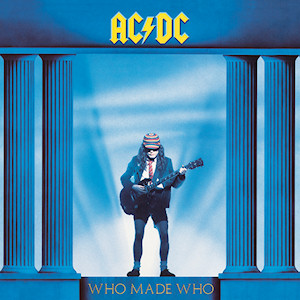
632. AC/DC / Who Made Who. 1986. 4.5/5
In the main, this album serves as the
soundtrack to the Stephen King penned movie Maximum Overdrive, a
moderately enjoyable film with big trucks that gain their own conscious
state. As a collection of songs, both newly recorded and a smattering of
good 'uns from their back catalogue, this becomes greater than the sum
of its parts.
The headline song is the title track, "Who Made Who" which became a huge anthem through the late 80's. It's popularity and importance to the AC/DC catalogue is obvious, and more than makes this compilation on its own.
There are two other new songs on this release, and both are instrumentals, "D.T." and "Chase the Ace". Both are great additions as well (with "D.T." becoming a favourite to play for the band I was in during my early twenties).
The remainder of the album is packed with great songs from their other albums. I like it because this is not a greatest hits collection, it is a soundtrack collection, so rather than getting the most popular songs of the band, you get a mix of songs that provided a background during the movie.
The obvious are included - "You Shook Me All Night Long" and "Hells Bells" from the Back in Black album boom along nicely, and fall into this category. There are the great "Sink the Pink" and "Shake Your Foundations" from the underrated Fly on the Wall album, the understated "Ride On" (the only contribution from Bon Scott here) from the Dirty Deeds Done Dirt Cheap album, and the awesome "For Those About To Rock (We Salute You)" from the album of the same name that closes out the album.
This is not a greatest hits album, but it is a great collection of some terrific AC/DC songs, not all of which are often considered when it comes to putting together a 'best-of' list, that is more than worthwhile owning.
The headline song is the title track, "Who Made Who" which became a huge anthem through the late 80's. It's popularity and importance to the AC/DC catalogue is obvious, and more than makes this compilation on its own.
There are two other new songs on this release, and both are instrumentals, "D.T." and "Chase the Ace". Both are great additions as well (with "D.T." becoming a favourite to play for the band I was in during my early twenties).
The remainder of the album is packed with great songs from their other albums. I like it because this is not a greatest hits collection, it is a soundtrack collection, so rather than getting the most popular songs of the band, you get a mix of songs that provided a background during the movie.
The obvious are included - "You Shook Me All Night Long" and "Hells Bells" from the Back in Black album boom along nicely, and fall into this category. There are the great "Sink the Pink" and "Shake Your Foundations" from the underrated Fly on the Wall album, the understated "Ride On" (the only contribution from Bon Scott here) from the Dirty Deeds Done Dirt Cheap album, and the awesome "For Those About To Rock (We Salute You)" from the album of the same name that closes out the album.
This is not a greatest hits album, but it is a great collection of some terrific AC/DC songs, not all of which are often considered when it comes to putting together a 'best-of' list, that is more than worthwhile owning.
Tuesday, July 24, 2012
631. Fates Warning / A Pleasant Shade of Gray. 1997. 2.5/5
Is it a brave move or a strange move or just a
progressive move to decide that you will not only record a concept
album, but for all intents and purposes make it just one song, in a
number of acts? This is pretty much what Fates Warning have done here on
A Pleasant Shade of Gray. The album is
basically one 55 minute song, in twelve parts without a title. It is so
designed that it is really not an option to throw on the CD and just
choose one 'song' to play, because it would seem out of place.
The concept album is not a rare beast in the progressive rock and metal genre. In fact, it is almost a prerequisite. the fact that it had taken Fates Warning so long to release one could be seen to be out of place.
So how do you approach this album? In my mind, after several listens, you have to be in the right mood, and you have to let it play from start to finish without interruption. It is, after all, just one song. Overall this is quite a mellowing album, there really isn't a lot of metal about it. It has all the complicated guitar and drum pieces that you expect from this band, and certainly the complex time changes that dominate an album of this genre. But it never reaches any thumping proportions. It almost slides along like a waterfall cascading into a stream. And this is where I feel you have to be in the right place to actually put this on. If you want to slump quietly into your favourite armchair, perhaps with a book, away from the world, this album can be very rewarding. It's a reflective kind of album. If you are looking to put something on to get the blood pumping, then this certainly isn't it.
Like many people, it took me a little while to 'get' this album, to find its place and to appreciate it for what it is. And once I had reached that place, I did find it rewarding in its own way. It's not going to please everyone, and it isn't for those that are looking for a metal album. Would I possibly call it 'easy listening' progressive rock? Perhaps. But the musicianship is faultless, and the vocals are spot on. Even so, it won't be for everyone, and the lengthy passages of light instrumentals may well turn off many followers.
The concept album is not a rare beast in the progressive rock and metal genre. In fact, it is almost a prerequisite. the fact that it had taken Fates Warning so long to release one could be seen to be out of place.
So how do you approach this album? In my mind, after several listens, you have to be in the right mood, and you have to let it play from start to finish without interruption. It is, after all, just one song. Overall this is quite a mellowing album, there really isn't a lot of metal about it. It has all the complicated guitar and drum pieces that you expect from this band, and certainly the complex time changes that dominate an album of this genre. But it never reaches any thumping proportions. It almost slides along like a waterfall cascading into a stream. And this is where I feel you have to be in the right place to actually put this on. If you want to slump quietly into your favourite armchair, perhaps with a book, away from the world, this album can be very rewarding. It's a reflective kind of album. If you are looking to put something on to get the blood pumping, then this certainly isn't it.
Like many people, it took me a little while to 'get' this album, to find its place and to appreciate it for what it is. And once I had reached that place, I did find it rewarding in its own way. It's not going to please everyone, and it isn't for those that are looking for a metal album. Would I possibly call it 'easy listening' progressive rock? Perhaps. But the musicianship is faultless, and the vocals are spot on. Even so, it won't be for everyone, and the lengthy passages of light instrumentals may well turn off many followers.
Subscribe to:
Posts (Atom)