Podcast - Latest Episode

Wednesday, July 04, 2018

1064. Wolfsbane / Live Fast, Die Fast. 1989. 3/5

Back in my youth, I became aware of a band called Wolfsbane through metal magazines such as Hot Metal and Kerrang! and Metal Hammer, comparing their early music to other bands I was favourable to at the time. Certainly the lead singer looked very similar to Bruce Dickinson did at the same time with the same long straight hair. Still, with so many other bands taking my fancy I didn’t feel an urge to check them out. Then in 1994 Bruce had left Maiden, and they actually hired that same lead singer, Blaze Bayley to take his place! Wow! But despite how much I enjoyed most of the material that came from those two albums I still didn’t feel any need to check out Wolfsbane. On his departure from Maiden I was pleasantly surprised by Blaze’s first two solo albums with his new band, as they had a great edge to them. Still, no Wolfsbane. Then he released his double live album As Live As It Gets, and one of the songs he does here is “Steel” which I enjoyed thoroughly. Blaze announces that it is an old Wolfsbane song (albeit from their EP All Hell's Breaking Loose Down at Little Kathy Wilson's Place!). Okay, maybe I need to check them out after all.

Wolfsbane’s first album Live Fast, Die Fast is a mixture of fast and slow, of heavy and mild, of good and bad. I don’t think I ever got around how much in places that this band sounds like Van Halen, and certainly Blaze’s vocals at this time have much in common with David Lee Roth’s. Whether or not they were looking for such similarities I don’t know, but they are obvious to most. It was also an interesting time to release an album like this, which feels like it is a hair metal album about five years too late in the whole scheme of the music world. Metallica, Megadeth and Slayer were dominating with their sound, while the Seattle grunge sound was right around the corner. More than anything else, this always sounds like a fun album, that the band itself is enjoying itself, which is half the battle won.
For me the biggest problem with this album is the differing styles and mood of the songs contained on it. This is what stops me enjoying it more. Both “Man Hunt” and “Killing Machine” are the best of the upbeat songs and the best examples of the heavier side of the album. The single “I Like it Hot” that produced a video that showed the band prancing and partying around in hijinks is one of the fun songs on the album, the ones that you’ll either enjoy because they don’t take themselves seriously or dislike because they don’t take themselves seriously. Much of the rest of the album is stuff that was probably enjoyable back in the day for about six minutes, before being cast aside or ignored in favour of anything else that was being released at the time. It really is full of the sexual innuendos that much of the hair metal movement candied up their songs with during the mid-1980’s, and while that works on some levels with those major bands it leaves me a little flat on this album. No doubt this is a result of not having listened to the album when it was released, for the reasons listed above, but moving back in time it is not these songs that hold up the best. It is the more powerful band tracks such as “Man Hunt” and “Killing Machine” that best express the talents of the band.

The musical reasons why Wolfsbane never really took off in a big way are hear for you to hear on their first album. Despite the promise of a great guitar sound and a solid rhythm section and a front man with some good pipes, the writing itself leaves a bit to be desired. It’s a better than average entrance to the album release stage but without any real hooks to drag you in time and again.

Rating: “Burning through the peace and the quiet. I don't want soft music!” 3/5


Monday, July 02, 2018

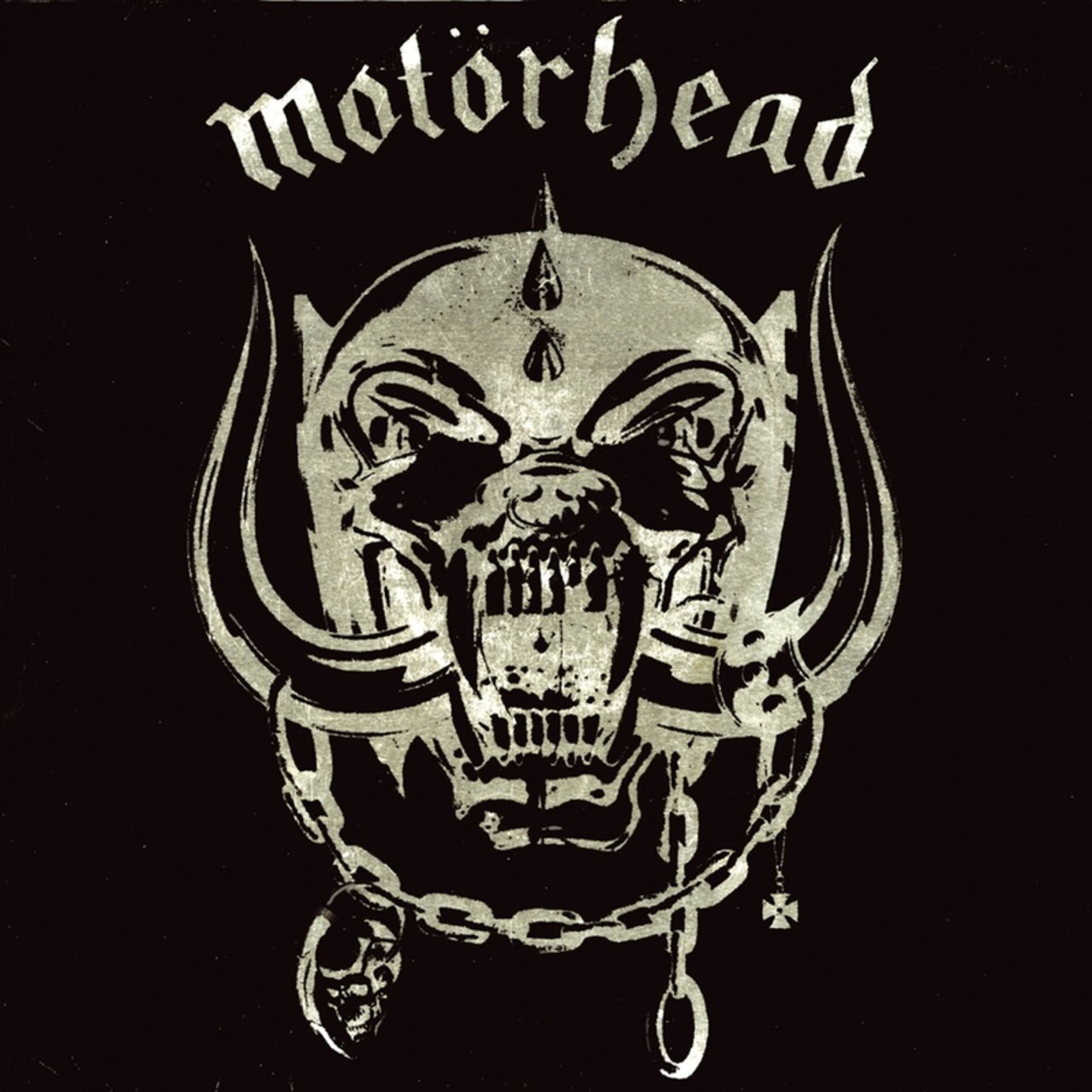
1063. Motörhead / Motörhead. 1977. 3.5/5

I wonder how many people there are out there whose first ever experience with the band Motörhead is their actual debut album, also entitled Motörhead? I know it wasn’t mine. That was the privilege of the Ace of Spades album like I’m sure it was for many. Indeed it wasn’t for many years that I finally got around to getting a copy of the album and actually listening to it and discovering just what kind of a start the band had made back in the day. And while many people seem to have differing opinion in regards to its quality, I’m not sure I agree.

There’s little left to the imagination by the lyrics of most of the songs. Lemmy’s concordance with drugs is right there for everyone to see in songs such as the title track “Motörhead” and “White Line Fever” and “Keep Us on the Road”. So too in the classic “Iron Horse/Born to Lose”. It is a cavalcade of lyrical exposition, and no doubt would have given a lot of parents at the time some concerns (I guess in the long run it probably would now too). The Larry Wallis penned “Vibrator” is also straight forward in what is being sung about. They mightn’t be writing poetry here but then the Beatles did the same thing, just about girls. Didn’t they?
Motörhead has a uniqueness about it, which is played out perfectly on this first album. The three piece, consisting of Lemmy on bass and vocals, Fast Eddie on guitar and Philthy Taylor on drums, are the epitome of a three piece band. They are loud, raucous and constantly in action. No time to simply strum while your partner solos away in a three piece band, each one of the members has to be contributing at all times to keep the songs moving, and they do that perfectly here. And the uniqueness of each individuals sound is so prevalent here that it sets up the following albums to exploit that. Clarke’s ringing guitar sound, Lemmy’s ‘nang-a-nang’ bass lines and Taylor’s perpetual drumming are classically highlighted here. Sure, the mix and sound mightn’t be A1 in quality, but isn’t the rawness of the material what helps make this album – and indeed the band – what it is? To be fair I think the opinions of those that pass this off because of production issues are overrated. This is part of what makes Motörhead the band they are, a grungy gravelly musical exposition. “Keep Us on the Road” is the perfect example of how I see the band in those days. Whenever I hear the song I can almost see them in that pub environment, crowd squeezed in and loving the band as it sounds.

Given that the album was recorded mostly over a 24 hour period, before a few days were added to help expand the material, this still sounds great today, despite what some experts may tell you. I love the fact that it sounds like a band firing on all cylinders in an effort to get as many songs recorded in as short a time as possible. Certainly the band must have sounded different in a live environment than they do on this album, but that’s what makes this so enjoyable, because it’s laid down in a couple of takes and that’s what you get. Better was to come there’s no doubt about that, but as an opening performance this still has plenty to enjoy.

Rating: “We began at the beginning, moving high and moving fast”. 3.5/5


Friday, June 29, 2018

1062. UFO / Strangers in the Night [Live]. 1979. 5/5

There’s always something magical about a live album. It’s where you get to hear exactly what a band is like in the environment that they are meant to be in. Let’s face it, you can make just about anyone sound good in a studio where you can overdub and cut and paste and play a section a thousand times over until you get it right. A live album is where there is nowhere to hide, and you have to be on to showcase how good you actually are. And on “Strangers in the Night” this is exactly what UFO do.
UFO had retooled and re-thought their music after the release of their first two albums, and with the addition of Michael Schenker on guitar had become a more hard rock based band than a synth based band. The addition along the way of Paul Raymond who could double on both rhythm guitar and keyboards gave the five piece all the weaponry they needed to become one of the best live bands in the world at the time.
One the back of their seventh album, and a run of five albums that are still considered the best the band released, UFO recorded several gigs on their US tour run to put together as a live album. What then followed was the perfect reflection of UFO’s career to this point in time. It has their most bombastic elements, it has their best songs. More than anything it showcases how terrific this band must have been in the live setting, and how each part of the band was so intrinsic in making the sound that was UFO. And unlike their individual studio albums along the way, here there is not a weak moment. It is pure unadulterated UFO.

I knew a few UFO songs from a Michael Schenker anthology double album I had bought a few months earlier before I found this double vinyl in my favourite second hand record store, and bought it on the spot. I didn’t know the band or its music very well but I knew Schenker and that he had been in this band, so I was keen to get home and give it a listen. It didn’t take long to realise that I had come across some real gold, and album that to this day I still get excited about whenever I put it on or hear it at a friend’s house.
From the outset there is so much to love here. The brilliant guitar riff to start off “Natural Thing”, the perfect segue and the harmony vocals of Mogg and Way in “Out in the Street”, and then into the classic UFO tracks “Only You Can Rock Me” and “Doctor Doctor”. The magnificence that is the live version of “Love to Love” with Mogg’s wonderful vocals and the brilliant guitar of Schenker stealing the show. Then there is the bombastic version of “Lights Out” that is as heavy a song that UFO perform which is followed by the extended version of “Rock Bottom” to allow Schenker to further showcase his brilliance on the guitar. Between this come all of the other hits that UFO had written up until this time, and nothing misses out. It would be difficult to come up with any weak points, or of any other songs that could replace those that are on this album already.
In a way this album ruined the studio albums of UFO for me once I got around to getting them, because I knew these songs perfectly by the time I heard them, but I knew the live version of the songs not the studio versions, and quite simply the live versions are far superior than their studio cousins. So when I started getting the early albums and listening to them I found that they didn’t quite have the same energy and momentum that the songs showed on this album. Over time of course that faded and I was able to enjoy them as much as any other of their work, but there is never a time that I put this on that I don’t love everything on this so much more.
The CD version has added back in two songs that start the concert, “Hot and Ready” and “Cherry”, and also reordered the playlist so that it is closer to what UFO played on this tour. I would normally have said “that’s great!”, but now for me it ruins the flow of the album just a little, because you miss that great start of the guttural guitar riff that leads into “Natural Thing” that for me was the perfect start on my vinyl copy. Now you don’t get to hear that until track five, and the album lacks a punch as a result.
I have often on this podcast made mention of the fact that I sometimes have trouble with live albums that chop and change the running order of the concerts they have been taken from, that as a preference I would like to have the songs in the order they were played at the gig, rather than what did happen quite a bit during the 1970’s, where the order on the album was changed to have the songs fit better on the vinyl. This for me is not one of those instances. Because I owned the vinyl version first, I am so used to that running order when I listen to it, that I have a lot of trouble with the order that is on the re-released CD version, which has the tracks back in almost concert running order. The opening four tracks on the vinyl – “Natural Thing”, “Out in the Street”, “Only You Can Rock Me” and “Doctor Doctor”, which is Side A of the first of the double vinyl – is the only way to listen to these songs.
The band is on fire, and each of them is just terrific on this album. Paul Raymond being able to switch between the organ and keyboards onto rhythm guitar to add a fullness to the live sound is fantastic and invaluable in the live environment. Pete Way on bass fills the bottom end out nicely, while Andy Parker’s drumming is fantastic. Phil Mogg’s vocals are superb, and he gives these versions of their songs a great kick. The star for me is still Michael Schenker, who despite his own feelings on the versions of the songs offered here again proves what a maestro he was with his instrument in his hands. His solos still steal the show on more occasions than not. His soloing on “Love to Love” is extraordinary, and the riffs throughout on “Lights Out”, “Doctor Doctor”, “Natural Thing” and “Only You Can Love Me” are superb. But “Love to Love” is something special. The combination between the synth keyboard and guitar, the beautiful bass of Pete Way and drumming of Andy Parker, and Phil Mogg’s vocals make this live version of this song superior in every way from the studio version.

I mentioned earlier that I had heard the Michael Schenker Group early albums while in high school, and then I picked up a Schenker best of double LP at Illawarra Books and Records in my first year of uni, and first came across a few tracks from UFO. Not long after this, I found this album in the same second hand store, and bought it immediately. And I have honestly not stopped playing it in the 36 years since that day. As soon as I heard the first side of the first album, I was hooked. Trapped. Ensconced. It was Schenker who grabbed me – but how can you ignore the rest of the band? Each of them was just as instrumental to their success as their lead guitarist. I had this taped on a C90 cassette and it remained in my car for years, an easy go-to when I got in to drive somewhere and needed some musical company.
Not everyone will agree with me, but with the departure of Schenker from the group during this tour, UFO lost some of its lustre. They released plenty more albums, many of which are very good, but none of which could touch the pure joy and amazement of this live album.
There have been some brilliant and unforgettable live albums released over the years. Think Iron Maiden’s “Live After Death”, think Slayer’s “Decade of Aggression: Live”, think Deep Purple’s “Made in Japan”. For me, this is the equal of those albums. It is truly one the great live albums released by hard rock and heavy metal bands, and for me it is the pinnacle of this band’s career, a defining moment that not only showed off their excellence but sadly proved to be the end of their golden years with the moving on of Schenker to other projects.

Wednesday, June 27, 2018

1061. UFO / Obsession. 1978. 2.5/5

UFO the band had been busy over the middle years of the 1970’s decade, putting out several albums and building a respectable following throughout the world. On previous albums they had managed to mix some brilliant songs that still resonate when played with some material that feels a bit lacklustre and of a lesser quality than the absolute top shelf stuff. Much the same can be said of Obsession which capped off the period with an ambivalence that could be said to be harsh on one hand but fair on the other.

I’ve always felt that there was only one heavy hitter song on this album, and it happens to be the lead track, “Only You Can Rock Me”. It remains the one song that stands out from the crowd on this release, and is still instantly recognisable whenever it is played today. The fact that it signals a lowering of the boom once it is over is what is troubling about this album.
As for the rest of the songs, I think they can be categorised pretty swiftly into two groups, the good and the average. It turns out that the majority of the good songs have Michael Schenker as a co-writer, whereas the majority of the average songs do not. Into the former group of good songs you can list tracks such as “Pack It Up (and Go)”, “Hot and Ready” and “Cherry”. Each of these has a better tempo, a slice of Schenker shredding on guitar and great Phil Mogg vocals. These songs follow my idea of the better UFO songs more closely than those in the average group, songs like the three end tracks on Side A of the album in “Arbory Hill”, “Ain’t No Baby” and “Lookin’ Out For No. 1”. “Arbory Hill” is a Schenker short guitar instrumental that serves no real purpose on the album and doesn’t lift anything. “Ain’t No Baby” and “Lookin’ Out For No. 1” fall too much on the side of soft rock ballad. I never cease to be disappointed when I listen to this album and hear these two songs again. “One More for the Rodeo” is probably one of the better tracks again, but I’m not sure if this is only because it is sandwiched between “You Don’t Fool Me” and “Born to Lose”, which even for AOR songs are stretching the friendship just a little too far.

This album was the final one that Michael Schenker played on for UFO for almost fifteen years and it was going out with a whimper rather than a bang. While the band is competent here, the music just feels as though it is going through a recycling process and that they were beginning to strain out the hard rock side of the songs and fall into the comfortable AOR radio sound instead. That being the case, I am happy to leave that right here.

Rating: “Who’s taking time out, who’ll take a shot now”. 2.5/5


Monday, June 25, 2018

1060. UFO / Lights Out. 1977. 3.5/5

Looking back on the UFO discography it is sometimes remarkable how the albums themselves aren’t similar, but the category or line-up of songs on them can be so similar. Most appear to be dominated by two or three songs while the rest can perhaps be seen to be making up the numbers. There would have been no way of knowing that would be the case in the writing process, but once again here it feels as though the quality and signature songs are the ones that brighten the album the best, and that they are the ones that Michael Schenker’s guitar dominates.

How this album could ever be regarded as ‘heavy metal’ is beyond me, because there is very little here that could be related to that genre. Indeed, the more you listen to it, the more you come to understand that it spends most of its life in a completely different setting. For this album the band brought in the addition of Paul Raymond who not only handled rhythm guitar but with the added bonus of mixing in some keyboards into the songs. UFO had used keys on their albums before but Raymond’s addition to the band made it a real focus. And it is the keyboards which almost typically tie this album and most of its tracks to this period, with that AOR sound coming to the fore. This is especially true of “Just Another Suicide” which always feels as though it was meant to be a heavier song, but because of the piano that dominates through the bridge and chorus it is transformed into a perfectly reasonable AOR song, but not a heavy track by any stretch of the imagination. “Try Me” is an even further regression as such, as every time I hear it I can’t help but think it is far too similar to an Eagles song with Joe Walsh on vocals, except this is even more of a ballad track. It seems such a waste, because UFO didn’t need these kind of standard ballad tracks to succeed, did they?
“Getting’ Ready” is more or less a straight up and down rock track, one of those songs that an album has to have to keep it ticking over in the middle. “Alone Again Or” is a cover of the song originally written by the band Love, and it too sounds from that era of the early 1970’s. To me in fact it sounds a hell of a lot like a Crosby, Stills, Nash & Young song. Like “Try Me”, I really don’t think this fits in at all. “Electric Phase” which follows has a better sound to it, though even here it feels as though the band should have been really stretching out and giving this song the opportunity to really get going, to let the handbrake off and let the harder edge and speed come into play.
When it comes down to it, there are only three songs on this album that are truly worth finding it for. “Too Hot to Handle” is a jaunty opening, a song with a good riff and singalong vocals that opens the album on the right foot and in the right mood. This is then framed by the closing song on Side A of the album, the title track “Lights Out”. This has been, and remains, my favourite UFO song. The opening bars to the guttural riff underneath the bridge and chorus, to Schenker’s brilliant solo and wonderful undertones from both Pete Way and Andy Parker, this is the top of the tree for me. Then the album closing track “Love to Love” does all the great things that an epic track should. It’s not a ballad, but it is the way all ballads should be, because it has heart and emotion and fantastic vocals from Phil Mogg. To top it all off, Schenker’s guitar solo to complete the song and album is superb and perfectly performed. And having criticised slightly the use of the keyboards in other songs, here on both “Lights Out” and “Love to Love” the keyboards work perfectly, and enhance rather than reign in the songs.

This was UFO’s highest charting album and is generally regarded as their best. To be honest I don’t think there is much that separates this from two or three other of their albums of this era. All of them have some great songs and some average songs. Here again there are, in my opinion, three great songs, two good songs and three that I don’t get a lot out of. It mightn’t be one that I’d put on a list of ‘must listen-to albums’, and it is still one that I like rather than love.

Rating: “From the back streets there’s a rumbling, smell of anarchy”. 3.5/5


Friday, June 22, 2018

1059. UFO / Phenomenon. 1974. 4/5

The early years of the band UFO appear from this distance in time as being on a completely different timeline from what the band eventually travelled through the decade of the 1970’s.
Lead singer Phil Mogg, guitarist Mick Bolton, bassist Pete Way and drummer Andy Parker formed the band in 1968 and having signed to Beacon Records they had released their debut album “UFO 1” in 1970, and was quickly followed by their second album, “UFO 2: Flying”. While neither album had reached the charts, and indeed at this time UFO attracted little interest in Britain and America, a single had attracted some sales in Germany, reaching #30 on their singles charts. The majority of their early work on both of these albums was strongly influenced by space rock - indeed, their second album featuring a 26-minute title track and a 19-minute-long track "Star Storm" and was subtitled One Hour Space Rock. Following that second album that was modestly popular at the time, the band soon realised the style was somewhat limited. Mick Bolton left the group in January 1972, and UFO set out to find a guitarist who could provide the band with a more standard rock sound.
After flirtations with future Motorhead guitarist Larry Wallis and future Whitesnake guitarist Bernie Marsden, who played as a temporary touring guitarist for the band when they toured Europe, the band recruited Michael Schenker from the Scorpions in June 1973. Scorpions had opened up for UFO on that European tour, and they were so impressed with the young guitar maestro, who was only 18 years of age but already a well-respected guitarist, that they asked him to join. Having consulted his brother Rudolph, who gave his blessing, the deal was done. The injection of Schenker both on guitar and as a songwriter, meant that UFO were ready to make the jump from 60 based space rock band to fully fledged hard rock icons, and the first step to that process was the writing and recording of their first album together, titled “Phenomenon”.

Breaking away from their space rock style, UFO produce an album here that mixes a style that is of the mainstream hard rock of the era along with the extended instrumental passages that were common on the first two albums. The opening salvo of “Too Young to Know” has a sound that incorporates a sound similar to contemporary bands such as Bad Company and Free, as well as the Rolling Stones. Phil Mogg’s smooth vocals are the immediate focal point of the song, while Michael Schenker’s easy listening guitar also makes its presence felt through the majority of the song. The rhythm of Andy Parker’s drums and Pete Way’s bass guitar keep the momentum throughout the song. “Crystal Light” generally sticks to the same style of song that the band had produced on their first two albums, without it stretching beyond almost four minutes that this song goes for. There is an almost-Eagles-like feel to this song, in the quiet tones of the song rather than any of the country rock themes that band had around this time.
The star attraction of the album, and the first sign of the band’s growing direction, comes next with “Doctor Doctor”. From the subdued guitar beginning, into the Schenker riff supported by Parker’s hard drums, and then into the main riff of the song, this is the song where your ears immediately prick up and think ‘wow... that’s different!’ And it is as brilliant today as it was 50 years ago. This is where the harder edge of the band began to appear, and the popularity and success of this song is what drove what came beyond this album. Great melody, heavier sound, and Schenker’s guitaring, including amazing solo. The genesis of what UFO became is the basis of this track.
“Space Child” follows a similar type of path to “Crystal Light”, a quiet introspective song dominated by Mogg’s soaring vocals in the first half of the song and then Schenker’s restrained guitar solo in the middle of the track. This is followed by the other dominant hard rock track of the album, “Rock Bottom”, where again it is Schenker and his guitar that steals the show. It takes centre stage from the very beginning of the song, driven by Andy Parker’s drums through the opening section of the song alongside Mogg’s vocals. Once we reach the middle of the song it is Schenker’s freeform guitar solo that takes command, enhanced by the quite brilliant bass line from Pete Way in conjunction. It is a superb few minutes of music, showcasing both Schenker’s talents and again exacerbating the direction the band was to go on the back of songs such as this. Schenker would always extend the solo section when the song was played live, which again is always a treat. Alongside “Doctor Doctor” this is one of the band’s greatest songs.
Side two sits back in the middle range of the rock/hard rock genre. It opens with “Oh My”, a solid rock track, and moves into “Time on My Hands”, a song I feel mirrors the Eagles feel of “Crystal Light”, inoffensive but not with the power of the major songs here. “Built for Comfort” is a cover of the Willie Dixon blues song, and seems like a slight mismatch to the other material here. “Lipstick Traces” is motivated by the previous track, and instrumental concentrating on the quiet technical side of Michael Schenker’s guitar skills. It a likeable song, though again feels slightly out of place. The album then concludes with “Queen of the Deep”, a creeper that builds from a slow start to a bigger finish, again in the main through Mogg and his terrific vocal line and the Schenker/Parker/Way solid rhythm, with Michael’s solo again concertina-ed with Pete Way’s bass line and Andy Parker’s collared drumming.

When I first started listening to the UFO studio albums, it was a tough experience. I had first discovered the band on a Michael Schenker Anthology two album collection I had bought from my go-to second hand record store, Illawarra Books and Records, in 1988, and then from the same store the amazing live album “Strangers in the Night”, which was the first episode of this season of the podcast, back in January. That album acted as a best-of album for me for the band, and so I started to delve back into the studio albums that preceded that live album. The problem being, given how good all of those songs sounded live, it was difficult to go back and listen to studio versions of the same songs that didn't have the same energy and tempo.
This meant that once I first got “Phenomenon”, I found the songs and music to be much slower and less intense than I was expecting. Given that by the end of the 70’s decade the band had built itself up to being a furious hard rock band verging at times into NWOBHM style heavy metal, some of the songs on this album ailed to mesh with me at the time, and while I didn’t hate it, it wasn’t in the genre of music that I was very much into at that time.
In more recent years when I’ve gone to the album, it has been far more entertaining. Because I’m older? Because I’m more tolerant? Probably bits of both. But I think the main thing I did was realise that I love this band, so surely if I listen to this album and ACTUALLY listen to it, then I will enjoy it. And that is what occurred. Taking the time to listening to the album and not trying to make it something it isn’t. Because it’s not a 1980’s heavy metal album, it’s an album that is celebrating its 50th anniversary, and it was a band that was still discovering exactly what they wanted to be, especially with a brand new guitarist joining the ranks for this album.
I’ve had this on my playlist rotation for the past three weeks, and on top of that I have spent the past two days listening only to this album, back-to-back, over and over again. So in this three week period that’s approximately 30 times I have listened to this album from start to finish. And each time I grow more entranced with it again. Even now after all these years, I have picked up pieces that I haven’t really noticed before, and others that have grown in stature for me. That brilliant bass line from Pete Way underneath Schenker’s guitar solo in “Rock Bottom”, Phil Mogg’s vocal melody in “Oh My”, the wonderful mood of “Queen of the Deep”. All of those things are just a part of the mystique and beauty of “Phenomenon” as an album.
This was the first of a five album stretch that the band did through the 1970’s that is the golden era of UFO. All of it is terrific. This song is the leading light to where they were headed over those years.

Wednesday, June 20, 2018

1058. Symphony X / V: The New Mythology Suite. 2000. 4/5

Symphony X had had a mixed start to its career as a band, rather than just as a project for guitarist Michael Romeo. The highly touted guitarist had put together the band in 1994 and released their debut album under the same name, and that album can be heard on episode 1 of this podcast. Following this, with new lead vocalist Russell Allen coming on board, had been the album “The Damnation Game” and then “The Divine Wings of Tragedy” in quick succession, and the progressive metal styled album found its audience. Following this album, drummer Jason Rullo quit the band, which has been put down to tension between himself and bass guitarist Thomas Miller in more recent times. With new drummer Thomas Walling the band recorded their third album “Twilight in Olympus” which was released in February of 1998. Michael Romeo has said in interviews since that he felt the whole process was rushed, and that as a result the results were not to his liking, describing it as his least favourite release by the band.
What did happen for the first time upon the release of this album was the first live performance of Symphony X. Having been solely a studio project up to this point in time, the band had agreed to test the open market of the band and their materiel on the live stage, with their debut performance occurring in Osaka in June 1998, which they then pushed on for a full world tour. However, following that initial tour of Japan, both Thomas Miller and Thomas Walling quit the band due to their unwillingness to go on tour. The result of this was that Jason Rullo agreed to return on drums, no doubt on the back of the departure of Miller, and they recruited Michael LePond to come in on bass guitar, and the five members that would take Symphony X to the present day had come together. Following the world tour a compilation of the first four albums titled “Prelude to the Millennium” was released, before it was time for the newly constituted line up was to return to the studio to record their first album together. It was to be an album that was to have a major label release for the first time in the band’s existence, an album that came to be known as “V - The New Mythology Suite”.

From the very beginning Symphony X has produced albums of the highest quality, that are immediately catchy and have all the hallmarks of the best musicians going around. Building this reputation throughout the 1990’s the dawn of the new millennium drew together all the best pieces of their music that they had written to this time, and began to push them in a direction that would define the future sound of the band. The album is a concept album, mixed and reshaped from legends around Atlantis and Egyptian mythology. It tells the story of Atlanteans and creatures created by them, the Children of Belial, who represent archetypes of good and evil within humanity respectively. Atlantis is destroyed, and the survivors move to Egypt where they play the good and evil roles on the population, while hope for restoration lies in a prophecy of a future planetary alignment through which balance can be restored.
Musically, the album is a step forward from what the band has offered to this point in time, and is the opening to where the band would head in future releases.
The album has been compared to an original motion picture soundtrack, of the music composed to act as the expression of what is occurring on the screen, which is a reasonable assessment given it is a concept album in its own right. Orchestrally (through the keys of Michael Pinella of course) it has very much that feel to it, which highlights the progressive nature of the music. The music fits the purpose, with the story of being told through the lyrics. Whether you are inclined to enjoy a concept album for the story or not is not as relevant as how much you enjoy the songs themselves, and once again the band has done a great job under the direction of the supreme Michael Romeo. From the opening instrumental of “Prelude” into the starting track of “Evolution (The Grand Design)”, the band has picked up a notch again in the progressive speed and arrangement of their music, and Russell Allen’s vocals and Jason Rullo’s double kick then power in to take centre stage and drive us into the heart of the song. And the first of many instances of the amazing duels between Michael Romeo’s guitar and Michael Pinella’s keys that are so characteristic of the band. It’s a brilliant opening to the album. This segues into “Fallen” which provides more of the same riffing and soaring vocals from Allen, before the instrumental segue of “Transcendence” takes us to “Communion and the Oracle”, that opens with the magnificent mix of keys and synth alongside the guitar and bass that paints the scene of the song before a word is sung. Russell’s vocals in this track are outstanding, harnessing the amazing melody he can hold, backed by Romeo and Pinella to create the beautiful mood of the track. “The Bird Serpent War/Cataclysm” is a heavier and more intense track, mirroring the tale it tells of the fall of Atlantis, wiht suitably heavier riffing from Romeo and vocals from Allen. The second segueing instrumental “On the Breath of Poseidon” takes us into “Egypt” - the song and the place. It also manages to wind in Egyptian-themed music but in a progressive metal fashion, certainly not the easiest thing to accomplish. Russell Allen soars again in magnificent fashion. The next instrumental mood piece "The Death of Balance/Lacrymosa", an extended and peaceful violent overlay, takes us to “Absence of Light” and further into “A Fool’s Paradise”, both of which explore the darker side of the story being told, of evil increasing its hold over good, and with both songs increasing in pace and intensity as a result.
As the final musical segue of “Rediscovery” transcends into the final track of "Rediscovery (Part II) - The New Mythology", Symphony X offers us their epic finale, the 12 minute closer than speaks of the planetary alignment that is hoped will restore balance to existence. Musically it combines several pieces written at the time and prior to the album. Michael Romeo confirmed after its release that portions of the final track were taken from the abandoned title track of the previous album “Twilight in Olympus” and morphed into this track along with further improvements. As with all of the epics Symphony X create, the song incorporates all of the facets of progressive metal within its construction, with each member offering their own highlight to conclude this album and story on an ‘epic’ scale.

My discovery of Symphony X came after this album, with the release of “The Odyssey” and its own epic concluding title track. I had discovered Dream Theater a couple of years earlier, and in the spirit of enjoying their music I began to look for other likeminded bands to whom I could invest some time and money, and “The Odyssey” floated across me and grabbed me by the... ears. So it was only right and proper that I then went backwards and discovered the catalogue of albums they had produced before it. And of those five albums, it was this one that grabbed me the most. Now, that is perhaps because musically it is the closest in style to “The Odyssey”. But I immediately enjoyed the... progression... of the songs and the music. I followed along with the story, but it meant less to me than the actual songs, and each is terrific. As brilliant as both Dream Theater and Symphony X are, I find that Symphony X’s albums are more song-related than technical musical pieces, which is probably completely incorrect and unobtainable, but it is my thoughts on why their albums appeal to me so much.
How accessible Symphony X’s music is will always be a matter of debate. Every single one of the band members are magnificent on their chosen instrument. Russell Allen’s vocals are quite amazing, continuing to explore regions that many cannot with their vocal cords. Because of the nature of the songs written he often has to move to higher regions which he has little trouble in succeeding to do, and for the heavier pieces he is just as adept at creating those images. These ranges would be explored further on future albums. Michael Pinnella’s keyboards and synths are a masterpiece, constantly able to create an atmosphere that defies and expands the songs as they are written. On these tracks he has managed to make each song sound fuller and packed solid just through his own musicianship, and that is quite an achievement. Jason Rullo’s drumming on his return to the band is just as fantastic, driving the album along as the pace it deserves and requires. Bass guitarist Michael Lepond joins here for his first album with the band and makes his presence felt immediately with those rolling fingers up and down the fretboard giving that bottom end a perfect base. On top of all of this is the maestro Michael Romeo whose guitaring once again is a standout, able to switch between the songs where his input is more in the background of the orchestral arrangement and the songs where he takes centre stage and shows off his wares in a flurry. All of this together sometimes can scare off the average music listener, who don’t want this kind of complexity throughout their songs. They want simple, straight to the point songs with a riff, maybe a solo, some lyrics and finish. That’s not what Symphony X do, they explore to both ends of the progressive metal elements, pushing beyond what may feel like a simple length for a song and continue where others fear to tread. In the same way that Dream Theater has done for so many years, this album gives you everything and more.
I have listened to this album all over again for the past week. And it still excites me in so many different ways. I love their music (as I guess is obvious from what I’ve just said) and I love their songs. I was fortunate enough to see them on their only tour of Australia, almost 9 years to the day from the date that this episode is released. And to stand in front of Michael Romeo as he flayed on guitar, and to hear Russell Allen sing live on stage, was one of those music moments I will never forget. This band, and this album, are very much ingrained in me, and i don’t believe they have ever failed to deliver.
This proved to be a bridge between the opening age of Symphony X and its future. Behind lay the progressive stage with those passages that sometimes sounded like a freeform metal song archive, driven in the first by the keys and synths. Coming up became the heavier definition of the band, where the music and vocals took that metal edge and began to explore what they could do with it. “V: The New Mythology Suite” is the bridge of the transformation, and the walk across is just as satisfying as the view of what is on the other side.

Monday, June 18, 2018

1057. Stryper / Soldiers Under Command. 1985. 3.5/5

Following the path of being a Christian band with a heavy metal twinge is not one that you would have considered to be one that would lead to a following on the scale of the larger bands in the world, certainly in the mid 1980’s where there was a convergence in regards to the genre of heavy metal itself. Stryper had made a good fist of it leading up to the release of their debut EP “The Yellow and Black Attack”, and on the back of that they were the opening act on tours by two of the biggest bands at that time, Bon Jovi and Ratt, and the exposure gained through those tours increased their popularity. It also had parts of their hardcore fan base, and Christian groups who were not necessarily fans of the band’s music, questioning whether they were a true Christian band given the music played by those that they were on tour with. It was a tight line that the band had to walk. Despite the success they had in picking up new fans, either for the message they were spruiking or for the music they were playing, there were just as many people who chastised them for much the same things – that they couldn’t be a Christian band if they played this genre of music, or that they were true Christians if they were touring with these other bands whose morals surely couldn’t line up with what they were espousing.
On the back of the further exposure the band received on those tours, they headed back into the studio in early 1985 to begin work on their first full length album, one that would be considered as their debut studio album. The band brought in legendary producer Michael Wagener, who had started with Accept and Dokken, and would from this point branch out into almost all of the most popular metal bands and albums of the 1980’s. His experience and suggestions helped the band put together what they hoped would be their springboard to their career. What it achieved, released as “Soldiers Under Command” in August of 1985, no doubt exceeded all of their expectations

If you come looking for Stryper albums, then you know what is involved and you know what you are getting yourself in for. You can be Christian and come for the message within the lyrics. You can be... not... Christian... and come to Stryper to hear great songs with wonderful guitars and drums and amazing vocals. Perhaps you’ll come for both of those things. Whatever way it is, coming into a Stryper album, you know exactly what you are going to get – apart from the one album that I reviewed here just a few episodes ago, “Against the Law”. That was the one album that didn’t follow the Stryper script. But here on “Soldiers Under Command”, the template is well and truly set.
So. Let’s get this out there from the outset. There are a couple of… terrible… awful... songs on this album. There’s just no other way I can describe them. They are those terrible awful ballad tracks that for some reason bands insist they must produce in order to sell their records. Or gain airplay. Or whatever reason they come up with. And yes, I know there are those people out there who like them and enjoy the way that they believe that they enhance an album. But if you’ve listened here long enough you know that for me, in MOST instances, that is not the case. In most instances ballads or power ballads or acoustic ballads pretty destroy what otherwise are perfectly decent albums. And is that the case with “Soldiers Under Command?” My WORD it is! So here, Stryper has produced a couple of beauties. The first of those to appear is “First Love”, which is so sickly sweet it encourages a gagging reflex every time I have to listen to it without skipping. And here is a snatch of the lyrics, those that are repeated often through the song: “Tears in the night, filled with pain, you're running from the love that you had before, you cried out for your first love. There is no love like the love of your first love, it's so true, yes true love will never leave you”. Of course, Michael here is singing about God, which is fine. And it is a love song. That’s great. But everything prior to this song is basically upbeat, fun, happy, energetic. And then this song arrives, and kills off the mood of the album entirely. Album killer? Almost. If not for the following track which closes out side one of the album, this song could have been charged with manslaughter at the very least. Zero redeeming features here. Then on the second side of the album we have “Together As One” which is pretty much on the same level. It’s almost a carbon copy of “First Love” with lyrics such as: “Together as one we'll stand for the world to see, together as one we'll shine throughout eternity”. And yes, Michael talking about God again. But it is the music that is the main killer. Once again all of the momentum that the album has created to this point gets washed away in a huge vat-full of sad, soppy wasted material. Now I’m sure that the band and their producer and record company thinks that they are a valuable addition to the album. Well no, they’re not. They destroy the momentum and feel of the album in its tracks. In the days of vinyl and cassettes I used to cut both of these songs out when I recorded it for the car, and it made the album a hell of a lot better. No pun intended.
Okay. Now that we have got this out of the way, we can talk about the far more enjoyable parts of the album. The solid base of the album comes from songs such as “Makes Me Wanna Sing” and “Reach Out” which are the best type that Stryper put forward, hard rock songs that put forth their message but also give it to you with guitars and great vocals. The combination of guitars between Michael Sweet and Oz Fox bring these songs up above average level, as does Michael’s amazing vocals range. These two songs are on the second tier level tracks for Stryper. Along with them, we have tracks such as “Together Forever”, “(Waiting For) A Love That’s Real” and “Surrender”, which are the building blocks of the best Stryper albums. They are solid songs that may not be exceptional, but are good solid songs that fill the gaps between the best on the album, but keep the album moving forward, holding the good feelings that have been produced and not do anything to drag the album down – yes, like those songs I mentioned at the top. are also better than average tracks. “Battle Hymn of the Republic” don’t quite finish off the album as well as it could. It is a grandiose version of this patriotic American song, but it seems over-indulgent and a little bit over the top as a way to conclude the album.
On the other hand, there are two songs here that stack up with the best of anything that was produced by hair and glam metal bands throughout the decade of the 1980’s, the two songs that bookend the first side of the album. The title track “Soldiers Under Command”, which opens the album in style, and the first side closer “The Rock That Makes Me Roll” showcase the best that Stryper can offer, with the twin guitars of Michael Sweet and Oz Fox paired off with their amazing vocal work, and driven by the rhythm of Robert Sweet’s ‘visual timekeeping’ and Tim Gaines bass guitar. These are both anthemic and wonderfully and almost playfully heavy, and perhaps more than the band realised at that time, the songs that best amplify the message they were trying to promote. The choruses of both lead themselves to be sung at loud volumes – almost raising your voice to God, if you will – and as a way of drawing in fans and outsiders to their message, it is a far better method than sending fans into despair and illness by having to listen to ballads. Both are terrific songs that call for pumping fists and banging heads and are the absolute highlights of the album.

My introduction to the band Stryper didn’t come until 1987 when the band first toured Australia on their “To Hell with the Devil” album – a story in itself that will shortly appear on my Patreon page should anyone be interested in signing up and having a listen. It was then that I first got the three albums that the band had released to that point, the EP “The Yellow and Black Attack”, the album they were touring on and “Soldiers Under Command”. And without going into the whole story behind it, being confronted with Christian lyrics on these albums was slightly confronting for a then 17-year-old who had left any pretence at a belief of a higher being behind long ago. But once I heard the music... I was sold enough to continue. And actually seeing the band live so soon into my discovery of their music was absolutely so important. It is still one of the loudest gigs I have ever seen, and hearing them play all of those great songs live brought them to life. That helped enormously.
As you will have guessed, I was not – nor am I now – sold on the two ballads on this album. Terrible tracks, they destroy the album, or at least at much as I allow them to. But the rest of the album is mostly excellent, and because I come to the albums of this band for the music, it has to be good to retain my interest. And it is. All four members are wonderful on their instruments, but it is those melodic and riffing guitars of Michael and Oz that take centre stage, and of course Michael ridiculous vocals, that extend themselves even further on the following album.
I’ve listened to this album a dozen times over the past few days once again. And nothing has really ever changed for me about it over the last 38 years that I have owned it. And the Stryper structure has barely changed over the years, to me at least. There are usually one or two tracks that I just outright hate, there are half a dozen that I think are good, usually better than average songs, and then the 2-4 tracks that are outstanding and continue to be so. That holds up here on “Soldiers Under Command”. Compared to their albums of the past decade this has perhaps dated a bit, but given I was on board at a very early stage with this band, it will always be an attachment that I’m unwilling to let go of.

Friday, June 15, 2018

1056. Guns n' Roses / G N' R Lies [EP]. 1988. 4/5

Guns N’ Roses debut album “Appetite for Destruction” had been a slow burner across most of the world. It was really 12 months after it was released before it finally began to take traction and began to sell in the millions worldwide. And because of this slow burn, the release of this EP came as somewhat of a surprise. Under normal circumstances, 17 months after an album’s release was probably a good time frame to come in with this album. Three singles had been released in that time frame, including “Sweet Child O’ Mine” which had come out five months prior to this. However, two further singles from that first album were still to come months after this release, with “Paradise City” being the big seller of them. Indeed, there was only one single released from this EP, and that wouldn’t be until April the following year, a few months after “Paradise City” had stormed the charts itself.
All of this combined to add some confusion to what the band and/or the record company was trying to achieve. And perhaps it was just simply that neither was aware of how this movement in popularity was gathering. Could either have guessed the success that “Paradise City” received when it was released, some 18 months after the album had first been put out? If they had, would they have delayed the release of “Lies” purely from a financial point of view? Or did the release of “Lies” when it was, riding the wave of the still-building Guns N’ Roses fanbase, allow it to not only get sales at that time, but more six months later, when the single release of “Patience” also went ballistic on the back of the success of “Paradise City”, and then poured more money into the coffers with those people then rushing out to purchase “Lies” as well? Whatever reason you come up with, it turned out to be a pretty profitable time for the band and their moguls.

The opening four tracks are all in a faux-live setting and made up the original EP “Live ?!*@ Like a Suicide”, which was released by the band prior to the arrival of “Appetite for Destruction”, with the release limited to just 10,000 copies. There are two songs from the band Hollywood Rose that Izzy Stradlin and Axl Rose originally formed which eventually morphed into Guns n’ Roses, and had all members apart from Duff McKagan in at one time or another. Those two songs are “Reckless Life” and “Move to the City”, and both are upbeat and fast paced songs that hint at the style of songs that was to come from the band. “Nice Boys” is a cover of an old Rose Tattoo song, and the band does a great version here, losing none of the original attitude. The fourth and final song here is an Aerosmith cover called “Mama Kin” which is the weakest of the four songs but is still a vast improvement on the original. Which wouldn’t be hard for most Aerosmith songs.
The four remaining songs are all performed acoustically and predated what was to become a glut of similar releases, driven in part by this release. It led to the hit single “Patience” which found itself on heavy radio rotation around the world, and in itself pushed other bands such as Extreme and Mr Big to release their own big selling acoustic numbers. This then led to the popular “MTV Unplugged” program that brought together whole sets of bands numbers played acoustically. Here of course there was only one actually released song that got this treatment, being “Your Crazy” which was faster and much more electric on the “Appetite for Destruction” album. This version was apparently more in the realm of the way they wanted the song to sound, which to me is ‘crazy’ (pun intended I guess) because the faster version is much better. “Patience” was the only single released, while both “Used to Love Her” and “One in a Million” are great sounding songs with lots of energy and performed with gusto. There is some degree of controversy over “One in a Million” in particular, with the use of some words that are taboo in describing racism and homophobia, and it is a shame that they overshadow what is a terrific tune and a song that is played superbly by the band in this instance.

As an accompanying piece with their debut album, "Lies” still stacks up well. With their continued growing popularity, this kept the band well and truly in the public’s hearing alongside their debut album. It’s a short sharp jab in the ribs and serves its purpose well. It may not be a go-to album on many occasions, but when you get around to it you remember just what made it so special. The combination of live sounding tracks and the acoustic based tracks actually works well as an EP, and combines both sides of the band in a terrific way.
When this was first released, I felt an aversion to buying it, and as a result didn't really give it a good listen until a few years later. Why? Well, the reason turned out to be that I wanted to be different from the crowd. “G N' R Lies” came out at a time when, in Australia at least, “Appetite for Destruction” was still in the throes of taking hold of the listening public, so it was actually the ’in-thing’ to enjoy Guns n' Roses as a mainstream act. When this EP came out, and with it the mixture of live and acoustic songs, those jumping on the bandwagon grabbed it with glee, and as a result I felt an aversion to liking it for fear that I would be lumped in with this popular music seeking crowd. Yes, the age of youth was upon me, however stupid that does appear in retrospect. And it is. The fact that "Patience" was such a hit made me withdraw even more from this release when it first came out. I wasn't a fan of the hit machine, which is what these acoustic tracks became, and led to so many hard rock and metal bands seeking to 'sell out' and perform songs just for radio exposure. It really stopped me actually buying into this album until the mid-1990's, at which point I discovered the great material that lay within, and not for the first time wondered why I was so stupid in the early years to deprive myself of this because of 'music fashion'. In the end, I had again been the one to suffer through my own desire to ‘not fit in’. Idiot.
Everything about this album still holds up today. I have had this going around for a few times a day for the last few weeks, and I haven’t gotten sick of it yet. The popularity of this album then bled into the soon to be released “Use Your Illusion” albums, as Guns N’ Roses continued, if only for a short glimmer of time, to rule the music world in all genres.

Wednesday, June 13, 2018

1055. Guns n' Roses / Use Your Illusion II. 1991. 3/5.

From the outset, the appearance of Use Your Illusion I and Use Your Illusion II on the same day created mayhem amongst fans of Guns n' Roses who had been waiting with anticipation for new material from the band. Two albums meant a lot of juggling when it came to listen and giving all of the material a fair chance to grow with love. Over time I came to enjoy the mix of material on Use Your Illusion I, and over time I came to consider just where it was that Use Your Illusion II couldn't quite match up to it.

There are two great songs on this album, ones that have resonated through time and still stand out as the best here every time they come on. The album opener “Civil War” is a classic, with its opening monologue taken from the movie “Cool Hand Luke”, the moody start to the hard and emotional ride beyond, it is one of the songs that shows the other side to Guns n’ Roses, not just the crass and pissed off side, the one where the band’s lifestyle comes through in the lyrics. “Civil War” shows a mature side, a meaningful side to the band’s song writing, and for me it is one of their best songs. The other is “You Could Be Mine” which found its way onto the soundtrack of “Terminator 2: Judgement Day”, and it too shows the technical side of the band and its musicians. It is a heavy, rollicking song that reaches for the pinnacle, and tests the limits of any singer’s vocal chords. Hard hitting drums, awesome guitars and great lyrics make for a terrific song and the best the band can offer.
Beyond this there are other layers of songs that fill the album, some are good and others are really only average. Unlike the other album I don't believe the songs tie together as well here as they do on it, and whether that is because most of this is 'newer' material is not something I can answer.
Sitting in the middle would be songs such as the piano ragtime sensibilities of "14 Years" which I alternately enjoy or dismiss depending on my mood at the time. "Yesterdays" again is heavily based around the piano and the tempo probably precludes my total enjoyment of the track. The cover version of "Knocking on Heaven's Door" doesn't do it for me like its sister track from Use Your Illusion I, "Live and Let Die", probably only for the fact that I've never really liked the song anyway. It's okay for the mix of songs available.
"Get in the Ring" is an abusive laden sledge fest at critics and hangers on over the career of the band, with little left to the imagination as to what they really think of those people mentioned. Once again, as with "Yesterdays" I can really get into this song on some days and on others I can quiet happily skip it if I'm not in the mood. "Shotgun Blues" is closer to the sound the band gave us on their first album and is more recognisable as a result. "Breakdown" is fine but a bit long on the run time. "Pretty Tied Up (The Perils of Rock 'n' Roll Decadence)" has its moments where it is fun to listen to, and for the most part so is "Locomotive (Complicity)", but once again it just goes on way beyond the length of time it needs to.
"So Fine" is written by and sung by Duff McKagan, and apart from that novelty the song is about average for the rest of the album. For my taste it is too slow and maudlin at the beginning to be an enjoyable track before it breaks out towards the end.
"Estranged" is a long winded, overblown extravagance of a song that goes nowhere and takes an eternity to do so. I have never found anything even remotely terrific about this track. With so many of these tracks it feels like they have been extended purely to try and get the album up to its maximum length of 78 minutes that a CD would hold in those good old days of the early 1990's. Sure, quantity can be better, but only if it is quality.
"Don't Cry" is the second version of this song, with alternate lyrics from the twin track that appears on Use Your Illusion I. I haven't ever been a fan of either version. "My World" completes the album in reasonable fashion without being able to rescue it from its own averageness.

As I said in my review of Use Your Illusion I, taking the best songs from both albums and combining it into just one would have been a much better idea, and produced a much better product. With that in mind, I don't think there would have been a great deal of material from this album that would end up on a combined effort. Much of this feels and sounds forced, and without great inspiration. Others may disagree, but unless there is some stimulant involved I can't get overly excited about what is contained within.

Rating: "I'm a cold heart-breaker, fit to burn, and I'll rip your heart in two". 3/5