Podcast - Latest Episode

Wednesday, April 03, 2013

650. Angel Witch / Angel Witch. 1980. 4/5

The origins of the band Angel Witch came from an earlier formation of a band called Lucifer, which had contained guitarist and vocalist Kevin Heybourne, fellow guitarist Rob Downing, drummer Steve Jones, and bassist Barry Clements. This band eventually fractured and split when Jones left to join Paul White and an unknown vocalist by the name of Bruce Dickinson to form the short-lived band Speed. With the end of Lucifer, Kevin Heybourne moved to start a new band, retaining guitarist Downing while bringing in Steve Coleman as the drumming replacement, and Kevin Riddles came in as bass guitarist. The following year Downing left the band leaving Heybourne as sole guitarist and lead vocalist, while Coleman was eventually also replaced by Dave Hogg.
The band had arrived on the doorstep of the beginning of what would become known as the New Wave of British Heavy Metal, and the style of music they had begun to create seemed right for the era. Their first song to bring them to mainstream prominence was “Baphomet”, which was included on the compilation album that was to launch many of the bands of the era, “Metal for Muthas”. For those that haven’t delved back that far, you can find the review of that album on episode #10 of this podcast. That song brought the band a great deal of publicity, which brought with it an offer of a recording deal with EMI. The band released their first single through them, with the song “Sweet Danger” creating a record, lasting one week in the UK singles charts at the lowest position the charts ran to, #75. After this, the band through their manager walked away from the EMI deal, citing not wanting to hand the band over to professional management which EMI had asked for. In a recent interview, Heybourne said: “We were actually one of the last bands to get signed from the rest of the NWOBHM bunch, but we were offered a deal by EMI. But I didn’t want to do it, mainly because Maiden had already been signed. The other guys in the band really wanted to do it, but the guy that was managing us at the time said, ‘Do you really want to be under the shadow of a band that have already made it?’ Maiden got a big deal. So we walked away from that. I don’t regret it. You can’t go back and change it.”
Instead, the band signed to the more low-key Bronze Records, who at the time were Motorhead’s record label. They had played live on the BBC Friday Rock Show in March 1980, playing four songs. Continuing to play live through this period, they kept attracting big crowds and rave reviews, but needed to have an album out to promote to continue that progress moving forward. Recording the album in the back third of the year, its release finally saw the culmination of 18 months hard work come to its fruition in the form of the self-titled debut album of “Angel Witch”

The album kicks off with the self-titled eponymous title track... one that we’ll come back to at the conclusion of this review, because to start off with it might overshadow everything that comes after it. Because in many ways that has been the greatness and the curse of this album. But following it is “Atlantis”, one that delves away from the bright and breezy opening track to coil itself around the darker and heavier tones that parts of this album contain. The heavier drumbeats from Dave Hogg come to bear along with the riveting guitar riff that continues at a similar speedy rate as the opening track. Heybourne again showcases what he brings to his music vocally, offering dual layered vocals through what can be interpreted as the chorus along with what becomes a trademark shriek. This is another momentum builder which sparks the beginning of the album. “White Witch” offers our second season of the witch in the first three tracks. The song bounces along at a solid tempo, with the drums and bass rhythm solidly holding together while Heybourne sings and cries over the top. The middle breakdown of the track brings similarities to another NWoBHM alumni in Diamond Head and their song “Sucking My Love” which has a similar structure and sound throughout. Unlike that song, this one runs for under half the running time, and is a solid track once again, bringing together the best parts of what makes this such an interesting album.
“Confused” talks about mental challenges and the pressure of an anguished mental status, bringing a different them to the lyrics and thus the feelings brought out of the track. The riff and solo combination through the middle of the song and into the conclusion is some of Heybourne’s best work, and offsets the slightly off-putting lyrics and vocals by finishing off the song in strong fashion. From here we move to “Sorcerers” to take us lyrically back into the world that Heybourne has been drawing on for the album so far. Perhaps not the work of the great lyricists of our time, but the song itself is well constructed, growing from the clear guitar beginning with a dramatic feel to the cause, and building in intensity into the middle of the song, and completed by another great riff and solo from Heybourne along with a wonderful bassline from Riddles underneath that gives the second half of this track a terrific finish. There is a lot to like about this song, one that you feel could have been better with a few refinements, but it still completes the first side of the album on a good note.
The second side opens up with “Gorgon”, delving into the mythology of the being, with Heybourne’s lyrics once again warning us of the peril of messing with this creature. Musically the song again is very good, with the basic structure that has worked on the album to this point being utilised again, an upbeat tempo framed by the verses and with the solo break in the middle and conclusion of the track. The music is bouncy rather than headbanging, and the segueing between the heavier sections to the progressive is still as fascinating as it must have been on the album’s release. “Sweet Danger” that follows was the first single released from the album, and it does have a commercial feel about it without compromising the band’s principal sound. It races along at the kind of speed that works perfectly for the band, and doesn’t extend Heybourne’s vocal range, while Riddles bass and Hogg’s drumming tick along like clockwork. This then morphs into the ballad of the album, “Free Man”, where the music mirrors where these types of tracks look for. The breakdown in the middle holds true to its purpose, while Heybourne’s solo is wonderfully composed for such a track. It is not a true ballad in the sense of the word because the progressiveness of the song allows it to drive along with nough power to compensate for its obvious target. And Kevin Riddles bass on this track is outstanding, indeed it is the star attraction on this song. “Angel of Death” draws us back into the overarching lyrical concept that the majority of this album follows in a more traditional hard and heavy musical metamorphosis. And the album concludes with “Devil’s Tower”, the instrumental outro that is a slightly oblique way of bringing to a close an album that has lots of different pieces about it.
So now we return to the opening title track. From accounts at the time and since, Heybourne felt that “Angel Witch” the song was too lightweight a song to be included on the album surrounded by the vibe of the other songs he had written. In a recent interview Heybourne said: “I honestly didn’t think about doing the song for the album, but everyone said it had to be a bloody single! The producer said, ‘It’s got to be done!’ so that happened. It evolved in the studio, actually. I changed a few bits and shortened it, because it used to be much longer with three verses and an extremely long solo, which I call ‘practising on stage’” Released as a single just prior to the album’s release, it became the band’s strike weapon. Heybourne said: “There was a big push from the record company when it was released as a single. So people knew it and they expected it and it ended up that we had to play it. I think at one point we were doing it twice, at the beginning of the set and at the end! That was stupid, really. But yeah, as a song, it’s basically nailed to my back!”
As an album from a standalone perspective, there is a bit to unpack and a bit to take in. It isn’t an album that will drag you in from the first time you listen to it. Indeed, it is the kind of album, in this modern day, that is more likely to turn off prospective listeners on one listen. Was that the case on its release? It’s a difficult question to answer from this point in time. But it is also an album that is a grower. The more you listen to it, the more you can discern the varying styles that Heybourne uses on the songs on this album. So it is definitely not one to be dismissed immediately if you are just coming to the Angel Witch party.

About fifteen years ago as I record this episode, the lack of a steady supply of new material from my favourite artists and the inconsistent flow of listenable material from new artists had brought me to the conclusion that I needed to find another outlet for my musical disposition. In this regard, I made a decision to go back in time, and track down some of the albums that were either an influence or a part of the very beginnings of the heavy metal genre, especially those who were a part of the New Wave of British Heavy Metal. Some of these were at the time still very difficult to locate, but occasionally my digging in record stores and online stores brought forth some gold, and that is what occurred when I finally found this album.
It is still hard to believe that this album on its release did not drive the band to further success. Certainly the production of the album mirrors what was happening to all of the debut albums released by bands of this era, and it is also filled with great drum fills, guitar riffs and soaring vocals. Listening to an album released in 1980 for the first time in 2013, which is when I first heard this album, means that I couldn’t possibly have the same reaction to it as I would have as a teenager in the 1980's. More's the pity, as I would love to have done so. If I had heard this album back in the final years of high school in the 1980’s, I think this would be extremely highly rated by me now. But even with that being the case, I can't help but enjoy this album. The energy through every song is contagious. While it was probably seen as being much darker on its release than it would now, you can hear the roots of thrash and metal in these songs. Ven though the title track is the band’s best known song, almost everything here still holds up in some way when you listen to the album and accepting its flaws. And it does have some, but how harshly are you going to judge it on those? In the long run, that will determine how much you enjoy the album.
I have had my remastered vinyl copy out in the Metal Cavern for the past few days, reliving this album all over again. And it still has so much to enjoy. If I was to ponder what could be done to make this a better album, I think that on the whole the songs structures are pretty good. Sure, some of the lyrics are a bit laughable but each genre of music has that. Reliving the production, and trying to eliminate the stereotypical muddy sound that so many of the albums of the era suffer from would have helped, as would tightening the songs and giving the bass more of its due. But, as always, what would I know. There is also a criticism of Heybourne’s vocals in some quarters, but I think they sound more than adequate. Not everyone is a Dickinson or a Halford, and judging a band or album purely on the vocals can often miss what the music underneath offers.
The one thing that does come to mind here are the B-side tracks of the singles that didn't make this album. “Extermination Day” is a great track that should surely have been included here. “Baphomet” that appeared on “Metal for Muthas” should have been on here. “Hades Paradise”, “Flight 19”, “Loser”, “Suffer”, “Dr Phibes”. All songs that could have been considered. They are all a part of the 30th anniversary release of this album, and are worth listening to if you are a fan.
This album should have been the start of a solid recording and touring career for the band. Instead, like many bands of the NWoBHM revolution, they were unable to turn a great debut album into a career. The band eventually broke up following this album’s release, only to be revitalised not long after, a story you can find on this podcast on episode #131 that talks about the band’s belated sophomore album “Screamin’ and Bleedin’” where I go into more detail. Angel Witch of course is still out there today, 45 years on, and still making a go of it. They may not have had the mega success that Iron maiden achieved with THEIR signing to EMI Records, but they have this debut album, one that still has lots of great material that is worth revisiting.

Tuesday, April 02, 2013

649. Def Leppard / Yeah! 2006. 2.5/5

There is a certain art to preparing and recording a covers album. Obviously, in the majority of cases, the songs that you cover are going to be ones that influenced you at sometime in your life, whether it was to get you started into playing a musical instrument, or as a band influenced the way you go about writing your own songs. Whether those songs actually relate to your listening audience, and then translate into sales of the said covers album, is another thing altogether.

Def Leppard come from a different  set of influences than many of their so-called contemporary bands. That is very well defined by the selection of songs they perform on this album. It is an eclectic bunch of mostly early1970's bands, and the songs themselves are most often from the experimental psychedelic form of music that was still prevalent during the early part of that decade, or the straight rock variety. No metal or early forms of that music here, and that isn't surprising given the band's constant statement that they don't consider themselves a metal band of any description.
Quite simply, if you are of the band's vintage, then you too would have grown up with these songs, and you probably know them all, and have a very good chance of liking them. If you are a bit younger, and grew up listening to Def Leppard rather than the other way around, then you may well have missed most of this class of music. That doesn't mean you won't or can't like them, but it may not be a familiar style of music for you.
Songs like T.Rex's "20th Century Boy", Blondie's "Hangin' on the Telephone" (which is apparently by a band called The Nerve, but to me it will always be Blondie), Sweet's "Hell Raiser", Roxy Music's "Street Life", Thin Lizzy's "Don't Believe a Word" and David Bowie's "Drive-In Saturday" are the songs here that I find the best, the ones with a bit of rock about them. Some of the songs Def Leppard had no say over, because I have always hated David Essex's "Rock On" and every version of "He's Gonna Step On You Again".

Those who like this 70's music and enjoy Def Leppard will get the most out of this album. Those that don't may find it is boring and boorish. My advice is to give it a chance. because there are some gems to be found here, perhaps most of all Phil Collen singing "Stay With Me" by Faces (Rod Stewart's group for those not in the know). It's a great version, and well worth listening to. This album took me a few listens before I began to get much out of it, but once I was in I found that not only did it give me a better perspective of Def Leppard the band, but also of the artists they had covered. Again, as with all cover albums, it is rare that I pull this out to listen to. Now, however, i don't have any qualms about it when I do.

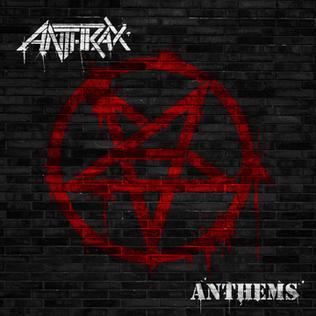
648. Anthrax / Anthems [EP]. 2013. 2.5/5

Anthrax have not been into the high output of albums in recent years, having only released two studio albums in the fifteen years since 1998's Volume 8: The Threat is Real. That's tough for the fans, who not only want to see their favourite bands live, but want to hear new songs from them as well. We've had live albums and compilation albums from the band, but little new stuff.
Following on from 2011's Worship Music we now have another EP, this one full of cover songs that the band has put together, no doubt as a further effort to appease fans such as myself who are actually looking for new material, and allow them to keep touring which, let's face it, will make them more money in this day and age than trying to sell albums.

The song list was chosen by the members of the band, and consists of band's whose base era was the 1970's, and though not metal bands by any stretch of the imagination, their hard rock roots no doubt influenced more bands than just Anthrax as the decade crossed over into the 1980's. From a listening and reviewing point of view, it is a difficult thing to hold on to, when you don't have any great love of the bands or songs covered on the album. I can appreciate that bands like Rush, Boston, Cheap Trick and Journey have a large fan base, and that their work is see and heard as an influence upon others, but really, I just don't really like them. What i can appreciate here is the effort by the band to cover these songs properly and with the attention to detail required to pay homage to the original songs and artists. They sound great, whether you enjoy the songs or not.
For me, the two stand outs are AC/DC's "T.N.T." which sounds great, and a brilliant version of Thin Lizzy's "Jailbreak". If Thin Lizzy really wanted a replacement for Phil Lynott's vocals, then Joey Belladonna's audition on this song is top class.
Filling out the remainder of the disc is "Crawl" from the aforementioned Worship Music as well as a remix of the same song.

As with all cover albums, this one will retain the interest of the listener for a number of spins in the CD player, until they realise that they should either just go back to the originals by the real bands, or that throwing on Among the Living again would give a better indication of the real love of Anthrax.

647. Adrenaline Mob / Coverta [EP]. 2013. 4/5

Mike Portnoy recording a covers album?! That's unheard of!! Oh - except of course for the dozen or so he did with Dream Theater and the such.
Adrenaline Mob toured and clubbed around at the end of 2011 and throughout 2012, both before and after the release of their debut album Omerta. During this tour, given that they only had one album's worth of material to play, the band also threw in a number of their favourite songs as cover versions to fill out each set. No doubt they could have played songs from their previous or current bands, but they obviously tried to avoid playing anything that may take the focus off their own material.

So here we have an EP of studio recordings of those favourite cover songs of theirs. It's a great collection of songs and bands, and they are all performed wonderfully well. Though each band is only represented once, there is a common theme involved. For instance, they do a cover version of Dio's "Stand Up and Shout", which is great. They also do a cover version of Rainbow's "Kill the King", also terrific, and originally recorded with Ronnie James Dio on vocals. They finish off with a cover version of Black Sabbath's "The Mob Rules", again a great version, and again originally recorded with vocals by Ronnie James Dio. It's good to see the great man get more recognition by some of today's stars.
The version of Badlands' "High Wire" is terrific, and is obviously one of the band's favourites. Russell Allen's vocals are extremely impressive here. Covering "Break on Through" by The Doors was brave and no doubt challenging decision. Of all the songs here, this version is the one that is most unlike the original. It's tough to change up a classic like this song, and no doubt some will love it and some will hate it. I guess I'm a bit nonplussed about it. "Romeo Delight" by Van Halen and "Barracuda" by Heart are both faithful adaptations of those songs, with Allen's vocals on "Romeo Delight" very much in the vein of DLR. Led Zeppelin's "The Lemon Song" is again done very well, but it just doesn't fit in with the energy that the other songs give off in this collection.

In the long run, this collection gives the fans something to tide them over until the band releases some new material. While this works in both performance and song choice, it will for me fall into the same category as all albums and EPs that are strictly filled with cover versions do - that is, the first ten or so times you put it on and listen you will enjoy it. Then you will drift back to the original versions of these songs, and realise that they are still the best versions, and this EP will become a self filler, only to be brought out when someone comes over and you can put it on for ears who haven't yet heard it.

Friday, March 22, 2013

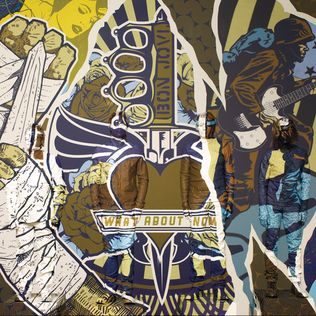
646. Bon Jovi / What About Now. 2013. 1.5/5

Wow... is this The Eagles for the 2010's?! What in the hell have we got here? Because from the opening bars of the opening track "Because We Can", this is a very uninspiring and bland as cardboard effort.

Bon Jovi can take a convoy-load of credits from their albums such as Slippery When Wet and New Jersey and even Keep the Faith. Those albums got them fans for life when they were released, they were that special. 

But they were real hard rock albums, the kind that got your blood pumping (still do actually). There is none of that left here. It has all been scrubbed clean with a metal wire brush, and all we have left is a very pop, ballad-like, almost country collection of songs that may not be dripping in sugar like the stuff that Def Leppard currently call music, but they aren't really that far off. The steel and acoustic guitars are in prominance here, and the drums just plod along to give Jon something to keep his lyrics timed by. There is no up-tempo tunes at all. In fact, the meandering pace of the album almost seems to stretch through every song, making this the longest ballad ever recorded. Where the hell has the Richie Sambora shredding gone? There is precious little of that to be heard here.
This is the kind of stuff that the 'easy listening' radio stations play. You know those stations, they are the ones that if you happen to come across them when you are tuning the radio in the car, you press SEEK as quickly as possible to get away from them!

OK, so a band and its members do not have to continue in the same vein or style for their entire careers, especially if they have enough money that they don't have to sell albums to make a living. And they are not the only band in the word to move away from the style and genre of music that made them famous. But even given their recent efforts, this is a real departure for the band. If not for Jon's vocals, this album would really be unrecognisable as a Bon Jovi album to me.
Having said all that, I guess there is little doubt that all of the... shall we say... mature... women of the world will be taken in by this, and conitue to fawn over the lead vocalist as they always have. Those that first discovered him in their teens and twenties are now in their forties and fifties, and this will most probably be right up their alley.

For me though... What About Now?... no more thank you...

Thursday, March 14, 2013

645. Helloween / Straight Out of Hell. 2013. 4/5

After all of this time I still get excited about a new Helloween album, and mainly because they have rarely let me down when it comes to the finished product. (No, do NOT mention Pink Bubbles Go Ape or Chameleon!). The band promoted it as an extension of their previous album 7 Sinners but with less doom and more positive overall.
What I noticed most in my first couple of listens was that the keyboards are toned down compared to their previous release - they are still there, but just not as prominent - and that this tends more towards heavy metal than the power metal style.

The album kicks off with the single "Nabataea", continuing the band's tradition of the lengthy album opener to drag you in.  The blinding speed of the anthemic "World of War" is reminiscent of any of a number of the best speed metal songs that have been written and performed by Helloween, and really gets the album moving. "Live Now!", while not a bad song, doesn't quite seem to gell with the two opening songs. You tend to bop along with the song rather than bang along with it, if you get my meaning. "Far From the Stars" almost tends to mix pieces of Pink Bubbles Go Ape and Rabbit Don't Come Easy which is no mean feat, but all ends well. "Burning Sun" returns the album to its glory, a great song in all respects, and this is followed by the piano-driven "Waiting for the Thunder", which almost steals the show as one of the best songs on the album. While not losing its identity with the album, it has a great mood and feel that really pushes home the point that this band can do just about anything.

And then, smack bang in the middle of a rocking album comes "Hold Me in Your Arms", the power ballad that not only halts the whole momentum that has been built up by the first half a dozen songs, it just changes the whole listening mood. I'm not suggesting the song is done badly, its just that I can't see the point in moving this rapidly between fast paced action and sit down quietly ballads. This song is a floor-cleaner at the local disco, the song that empties everyone back to their seats. It is certainly no "In the Middle of a Heartbeat".
Following the short and also slightly misplaced "Wanna Be God (Dedicated to Freddie Mercury)", where the lads seem to be doing a Helloween-ish version of "We Will Rock You", the album returns to fourth gear with the title track, "Straight Out of Hell", a classic Helloween happy-guitar song that still has the strength and metal behind it. This is followed by the aptly named "Asshole", a title that immediately can bring together a number of emotions. I mean, how do you approach a song with a title and lyrics like this and do it well without losing credibility? The possibility was there that this song could just become a parody of itself, and even affect the whole album to its detriment if it didn't work. Thankfully that isn't the case. The song is strong enough musically in the first place, and then lyrically it all falls into place, with Andi's marvellously emphatic vocals sealing the song such that it actually ends up lifting the album into a more powerful status.

While to me the back end of the album doesn't quite match the first half, there are still good pieces to it. I think "Years" doesn't quite live up to its predecessors, but both "Make Fire Catch the Fly" and "Church Breaks Down" are good songs, probably deeper lyrically than the actual music around them shows them off to be.
There are two bonus tracks, depending on what format you have purchased, with the rocker "Another Shot of Life" followed by a second version of "Burning Sun" dubbed the Hammond version, as a tribute to Jon Lord of Deep Purple, who had passed away not long before the release of the album.

The fabulous musicianship of the band is in its element on this album, something that is their credit given their length of service. Dani Loble's drumwork is exceptional, pounding through each song at a sometimes exhilarating rate, and the drum sound they have got on this release is fantastic. Sascha Gerstner continues to impress, and his duels with veteran Miki Weikath continue to belt out those happy Helloween guitar tunes that make the band so identifiable. Marcus Grosskopf still gets the most amazing bass riffs out of his guitar, wrapping those enormous hands and fingers into remarkable positions, while Andi Deris has never sounded better than he does here, his vocals still so powerful no matter what range he is expected to sing in.

30 years on and Helloween are still able to produce such a super album as this. Another terrific album from one of the best bands of all time.

Wednesday, March 13, 2013

644. Riverdogs / Riverdogs. 1990. 3/5

Guitarist Vivian Campbell had had a roller coaster ride through the decade of the 1980’s, one that had taken him to the highs of the music business. He started out in the UK band Sweet Savage, as they rose on the back of the New Wave of British Heavy Metal, his guitar was a dominating influence on their sound. Then on the recommendation of Jimmy Bain he was recommended to Ronnie James Dio, who had just parted ways with Black Sabbath and was looking to form his own band, which Vivian jumped at, and became an integral part of the iconic first three albums that the band Dio produced. After being fired after a disagreement over money, Campbell was picked up by Whitesnake essentially as a replacement for John Sykes, who had just co-written the enormous “1987” album, and Campbell completed the tour with the band to support that release. Once this was over, Campbell again found himself in an argument with the band leader, after he was told that he would not be asked to make any writing contributions to the band as Coverdale felt he and fellow guitarist Adrian Vandenberg were the best combination to do that. Having felt as though he was just a hired hand in Dio, Campbell admitted in later interviews that he did not want to be in that position once again.
Around the same time, an LA based band named Aircraft had been doing the rounds of the Whisky a Go Go and the Troubadour and other popular venues over a couple of years, before disbanding in 1987. Once this had occurred, the band’s drummer Alan DeSilva got in contact with his fellow former bandmates, vocalist Rob Lamothe and guitarist Nick Brophy and the three formed a new band called Riverdogs in 1988. The band moved forward with trying to establish itself, and this is where Campbell became involved. He began helping out Brophy with guitaring, and as a result became involved in helping the band to produce some demos. Through this process, Campbell became so impressed with the band and the sound they were producing, that he made a decision that in retrospect still seems an amazing one. He decided to leave Whitesnake, and join Riverdogs. Now, while that appears crazy, there is no doubt that Campbell was still smarting from the situation that played out with Dio, and he obviously had no intention of being put in that position again. And perhaps he saw an opportunity with this new band, one he could get in on the ground floor with and be an equal partner in.
To accommodate the recruitment of Campbell in the band, Brophy moved to bass guitar duties. Based in Los Angeles, the band also brought in Mike Baird on drums to record their debut album. The self-titled album was released in mid-1990, in retrospect up against some heavy hitter albums, including Campbell’s former band. With the changing music landscape around them, the question being asked was could they find a way to fit into that landscape, and also was their record company marketing them in the right way to achieve that.

In many ways the sound that the band stick to for this album is rather surprising for the day and age. Creating what is essentially a blues hard rock album in 1990 seems so far away from what every other popular form of music was at that time. The fact that they can pull it off at all is down to the musicians in the band. And what probably hurt the band the most was that the record company insisted on promoting the band on the back of the pedigree of their guitarist. Now you can’t blame them for that as such, as having someone who had been such a prominent part of two huge heavy metal acts would obviously have given them the ammunition to promote this album and band in the same genre against those musicians. The problem was – this album is in no way a heavy metal album, and promoting it to headbangers around the world was probably a mistake in the long run. This is an album where searching for scintillating Vivian Campbell solos is completely useless, because they don’t exist. There are nice riffs, there are some great musical passages, but there is not even a semblance of any metal in this recording. Everyone coming to this album for any of that was poorly directed. But we’ll come to that.
Perhaps what is the thing that most will pick up early on is that songs... all really sound very similar. The basic song structures remain through most of the album. They are built on the inoffensive bluesy riffs of the guitars, the steady singular pace of the music, solid and efficient rhythm of drums and bass guitar. Everything seems to sit in the same steady stream, all of which works nicely and is enjoyable for those that enjoy that kind of thing.
The two standouts on this album are the vocals of Rob Lamothe and the occasional bursts of energy from Viv Campbell. Viv offers some nice solo pieces in songs, different from what he had done in the past but still offering a glimpse at his natural talent on the instrument. The solo through the middle of “Big House” is excellent, as it is on “Holy War”, one that provides the highlight of the track. And on this album, Lamothe puts himself forward as an excellent vocalist in this style of music. Even if you aren’t a particular fan of the music, Lamothe’s performance does lift this above the average by his efforts.
The songs here are therefore, for the most part, driven by Lamothe's vocals and Viv's guitaring. I don't mind admitting that the opening track to the album, "Whisper" is one of my all-time favourite 'guilty pleasure' tracks, one I can play at any time and sing along to at the top of my lungs. I love the feel of "Water from the Moon" as well, and in a similar vein musically to “Whisper” it has a great mood and guitar riff and solo, as well as those dulcet vocals again. “Baby Blue” on the other hand sounds like a blues up version of The Cult. It is mostly the second half of the album that really sparks up, though if you hope that means in regard to the tempo and excitement than I’m afraid I have bad news for you. Those songs that include "Rain, Rain", "Toy Soldiers" and "Spooky" do not contain much different from the other tracks on the album, but enough to have them mark their territory in a blues rock drenched release.

Back in 1990, Vivian Campbell was still my guitaring hero. Despite his falling out and dismissal from Dio, for which his contribution was critical and magnificent, and his subsequent flirtation in the touring band of Whitesnake, he was what I wanted to be had I ever gotten off my backside and learned to play the guitar. But what I did do was, from the time he left Dio, I began searching through every means possible (mostly in vain) for every time he was mentioned as having joined another band (Whitesnake was his first stop, no matter that it was a short one) or was rumoured to be being considered for another band. Then, one day in Australia's "Hot Metal" magazine, I discovered it. He had joined a band called Riverdogs, and their debut album was about to be released. So off I trotted to Sydney's Utopia Records and purchased said album.
With all of this in mind, you must now be of the opinion that I am going to be slightly biased as to the outcome of this album. And for the most part I won’t deny that this is certainly true. The first thing to glean from this is that “Riverdogs” is not a metal album, but a comfortable hard rock experience. My excitement in finding this CD on that trip to Utopia Records back in 1990 was tempered almost immediately by complete and utter disappointment. It was hardly anything like what I had been hoping for, that of course being Viv ripping riffs and shredding solos like the days of old, and a band and album that reflected the kind of heavy metal experience that I wanted. I guess I was hoping for a band that was Dio but with a different singer, and I didn’t get that. Once I got over that initial disappointment, I did give the album a fair listening, and I found that it wasn't as bad as my first impressions allowed. Rob Lamothe's vocals are terrific and given the passing of 35 years now since this release I find it amazing that he hasn't gone on to more prominent things. The change of the musical landscape in the 90’s probably didn’t help.
For me it is a guilty pleasure album. I know that when Helen hears me playing it she screws her nose up and says that there is nothing in the music, its dull and boring. And while I don’t completely agree with her, I know what she means. It is a long way from the music that I usually listen to. And if Vivian Campbell had not played on this album, not only would I never have thought of buying or listening to this album, I would probably also think it was very average. But that can be the rose tinted glasses that come with favourite artists or bands. Sometimes, no matter what your head tells you, your heart tells you something else. As I have gotten older, is it really a surprise that I find myself enjoying this album more? Probably not. It has an 'easy listening' kind of vibe to it these days, reminding me of days gone by. In some ways “Riverdogs” was, and is, an underrated album. Certainly the musicianship is very good. The STYLE of the music is what would turn away any possible converts.
I have had this album on again for the last week, acting mostly as a background soundtrack to my work days. It has been inoffensive, but to be honest I have over played it. This is an album that should be given an occasional listen and then placed back in the CD shelves until the next time. Repeated playing's found me considering Helen’s ‘dull and boring’ comment and thinking she wasn’t far off the mark. Still, if for nothing else, I will always find this album when I need to hear the opening track, the one that is still a favourite after all of these years.

Wednesday, August 22, 2012

643. Crimson Glory / Crimson Glory. 1986. 3.5/5

I can honestly say that I had never heard of Crimson Glory up until about four months ago, when a fellow 80's metal head on a music forum somewhere asked me "have you heard Crimson Glory?" My negative response to this brought the inevitable urgent pushing that I should drop everything I was doing and get out there and get it. While I agreed that I would do so, it took me another couple of months to get around to finding said album.
When I first put it on, my immediate response to myself was "Why have I not heard about this album before now?!" It really is a mystery, because all of the elements that originally drew me to heavy metal are all here.

Had it been that I had discovered this album when it was released, all those years ago, it is quite possible, even probable, that I would be absolutely raving about the amazing positives of Crimson Glory and slapping a big five stars all across it. As it is, for the most part I have only positive things to say about it now.
The vocals and the guitars are the first things that hit you about this album. It is very easy to hear the influence that bands like Judas Priest and
Queensrÿche had with Crimson Glory. the early songs such as "Valhalla" and "Dragon Lady" not only have that Queensrÿche melodic guitar sound in them, they are pumped full of not only the Judas Priest twin guitar assault, they have the vocals. Crimson Glory lead singer, Midnight (yes, that's correct, his name is Midnight) goes all out to be almost a Rob Halford clone. He hits notes as high, and as long, as almost no one but Halford could do in that age, and the similarities between them are quite obvious. This is not to suggest they are a clone band, but that influence really comes through in their songs.

I can't help but enjoy this album, and this is where the crux of the argument comes to play. Given the improvement in production, this would sound so much better if it was recorded today. And the problem of discovering an album now that I really should have back in the days of 1986 means it is now being marked against all of the albums I've had since then, but have listened to half a million times, compared to the dozen I have now listened to Crimson Glory. As I stated within here, I really believe if I had had this album for that length of time, it would be getting a extremely positive ratings result. As it is, I like this a lot, but on a comparable scale across all my albums, it falls short of the great ones.

Monday, August 20, 2012

642. Shadows Fall / Fire From the Sky. 2012. 1.5/5

Given that my only other experience with Shadows Fall is their 2002 release The War Within, which tickled my fancy enough at the time, I came into this with an open mind, but hope in my heart. I had initially walked into The War Within by mistake, and had found it to be a better than average release at a time when I had been looking for new material. Despite that, I had never gotten around to listening to anything since then before now.
I laughed when I read a fellow “Rate Your Music” user ask the question “Wait… is this Metallica?”, because on the opening two songs, there are a number of things that are reminiscent of the latter days of the veteran metal giants. To an extent it is uncanny, but there is no surprise that bands out there are using some of their influences in their own music.

At this point, though, I am able to say that this album is, rather harshly, a failure. I'm not sure I am able to pin point exactly where and how this fails to find the mark. The vocals just don't seem to bring across any sense of intensity or emotion. Fast drums and heavy guitar riffs mean nothing if they aren't arranged into exacting tones. Does this band, and this album, want to be thrash or metalcore or turn towards a mainstream metal sound? It seems a little confusing here as to their intent. More than anything else, despite their interesting arrangement of their heavier riffs, they combine it with their clear, song-halting explorations at awkward moments.
Given the length of time since my last visitation with the band, perhaps I was expecting too much. What I received instead was something of a disappointment. It starts off okay with "The Unknown", "Divide and Conquer" and "Weight of the World", which are reasonable songs if a little off-putting. The afore-mentioned similarities to Metallica are only enhanced by the missing power element in the songs. What follows unfortunately does not dismiss these feelings of abandonment, with a couple of critical elements missing from this entire recording.

Not having had an intimate relationship with the band's material in the past I am probably not qualified to give an absolute trashing of their latest release. Suffice to say that the result will stop me from actively pursuing any of their other material for the time being, because if it is all similar to this I feel I would be wasting my time.

Sunday, August 19, 2012

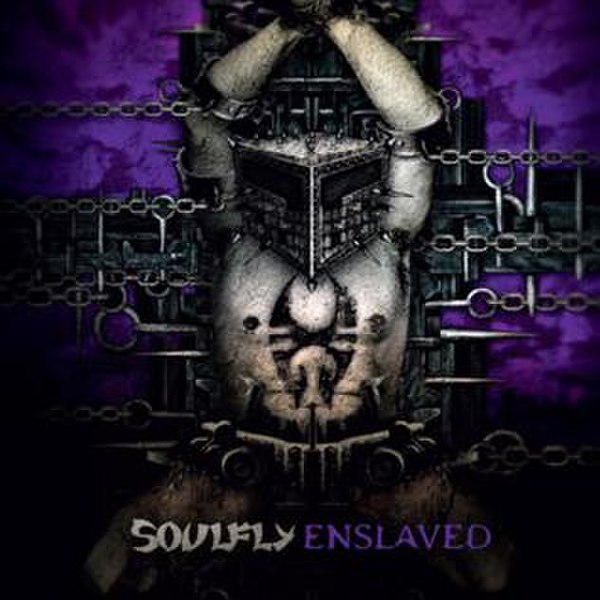
641. Soulfly / Enslaved. 2012. 3/5

It's been a long time since Max and his first band took the world by storm with their new take on heavy metal, and made people stand up and take notice. When he eventually left that band and formed Soulfly, he put out a debut album that hinted of good thiings to come.
Since that time... well... it hasn't been bad, but it has been like a conveyor belt, each album dishing out much the same product with little change or inspiration. And as I have said on countless occasions, that is not always a bad thing, and for big fans of the band they will no doubt love every moment of this.

For me - well, Soulfly is a band I can listen to and respect their work, but I am not a fanatic. Like so many bands for whom Sepultura and then Soulfly have blazed a path - bands like Lamb of God, Trivium and Arch Enemy - unless the material is outstandingly good, it can get either very similar and pointless or just plain boring.
And this isn't bad, not by a long shot. It jumps off at a cracking pace with the intro "Resistance" leading straight into "World Scum", which is then followed by my two favourote tracks "Intervention" and "Gladiator" which are led by blinding drums and super solo guitar work. "Legions" brings forth more of the same. I seriously am awestruck by some of the rolls by David Kinkade on this song. Just blinding. The rhythm riff through the song is also a pearler.
My main discourse with the back end of the album is that I think the songs get a bit long, and as result lose a bit of the impact the the start of the album delivers.

All in all, this is another solid release from the Soulfly icon, and while it may not break any new barriers it certainly keeps the band and its leader at the forefront of this style of heavy metal.