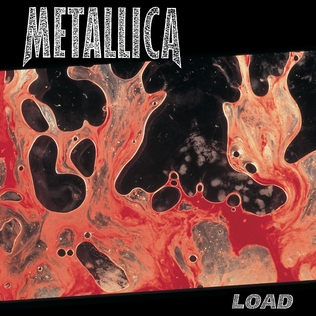
If you have been listening to this podcast for a while – firstly, thank you very much – but secondly, you would be fully aware of exactly what faced the artists that had dominated the 1980’s decade by the time we had arrived in the mid-1990's. Music had changed a great deal, and there appeared to be few bands and artists who were still writing the same material that they had made great a decade before. Grunge was beginning its inevitable receding from the top of the charts, and in its place, there was a mixture of alt rock and metal with metalcore and other variants of that description. Through Europe speed and power metal had taken root, and anything that resembled traditional heavy metal had been skewed to other tangents along the way. Metallica was on the verge of releasing their most controversial album to that point in their career, “Load”, one that divided opinions in their fan base. Actually, it cut them to pieces. But we’ll get to that on an episode shortly. It was an interesting time to be a music fan that had collated their music from the previous decade, and an interesting time to be a full-time musician from those days.
Bruce Dickinson had moved on from Iron Maiden, and with the help of Roy Z and his band Tribe of Gypsies had released his second solo album “Balls to Picasso” to a mixed response. His first solo album, “Tattooed Millionaire”, had been a n effort that simply looked to offer a style of song that was not a mirror reflection of his music in Iron Maiden. Once he had cut ties with the band, he could write music in his own sphere without having to compromise to anyone else’s ideas. Well, Steve Harris. In Roy Z he found a collaborator that worked, and while “Balls to Picasso” had confronted those same changes in music mentioned earlier, it had at least given Dickinson an outlet to be his own man. After the album was recorded the Tribe of Gypsies moved on to do their own album, and Bruce put together a band to help support that album with three new musicians – the excellent Alex Dickson on guitar, the equally excellent Chris Dale on bass and Alessandro Elena on drums. This four piece toured the album, which was recorded and released as the double live album “Alive in Studio A”, which you can hear about on episode 19 of this podcast. It was also during this tour that the band did their drop in concert in war torn Sarajevo during the Bosnian War, which was filmed and released in the documentary ‘Scream for Me Sarajevo’.
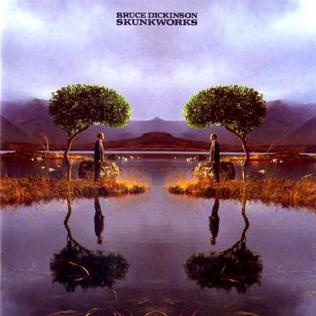
The original process was to call the band Skunkworks, but the record label was having none of it and insisted it be released under his solo name. Dickinson however, often referred to himself as the lead singer of Skunkworks in interviews of the time. Perhaps the label hadn't listened to the album before it was released, because the music here is nothing like anything Bruce had ever recorded and released before, and perhaps by doing it under a band name rather than his own it would have found its place in the world. The band produced 22 songs in a 7.5 week period, after which thirteen were chosen for the album itself. In an interview at the time, Dickinson was asked about Iron Maiden’s first album without him, “The X Factor”, which had been released several months earlier, and he replied that he thought that it was a decent album, but that Maiden should change musical styles to fit Blaze Bayley's vocal style, just as they did when Bruce replaced Paul Di'anno. The significance of that statement not only says a lot about what his former band was doing at the time, but also of the direction that he himself headed with the release of his next project which carried the name “Skunkworks”.
The one thing that you cannot deny on this album is the musicianship. The rhythm section of Chris Dale on bass guitar and Alessandro Elena on drums is rock solid throughout, providing the platform that set this album in solid rock. Or alt-rock, if you will (a little pun there for you). Alex Dickson’s guitaring is without question, something he proved very capably on the “Alive in Studio A” live album. And Bruce is... well... Bruce. But yes, it is a different Bruce here.
The album is a mix of a grunge vibe that mixes with the alternative rock and metal that was the growing genre of the time. Dickinson has made a conscious effort to move away for the ‘air raid siren’ vocals of his Iron Maiden past and looked to lock into what was happening around the band at the time this was conceived. He and Alex co-wrote all of the songs on the album, with Chris Dale getting a co-write for “Innerspace” towards the end of the album. So this album is their baby, their concept of what they wanted to achieve. That includes utilising songs in a very mid-tempo range. “Space Race” immediately sets the tone and platform, meandering along with a guitar sound that offers similarities to the remaining grunge elements of Soundgarden and Pearl Jam within its musical context. In interviews at the time Bruce was quoted as suggesting he was trying to mirror similar strengths shown by Soundgarden vocalist Chris Cornell on this album, and those similarities do pop up in places. The single released from the album, “Back from the Edge” pushes up the ante a little, the harder double time drums and bass increase the feeling of tempo along the way, and Bruce looks to push his vocals a tad more, stretching out the song title in the chorus. Dickson’s solo channels the same musical tones and Bruce’s dualled layered vocals into the end of the track give it a satisfying conclusion. “Inertia” follows a similar path, Bruce again stretching the title through the chorus in the closest we will hear him truly pushing his range vocally. It feels as though his vocals here have been designed especially for the output of what is achieved. Overall, there is a softer alternative, a narrower vocal range with the stripped back sound of the guitars, not dominating but happy to be heard underneath the rhythm for the most part. The melody in “Faith” does provide a welcome change, and the change up to a slightly heavier tone in the middle of the track for Dickson’s solo also adds a different flavour to this song that doesn’t always exist elsewhere on the album. The tempo of the songs and the album itself rarely seem to change too much. “Solar Confinement” isn’t heavier in the sense of metal, but heavier in that it is more present, booming through the speakers with a moody atmosphere. It sounds good, and Bruce sings it well. But here like the other tracks that open the album, there is a nagging feeling that it is missing something.
“Dreamstate” is a real departure musically and in mood especially. Exploring the blurred line between reality and imagination, that is what the track explores musically as well, a softer tone that sets the mood of the lyrics. It is followed by “I Will Not Accept the Truth”. Chris Dale’s bass line drives this song throughout, leading the song through its various stages as the connecting thread with a wonderful winding tale about it. Lyrically one wonders if this was prophetically talking about this album and its resulting emotional outpouring for Bruce. His vocals morph through quiet and serene into an outlandish outpouring by the song’s conclusion. “Inside the Machine” returns to the mid-tempo style of the opening tracks, replete with nice solo from Dickson, and Bruce once again stretching out the title of the song in the chorus. And this does tend to become a bit of a template for what is occurring here. A structure of track that, even though not all songs here have every similarity about them, there is a pattern that emerges.
“Headswitch” emerges from this with musical standard but plays it on the edge of the heavier version of alt-metal, the rollicking rhythm holding the song together, Bruce singing in a restrained lower vocalised medium, while Alex offers us some differing lick and solo. It sounds like a song that is being held back by the reigns, not allowing it to break into the canter that it dearly wants to break into. “Meltdown” draws back the tempo into the album template with a great drum beat from Elena Being the driving force of the track, while “Octavia” offers almost the complete opposite, a quieter introspective song with the Dickinson melody returning for one of its few appearances on this album. On the other hand, “Innerspace” returns to the rollicking-type musical background heard on “Headswitch”, which rolls on with a perpetual drum and bass track that keeps the song moving nicely. And then we come to the concluding track, “Strange Death in Paradise”. Is this an epic type of song that Bruce was looking for? As the finale to the album? I’m not sure. It swirls with an ever changing atmospheric feel about it that never quite nails down what it is trying to achieve. There is a latter-day Tony Iommi feel to parts of it, and Alex’s moody solo leads to the bang-for-your-buck build to the big band conclusion, with Dickson’s guitar soling under Bruce as he repeats the title numerous times with perhaps the most passion he shows on the album. Does it work? Or is it a bit too little too late? To be honest, even after all of these years, I’m not sure of the answer myself.
My discovery of “Skunkworks” was very probably not conducive to me getting the most enjoyment out of the album. I had fallen away from Bruce after the “Balls to Picasso” album, not having found what I was looking for with what it offered. “Skunkworks” passed me by completely. It wasn’t until a mate of mine in early 1999 exposed me to “The Chemical Wedding” that Bruce came back into focus for me, about the same time as it was announced he would return to Iron Maiden. And even then, I didn’t actually listen to “Skunkworks” until around 2002, when I first discovered it actually existed.
With this in mind, consider what I’ve been exposed to prior to listening to this album. I had found “The Chemical Wedding” and was blown away by it. I had gotten “Brave New World” and was so excited about the return of the band I loved. I had found “Accident of Birth” and freaked out about what I found there. All three of these albums for me were so far in front of the last Bruce solo album I had heard that I had begun to think that perhaps it had just been an aberration, so much so that when I discovered “Skunkworks” I just assumed this was going to be another giant win in my recent discoveries of Bruce Dickinson related albums. Error.
I got the album, and was completely thrown by its content. Utterly. It was unlike anything I had heard from Bruce. Of course, it still is. I was unprepared for the grungy alternative mix that the songs on this album offered up. And that is what I meant when I said that the timing of my discovery of this album was what hurt my first impressions immeasurably. Because it wasn’t 1996, it was 2002, and the music world had changed again, and this was not what I was expecting. I was looking for riffs and fast tempo and heavy undertones and soaring vocals. Not what I was offered here. I persisted with the album for a while, and then moved off to the power metal and progressive metal that was beginning to dominate my listening at that time, and left “Skunkworks” to sit on the shelves.
Over the intervening years it has come out occasionally to be listened to, and while I have become accustomed to its charms over that time, there continued to be that nagging pull at the back of my head directing me to listen to something else. And over the past week I have probably listened to this album more in one hit than I have at any other time since I’ve owned this album. At work, at home in the Metal Cavern, in the car.
Prior to this episode, my thoughts on the album were succinct. For me, it is not as though I hated this album, or that I even disliked it. It's just that at no time during listening to this album over the years, no matter when or where or how many times I listened to it, did I ever get excited about any of it. There isn't a song that makes me stop what I'm doing and sing along, or air guitar or air drum to - not a riff or a fill or a lyric. It just seemed so bland, right across the board. And for me I admit that alternative material can be a bit that way, unless there is a hook that drags me in.
In assessing its impact, I imagined taking away the vocals. What are you left with? Some fairly formulaic, straight forward drums, bass and guitar. For me there are no hooks, no tantalising riffs to drag you into the song. It has a mellow Soundgarden or Pearl Jam kind of feeling to it, but without their characteristic bursts of energy and innovation that creates defining moments in the music and the album. “Skunkworks” fails to deliver any of that. I hesitate greatly and for a long period before saying this, before I can no longer ignore the fact that, for the most part, this album for me is just plain boring. I have sat in the Metal Cavern with this on my stereo as I was doing some other work, and as a part of the background music it was fine, but at no stage did it drag me away from what I was doing to insist that I be listening more carefully, to encourage the aforementioned air guitaring or singalong.
Bruce is a brilliant artist, a fantastic singer, who has been at the forefront of music for a long time. This album is a real change from just about anything he has produced in his career – before or since. And the band is excellent. Their performance on the album is sound.
Looking back now from a safe distance, I can totally understand why Bruce wrote and performed an album like this. When you read interviews of the time, read his autobiography and feel the passion in his words that he had about what he produced on this album, and how gutted he was when it did not receive the kind of appreciation that he felt it deserved, you know that it was done for all the right reasons, that he held nothing back and gave this album everything that he had at that moment in time. And I truly want to love this album just for that fact, that someone has put so much of themselves into an album that it deserves to get that kind of recognition and adulation. As you have probably guessed by now, I can’t seem to muster that up.
One middle-aged headbanger goes where no man has gone before. This is an attempt to listen to and review every album I own, from A to Z. This could take a lifetime...
Podcast - Latest Episode
Friday, July 26, 2013
Wednesday, July 24, 2013
685. Skid Row / Skid Row. 1989. 4.5/5
Back at the end of the 1980's, when heavy metal bands were beginning to break through to some mainstream recognition, and hard rock and hair metal bands were about to face some stiff competition from a new genre of music called grunge, there came a band and their debut album that crossed the genres and took the music scene by storm, selling hundreds of thousands of units purchased by teeny-boppers and headbangers alike. It was something that had been pioneered by Guns N' Roses with their debut “Appetite for Destruction” a couple of years before, and this album and band looked to be on the same trajectory.
And as yet another debut album comes up for review here on this podcast, we again delve into how the band formed and traversed the path from start up gig to recording that first album. In the case of Skid Row, it was initially formed back in 1986 in New Jersey, when guitarist Dave Sabo met bassist Rachel Bolan in a local guitar store where Sabo worked. As they shared musical influences - Sabo from Judas Priest and Iron Maiden, while Bolan’s roots were in The Ramones – their styles complemented each other, with Kiss and Van Halen being shared loves, and they began rehearsing in Bolan's parents' garage. Guitarist Scotti Hill was drafted in and came from Bolan's previous club band, and Sabo picked up drummer Rob Affuso.
What became the band’s biggest influence on their early success was the connection with the band Bon Jovi. As was brought up on the previous episode of this podcast that relates the story of Bon Jovi’s debut album, Sabo was a childhood friend of Jon Bon Jovi and they had agreed if one of them succeeded in the music business, that they would look to help the other out. That initially came from being able to support Bon Jovi on their “Slippery When Wet” tour in 1987, at which time they caught the attention of Bon Jovi’s manager Doc McGhee. It was he who suggested that they replace their lead singer, as he lacked the drive of the rest of the group. When they did indeed follow through with this, they then had to find another front man who could fulfil their requirements. It was then at a wedding reception that Jon Bon Jovi’s parents attended that a band played with a lead singer who seemed to be a possibility. His name was Sebastian Bach. He was invited to meet with the band, and while some doubts and tensions remained, both sides agreed to come together.
After completing the lineup, the group then signed with Richie Sambora's and Bon Jovi's publishing company Underground, unknowingly giving them the majority of the group's royalties. How this occurred goodness knows, but it did cause a lot of friction for some years. Eventually negotiating some years later returned the royalties for their work, though not retrospectively, so the Bon Jovi element made a fair amount of money on Skid Row’s success.
With the band set, they entered the studio to record their album, a move that went smoothly apparently firstly through the fact the band made a pact to stay dry during the recording sessions, and secondly because they had been playing the songs for some time, and knew exactly how they wanted them put down on vinyl.
This album comes out rocking hard from the start. The hard guitar riff of "Big Guns" makes for a big statement start to the album, simple, hard hitting and a great opening track, that extends swiftly into the fast paced "Sweet Little Sister". “Sweet Little Sister” is dripping with the attitude of the lyrics perfectly attuned to Seb’s vocals, but for me the star element is still Rob Affuso’s drums, a song that I still cannot help but air drum along to even today. Don’t get me wrong, his drumming is brilliant throughout this whole album, but they just stand out proud on this song. One thing Skid Row have done well here through Sabo and Bolan’s terrific songwriting are repeatable and singable choruses, ones that everyone knows and can sing along to. The rhythm section on all of these songs is magnificent. Each song has its own timing and beat, which (while you are singling along) you can't help but find yourself banging away on the desk or table or knees in time. Affuso's drumming is clean and clinical and lends itself to this kind of air drumming. I find this especially so in the aforementioned “Sweet Little Sister”, but also tracks such as "Rattlesnake Shake" and of course "Youth Gone Wild". All are great songs to drum along to.
"Can't Stand the Heartache" is a mid-tempo song that transitions between the heavier and lighter songs beautifully, led by the chorused vocals throughout. "Piece of Me" ramps up the attitude of the guitars and the vocals once again, Seb once again belligerently singing what he knows the band’s fans are thinking and want to both hear and say themselves. The same happens in songs such as "Here I Am" and "Makin' a Mess", both have the same vibe and attitude and are great heavy songs with Snake and Scotti’s guitars ripping through the speakers as Seb's spitting lyrics wail over the top. The middle of the album takes all of the collective building in drive and power and unleashes the best of all in the songs “Rattlesnake Shake” and the forever youth of 1989 anthem of “Youth Gone Wild”. By the time the band reached Australian shores they had already outgrown the local clubs and pubs circuit, but I still imagine just how these must have sounded in those smaller venues of the time, sweat dripping off the walls from the energy dispensed by both band and crowd. They still pack such a punch today. The closing song "Midnight" is also particularly awesome, a slashing conclusion that perhaps gives a real insight as to what was to come on the band's follow up album a couple of years later.
The main winners on the album for the band in regards to radio play and singles sold are the two power ballads, "18 and Life" and "I Remember You", which dominated the airwaves during their release. Now as most of you who read my reviews are aware, I am no lover of power ballads. They invoke themselves to becoming a part of the hair metal and power metal genres, but unless they can bring something worthwhile to the table I believe all they do is suck the momentum and life out of an album at an inopportune time, and can damage said album irreparably. On Skid Row however, that is not (totally) the case. Both of these songs are driven dramatically by Seb Bach's amazing vocals, in such a way that you can't help but like the songs, and also sing along. "18 and Life" is not really a ballad in the sense of the word or in the way it is written anyway, but it is drafted into that category by many. It fits in nicely with the whole flow of the album, and the energy and passion brought through in Seb’s vocals help it rise well and truly above the pack when it comes to any discussion of the ballad. "I Remember You" is certainly a power ballad, but again it is performed so well vocally that it doesn't feel like a ballad. Bach's efforts on this song are sensational, and help to offset any sense of imbalance with the rest of the album.
I can totally understand if kids, or adults I guess in 2024 put this album on and just want to tear shreds off it. It is most definitely tied to its era, when hair metal like the bands such as Ratt and L.A Guns and W.A.S.P. were at their peak. Could a teenager in 2024 really get this? I was 19 when this was released, and it was one of those albums that really spoke to what my youth and to what my future may be, and as a result it will always be a part of my makeup. It could turn misery to joyousness in 40 minutes just by listening to it, and albums like that are very special. Too bad if you might sneer at a 54 year old jumping around the lounge room, singing "Youth Gone Wild" at the top of his lungs to his own kids. These songs still have this same meaning to me now, as much as Alice Cooper's "School's Out" and "Department of Youth" still do. While those that didn't grow up with this album might not be able to understand what it is that I find so wonderfully brilliant about it, I can assure you that for me, and others like me, that it is still one of the best albums of our youth, and invokes the same joy today as it did all those years ago.
This was an amazing album when it was released, alongside other well performed hair metal albums of 1989 such as Motley Crue's “Dr Feelgood” and Alice Cooper's “Trash”. But even though “Skid Row” was a debut album from the band, it more than holds it own against these established acts. The music is energetic and bouncy, the guitars squealing in all of the right places, and Sebastian Bach's high energy vocals make every song sound exciting. As it turns out, I saw all three of those bands, touring on all three of those albums, in a period of just eight days in early 1990, and they were three of the best gigs you could imagine.
I got this album on the recommendation of two unusual people, the sister of one of my best friends and the girlfriend of another of my best friends, who both said I should get this album and listen to it, I would like it. And I did. And I BLOODY well enjoyed it! More than that. It went into high spin rotation on all of my devices for… I don’t know how long. A long time, long before I saw them in concert and long after as well. Because these became the anthems of my life, and became moreso than I would ever have imagined. As I said, I saw them on this tour, their first tour of Australia. And they played the whole album because it was all they had to play, and added in some cover songs they loved, and even played a brand new song “Get the Fuck Out” that they had never played live before, that eventually appeared on their following album. And it was outstanding in every respect. I was standing side by side with my best friends from school, friends who all still remain my best friends today, our arms linked around shoulders, jumping up and down singing “Youth Gone Wild” along with the band. It is one of the strongest and still most heartfelt moments of my life. All the more because we are all still together as friends 30-odd years later. It was an amazing gig, and the album spoke to us. It’s OUR album. I might be 54 years old as I do this episode, but whenever this album is on, I’m still 19, and every song is of my generation. All of it sends me back to 1989. And no one can ever take it from us.
As much as the band as a whole are terrific here, and even better on the follow up, the thing that makes this such a terrific album is Seb Bach’s amazing vocal chords, the attitude and energy he puts into all of that, that really takes these above average songs and makes them the superstar elements that they have. The band needed Seb to take them to this level, and Seb needed this band to do the same.
For me, this is still one of the greats. Yes, it is all because of the memories it invokes, of where I was in life when I got this album, and of how the album and songs speak to the generation of the time. And that’s me. No matter how old I get, I will always be the age I got this album whenever I listen to it.
And we will forever stand and will not fall, we are forever one and one for all. We are still the youth gone wild.
And as yet another debut album comes up for review here on this podcast, we again delve into how the band formed and traversed the path from start up gig to recording that first album. In the case of Skid Row, it was initially formed back in 1986 in New Jersey, when guitarist Dave Sabo met bassist Rachel Bolan in a local guitar store where Sabo worked. As they shared musical influences - Sabo from Judas Priest and Iron Maiden, while Bolan’s roots were in The Ramones – their styles complemented each other, with Kiss and Van Halen being shared loves, and they began rehearsing in Bolan's parents' garage. Guitarist Scotti Hill was drafted in and came from Bolan's previous club band, and Sabo picked up drummer Rob Affuso.
What became the band’s biggest influence on their early success was the connection with the band Bon Jovi. As was brought up on the previous episode of this podcast that relates the story of Bon Jovi’s debut album, Sabo was a childhood friend of Jon Bon Jovi and they had agreed if one of them succeeded in the music business, that they would look to help the other out. That initially came from being able to support Bon Jovi on their “Slippery When Wet” tour in 1987, at which time they caught the attention of Bon Jovi’s manager Doc McGhee. It was he who suggested that they replace their lead singer, as he lacked the drive of the rest of the group. When they did indeed follow through with this, they then had to find another front man who could fulfil their requirements. It was then at a wedding reception that Jon Bon Jovi’s parents attended that a band played with a lead singer who seemed to be a possibility. His name was Sebastian Bach. He was invited to meet with the band, and while some doubts and tensions remained, both sides agreed to come together.
After completing the lineup, the group then signed with Richie Sambora's and Bon Jovi's publishing company Underground, unknowingly giving them the majority of the group's royalties. How this occurred goodness knows, but it did cause a lot of friction for some years. Eventually negotiating some years later returned the royalties for their work, though not retrospectively, so the Bon Jovi element made a fair amount of money on Skid Row’s success.
With the band set, they entered the studio to record their album, a move that went smoothly apparently firstly through the fact the band made a pact to stay dry during the recording sessions, and secondly because they had been playing the songs for some time, and knew exactly how they wanted them put down on vinyl.
This album comes out rocking hard from the start. The hard guitar riff of "Big Guns" makes for a big statement start to the album, simple, hard hitting and a great opening track, that extends swiftly into the fast paced "Sweet Little Sister". “Sweet Little Sister” is dripping with the attitude of the lyrics perfectly attuned to Seb’s vocals, but for me the star element is still Rob Affuso’s drums, a song that I still cannot help but air drum along to even today. Don’t get me wrong, his drumming is brilliant throughout this whole album, but they just stand out proud on this song. One thing Skid Row have done well here through Sabo and Bolan’s terrific songwriting are repeatable and singable choruses, ones that everyone knows and can sing along to. The rhythm section on all of these songs is magnificent. Each song has its own timing and beat, which (while you are singling along) you can't help but find yourself banging away on the desk or table or knees in time. Affuso's drumming is clean and clinical and lends itself to this kind of air drumming. I find this especially so in the aforementioned “Sweet Little Sister”, but also tracks such as "Rattlesnake Shake" and of course "Youth Gone Wild". All are great songs to drum along to.
"Can't Stand the Heartache" is a mid-tempo song that transitions between the heavier and lighter songs beautifully, led by the chorused vocals throughout. "Piece of Me" ramps up the attitude of the guitars and the vocals once again, Seb once again belligerently singing what he knows the band’s fans are thinking and want to both hear and say themselves. The same happens in songs such as "Here I Am" and "Makin' a Mess", both have the same vibe and attitude and are great heavy songs with Snake and Scotti’s guitars ripping through the speakers as Seb's spitting lyrics wail over the top. The middle of the album takes all of the collective building in drive and power and unleashes the best of all in the songs “Rattlesnake Shake” and the forever youth of 1989 anthem of “Youth Gone Wild”. By the time the band reached Australian shores they had already outgrown the local clubs and pubs circuit, but I still imagine just how these must have sounded in those smaller venues of the time, sweat dripping off the walls from the energy dispensed by both band and crowd. They still pack such a punch today. The closing song "Midnight" is also particularly awesome, a slashing conclusion that perhaps gives a real insight as to what was to come on the band's follow up album a couple of years later.
The main winners on the album for the band in regards to radio play and singles sold are the two power ballads, "18 and Life" and "I Remember You", which dominated the airwaves during their release. Now as most of you who read my reviews are aware, I am no lover of power ballads. They invoke themselves to becoming a part of the hair metal and power metal genres, but unless they can bring something worthwhile to the table I believe all they do is suck the momentum and life out of an album at an inopportune time, and can damage said album irreparably. On Skid Row however, that is not (totally) the case. Both of these songs are driven dramatically by Seb Bach's amazing vocals, in such a way that you can't help but like the songs, and also sing along. "18 and Life" is not really a ballad in the sense of the word or in the way it is written anyway, but it is drafted into that category by many. It fits in nicely with the whole flow of the album, and the energy and passion brought through in Seb’s vocals help it rise well and truly above the pack when it comes to any discussion of the ballad. "I Remember You" is certainly a power ballad, but again it is performed so well vocally that it doesn't feel like a ballad. Bach's efforts on this song are sensational, and help to offset any sense of imbalance with the rest of the album.
I can totally understand if kids, or adults I guess in 2024 put this album on and just want to tear shreds off it. It is most definitely tied to its era, when hair metal like the bands such as Ratt and L.A Guns and W.A.S.P. were at their peak. Could a teenager in 2024 really get this? I was 19 when this was released, and it was one of those albums that really spoke to what my youth and to what my future may be, and as a result it will always be a part of my makeup. It could turn misery to joyousness in 40 minutes just by listening to it, and albums like that are very special. Too bad if you might sneer at a 54 year old jumping around the lounge room, singing "Youth Gone Wild" at the top of his lungs to his own kids. These songs still have this same meaning to me now, as much as Alice Cooper's "School's Out" and "Department of Youth" still do. While those that didn't grow up with this album might not be able to understand what it is that I find so wonderfully brilliant about it, I can assure you that for me, and others like me, that it is still one of the best albums of our youth, and invokes the same joy today as it did all those years ago.
This was an amazing album when it was released, alongside other well performed hair metal albums of 1989 such as Motley Crue's “Dr Feelgood” and Alice Cooper's “Trash”. But even though “Skid Row” was a debut album from the band, it more than holds it own against these established acts. The music is energetic and bouncy, the guitars squealing in all of the right places, and Sebastian Bach's high energy vocals make every song sound exciting. As it turns out, I saw all three of those bands, touring on all three of those albums, in a period of just eight days in early 1990, and they were three of the best gigs you could imagine.
I got this album on the recommendation of two unusual people, the sister of one of my best friends and the girlfriend of another of my best friends, who both said I should get this album and listen to it, I would like it. And I did. And I BLOODY well enjoyed it! More than that. It went into high spin rotation on all of my devices for… I don’t know how long. A long time, long before I saw them in concert and long after as well. Because these became the anthems of my life, and became moreso than I would ever have imagined. As I said, I saw them on this tour, their first tour of Australia. And they played the whole album because it was all they had to play, and added in some cover songs they loved, and even played a brand new song “Get the Fuck Out” that they had never played live before, that eventually appeared on their following album. And it was outstanding in every respect. I was standing side by side with my best friends from school, friends who all still remain my best friends today, our arms linked around shoulders, jumping up and down singing “Youth Gone Wild” along with the band. It is one of the strongest and still most heartfelt moments of my life. All the more because we are all still together as friends 30-odd years later. It was an amazing gig, and the album spoke to us. It’s OUR album. I might be 54 years old as I do this episode, but whenever this album is on, I’m still 19, and every song is of my generation. All of it sends me back to 1989. And no one can ever take it from us.
As much as the band as a whole are terrific here, and even better on the follow up, the thing that makes this such a terrific album is Seb Bach’s amazing vocal chords, the attitude and energy he puts into all of that, that really takes these above average songs and makes them the superstar elements that they have. The band needed Seb to take them to this level, and Seb needed this band to do the same.
For me, this is still one of the greats. Yes, it is all because of the memories it invokes, of where I was in life when I got this album, and of how the album and songs speak to the generation of the time. And that’s me. No matter how old I get, I will always be the age I got this album whenever I listen to it.
And we will forever stand and will not fall, we are forever one and one for all. We are still the youth gone wild.
Monday, July 22, 2013
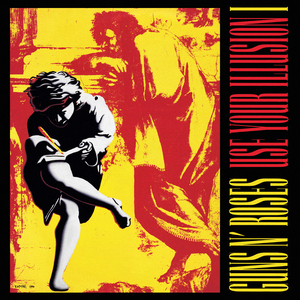
684. Guns N' Roses / Use Your Illusion I. 1991. 4/5
Following the enormity of Appetite for Destruction
it was always going to be interesting scenario to see what Guns N'
Roses would do in order to equal or top its popularity. It would be safe
to say that it would have been difficult to predict that the response
would be to write, record and release TWO albums, both on the same day.
An impossible task, you would say, to do so and to be able to sell both
in appropriate numbers. But they did, and for the most part they
succeeded in doing so with both albums.
This is a real eclectic mix, showing that their music cannot be categorised in a single genre. But, they are able to mix it into a format here that, for the most part, makes the album a winner.
The good songs are terrific, top-shelf stuff. They are songs you can easily walk around singing in your head for days afterwards when you have thrown the album on for a whirl. The lesser songs on the album are, well, average at worst, and OK on most scales. The album survives on a whole because these songs - good, average, fast, slow, heavy, soft - all mix themselves in to the playlist such that whatever your tastes or likes of each song, you can be sure that it will be offset by the next song in order. It means that, even though some of these songs could be considered "skip" songs, you have no desire to do so, because it all seems to fit together rather nicely.
It kicks off with brilliant "Right Next Door to Hell", a breezy mix of lyrics and guitar shovelled in until it bursts through the speakers, a song that could easily have come from their debut opus. This is followed by "Dust N Bones" which slows the tempo down immediately and also introduces the piano into the mix as well.
The cover version of Wings' "Live and Let Die" is a real treat. It pays homage to the original but not straying too far from its formula, but it gives it a real hard rock edge, and the energy that comes out is just awesome. "Don't Cry" (this version being dubbed the "Original Version" rather than the "Alternate Lyrics" version on Use Your Illusion II) is tolerable without being anything above average. I feel as though this is this album's "Paradise City", a song that most others seem to love, but that I find quite average.
"Perfect Crime" is what I would consider the best type of Guns N' Roses song. It is short, sharp, taxing vocals, great riff and solo break and terrific drumming, all at a cracking pace. Great stuff all round. This is followed by "You Ain't the First", an acoustic song in the same style as what was done on G N' R Lies. Now, while that stuff was OK for an EP release, I don't really see the need to revisit it here on a new album a couple of years later. If you wanted to write this song, then do it at THAT time! Sure, that's just my opinion, but it did seem a little odd at this time of the album. "Bad Obsession" reinvigorates the piano here, as well as bringing in the harmonica, so that it has a real rockabilly feel to the song. Another song for me that isn't bad, but it doesn't appeal either. "Back Off Bitch" is a much more straight forward hard rock song, with typical Axl attitude. "Double Talkin' Jive" is a really subtle under toned kind of song, featuring Izzy Stradlin on vocals and an extended guitar solo from Slash that leads out the song.
"November Rain" was the overblown lengthy single, and the video it spawned is by all accounts one of the most expensive ever produced. To be honest, when I first listened to the song on the album I was less than excited about it, but, having had it played on the radio for six months straight, and having seen the video for the song a thousand times, it did begin to grow on me. Though I would never call it once of their greatest songs, I do now find myself enjoying it whenever it comes on. "The Garden" follows this, which features Alice Cooper on vocals on part of the song, and it is written in a very Alice Cooper-type way. You could easily mistake it for one of his songs, such is the mood and tempo it is played and sung at. "Garden of Eden" moves the album back into fourth gear, driving along at a frenetic pace that had been missing from the previous couple of songs.
"Don't Damn Me" starts off with a great rock riff and Axl at his best, spitting out lyrics in an incomprehensible tone and without taking a breath, which seems literally impossible if you try and sing along with him. It has a great solo from Slash and is one of my favourite songs on the album. I cannot understand why they have never played it live, it just feels like a great live song. "Bad Apples", dominated by the piano of Dizzy Reed, sounds as though it could be being played in an old western bar, the band in the corner playing while everyone around them sips whisky and plays poker. "Dead Horse" is of a similar vein, although there is not the dominating presence of the piano here that there was on "Bad Apples" it is much more driven by the guitars.
The album wraps up with the 10 minute sleeper, "Coma". In so many ways, certainly when I first got the album and listened to it, this song really did almost send me into a coma. It really dragged out the conclusion of the album, and on two occasions during the song it feels like it is finished, only to kick start again (no doubt much like a coma victim). In recent times I have come to enjoy it much more than I did in those days twenty years ago, though i still think it is dragged on far longer than is necessary.
I have always felt, probably like a majority of people, that if the band had just taken the best parts of both Use Your Illusion I and Use Your Illusion II, and fused them together, they could have made one album that may have reached legendary status. As it turns out, both of them stand up on their own. Use Your Illusion I has something for just about everyone's musical taste, and all with a distinctive Guns N' Roses flavour about them, which is quite an achievement. To me, there are a lot of songs here that I like rather than love, and a numberof others I can tolerate rather than like. With an album so long and with so many songs of varying styles, you might be able to find a lot that you enjoy, but there will also through sheer volume be a few that you are ambivalent about. In an overall rating of the album, this is what costs it getting full marks.
This is a real eclectic mix, showing that their music cannot be categorised in a single genre. But, they are able to mix it into a format here that, for the most part, makes the album a winner.
The good songs are terrific, top-shelf stuff. They are songs you can easily walk around singing in your head for days afterwards when you have thrown the album on for a whirl. The lesser songs on the album are, well, average at worst, and OK on most scales. The album survives on a whole because these songs - good, average, fast, slow, heavy, soft - all mix themselves in to the playlist such that whatever your tastes or likes of each song, you can be sure that it will be offset by the next song in order. It means that, even though some of these songs could be considered "skip" songs, you have no desire to do so, because it all seems to fit together rather nicely.
It kicks off with brilliant "Right Next Door to Hell", a breezy mix of lyrics and guitar shovelled in until it bursts through the speakers, a song that could easily have come from their debut opus. This is followed by "Dust N Bones" which slows the tempo down immediately and also introduces the piano into the mix as well.
The cover version of Wings' "Live and Let Die" is a real treat. It pays homage to the original but not straying too far from its formula, but it gives it a real hard rock edge, and the energy that comes out is just awesome. "Don't Cry" (this version being dubbed the "Original Version" rather than the "Alternate Lyrics" version on Use Your Illusion II) is tolerable without being anything above average. I feel as though this is this album's "Paradise City", a song that most others seem to love, but that I find quite average.
"Perfect Crime" is what I would consider the best type of Guns N' Roses song. It is short, sharp, taxing vocals, great riff and solo break and terrific drumming, all at a cracking pace. Great stuff all round. This is followed by "You Ain't the First", an acoustic song in the same style as what was done on G N' R Lies. Now, while that stuff was OK for an EP release, I don't really see the need to revisit it here on a new album a couple of years later. If you wanted to write this song, then do it at THAT time! Sure, that's just my opinion, but it did seem a little odd at this time of the album. "Bad Obsession" reinvigorates the piano here, as well as bringing in the harmonica, so that it has a real rockabilly feel to the song. Another song for me that isn't bad, but it doesn't appeal either. "Back Off Bitch" is a much more straight forward hard rock song, with typical Axl attitude. "Double Talkin' Jive" is a really subtle under toned kind of song, featuring Izzy Stradlin on vocals and an extended guitar solo from Slash that leads out the song.
"November Rain" was the overblown lengthy single, and the video it spawned is by all accounts one of the most expensive ever produced. To be honest, when I first listened to the song on the album I was less than excited about it, but, having had it played on the radio for six months straight, and having seen the video for the song a thousand times, it did begin to grow on me. Though I would never call it once of their greatest songs, I do now find myself enjoying it whenever it comes on. "The Garden" follows this, which features Alice Cooper on vocals on part of the song, and it is written in a very Alice Cooper-type way. You could easily mistake it for one of his songs, such is the mood and tempo it is played and sung at. "Garden of Eden" moves the album back into fourth gear, driving along at a frenetic pace that had been missing from the previous couple of songs.
"Don't Damn Me" starts off with a great rock riff and Axl at his best, spitting out lyrics in an incomprehensible tone and without taking a breath, which seems literally impossible if you try and sing along with him. It has a great solo from Slash and is one of my favourite songs on the album. I cannot understand why they have never played it live, it just feels like a great live song. "Bad Apples", dominated by the piano of Dizzy Reed, sounds as though it could be being played in an old western bar, the band in the corner playing while everyone around them sips whisky and plays poker. "Dead Horse" is of a similar vein, although there is not the dominating presence of the piano here that there was on "Bad Apples" it is much more driven by the guitars.
The album wraps up with the 10 minute sleeper, "Coma". In so many ways, certainly when I first got the album and listened to it, this song really did almost send me into a coma. It really dragged out the conclusion of the album, and on two occasions during the song it feels like it is finished, only to kick start again (no doubt much like a coma victim). In recent times I have come to enjoy it much more than I did in those days twenty years ago, though i still think it is dragged on far longer than is necessary.
I have always felt, probably like a majority of people, that if the band had just taken the best parts of both Use Your Illusion I and Use Your Illusion II, and fused them together, they could have made one album that may have reached legendary status. As it turns out, both of them stand up on their own. Use Your Illusion I has something for just about everyone's musical taste, and all with a distinctive Guns N' Roses flavour about them, which is quite an achievement. To me, there are a lot of songs here that I like rather than love, and a numberof others I can tolerate rather than like. With an album so long and with so many songs of varying styles, you might be able to find a lot that you enjoy, but there will also through sheer volume be a few that you are ambivalent about. In an overall rating of the album, this is what costs it getting full marks.
Saturday, July 20, 2013
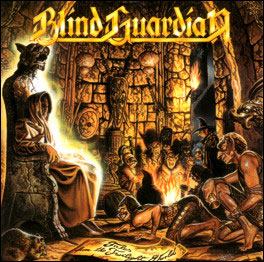
683. Blind Guardian / Tales From the Twilight World. 1990. 4.5/5
Though not a definitive recognition of the creation or popularising of the specific genre, you can draw a pretty good line from the fact that Helloween were forebearers and inspiration behind the genre of heavy metal that would become known as power metal. Though they themselves started off more as a speed metal band before developing through their first four albums a sound that was as uniquely wonderful as it was brilliant, they along with other bands of their era and ilk cut a swathe that primarily became the source of where power metal advanced along to in the 1990’s. Power metal though became somewhat keyboard based alongside the guitars and soaring vocals, whereas Helloween was very much guitar based. And this is where another band came alongside them to follow in their wake, and that band was Blind Guardian.
Their path followed that of the band that they looked up to. Their debut album “Battalions of Fear” was very much a speed metal album, much as Helloween’s “Walls of Jericho” had been a couple of years prior to this. Then Blind Guardian followed this up with “Follow the Blind”, an album that harboured that same sound but even went further to incorporate some thrash metal tendencies that were a major part of that time as well. Kai Hansen, who had just recently parted ways with Helloween, had contributed vocals and guitar on two songs on the album, further cementing the bind that tied these two bands together. Moving onto their third album there was a mood for further maturing and revision of their music. The band, again following the lead that Helloween had made with the two Keeper of the Seven Keys albums, looked to create an album that would incorporate a more melodic sound, creating epic sounding tracks that retained the basis of the band’s sound of their first two albums but giving them a push to be fuller musical pieces. Along with this, Hansi Kursch, who was the main lyrics writer for the songs, looked to move along the same path that he had on the first two albums, transcribing from his favourite books and films and bringing them to life in Blind Guardian’s music.
This was the direction taken by the band as they headed to the studio in the first half of 1990, at a time when the music world was reaching an interesting crescendo of its own, one which Blind Guardian almost completely ignored with their third studio album, the outstanding “Tales from the Twilight World”.
From the opening strains of the opening track, Blind Guardian are on a winner with this album. Met by the chorus of “The Morning Sun of Dune”, the album kicks off with the pacey and double-kick driven "Traveler in Time", based on Frank Herbert's "Dune" series of science fiction novels. Hansi sings from the point of view of Paul Atreides, and all that he has to overcome. “The Fremen sing that their kingdom will come, and I’m the leading one... so where is the way? When I’m a million miles from home”. It is a great way to start the album, showcasing the continued heavy and speed metal aspects of the band while incorporating these new epic quotients into their music.
This is followed by one of the band’s greatest tracks, and most likely my all time favourite Blind Guardian song and still the one that lights up the room every time it comes on, "Welcome to Dying". From the outset it crashes through the speakers as it drags you in, a brilliantly energetic song, punctuated all the way through with the anthemic chorus. There is an ‘all-hands-on-deck’ attitude in regards to the chorused backing vocals, supporting the marvellous tones of Hansi Kursch who leads the charge as lead singer. The solo breaks both within the middle of the track and then leading out the song are completely brilliant, and Hansi's vocals just perfect throughout. This song tells the story of the great Peter Straub novel, "Floating Dragon", which I also love. This is still a cracking song, still finds itself in live setlists and is one that showcases everything great about this band.
The short and unusual instrumental break of "Weird Dreams" follows, and as a way of transitioning between songs it interesting one. This is powerful, fast, loud, chock full of guitars harmonising throughout. Andre Olbrich has been allowed to unleash here as the writer of the song, and he and fellow guitarist Marcus Siepen utilise the freedom offered to them here. Its conclusion allows us to then be treated to the serene and acoustic ballad of "Lord of the Rings", combining gentle keyboards as well. Now power ballads are not my cup of tea, but this is not really one of those, it is a quieter, acoustically driven version of Blind Guardian's song writing, and while it may not appear so on initial listenings, once you have heard this album a lot of times, it really does just seem to fit in, which surprised me as much as it would surprise anyone else. As the title would suggest, Hansi sings about the opening concept of Tolkien's “Lord of the Rings”, but in a Hobbiton setting rather than a Mordor setting. I guess you have to be a nerd to understand the reference.
From here we bust back into speed power metal mode with "Goodbye My Friend", with Thomen Stauch’s drumming again driving the song from the outset. “Goodbye My Friend” is Hansi’s tribute to the movie ‘ET: The Extraterrestrial’, from ET’s point of view, harping on the human race and how they are likely to destroy themselves through the fear and ego they possess. As Hansi sings as ET, “Communication to you is so strange, You I trust to no one no warmths reach your heart, To you I’m the stranger but you’re strange to me, You destruct all that is unknown to you”. Musically the song cruises along at a great speed and is another absorbing track. Another of the highlights of the album is next, with "Lost in the Twilight Hall". Lyrically, Hansi delves back into The Lord of the Rings, with the song describing what happened to Gandalf the Grey after defeating the Balrog in the mines of Moria before his reincarnation as Gandalf the White, as described in second volume "The Two Towers". Once again the band takes us on a ride, with great riffing guitars from Olbrich and Siepen, the wonderful fast bassline from Kursch and the crushing drums from Stauch. The tempo is the winner though, driving along at speed in perfect synchronicity. What also acts as a major energiser for this song is the appearance of guest musician Kai Hansen. Along with lending his vocals in both a lead vocal and backing vocal capacity, he also contributes a guitar solo to the song, which is instantly recognisable and brilliant. Great stuff. This semi-almost-title track is another of the outstanding songs on this album that make it as brilliant as it is.
The lyrics of both "Tommyknockers" and "Altair 4" are from the Stephen King novel, "The Tommyknockers". “Tommyknockers” invokes the preamble from the novel “Late last night and the night before Tommyknockers, Tommyknockers knocking at the door” while telling the story from Gard’s point of view in the novel, with “Altair 4” referencing the place that the kid David Brown had been portalled to when the magic trick by his sibling Hilly went wrong. Both songs are good, again driven along by Thomas' excellent drum work, but both are less memorable than those songs preceding them. Given the excellence of the songs on this album, in comparison they were always going to suffer a little. The album then concludes with "The Last Candle", with another Kai Hansen guitar solo and appearance on backing vocals being an attractive way to end the album.
I spent years and years when I walked down the aisles of albums and CDs at Sydney’s Utopia Records, looking for new albums to add to my collection, seeing the beautifully crafted front covers of the albums by Blind Guardian and thinking “I wonder if that band is any good?” And there were occasions when I thought that I should just buy one album and see what they are like, because maybe I’ll like them!! Because none of my friends listened to them, and I knew no one who had even heard a song by them. So it wasn’t until 2002 that I finally bit the bullet and decided to buy an album, which was their then current new release “A Night at the Opera”. That, as it turned out, was a mistake. Firstly because I wasn’t overly fond of that album, and secondly because it stopped me from delving any further into their back catalogue. Which meant it was another three years before I dared to give the band another chance, mainly on the back of having seen a video of them playing at Wacken, and a particular song that caught my attention called “Welcome to Dying”. So I decided to track down the album that that song was on, and it was “Tales from the Twilight World”. Paydirt! Here was an album that appealed to me! For a start, it was fast. It was almost speed metal like in places. It had great vocal, awesome guitars, brilliant drumming. And the songs, they had a substance to them, they had lyrics worth knowing and singing along to, and more importantly referenced things that I loved – Tolkien, Stephen King. And I was hooked. Not only that, I was now cursing Past Bill for his lack of foresight in not having cottoned onto this earlier. Idiot! So while not my first exposure to Blind Guardian the band, this album along with “Nightfall in Middle Earth” were certainly the two albums that made me fall in love with the band.
I have had my CD out again this past week, revelling in songs that are pure joy to me to listen to. All of those albums the band released in the 1990’s are terrific, each different in their own way as the band’s sound changed with each album released, and each has their own story that goes with it. This one, that invokes the works of books and films, mirrors the lyrical aspects that other bands I love such as Iron Maiden and Anthrax also follow. But it is the methodology that Blind Guardian follows, of the raging guitars of Andre Olbrich and Marcus Siepen, the flying drumming of Thoman Stauch, and the bass work and amazing vocals of Hansi Kursch, that create such a magnificent album as this. It is one of their best, and is arguably my favourite. And this is the crowning glory.
Their path followed that of the band that they looked up to. Their debut album “Battalions of Fear” was very much a speed metal album, much as Helloween’s “Walls of Jericho” had been a couple of years prior to this. Then Blind Guardian followed this up with “Follow the Blind”, an album that harboured that same sound but even went further to incorporate some thrash metal tendencies that were a major part of that time as well. Kai Hansen, who had just recently parted ways with Helloween, had contributed vocals and guitar on two songs on the album, further cementing the bind that tied these two bands together. Moving onto their third album there was a mood for further maturing and revision of their music. The band, again following the lead that Helloween had made with the two Keeper of the Seven Keys albums, looked to create an album that would incorporate a more melodic sound, creating epic sounding tracks that retained the basis of the band’s sound of their first two albums but giving them a push to be fuller musical pieces. Along with this, Hansi Kursch, who was the main lyrics writer for the songs, looked to move along the same path that he had on the first two albums, transcribing from his favourite books and films and bringing them to life in Blind Guardian’s music.
This was the direction taken by the band as they headed to the studio in the first half of 1990, at a time when the music world was reaching an interesting crescendo of its own, one which Blind Guardian almost completely ignored with their third studio album, the outstanding “Tales from the Twilight World”.
From the opening strains of the opening track, Blind Guardian are on a winner with this album. Met by the chorus of “The Morning Sun of Dune”, the album kicks off with the pacey and double-kick driven "Traveler in Time", based on Frank Herbert's "Dune" series of science fiction novels. Hansi sings from the point of view of Paul Atreides, and all that he has to overcome. “The Fremen sing that their kingdom will come, and I’m the leading one... so where is the way? When I’m a million miles from home”. It is a great way to start the album, showcasing the continued heavy and speed metal aspects of the band while incorporating these new epic quotients into their music.
This is followed by one of the band’s greatest tracks, and most likely my all time favourite Blind Guardian song and still the one that lights up the room every time it comes on, "Welcome to Dying". From the outset it crashes through the speakers as it drags you in, a brilliantly energetic song, punctuated all the way through with the anthemic chorus. There is an ‘all-hands-on-deck’ attitude in regards to the chorused backing vocals, supporting the marvellous tones of Hansi Kursch who leads the charge as lead singer. The solo breaks both within the middle of the track and then leading out the song are completely brilliant, and Hansi's vocals just perfect throughout. This song tells the story of the great Peter Straub novel, "Floating Dragon", which I also love. This is still a cracking song, still finds itself in live setlists and is one that showcases everything great about this band.
The short and unusual instrumental break of "Weird Dreams" follows, and as a way of transitioning between songs it interesting one. This is powerful, fast, loud, chock full of guitars harmonising throughout. Andre Olbrich has been allowed to unleash here as the writer of the song, and he and fellow guitarist Marcus Siepen utilise the freedom offered to them here. Its conclusion allows us to then be treated to the serene and acoustic ballad of "Lord of the Rings", combining gentle keyboards as well. Now power ballads are not my cup of tea, but this is not really one of those, it is a quieter, acoustically driven version of Blind Guardian's song writing, and while it may not appear so on initial listenings, once you have heard this album a lot of times, it really does just seem to fit in, which surprised me as much as it would surprise anyone else. As the title would suggest, Hansi sings about the opening concept of Tolkien's “Lord of the Rings”, but in a Hobbiton setting rather than a Mordor setting. I guess you have to be a nerd to understand the reference.
From here we bust back into speed power metal mode with "Goodbye My Friend", with Thomen Stauch’s drumming again driving the song from the outset. “Goodbye My Friend” is Hansi’s tribute to the movie ‘ET: The Extraterrestrial’, from ET’s point of view, harping on the human race and how they are likely to destroy themselves through the fear and ego they possess. As Hansi sings as ET, “Communication to you is so strange, You I trust to no one no warmths reach your heart, To you I’m the stranger but you’re strange to me, You destruct all that is unknown to you”. Musically the song cruises along at a great speed and is another absorbing track. Another of the highlights of the album is next, with "Lost in the Twilight Hall". Lyrically, Hansi delves back into The Lord of the Rings, with the song describing what happened to Gandalf the Grey after defeating the Balrog in the mines of Moria before his reincarnation as Gandalf the White, as described in second volume "The Two Towers". Once again the band takes us on a ride, with great riffing guitars from Olbrich and Siepen, the wonderful fast bassline from Kursch and the crushing drums from Stauch. The tempo is the winner though, driving along at speed in perfect synchronicity. What also acts as a major energiser for this song is the appearance of guest musician Kai Hansen. Along with lending his vocals in both a lead vocal and backing vocal capacity, he also contributes a guitar solo to the song, which is instantly recognisable and brilliant. Great stuff. This semi-almost-title track is another of the outstanding songs on this album that make it as brilliant as it is.
The lyrics of both "Tommyknockers" and "Altair 4" are from the Stephen King novel, "The Tommyknockers". “Tommyknockers” invokes the preamble from the novel “Late last night and the night before Tommyknockers, Tommyknockers knocking at the door” while telling the story from Gard’s point of view in the novel, with “Altair 4” referencing the place that the kid David Brown had been portalled to when the magic trick by his sibling Hilly went wrong. Both songs are good, again driven along by Thomas' excellent drum work, but both are less memorable than those songs preceding them. Given the excellence of the songs on this album, in comparison they were always going to suffer a little. The album then concludes with "The Last Candle", with another Kai Hansen guitar solo and appearance on backing vocals being an attractive way to end the album.
I spent years and years when I walked down the aisles of albums and CDs at Sydney’s Utopia Records, looking for new albums to add to my collection, seeing the beautifully crafted front covers of the albums by Blind Guardian and thinking “I wonder if that band is any good?” And there were occasions when I thought that I should just buy one album and see what they are like, because maybe I’ll like them!! Because none of my friends listened to them, and I knew no one who had even heard a song by them. So it wasn’t until 2002 that I finally bit the bullet and decided to buy an album, which was their then current new release “A Night at the Opera”. That, as it turned out, was a mistake. Firstly because I wasn’t overly fond of that album, and secondly because it stopped me from delving any further into their back catalogue. Which meant it was another three years before I dared to give the band another chance, mainly on the back of having seen a video of them playing at Wacken, and a particular song that caught my attention called “Welcome to Dying”. So I decided to track down the album that that song was on, and it was “Tales from the Twilight World”. Paydirt! Here was an album that appealed to me! For a start, it was fast. It was almost speed metal like in places. It had great vocal, awesome guitars, brilliant drumming. And the songs, they had a substance to them, they had lyrics worth knowing and singing along to, and more importantly referenced things that I loved – Tolkien, Stephen King. And I was hooked. Not only that, I was now cursing Past Bill for his lack of foresight in not having cottoned onto this earlier. Idiot! So while not my first exposure to Blind Guardian the band, this album along with “Nightfall in Middle Earth” were certainly the two albums that made me fall in love with the band.
I have had my CD out again this past week, revelling in songs that are pure joy to me to listen to. All of those albums the band released in the 1990’s are terrific, each different in their own way as the band’s sound changed with each album released, and each has their own story that goes with it. This one, that invokes the works of books and films, mirrors the lyrical aspects that other bands I love such as Iron Maiden and Anthrax also follow. But it is the methodology that Blind Guardian follows, of the raging guitars of Andre Olbrich and Marcus Siepen, the flying drumming of Thoman Stauch, and the bass work and amazing vocals of Hansi Kursch, that create such a magnificent album as this. It is one of their best, and is arguably my favourite. And this is the crowning glory.
Thursday, July 18, 2013
682. Venom / Welcome to Hell. 1981. 4/5
In the last few weeks it has come to my attention that I may have missed a trick back in my late teenage years, something that when it comes to my music tastes I don't think happened too often. However, there are probably reasons why Venom slipped beneath my radar. Unless you were often frequenting specialist record stores in Australia, you would never find these albums, because the mainstream record stores would not have a bar of keeping such stuff. Of course, it's all different these days, what with the internet and online music stores and the ability to easily buy albums from overseas, but in the 1980's for us a lot of it was guesswork or becoming friendly with an overseas student who brought new music in your life. So in recent times I have done a lot of chasing down of bands from the early 80's that I had little knowledge of, and venom was on that list. this was the first album I bought, being their debut.
Reviewing this more than thirty years after its release is not easy. Because it's style is so familiar and recognisable, mainly because it so obviously inspired so many bands that came after them, I felt comfortable with the album from the first time I played it. It is different from most of the other NWOBHM bands of the time, most of whom looked for melodic guitars and more progressive elements in their music. This is heavier, generally faster, with a real emphasis on deeper and darker vocals and guitars. The production is only average, and there is little precision in any of the instruments (the myth has been raised that the band thought they were recording a demo when in fact it was what became Welcome to Hell), so it sometimes comes off as clunky and just a wall of noise rather than superb song recording. But in some ways that is the charm of the album. It's not perfect, and given that it was apparently all recorded in three days compared to some bands today taking two years to get every single note perfect... well, that's what is so different about music these days. But why would you want this to be any different? If you aren't as precise as Dream Theater when it come to your instruments, then you sure don't need to have high fidelity sound, and overall this has similar production values as other albums of the era.
The raucousness of "Son of Satan", the chugging guitar, rumbling bass and solid drum timekeeping of the title track "Welcome to Hell", the Motorhead-like rock 'n metal of "Poison", the awe-inspiring "Witching Hour" - the album has great songs coming at you one after the other. Like I said, it is great now, having only heard this album and band for the first time in the last six months. i can only imagine what it must have been like to the average punter when it was first released.
Had I discovered this album back in my high school years, I am willing to suggest that it could well be rated a whole lot higher than I have rated it today. Everything about it hits the right nerves in me when I listen to it, and if I had been playing it over and over for 25 or 30 years it would most likely be in a list of my all time classics. Despite this, Welcome to Hell is still a classic, a standard bearer to the thrash and black metal bands to come who obviously drew so much inspiration from it, and while it may seem a little tame in comparison to some of those bands today, that doesn't detract from how good this album was in the day, and still is in the present.
Reviewing this more than thirty years after its release is not easy. Because it's style is so familiar and recognisable, mainly because it so obviously inspired so many bands that came after them, I felt comfortable with the album from the first time I played it. It is different from most of the other NWOBHM bands of the time, most of whom looked for melodic guitars and more progressive elements in their music. This is heavier, generally faster, with a real emphasis on deeper and darker vocals and guitars. The production is only average, and there is little precision in any of the instruments (the myth has been raised that the band thought they were recording a demo when in fact it was what became Welcome to Hell), so it sometimes comes off as clunky and just a wall of noise rather than superb song recording. But in some ways that is the charm of the album. It's not perfect, and given that it was apparently all recorded in three days compared to some bands today taking two years to get every single note perfect... well, that's what is so different about music these days. But why would you want this to be any different? If you aren't as precise as Dream Theater when it come to your instruments, then you sure don't need to have high fidelity sound, and overall this has similar production values as other albums of the era.
The raucousness of "Son of Satan", the chugging guitar, rumbling bass and solid drum timekeeping of the title track "Welcome to Hell", the Motorhead-like rock 'n metal of "Poison", the awe-inspiring "Witching Hour" - the album has great songs coming at you one after the other. Like I said, it is great now, having only heard this album and band for the first time in the last six months. i can only imagine what it must have been like to the average punter when it was first released.
Had I discovered this album back in my high school years, I am willing to suggest that it could well be rated a whole lot higher than I have rated it today. Everything about it hits the right nerves in me when I listen to it, and if I had been playing it over and over for 25 or 30 years it would most likely be in a list of my all time classics. Despite this, Welcome to Hell is still a classic, a standard bearer to the thrash and black metal bands to come who obviously drew so much inspiration from it, and while it may seem a little tame in comparison to some of those bands today, that doesn't detract from how good this album was in the day, and still is in the present.
Thursday, July 11, 2013
681. Night Ranger / Midnight Madness. 1983. 3.5/5
Following up the hard rocking debut of Dawn Patrol was always going to be a difficult task, and maintaining the balance on this album was also going to be a task in itself.
Opening with the American anthem "(You Can Still) Rock in America", as an International listener and buyer of the album this song still makes me annoyed even to this day. Yeah, sure, you are Americans who live in America, and can apparently still Rock in America. And the song itself sounds great, a fast rock track with plenty of scope for the guitars to turn their trade. But for those of us who aren't American, it makes it REALLY hard to sing along, because in the long run we aren't rocking in America! In the same way that John Mellencamp's "R.O.C.K. in the U.S.A" annoyed the crap out of me when it was plastered over Australian radio for twelve months, this does for the same reason. Yes, it's a petty gripe, but one that non-Americans I'm sure can relate to. I mean, do Americans sing "I come from a land Down Under" with passion? Anyway, enough of this. A good song to open the album with.
"Rumours in the Air" is a softer, slower song than I would have expected in following up this opener. I never really understand what leads some bands to think that jumping between fast and slow songs on a album won't affect the 'listening pleasure' of those that buy the album. Having jumped into the album with a great hard rock number, this holds everything back again.
"Why Does Love Have to Change" follows similar themes, but back at a faster pace, with Jack's dominating vocals searing through over the top of the keyboards and guitars. While the solos again here are terrific, showing off the best that Brad and Jeff had to offer, the song would have been harder had the guitars not been turned down so much in the mix throughout the whole song, Apart from the solos it is the keyboards that dominate most of the melody through the song, which to me is a shame.
The radio-friendly, rock power ballad hit "Sister Christian" is next. This is arguably Night Ranger's biggest single success, but is so far out of my sphere of love of music that it, for me, just stops the album in its tracks. Plenty of people were probably drawn to Night Ranger by this song, and I'd bet many of them would leave disappointed having heard the majority of their other songs, just because they all aren't like "Sister Christian". If you love the rock ballad you will probably love this. When I used to record this from vinyl to cassette, it was one song I would always omit.
After this slow and sullied end to Side One, Side Two kicks into gear straight away with the brilliant "Touch of Madness", easily the best song on the album. A punchy drum beat and guitar riff led by terrific vocals makes this the star of the album. This is the kind of song that, for me, would have made Night Ranger an even more formidable band if they had concentrated on this style. Singles success somewhat disproves this theory, but I know I would like to have heard more songs in this kind of genre. "Passion Play", while still a good song and more than listenable, bring the album back to that almost pop rock kind of style, one that works for Night Ranger through the sheer talent of the band's members. Moving on from this comes "When You Close Your Eyes", which I sort of like despite myself. It's a love song, no doubt, and its success as a single shows that it was certainly written as radio-friendly, but it is catchy, and you can't help yourself but sing through the chorus loudly. "Chippin' Away" continues along in this vein, not really jumping out of second gear, when it could really have been a guitar-driven hard rock song. Instead it is a serviceable song in the mood of this album. It is all concluded with the quiet, silent, acoustically harmony of "Let Him Run", which almost destroys and semblance of the hardness of the band and lets you drift off into a coma. While I would not be a fan of this song wherever it was placed on the Album, making it the last thing you hear before the needle comes off the vinyl seems a really strange decision.
I still like this album quite a bit, though I think it is a step down from their previous release. In a lot of ways this went just a little bit too much in the soft rock direction without actually falling into that category. It's hard to attribute that, with two such brilliant guitarists such as Brad Gillis and Jeff Watson in the band, that it is the keyboards that dominate most of the songs, apart from the small lead breaks both of them get. It's what probably made the band more accessible through the radio market, and held them back from moving into a more fully fledged metal market than hard rock. It also severely ties this album to the 1980's, and while that's not necessarily a bad thing, it does limit its full potential.
Opening with the American anthem "(You Can Still) Rock in America", as an International listener and buyer of the album this song still makes me annoyed even to this day. Yeah, sure, you are Americans who live in America, and can apparently still Rock in America. And the song itself sounds great, a fast rock track with plenty of scope for the guitars to turn their trade. But for those of us who aren't American, it makes it REALLY hard to sing along, because in the long run we aren't rocking in America! In the same way that John Mellencamp's "R.O.C.K. in the U.S.A" annoyed the crap out of me when it was plastered over Australian radio for twelve months, this does for the same reason. Yes, it's a petty gripe, but one that non-Americans I'm sure can relate to. I mean, do Americans sing "I come from a land Down Under" with passion? Anyway, enough of this. A good song to open the album with.
"Rumours in the Air" is a softer, slower song than I would have expected in following up this opener. I never really understand what leads some bands to think that jumping between fast and slow songs on a album won't affect the 'listening pleasure' of those that buy the album. Having jumped into the album with a great hard rock number, this holds everything back again.
"Why Does Love Have to Change" follows similar themes, but back at a faster pace, with Jack's dominating vocals searing through over the top of the keyboards and guitars. While the solos again here are terrific, showing off the best that Brad and Jeff had to offer, the song would have been harder had the guitars not been turned down so much in the mix throughout the whole song, Apart from the solos it is the keyboards that dominate most of the melody through the song, which to me is a shame.
The radio-friendly, rock power ballad hit "Sister Christian" is next. This is arguably Night Ranger's biggest single success, but is so far out of my sphere of love of music that it, for me, just stops the album in its tracks. Plenty of people were probably drawn to Night Ranger by this song, and I'd bet many of them would leave disappointed having heard the majority of their other songs, just because they all aren't like "Sister Christian". If you love the rock ballad you will probably love this. When I used to record this from vinyl to cassette, it was one song I would always omit.
After this slow and sullied end to Side One, Side Two kicks into gear straight away with the brilliant "Touch of Madness", easily the best song on the album. A punchy drum beat and guitar riff led by terrific vocals makes this the star of the album. This is the kind of song that, for me, would have made Night Ranger an even more formidable band if they had concentrated on this style. Singles success somewhat disproves this theory, but I know I would like to have heard more songs in this kind of genre. "Passion Play", while still a good song and more than listenable, bring the album back to that almost pop rock kind of style, one that works for Night Ranger through the sheer talent of the band's members. Moving on from this comes "When You Close Your Eyes", which I sort of like despite myself. It's a love song, no doubt, and its success as a single shows that it was certainly written as radio-friendly, but it is catchy, and you can't help yourself but sing through the chorus loudly. "Chippin' Away" continues along in this vein, not really jumping out of second gear, when it could really have been a guitar-driven hard rock song. Instead it is a serviceable song in the mood of this album. It is all concluded with the quiet, silent, acoustically harmony of "Let Him Run", which almost destroys and semblance of the hardness of the band and lets you drift off into a coma. While I would not be a fan of this song wherever it was placed on the Album, making it the last thing you hear before the needle comes off the vinyl seems a really strange decision.
I still like this album quite a bit, though I think it is a step down from their previous release. In a lot of ways this went just a little bit too much in the soft rock direction without actually falling into that category. It's hard to attribute that, with two such brilliant guitarists such as Brad Gillis and Jeff Watson in the band, that it is the keyboards that dominate most of the songs, apart from the small lead breaks both of them get. It's what probably made the band more accessible through the radio market, and held them back from moving into a more fully fledged metal market than hard rock. It also severely ties this album to the 1980's, and while that's not necessarily a bad thing, it does limit its full potential.
Wednesday, July 10, 2013
680. MullMuzzler / Keep It to Yourself. 1999. 3/5
MullMuzzler is the side project of Dream
Theater's lead vocalist James Labrie, and this album was the first,
released a couple of months before that band's Scenes From a Memory.
The opening song "His Voice" is reminiscent of the best parts of his Dream Theater influences, a prominent guitar riff that punctuates a keyboard-dominated melodic song, which suits Labrie's vocals perfectly. The guitar and drums do not dominate here, which probably highlights that the writers on this album are not those that are seen in his full time band. This theme continues in "Statued", where again it is the keyboard that dominate the song, along with major keyboard solo again but not so much from the guitar. In a way it is probably a good thing that Labrie and Mullmuzzler have tried to change things up from what you would normally here from the Dream Theater conglomerate, but although I do enjoy both of these opening songs on the album, I really feel it misses a real guitar and drum influence, to help balance out what is here. Perhaps that would bring too much heaviness to the music that the band was looking to avoid. I'm not sure. "Shores of Avalon" continues in this same vein, with Labrie's soaring vocals tending to paper over the oversights in the music itself. The keyboards in the middle of the song are very much front and centre here though, leaving the guitar to be almost an afterthought in the distant background.
None of that can prepare you for "Beelzebubba", the jazzy, swing tempo song that is all about the horns, trumpet, sax and trombone, mixed in with more subtle keys in a song that is so diverse and different from anything that has been heard before with his vocals attached to it that it is a real shock on first listen. Sadly, it really doesn't improve on subsequent listens to the album. It really is like a sore thumb, even sticking out amongst the different tones that are gathered together on Keep It to Yourself. This is certainly one way to garner attention to your music, but I would question as to whether it is a good thing.
The album's best song follows this hiccup. "Guardian Angel" raises itself to a better tempo, and is a more concentrated guitar and drums based song, though even here it is amazing that it the bass guitar is the main guitar in question, until we get to the guitar solo, which is the first on the album where it truly does dominate. The bass and keys also get a chance to shine on their own. A much better return than its predecessor.
"Sacrifice" is very much of the power ballad variety, with James crooning through, and even having the soft rock power guitar solo as a reference point. James sounds great, but when you are not a fan of these kinds of songs it would take a hell of a lot more to save it. "Lace" is probably my second favourite on the album, with several characteristic time changes and switching between guitar riff and keyboard riff as the headline act of the song, and even James singing with James in places with some excellent harmonies. "Slow Burn" returns to the power ballad genre, starting out slow and mournful with keyboards and guitar underneath Labrie's soaring vocals. The closing song "As a Man Thinks" is another abstract piece of music writing, one that really probably just drags on way too long. It is almost like a freeform jam, without any structure and relying on keys and computers as the lead instrumentals. It makes me think of Max Headroom for some reason, not always a pleasant thought. A very strange way to finish off.
There is a lot to like here, along with some stuff that you would have to be a fanatic to love. While it may not be to everyone's tastes, it is good to hear Labrie and his band experimenting with lots of different styles through the genre of the album, and not being locked into an album where all the songs sound the same and act the same. Mullmuzzler give you a chance to appreciate their talents through many mediums, and whether you like it will be up to the individuals taste. For me, I don't find it is an album I would drift back to very often, but when I do, as I have today, I am still mostly pleasantly surprised at the outcome. If I listen to it without "Beelzebubba" and "What a Man Thinks" I enjoy it a lot more, and would certainly rank it higher without them.
The opening song "His Voice" is reminiscent of the best parts of his Dream Theater influences, a prominent guitar riff that punctuates a keyboard-dominated melodic song, which suits Labrie's vocals perfectly. The guitar and drums do not dominate here, which probably highlights that the writers on this album are not those that are seen in his full time band. This theme continues in "Statued", where again it is the keyboard that dominate the song, along with major keyboard solo again but not so much from the guitar. In a way it is probably a good thing that Labrie and Mullmuzzler have tried to change things up from what you would normally here from the Dream Theater conglomerate, but although I do enjoy both of these opening songs on the album, I really feel it misses a real guitar and drum influence, to help balance out what is here. Perhaps that would bring too much heaviness to the music that the band was looking to avoid. I'm not sure. "Shores of Avalon" continues in this same vein, with Labrie's soaring vocals tending to paper over the oversights in the music itself. The keyboards in the middle of the song are very much front and centre here though, leaving the guitar to be almost an afterthought in the distant background.
None of that can prepare you for "Beelzebubba", the jazzy, swing tempo song that is all about the horns, trumpet, sax and trombone, mixed in with more subtle keys in a song that is so diverse and different from anything that has been heard before with his vocals attached to it that it is a real shock on first listen. Sadly, it really doesn't improve on subsequent listens to the album. It really is like a sore thumb, even sticking out amongst the different tones that are gathered together on Keep It to Yourself. This is certainly one way to garner attention to your music, but I would question as to whether it is a good thing.
The album's best song follows this hiccup. "Guardian Angel" raises itself to a better tempo, and is a more concentrated guitar and drums based song, though even here it is amazing that it the bass guitar is the main guitar in question, until we get to the guitar solo, which is the first on the album where it truly does dominate. The bass and keys also get a chance to shine on their own. A much better return than its predecessor.
"Sacrifice" is very much of the power ballad variety, with James crooning through, and even having the soft rock power guitar solo as a reference point. James sounds great, but when you are not a fan of these kinds of songs it would take a hell of a lot more to save it. "Lace" is probably my second favourite on the album, with several characteristic time changes and switching between guitar riff and keyboard riff as the headline act of the song, and even James singing with James in places with some excellent harmonies. "Slow Burn" returns to the power ballad genre, starting out slow and mournful with keyboards and guitar underneath Labrie's soaring vocals. The closing song "As a Man Thinks" is another abstract piece of music writing, one that really probably just drags on way too long. It is almost like a freeform jam, without any structure and relying on keys and computers as the lead instrumentals. It makes me think of Max Headroom for some reason, not always a pleasant thought. A very strange way to finish off.
There is a lot to like here, along with some stuff that you would have to be a fanatic to love. While it may not be to everyone's tastes, it is good to hear Labrie and his band experimenting with lots of different styles through the genre of the album, and not being locked into an album where all the songs sound the same and act the same. Mullmuzzler give you a chance to appreciate their talents through many mediums, and whether you like it will be up to the individuals taste. For me, I don't find it is an album I would drift back to very often, but when I do, as I have today, I am still mostly pleasantly surprised at the outcome. If I listen to it without "Beelzebubba" and "What a Man Thinks" I enjoy it a lot more, and would certainly rank it higher without them.
Tuesday, July 09, 2013
679. AC/DC / T.N.T. 1975. 4.5/5
The early days of AC/DC the band included a number of things that the casual fan who picked them up later than the 1970’s may not be fully aware of. The early dalliance with glam rock, the movement of members in and out of the band, and the early difficulties in gaining a record contract and then having it distributed through the world. If you are interested in this story, you can find the details on the podcast episode here that deals with the band’s debut album “High Voltage”, episode number 15 on this podcast. It is an interesting early history that makes for interesting listening. Even if I do say so myself. Obviously, don’t take my word for it, listen and make up your own minds.
Following that album’s release, the band was already thinking about what their next step might be. That included heading into the studio again just a couple of months after the release of “High Voltage”, and putting down a new song that they then decided to release as a single. That song was called... “High Voltage”... which possibly was a little confusing to the fans base, as it was the same name of their debut album, and yet it didn’t actually appear on that album. According to some reports, the success of this single actually pushed sales of the debut album higher again as fans went in search of it for this song. That was going to be a disappointing search for some, but for others, they would have discovered an album that became a legacy for the band. This was the final song recorded by the line up that recorded the debut album. Tony Currenti had played drums on this track, and was replaced by Phil Rudd in early 1975, while Mark Evans was hired as bass guitarist. This, along with Bon Scott and the brothers Young, became the first truly stable line up of AC/DC.
Released in June of 1975, the single “High Voltage” had sparked the return of the band to the studio to actually produce their follow up sophomore album with this new line up. Not only did this album signify a change in certain aspects of the band, such as Malcolm Young sticking to playing strictly rhythm guitar and allowing Angus to stick to the lead guitarist role, it also cemented what would become the true AC/DC sound after a slightly mixed bag on their debut album. In Murray Engleheart's book ‘AC/DC: Maximum Rock & Roll’, long time co-producer Harry Vanda is quoted as saying, "I suppose there might have been one or two tracks on the first album, a few things that they were experimenting with, which probably later on they wouldn't have done anymore. So I suppose you could say that ‘T.N.T’ was the one that really pulled the identity; like, this is AC/DC, there's no doubt about it, that's who it's going to be and that's how it's going to stay”.
There would have to be very few people on the planet who could not at least cobble together a few words or hum the tune of the best-known songs here. The album opens up one of those tracks, "It's a Long Way to the Top (If You Wanna Rock 'n' Roll)". It is the biographical song of any band, and one that, perhaps ironically, managed to help get AC/DC to "the top". It sometimes goes unnoticed in this day and age, but the introduction of the bagpipes into a hard rock song, which actually enhances the middle bridge of the song, is quite an achievement. Less successful is Bon Scott’s mimed attempt to play them in the video clip of the song on the back of a flatbed truck going down Swanston Street in Melbourne, though he of course did learn to play the instrument for the song. That in itself is a hilarious story, given that co-producer George Young recalled that Bon Scott had once been in a pipe band and encouraged incorporating bagpipes into the song. It quickly became apparent Scott had never played the instrument before, having in fact been a drummer in the aforementioned pipe band. However, Bon had bought himself a set and taught himself well enough to play on the track. It remains as popular today as it was when it was released. This is followed by the rocking beat of "Rock 'n' Roll Singer", which in a similar path to the opening track is a biographical song about the path to becoming... well... a rock 'n' roll singer! It is apparent by this stage of the album that the band has got their ship in order, and know what formula they are going to follow - a solid pounding drum beat, supported by a rumbling bassline, with clear, crisp guitar riffs setting the foundations of each song, allowing Bon Scott to star on vocals and Angus Young to flail away on guitar whenever he feels the need to. “Rock and Roll Singer” is the epitome of those solid ever faithful AC/DC tracks. There mightn’t appear anything special about it, but that is what makes it so listenable.
"The Jack" follows, with its slowed down tempo and toned down volume, a simple drum and rhythm throughout the song, and Bon relaying his story through a mix of almost-speaking vocals and then building to the oft-repeated chorus line, making it a favourite among teenagers especially, mostly who (in my day at least) had absolutely no idea what the band is singing about. I can fondly recall a school bus trip in high school where this album was played a lot, and this song got repeated playing, joined by the chanting of the chorus by the entire population of the bus. Not sure what the teachers thought, but there you go. Bon wrote the song on the premise of a letter Malcolm had received from a fan who claimed he had... left her with something... and Bon did the rest. The moody blues-based music is quite lulling, the chorus is just four words repeated ad nauseum – and yet it works. Closing out the first side of the album is "Live Wire", which remains one of my favourite all-time. The sombre opening of the bass and quiet guitar chords, to Phil Rudd’s hi-hat tap, and then the burst of guitar riff and drum beat, finally into the arrival of Bon’s vocals, that also begin in that quiet register before it all builds to the chorus. The song continues to build wonderfully through the second verse, into Angus’s solo, and the final exchange with Bion’s vocals fully charged, ending as the fist pumping hard rock anthem. Everything about it is simple on the basic level – the drum beat, the bass line, the rhythm guitar, the vocal delivery. But put it all together, with that amazing rise and build all the way through the song, and it becomes an absolute classic, one that is extremely underrated and yet truly brilliant. For me, it would be in my five favourite AC/DC songs.
Turn the album over, and we are straight back into the swing of things, as side two opens up with the timeless anthem and title track "T.N.T”. Once again built on that solid and yet iconic guitar riff and the chanting of ‘oi oi’, which does a sensational job of bringing the listener in to join in singing the vocals. The structure of the song, the characterisation of the lyrics and the way Bon sings them - It's hard to resist singing the chorus at the top of your voice, no matter where you are when you are listening to it. It is yet another anthemic track from the band that brings so many of them to the album. The band was still playing the pub circuit in Australia at the time, and having songs that brought the crowd into being a part ofthe performance is what helped to bring AC/DC to prominance, something that is written in stone on this album. "Rocker" that follows could almost be classed as filler, if it wasn't for the energy shown by Bon Scott's vocals through the song. It almost feels like an on-stage jam between the band, with Bon coming up with lyrics just to fill the gaps. It is a song steeped in the bands roots of blues rock, with the foot jammed on the accelerator and nothing left in the gas tank. Again its a simple format, and one that the band take great joy in ripping to pieces here.
"Can I Sit Next to You, Girl" is a re-working of AC/DC's first ever single, back before Bon Scott was in the band. The original was written and recorded when Dave Evans was still lead singer, but this is a different band here and a whole new persona out the front on vocals. It is patently clear that this is a much better version of the song, not only because Bon gives it a little bit more oomph than Evans, but because the band is sharper, cleaner and tighter. It shows its age by being of a different style from the majority of the tracks here, but it still sounds great after all these years.
The final two songs on the album were both recorded after the sessions for the first album were completed but before both Rudd and Evans came into the band. "High Voltage" of course was released as a single some six months prior to this album being released, and is a sister song to "T.N.T." and was inspired by the title of their first album. In 1993, Angus Young shared the origins of the title track with Vic Garbarini of Guitar For the Practicing Musician: "I remember sitting home one night before going into the studio and playing around with some chords, and I suddenly thought, let's try playing... A... C... D... C. Sounded good. And then I thought AC/DC...power..."High Voltage"! I sang the chorus part to my brother in the studio and he thought it sounded great”.
The final song on the album is "School Days', a cover of the Chuck Berry song. Now, while this may be an historically great song, and one can only assume that it was an influence on the band members in their youth, I feel it just muddies up the end of the album a little. "High Voltage" is really the best song to close with, letting it finish on a high. "School Days" doesn't tend to do that.
Growing up in Australia through the 1970’s and 1980's, AC/DC was always around, even if your parents weren’t listening to them. SOMEONE around the place was playing them, so you always had songs running around your head. The radio would occasionally pick up the singles and they would get their chance to shine for a brief moment before the next pop song came along. I was aware of the band at different times, more so from the time I reached the age of 15. The aforementioned bus trip on an excursion to Canberra was the first time I had heard this particular album, and I did so a number of times during those three days as a result. The move from listening to the radio to becoming interested in bands and entire albums occurred at this time as well, so it was all coming together for me, though perhaps at a meandering pace. This album was taped for me on a cassette at some time during that period, and it got played as much as anything else up until the time that the heavier band and music began to enter my life. In February of 1988, AC/DC toured Australia for the first time in seven years, and I got to see them at the Sydney Entertainment Centre from the front row. As a lead up to that concert, I had listened to this album and the others I had a lot, in preparation for the event, and it was probably during this period that I really began to listen to this album as a whole, rather than just the odd four songs that kept being the most noticeable and the most played.
Over the years, this has been one of my go-to AC/DC albums. It probably helped that for a while it was one of the few I owned on CD. But through that a greater love for the album grew. Beyond this album, up until Bon’s untimely passing, the albums grew in strength and depth, and the songs became more than just an almost two dimensional anthem type quality. And that in no way is meant to bring any derision on the songs of this album. Because what this album built for the band was a structure, the creating of the tightest rhythm section in rock music, one that became the bedrock of the band, that allowed Bon Scott and Angus Young to establish their credentials as the face of the band, the ones that brought the flair that could only be possible with the building of that rhythm section. And that rhythm section here truly brings the best from the songs that went on to establish the greatness of the band - “It’s a Long Way to the Top”, “The Jack”, “Live Wire”, “TNT”, “high Voltage”. From those songs came what followed, with a greater maturity and a desire to improve their song writing and performance, something that albums such as “Dirty Deeds Done Dirt Cheap”, “Let There Be Rock”, “Powerage” and “Highway to Hell” all proved true.
I don’t really need an excuse to take this album off my shelves and play it in the Metal Cavern, but this episode gave it to me anyway. And it is one of life’s simple pleasures. It is an album that requires no prodding to listen to, to sing along, to enjoy. From the opening strains of the opening track, this is unashamedly AC/DC. Sure, the cover of “School Days” might be an indulgence and one that is not completely necessary, but it also isn’t a bad version of the track either. And the album is here and gone before you know it, and most of the time you have to go back to the beginning and play it all over again, because once is never enough. It retains all of the charm it has always had. And, even though it should not have to be said, this album is the original and the best, not the bastardised version that Atlantic Records released as their international version, which they also titled “High Voltage”. When listening to AC/DC, this is the ONLY version of this album you should be listening to.
Despite a couple of moments that are a very slightly lacklustre, this is a true classic album. It was the making of AC/DC and was followed by more great albums, a couple that arguably are even better than this. But for me, this is where it is all captured, in this bottle called “T.N.T”, the very best of everything this band can offer. The super rhythm section, the brilliant riffage from Angus and Malcolm Young, and the unique vocal capacity of Bon Scott. The complete package.
Following that album’s release, the band was already thinking about what their next step might be. That included heading into the studio again just a couple of months after the release of “High Voltage”, and putting down a new song that they then decided to release as a single. That song was called... “High Voltage”... which possibly was a little confusing to the fans base, as it was the same name of their debut album, and yet it didn’t actually appear on that album. According to some reports, the success of this single actually pushed sales of the debut album higher again as fans went in search of it for this song. That was going to be a disappointing search for some, but for others, they would have discovered an album that became a legacy for the band. This was the final song recorded by the line up that recorded the debut album. Tony Currenti had played drums on this track, and was replaced by Phil Rudd in early 1975, while Mark Evans was hired as bass guitarist. This, along with Bon Scott and the brothers Young, became the first truly stable line up of AC/DC.
Released in June of 1975, the single “High Voltage” had sparked the return of the band to the studio to actually produce their follow up sophomore album with this new line up. Not only did this album signify a change in certain aspects of the band, such as Malcolm Young sticking to playing strictly rhythm guitar and allowing Angus to stick to the lead guitarist role, it also cemented what would become the true AC/DC sound after a slightly mixed bag on their debut album. In Murray Engleheart's book ‘AC/DC: Maximum Rock & Roll’, long time co-producer Harry Vanda is quoted as saying, "I suppose there might have been one or two tracks on the first album, a few things that they were experimenting with, which probably later on they wouldn't have done anymore. So I suppose you could say that ‘T.N.T’ was the one that really pulled the identity; like, this is AC/DC, there's no doubt about it, that's who it's going to be and that's how it's going to stay”.
There would have to be very few people on the planet who could not at least cobble together a few words or hum the tune of the best-known songs here. The album opens up one of those tracks, "It's a Long Way to the Top (If You Wanna Rock 'n' Roll)". It is the biographical song of any band, and one that, perhaps ironically, managed to help get AC/DC to "the top". It sometimes goes unnoticed in this day and age, but the introduction of the bagpipes into a hard rock song, which actually enhances the middle bridge of the song, is quite an achievement. Less successful is Bon Scott’s mimed attempt to play them in the video clip of the song on the back of a flatbed truck going down Swanston Street in Melbourne, though he of course did learn to play the instrument for the song. That in itself is a hilarious story, given that co-producer George Young recalled that Bon Scott had once been in a pipe band and encouraged incorporating bagpipes into the song. It quickly became apparent Scott had never played the instrument before, having in fact been a drummer in the aforementioned pipe band. However, Bon had bought himself a set and taught himself well enough to play on the track. It remains as popular today as it was when it was released. This is followed by the rocking beat of "Rock 'n' Roll Singer", which in a similar path to the opening track is a biographical song about the path to becoming... well... a rock 'n' roll singer! It is apparent by this stage of the album that the band has got their ship in order, and know what formula they are going to follow - a solid pounding drum beat, supported by a rumbling bassline, with clear, crisp guitar riffs setting the foundations of each song, allowing Bon Scott to star on vocals and Angus Young to flail away on guitar whenever he feels the need to. “Rock and Roll Singer” is the epitome of those solid ever faithful AC/DC tracks. There mightn’t appear anything special about it, but that is what makes it so listenable.
"The Jack" follows, with its slowed down tempo and toned down volume, a simple drum and rhythm throughout the song, and Bon relaying his story through a mix of almost-speaking vocals and then building to the oft-repeated chorus line, making it a favourite among teenagers especially, mostly who (in my day at least) had absolutely no idea what the band is singing about. I can fondly recall a school bus trip in high school where this album was played a lot, and this song got repeated playing, joined by the chanting of the chorus by the entire population of the bus. Not sure what the teachers thought, but there you go. Bon wrote the song on the premise of a letter Malcolm had received from a fan who claimed he had... left her with something... and Bon did the rest. The moody blues-based music is quite lulling, the chorus is just four words repeated ad nauseum – and yet it works. Closing out the first side of the album is "Live Wire", which remains one of my favourite all-time. The sombre opening of the bass and quiet guitar chords, to Phil Rudd’s hi-hat tap, and then the burst of guitar riff and drum beat, finally into the arrival of Bon’s vocals, that also begin in that quiet register before it all builds to the chorus. The song continues to build wonderfully through the second verse, into Angus’s solo, and the final exchange with Bion’s vocals fully charged, ending as the fist pumping hard rock anthem. Everything about it is simple on the basic level – the drum beat, the bass line, the rhythm guitar, the vocal delivery. But put it all together, with that amazing rise and build all the way through the song, and it becomes an absolute classic, one that is extremely underrated and yet truly brilliant. For me, it would be in my five favourite AC/DC songs.
Turn the album over, and we are straight back into the swing of things, as side two opens up with the timeless anthem and title track "T.N.T”. Once again built on that solid and yet iconic guitar riff and the chanting of ‘oi oi’, which does a sensational job of bringing the listener in to join in singing the vocals. The structure of the song, the characterisation of the lyrics and the way Bon sings them - It's hard to resist singing the chorus at the top of your voice, no matter where you are when you are listening to it. It is yet another anthemic track from the band that brings so many of them to the album. The band was still playing the pub circuit in Australia at the time, and having songs that brought the crowd into being a part ofthe performance is what helped to bring AC/DC to prominance, something that is written in stone on this album. "Rocker" that follows could almost be classed as filler, if it wasn't for the energy shown by Bon Scott's vocals through the song. It almost feels like an on-stage jam between the band, with Bon coming up with lyrics just to fill the gaps. It is a song steeped in the bands roots of blues rock, with the foot jammed on the accelerator and nothing left in the gas tank. Again its a simple format, and one that the band take great joy in ripping to pieces here.
"Can I Sit Next to You, Girl" is a re-working of AC/DC's first ever single, back before Bon Scott was in the band. The original was written and recorded when Dave Evans was still lead singer, but this is a different band here and a whole new persona out the front on vocals. It is patently clear that this is a much better version of the song, not only because Bon gives it a little bit more oomph than Evans, but because the band is sharper, cleaner and tighter. It shows its age by being of a different style from the majority of the tracks here, but it still sounds great after all these years.
The final two songs on the album were both recorded after the sessions for the first album were completed but before both Rudd and Evans came into the band. "High Voltage" of course was released as a single some six months prior to this album being released, and is a sister song to "T.N.T." and was inspired by the title of their first album. In 1993, Angus Young shared the origins of the title track with Vic Garbarini of Guitar For the Practicing Musician: "I remember sitting home one night before going into the studio and playing around with some chords, and I suddenly thought, let's try playing... A... C... D... C. Sounded good. And then I thought AC/DC...power..."High Voltage"! I sang the chorus part to my brother in the studio and he thought it sounded great”.
The final song on the album is "School Days', a cover of the Chuck Berry song. Now, while this may be an historically great song, and one can only assume that it was an influence on the band members in their youth, I feel it just muddies up the end of the album a little. "High Voltage" is really the best song to close with, letting it finish on a high. "School Days" doesn't tend to do that.
Growing up in Australia through the 1970’s and 1980's, AC/DC was always around, even if your parents weren’t listening to them. SOMEONE around the place was playing them, so you always had songs running around your head. The radio would occasionally pick up the singles and they would get their chance to shine for a brief moment before the next pop song came along. I was aware of the band at different times, more so from the time I reached the age of 15. The aforementioned bus trip on an excursion to Canberra was the first time I had heard this particular album, and I did so a number of times during those three days as a result. The move from listening to the radio to becoming interested in bands and entire albums occurred at this time as well, so it was all coming together for me, though perhaps at a meandering pace. This album was taped for me on a cassette at some time during that period, and it got played as much as anything else up until the time that the heavier band and music began to enter my life. In February of 1988, AC/DC toured Australia for the first time in seven years, and I got to see them at the Sydney Entertainment Centre from the front row. As a lead up to that concert, I had listened to this album and the others I had a lot, in preparation for the event, and it was probably during this period that I really began to listen to this album as a whole, rather than just the odd four songs that kept being the most noticeable and the most played.
Over the years, this has been one of my go-to AC/DC albums. It probably helped that for a while it was one of the few I owned on CD. But through that a greater love for the album grew. Beyond this album, up until Bon’s untimely passing, the albums grew in strength and depth, and the songs became more than just an almost two dimensional anthem type quality. And that in no way is meant to bring any derision on the songs of this album. Because what this album built for the band was a structure, the creating of the tightest rhythm section in rock music, one that became the bedrock of the band, that allowed Bon Scott and Angus Young to establish their credentials as the face of the band, the ones that brought the flair that could only be possible with the building of that rhythm section. And that rhythm section here truly brings the best from the songs that went on to establish the greatness of the band - “It’s a Long Way to the Top”, “The Jack”, “Live Wire”, “TNT”, “high Voltage”. From those songs came what followed, with a greater maturity and a desire to improve their song writing and performance, something that albums such as “Dirty Deeds Done Dirt Cheap”, “Let There Be Rock”, “Powerage” and “Highway to Hell” all proved true.
I don’t really need an excuse to take this album off my shelves and play it in the Metal Cavern, but this episode gave it to me anyway. And it is one of life’s simple pleasures. It is an album that requires no prodding to listen to, to sing along, to enjoy. From the opening strains of the opening track, this is unashamedly AC/DC. Sure, the cover of “School Days” might be an indulgence and one that is not completely necessary, but it also isn’t a bad version of the track either. And the album is here and gone before you know it, and most of the time you have to go back to the beginning and play it all over again, because once is never enough. It retains all of the charm it has always had. And, even though it should not have to be said, this album is the original and the best, not the bastardised version that Atlantic Records released as their international version, which they also titled “High Voltage”. When listening to AC/DC, this is the ONLY version of this album you should be listening to.
Despite a couple of moments that are a very slightly lacklustre, this is a true classic album. It was the making of AC/DC and was followed by more great albums, a couple that arguably are even better than this. But for me, this is where it is all captured, in this bottle called “T.N.T”, the very best of everything this band can offer. The super rhythm section, the brilliant riffage from Angus and Malcolm Young, and the unique vocal capacity of Bon Scott. The complete package.
Monday, July 08, 2013
678. Gary Moore / Victims of the Future. 1983. 4/5
With solo success slowly finding an audience following albums such as Corridors of Power and Dirty Fingers, it is probably here with Victims of the Future that Gary Moore really lays down a platform for his work as both a guitarist and a vocalist, and though the style of that music is still quite varied on this release, some of his finest work can be found on this album. This is where he began to find the voice that he wanted to share, both lyrically and vocally.
Opening salvo "Victims of the Future" starts with a beautiful melodic guitar and vocal, lulling the listener in, before breaking into the heavy rock heart of the song, driving through with a great guitar riff, and driven by Ian Paice's drums and Gary's vocals. A terrific song that holds up as well today as it did thirty years ago.
"Teenage Idol" is really a bit of fluff rock, almost a pop song with ludicrous lyrics that feel like they belong in an 80's Rodney Dangerfield movie, punctuated by Gary's terrific guitar work. Honestly, if you just threw this song at me and got me to listen to it I would probably throw it back in your face. But, because I have been listening to this album since shortly after its release, and it is tied to those days, I find it to be one of those guilty please songs that you can't help but like, even though you know it really is just a little lame. Following this is an excellent cover of The Yardbirds song "Shapes of Things, where Gary really excels both vocally and on guitar.
The power ballad "Empty Rooms" is the kind of song that I really don't and shouldn't like, but Gary Moore has this way of making them unavoidably likeable, both through his excellent vocals but also the guitaring, perfectly soft and dominating in the same instance. His solo in this song is really one of his best, because it makes a soft rock ballad into a song that is more powerful than is usual for a song on this type. Just fantastic.
Side Two is kicked off by the magnificent "Murder in the Skies". The start of the song is introduced by a minute and a half of brilliant guitar shredding from Gary, showcasing his amazing talent with the instrument. It is the perfect intro before the song kicks into high gear, with a great smashing drum beat and high intensity vocals. Written about the Korean Airlines Flight 007 that was shot down by a U.S.S.R. fighter plane in September 1983, the tragedy is wonderfully highlighted by great lyrics, a terrific chorus and sensational guitaring by the man himself. This is without doubt one of his finest songs, and again shows that it is his 'protest' songs that really work the best, where he takes on a cause and memorialises it in song. One of my favourite all-time Gary Moore tracks.
It is a shame that the remainder of the album is unable to live up to this high quality song. "All I Want" reverts back to an average rock song without the sensational guitar riffs or song structure of other songs previous to this. "Hold Onto Love" feels like an attempt at a radio-friendly rock song, but lacks anything memorable in which to make it so. "Law of the Jungle" becomes a rather plodding finish to the album, a song that has both merit and potential, but seems to get bogged down with trying to be something it is not. It is not a complete loss, but it is one that more could have been done with.
Like a lot of Gary's albums, this again comes across as being a little uneven. There are the social issues songs that try to be hard hitting and as a result have the best lyrics and rhythmic heaviness, mixed with pop rock songs that seem to be looking for radio airplay. In attempting to rate this, I would say half of this is top shelf with the other half probably just average fare. Anyone listening to this for the first time in this day and age could be forgiven for dismissing it as another 80's rock album, but a more discerning listener will be able to hear what is so good about it, and why it should be classed as a much more important release than perhaps it appears on the surface. Gary's guitaring and vocals alone lift this above the average.
Opening salvo "Victims of the Future" starts with a beautiful melodic guitar and vocal, lulling the listener in, before breaking into the heavy rock heart of the song, driving through with a great guitar riff, and driven by Ian Paice's drums and Gary's vocals. A terrific song that holds up as well today as it did thirty years ago.
"Teenage Idol" is really a bit of fluff rock, almost a pop song with ludicrous lyrics that feel like they belong in an 80's Rodney Dangerfield movie, punctuated by Gary's terrific guitar work. Honestly, if you just threw this song at me and got me to listen to it I would probably throw it back in your face. But, because I have been listening to this album since shortly after its release, and it is tied to those days, I find it to be one of those guilty please songs that you can't help but like, even though you know it really is just a little lame. Following this is an excellent cover of The Yardbirds song "Shapes of Things, where Gary really excels both vocally and on guitar.
The power ballad "Empty Rooms" is the kind of song that I really don't and shouldn't like, but Gary Moore has this way of making them unavoidably likeable, both through his excellent vocals but also the guitaring, perfectly soft and dominating in the same instance. His solo in this song is really one of his best, because it makes a soft rock ballad into a song that is more powerful than is usual for a song on this type. Just fantastic.
Side Two is kicked off by the magnificent "Murder in the Skies". The start of the song is introduced by a minute and a half of brilliant guitar shredding from Gary, showcasing his amazing talent with the instrument. It is the perfect intro before the song kicks into high gear, with a great smashing drum beat and high intensity vocals. Written about the Korean Airlines Flight 007 that was shot down by a U.S.S.R. fighter plane in September 1983, the tragedy is wonderfully highlighted by great lyrics, a terrific chorus and sensational guitaring by the man himself. This is without doubt one of his finest songs, and again shows that it is his 'protest' songs that really work the best, where he takes on a cause and memorialises it in song. One of my favourite all-time Gary Moore tracks.
It is a shame that the remainder of the album is unable to live up to this high quality song. "All I Want" reverts back to an average rock song without the sensational guitar riffs or song structure of other songs previous to this. "Hold Onto Love" feels like an attempt at a radio-friendly rock song, but lacks anything memorable in which to make it so. "Law of the Jungle" becomes a rather plodding finish to the album, a song that has both merit and potential, but seems to get bogged down with trying to be something it is not. It is not a complete loss, but it is one that more could have been done with.
Like a lot of Gary's albums, this again comes across as being a little uneven. There are the social issues songs that try to be hard hitting and as a result have the best lyrics and rhythmic heaviness, mixed with pop rock songs that seem to be looking for radio airplay. In attempting to rate this, I would say half of this is top shelf with the other half probably just average fare. Anyone listening to this for the first time in this day and age could be forgiven for dismissing it as another 80's rock album, but a more discerning listener will be able to hear what is so good about it, and why it should be classed as a much more important release than perhaps it appears on the surface. Gary's guitaring and vocals alone lift this above the average.
677. Accept / Balls to the Wall. 1983. 3.5/5
If you grew up in the 1980's, and you listened to heavy metal, then you knew the song "Balls to the Wall" by Accept, because it was one of those songs that whenever they had heavy metal videos played on music video television, it was always one of the first songs that popped up. It was the song that became the band’s signature song. Whether you knew anything else of this album is another question entirely. Many did not follow up knowing the single to checking out the album, which in retrospect could be seen to have been a poor move.
In 1983, Accept was coming off the tour to promote their fourth album, “Reckless and Wild”. Though it had been released in October 1982 in Europe, it had a delayed release in the US and UK which meant a delayed catch up in those regions to the album. Accept’s initial albums had been a bit of a formula, mirroring th sound and structure made popular by AC/DC at the time. And it’s fair to say that the first three albums are not overtly exciting. But from the opening track of “Restless and Wild”, you notice the change, that this is Accept’s moment. The energy and passion of “Fast as a Shark” is what sets this album apart from its predecessors and sets it up perfectly. And from here, the album barely takes a backward step. It’s not all as fast as the opener, but this is where the band comes together and finds its mojo.
This then was the momentum that the band took into the writing and recording of the follow up, “Balls to the Wall”. Herman Frank had come on board as an official member of the band, having been credited as guitarist on “Restless and Wild” even though he had not contributed to it. It was to be a watermark for the band, though one that was divisive on its release and still the bone of contention in some areas even today.
In 1983, Accept was coming off the tour to promote their fourth album, “Reckless and Wild”. Though it had been released in October 1982 in Europe, it had a delayed release in the US and UK which meant a delayed catch up in those regions to the album. Accept’s initial albums had been a bit of a formula, mirroring th sound and structure made popular by AC/DC at the time. And it’s fair to say that the first three albums are not overtly exciting. But from the opening track of “Restless and Wild”, you notice the change, that this is Accept’s moment. The energy and passion of “Fast as a Shark” is what sets this album apart from its predecessors and sets it up perfectly. And from here, the album barely takes a backward step. It’s not all as fast as the opener, but this is where the band comes together and finds its mojo.
This then was the momentum that the band took into the writing and recording of the follow up, “Balls to the Wall”. Herman Frank had come on board as an official member of the band, having been credited as guitarist on “Restless and Wild” even though he had not contributed to it. It was to be a watermark for the band, though one that was divisive on its release and still the bone of contention in some areas even today.
From the very beginning there are unmistakable homages to Judas Priest throughout, sometimes just a vocal or a guitar lick, but they are there, nonetheless. You can also catch stretches of AC/DC both lyrically and musically and given that Accept are of a similar vintage to both of these bands it shouldn't come as such a great surprise. These had been with the band since its inception, and still formed the basis of their music into their fifth album.
The album follows a solid hard rock/metal line in most of these songs. The anthemic qualities of the opening title track "Balls to the Wall" were alluded to in the opening of this episode, and they have helped to make it a crowd favourite since the album was released. It is pretty much the one song anyone can name if they are asked to name a song by Accept. The basic time format and chanting vocals make it a perfect song live. This is similarly true of songs like "London Leatherboys" and "Fight It Back" and "Losing More Than You've Ever Had", where the double chorusing on vocals lends the song that air of singing along with fists pumping the air. In regards to song writing the album included lyrical themes about politics, sexuality and human relationships. "Balls to the Wall" refers to slaves revolting against oppressing masters, while "Fight It Back" is about social misfits fighting against conformity. Drummer Stefan Kaufmann was quoted as saying "London Leatherboys" about bikers, but: "They're normal people, they just look different and they behave different. But they're normal people, another minority”.
One of the bigger minor controversies from the album was the song “Love Child”, which referenced people being gay, something that was seen as taboo in many circles in 1983. Kaufmann again was quoted in regard to this kerfuffle, stating: "It's a phenomenon that should be taken into consideration. Because it exists on a wide scale and should be demystified. In fact, this is a phenomenon of society that needs to be taken as such. For a long time gay people have been considered as sick or insane. And yet, it's time to respect these people, open our minds which are often closed”. Guitarist Wolf Hoffman played down the controversy, while adding that the media coverage was great for the band’s profile and album sales, while band manager and lyrics composer Gaby Hauke, who is married to Hoffman, also suggested it was the interpretation from certain circles that caused the controversy and not the lyrics themselves.
Returning to the album proper, and there are some other terrific songs here. The fabulous melodic lead breaks in the middle of "Turn Me On" really highlight that song, and amke it one of the best to listen to on the album. "Losers and Winners' is perhaps the paciest song of the album with a tracking drum beat and gunning guitars matched by Udo's vocals. This and “Losing More Than You’ve Ever Had” showcase the two halves of the Accept music tangent.
However, I need to raise my issues with the closing track, for regrettably typical reasons. "Winter Dreams" for me is a very strange and undesirable way to conclude the album. All those who listen to this podcast on a regular basis will know that I am not a fan of the power ballad at the best of times, but I especially find it a bit strange to end an album with one. Sure, you can't slow the momentum of an album if there is nothing to come following that song, but you can kill the mood the album is giving you by doing so. And I believe that is what “Winter Dreams” does. It softens what was a perfectly good album with a weak finish. Not a fan.
The album follows a solid hard rock/metal line in most of these songs. The anthemic qualities of the opening title track "Balls to the Wall" were alluded to in the opening of this episode, and they have helped to make it a crowd favourite since the album was released. It is pretty much the one song anyone can name if they are asked to name a song by Accept. The basic time format and chanting vocals make it a perfect song live. This is similarly true of songs like "London Leatherboys" and "Fight It Back" and "Losing More Than You've Ever Had", where the double chorusing on vocals lends the song that air of singing along with fists pumping the air. In regards to song writing the album included lyrical themes about politics, sexuality and human relationships. "Balls to the Wall" refers to slaves revolting against oppressing masters, while "Fight It Back" is about social misfits fighting against conformity. Drummer Stefan Kaufmann was quoted as saying "London Leatherboys" about bikers, but: "They're normal people, they just look different and they behave different. But they're normal people, another minority”.
One of the bigger minor controversies from the album was the song “Love Child”, which referenced people being gay, something that was seen as taboo in many circles in 1983. Kaufmann again was quoted in regard to this kerfuffle, stating: "It's a phenomenon that should be taken into consideration. Because it exists on a wide scale and should be demystified. In fact, this is a phenomenon of society that needs to be taken as such. For a long time gay people have been considered as sick or insane. And yet, it's time to respect these people, open our minds which are often closed”. Guitarist Wolf Hoffman played down the controversy, while adding that the media coverage was great for the band’s profile and album sales, while band manager and lyrics composer Gaby Hauke, who is married to Hoffman, also suggested it was the interpretation from certain circles that caused the controversy and not the lyrics themselves.
Returning to the album proper, and there are some other terrific songs here. The fabulous melodic lead breaks in the middle of "Turn Me On" really highlight that song, and amke it one of the best to listen to on the album. "Losers and Winners' is perhaps the paciest song of the album with a tracking drum beat and gunning guitars matched by Udo's vocals. This and “Losing More Than You’ve Ever Had” showcase the two halves of the Accept music tangent.
However, I need to raise my issues with the closing track, for regrettably typical reasons. "Winter Dreams" for me is a very strange and undesirable way to conclude the album. All those who listen to this podcast on a regular basis will know that I am not a fan of the power ballad at the best of times, but I especially find it a bit strange to end an album with one. Sure, you can't slow the momentum of an album if there is nothing to come following that song, but you can kill the mood the album is giving you by doing so. And I believe that is what “Winter Dreams” does. It softens what was a perfectly good album with a weak finish. Not a fan.
While for many who grew up with this album it has become an all-time classic, one which they will judge all other albums in history against, having first come into this album in the early 1990's I don't have the same stars in my eyes it regards to its attachment. These kinds of albums are the ones that, if you grew up when they were released and listened to them hundreds of times, over and over, you will rate at the top echelon of the scale, because they are catchy songs, which will inevitably remind you of those days. However, if you came into these kinds of albums after this stage of your life, you are more likely to think it is a solid album, but more in the mid-range kind of rating. In other words, the same album, but grabbing onto people at different times in their lives. I find for me this is especially true with “Balls to the Wall”. I can see myself loving this album to death had I been listening to it since 1983. However, having found it about a decade after this, I don’t have that true out and out love for it, the love you get from buying an album on its release, and loving it from that moment on. There is a real power to that, and while you can certainly get that from albums years after their initial release if you come into it of your own devices, I don’t for this. I still think it is a great album for the era, one with a lot of positives. Interestingly though, I am drawn to other Accept album more than this, such as “Restless and Wild” and even “Metal Heart”, but certainly the albums since the reformation of the band 15 years ago with Mark Tornillo on vocals. Those albums are far heavier than the 1980’s albums, and draw me in more than this album does.
All that aside though, don’t get the wrong impression, because I still enjoy this album a lot. I have had my vinyl copy spinning in the Metal Cavern over the last couple of weeks, and still enjoy it just as much as I ever have. Yes, it is tied to its era, and you have to enjoy the music of that era to enjoy this. But – who DOESN’T enjoy early 1980’s heavy metal?! Isn’t it what we are all here for, after all?
Friday, July 05, 2013
676. Metallica / Load. 1996. 2/5
It had been a long wait for Metallica fans between the time 1991's Metallica had faded from newness in the minds, and the time that it was announced that their next album Load was going to be released. Five years between albums chronologically, and for me probably a three year wait from the time I was ready for the next installment and the time we got it. In this time we had had the chance to digest the subtle changes that occurred with the Black album, and now I was ready to take on another full assault of the Metallica cannon.
What came next was as big a shock as my metal senses had ever had to absorb.
Part of the major outrage at Load from the long time Metallica fans was the huge change in musical direction this album took. Even given the changes that are obvious between ... And Justice For All and Metallica, even that could not possibly prepare the listener for the changes between that album and this. It is enormous, and I would think almost unprecedented in music, certainly in the heavy metal genre. There is no semblance of thrash metal nor speed metal on this album, but a lot of that had been watered down before we got to this point in time anyway. What really jumbles the pot here is that this isn't really a metal album of any description. This could be considered a hard rock album, mixing in a grunge element that by this release was beginning to fade out of existence anyway, and then some other unfamiliar elements as well. Call it anything else but Metallica, and you could probably sell it to some of the older fans. But this isn't Metallica. Barely a scrap of the music on this album is what anyone before this release would call Metallica. It might have been written and performed by the four members of the Metallica band, but it just isn't Metallica.
The tempo of the whole album is wrong for a start. I mean, you could pretty much fall asleep listening to this such is the flow. It's like a slow moving creek in a summer field, not the fierceness of a flood ravaged river bursting its banks. Songs start and end in a lull. There are very few song-defining solos shredding through the speakers, banging that head that will not bang. James' vocals have completely transformed to the lower, brooding variety, which no doubt he had to do to stop his voice blowing out again, but has taken away his energy from previous albums.
The crowning glory here in regards to change is that, six years previous to this release, Lars was hailed as the finest and most brilliant drummer on the planet, and with good reason. He was the innovator, the standard bearer, the one everyone was following. All kids playing drums were practising their arses off to be able to play the drums to his time changes and double kick on ... And Justice For All. Now, here on Load, it was simplified, untroubled 2/4 timing that a child could play with their eyes closed. It is the biggest and most audible change to Metallica's music, and one that does it no justice.
From the very beginning, this album lacks the energy and drive that all of its predecessors exuded. "Ain't My Bitch" might be a reasonable rock song, one that could almost find itself onto commercial radio, but it isn't anything like what you expect as an opening to a Metallica album. This is followed by "2 X 4", another simplified rock beat with repetitive lyrics. Already the album has signified a big shift in style, which continues to be enhanced by "The House Jack Built". The dreary and sludgy pace feels like walking through quicksand, it just never really kicks into a higher gear, even when James tries to lift the listeners impact in the chorus. It feels like a poor copy of a Soundgarden song, missing the ingredients that made that band one of the leaders of the Seattle sound.
"Until It Sleeps" was the first single, and for most people their first inkling of what was to come on Load. I still don't mind the song, most likely because it was imprinted in my mind before the album was released, and also it is a failsafe fallback having gotten three songs into this album without any great joy, this song comes in. "King Nothing" was the final single from the album, and one many fans enjoy, but it does nothing much for me (no pun intended). This is followed by another of the singles, "Hero of the Day", which to me is a really weak song. The slow, quiet casual build up at the start of the song just destroys it for, and even when it seems to build for about thirty seconds in the middle of the song, it falls back to the same style soon afterwards. It never fails to disappoint me when I hear it. What is then even more disparaging is that, for all intents and purposes, the best part of this album has now passed.
"Bleeding Me" is a long winded, overblown and frankly boring song, starting slow and soft and ending slow and soft. Is it emotive, or emotional? I don't know, because all it does for me is to wonder when it will ever finish. "Cure" goes on the same way, as with a number of songs on this album, as though it is one long jam session, and the song doesn't end until someone finally gives up, while James sprouts words over the top at random. "Poor Twisted Me" has a musical sound with a southern U.S.A twang, one which makes me almost expect to see rattlesnakes and banjos and slide guitars and people sitting on rockers on the front porch. "Wasting My Hate" must have been written knowing how this album was progressing, given that I'm probably wasting my dislike for this album on anyone in the band, because they obviously wanted to head in this direction. By this stage of the album I am really finding it hard to come to terms with the song and musical direction this Metallica album has taken. And, then, "Mama Said" turns up.
In the history of Metallica, we have progressed from "Fade to Black", a classic song that loses none of Metallica's metal roots, to "Nothing Else Matters", which to me was weak, radio-friendly fodder, to "Mama Said", this country-styled, steel guitar driven, vomit inducing spewfest.
I don't have a problem with bands and their members experimenting with their style of music, or in trying something different (no matter how different), or indulging in their passions. This whole album is a change of musical direction. But surely - SURELY - if James had wanted to do this, to write and perform what is nothing more or less than a country & western song, he could have put it on the B side of one of the singles from the album. Rather than creating a song that is so far from Metallica's fan base that it can only really drive a huge wedge between them and the band and putting it on their album, they could have indulged themselves with this, but put it somewhere where the real fans will still access it, but not be completely put off by it, because, (after all), it's just a B side song. No doubt they would say to me that it is their decision, and that they felt this was the right thing to do. I respectfully disagree.
"Thorn Within" is probably my favourite song on the album, but I have no basis on which to explain why it is. A combination of the groove and the rougher vocals from James probably lends itself to me more than the other songs on the album. Or perhaps it was always just the shock of "Mama Said" that any song following it HAD to be better...
"Ronnie" soon shoots any welling of good tidings through the heart. A return to the country rock vibe here is again as mystifying as it has been for most of the album. I truly begin to wonder where this complete change of musical direction occurred in Metallica. The album concludes with another monster freeform jam, "The Outlaw Torn", a song that mournfully drags itself out to almost ten minutes with nothing more than basically Lars play a simplified drum beat for the first seven minutes, James moaning out some lyrics, and Kirk and Jason almost rendered superfluous, until they appear to get a run in the back end of the song, but without any structure or orders to stop, so they just keep going until someone finally decides to fade them all out.
For all of the people who came into Metallica around this time, and grew up with this album, I still can't totally understand how they would love it and have trouble with how many people cannot "get" Load. In some ways I guess I wish I could enjoy this album the way they do. But for those of us who grew up with a different Metallica, this is such a quantum leap from what we knew of the band that it becomes impossible to digest it. It wasn't the last time I was lulled into buying a Metallica album in the hope of something brilliant only to be crushed in disappointment, but it is my most vivid.
What came next was as big a shock as my metal senses had ever had to absorb.
Part of the major outrage at Load from the long time Metallica fans was the huge change in musical direction this album took. Even given the changes that are obvious between ... And Justice For All and Metallica, even that could not possibly prepare the listener for the changes between that album and this. It is enormous, and I would think almost unprecedented in music, certainly in the heavy metal genre. There is no semblance of thrash metal nor speed metal on this album, but a lot of that had been watered down before we got to this point in time anyway. What really jumbles the pot here is that this isn't really a metal album of any description. This could be considered a hard rock album, mixing in a grunge element that by this release was beginning to fade out of existence anyway, and then some other unfamiliar elements as well. Call it anything else but Metallica, and you could probably sell it to some of the older fans. But this isn't Metallica. Barely a scrap of the music on this album is what anyone before this release would call Metallica. It might have been written and performed by the four members of the Metallica band, but it just isn't Metallica.
The tempo of the whole album is wrong for a start. I mean, you could pretty much fall asleep listening to this such is the flow. It's like a slow moving creek in a summer field, not the fierceness of a flood ravaged river bursting its banks. Songs start and end in a lull. There are very few song-defining solos shredding through the speakers, banging that head that will not bang. James' vocals have completely transformed to the lower, brooding variety, which no doubt he had to do to stop his voice blowing out again, but has taken away his energy from previous albums.
The crowning glory here in regards to change is that, six years previous to this release, Lars was hailed as the finest and most brilliant drummer on the planet, and with good reason. He was the innovator, the standard bearer, the one everyone was following. All kids playing drums were practising their arses off to be able to play the drums to his time changes and double kick on ... And Justice For All. Now, here on Load, it was simplified, untroubled 2/4 timing that a child could play with their eyes closed. It is the biggest and most audible change to Metallica's music, and one that does it no justice.
From the very beginning, this album lacks the energy and drive that all of its predecessors exuded. "Ain't My Bitch" might be a reasonable rock song, one that could almost find itself onto commercial radio, but it isn't anything like what you expect as an opening to a Metallica album. This is followed by "2 X 4", another simplified rock beat with repetitive lyrics. Already the album has signified a big shift in style, which continues to be enhanced by "The House Jack Built". The dreary and sludgy pace feels like walking through quicksand, it just never really kicks into a higher gear, even when James tries to lift the listeners impact in the chorus. It feels like a poor copy of a Soundgarden song, missing the ingredients that made that band one of the leaders of the Seattle sound.
"Until It Sleeps" was the first single, and for most people their first inkling of what was to come on Load. I still don't mind the song, most likely because it was imprinted in my mind before the album was released, and also it is a failsafe fallback having gotten three songs into this album without any great joy, this song comes in. "King Nothing" was the final single from the album, and one many fans enjoy, but it does nothing much for me (no pun intended). This is followed by another of the singles, "Hero of the Day", which to me is a really weak song. The slow, quiet casual build up at the start of the song just destroys it for, and even when it seems to build for about thirty seconds in the middle of the song, it falls back to the same style soon afterwards. It never fails to disappoint me when I hear it. What is then even more disparaging is that, for all intents and purposes, the best part of this album has now passed.
"Bleeding Me" is a long winded, overblown and frankly boring song, starting slow and soft and ending slow and soft. Is it emotive, or emotional? I don't know, because all it does for me is to wonder when it will ever finish. "Cure" goes on the same way, as with a number of songs on this album, as though it is one long jam session, and the song doesn't end until someone finally gives up, while James sprouts words over the top at random. "Poor Twisted Me" has a musical sound with a southern U.S.A twang, one which makes me almost expect to see rattlesnakes and banjos and slide guitars and people sitting on rockers on the front porch. "Wasting My Hate" must have been written knowing how this album was progressing, given that I'm probably wasting my dislike for this album on anyone in the band, because they obviously wanted to head in this direction. By this stage of the album I am really finding it hard to come to terms with the song and musical direction this Metallica album has taken. And, then, "Mama Said" turns up.
In the history of Metallica, we have progressed from "Fade to Black", a classic song that loses none of Metallica's metal roots, to "Nothing Else Matters", which to me was weak, radio-friendly fodder, to "Mama Said", this country-styled, steel guitar driven, vomit inducing spewfest.
I don't have a problem with bands and their members experimenting with their style of music, or in trying something different (no matter how different), or indulging in their passions. This whole album is a change of musical direction. But surely - SURELY - if James had wanted to do this, to write and perform what is nothing more or less than a country & western song, he could have put it on the B side of one of the singles from the album. Rather than creating a song that is so far from Metallica's fan base that it can only really drive a huge wedge between them and the band and putting it on their album, they could have indulged themselves with this, but put it somewhere where the real fans will still access it, but not be completely put off by it, because, (after all), it's just a B side song. No doubt they would say to me that it is their decision, and that they felt this was the right thing to do. I respectfully disagree.
"Thorn Within" is probably my favourite song on the album, but I have no basis on which to explain why it is. A combination of the groove and the rougher vocals from James probably lends itself to me more than the other songs on the album. Or perhaps it was always just the shock of "Mama Said" that any song following it HAD to be better...
"Ronnie" soon shoots any welling of good tidings through the heart. A return to the country rock vibe here is again as mystifying as it has been for most of the album. I truly begin to wonder where this complete change of musical direction occurred in Metallica. The album concludes with another monster freeform jam, "The Outlaw Torn", a song that mournfully drags itself out to almost ten minutes with nothing more than basically Lars play a simplified drum beat for the first seven minutes, James moaning out some lyrics, and Kirk and Jason almost rendered superfluous, until they appear to get a run in the back end of the song, but without any structure or orders to stop, so they just keep going until someone finally decides to fade them all out.
For all of the people who came into Metallica around this time, and grew up with this album, I still can't totally understand how they would love it and have trouble with how many people cannot "get" Load. In some ways I guess I wish I could enjoy this album the way they do. But for those of us who grew up with a different Metallica, this is such a quantum leap from what we knew of the band that it becomes impossible to digest it. It wasn't the last time I was lulled into buying a Metallica album in the hope of something brilliant only to be crushed in disappointment, but it is my most vivid.
Thursday, July 04, 2013
675. Alice Cooper / Pretties For You. 1969. 2.5/5
The road leading up to the Alice Cooper Band coming together, and then releasing their debut album, is one of many varied paths and distinct differences in the way each member got there. Vincent Furnier, who would eventually come to take on the moniker of Alice Cooper as his own, guitarist Glen Buxton and bass guitarist Dennis Dunaway, came together in high school as a part of the cross-country running team, forming an act for an end of session show. Dressed to resemble the Beatles, and performing parodies of their songs, they won the contest, and this convinced them to start a band for real. The problem was, Buxton was the only one who really knew how to play, so they bought instruments from the local pawn shop and he proceeded to teach them. This first group, the Spiders, played around for two years, at which time they graduated from high school, having also recorded their first single “Why Don’t You Love Me”. The band’s other guitarist was then replaced by Michael Bruce who had been a football player for a rival high school, and a second single, “Don’t Blow Your Mind” was released in 1966. While making regular trips to other cities to play gigs, the band changed their name to Nazz, recruited Neal Smith as their new drummer, relocated to Los Angeles, and released a third single.
By 1968, they discovered that the name Nazz was being used by Todd Rundgren, and along with believing that they needed a gimmick to increase the power and marketability of their music, they decided they needed another change. An urban legend suggested that the name the band came up with to change to, Alice Cooper, had come via a seance with a Ouija board. Furnier many years later in an interview suggested this was false. Instead, he said, "What if we sounded like we were somebody's aunt?" It was kind of like the all-American, sweet little old lady name. And I wasn't Alice Cooper. I was just the singer in the band Alice Cooper, like Manfred Mann. Pretty soon everybody called me Alice, they just assumed that the singer's name was Alice. So, at that point, I legally changed my name to Alice Cooper. It was a total outrage at the time. Now it's a household name".
After a gig in 1968 where most of the audience had left after hearing the band play just ten minutes, they were approached by music manager Shep Gordon, who felt they could turn that promotion into a positive. The band auditioned for Frank Zappa, turning up at 7am rather than the 7pm Zappa had actually organised. This actually impressed him enough to sign the band to a three album deal. And thus became the start of the Alice Cooper Band, and their debut studio album, “Pretties for You”
This is where it all began for the Alice Cooper Band, and it is mostly unrecognisable from the material that made them famous, and from what the namesake lead singer went onto in his solo career. It is an interesting step back in time to listen to, hearing the kind of music that was prominent when the Alice Cooper Band started back in 1968, to the material that has been published through the various decades that followed.
This is a very psychedelic album, much as was the style in the late 1960's. Most of the album is very much influenced by the differing styles of the age. In places, and on some tracks, the music is almost Beatles-esque from that era, especially from the sound they were putting out with “Sgt Pepper's Lonely Hearts Club Band”, the experimenting that was going on in both music and sideline habits, but it is also reminiscent of that era's Pink Floyd and Frank Zappa and other 'flower power' artists. On almost every level, it is a real effort to get through this album in a normal setting. Unless you are a big fan of the style and genre of music that this is composed in, then It just isn't the kind of album you will put on for enjoyment value to listen to. Now, perhaps if you dropped a couple of tabs of acid beforehand, you just may get a great deal more out of it! In general, with this kind of psychedelic mish-mash, it would have to be the norm.
When listening to the album, there is some information that you need to know upfront before you diss it or dismiss it. In an interview in latter years, the band's manager at the time Shep Gordon has stated that the album actually contains mostly what was recorded in one long rehearsal session. Zappa had left his brother in charge of recording, was then told later that afternoon that the album was done, and Zappa himself never listened to the end product. The only track on the album not a part of that session was a live recording of the song “Levity Ball”. Gordon suggests the band had no full songs written, and that what is put down on this album is what was done on the spot in many instances. With that knowledge in mind, it does make what you hear when you listen to the album can be taken with a different perspective. There is so much going on in all of the songs, and it doesn't always feel as though there is any rhyme or reason to what is being played. In some songs, such as "Sing Low, Sweet Cheerio" it feels like they are just doing a Spinal Tap free form jazz experimentation. It sounds just like a rehearsal room jam session which they ended up liking and putting on the album. Drums, guitars, bass, even the harmonica, all seem to be coming in and out as the musician pleases. That's not to say it's bad, but you really need to be in the right frame of mind to listen to it. And with the information in that interview, you can know relate exactly to that.
Much of the experience of the Alice Cooper Band, especially in these early days, was the stage show, and the antics that occurred during live performances. As a result this first studio album doesn't really convey to the listener what they would have been missing visually, and in this respect it would be easy to just write this off and dismiss it. But to do so would be hasty. Given an ability and desire to sit back and listen to the album a few times, you can find plenty to appreciate here. Once you are acquainted with the methodology of the structure of the album, it becomes easier to relate to, easier to accept the meshing of instruments in a random kind of noise, easier to come to terms with the fact that Alice sounds a little spookily like John Lennon in places (“10 Minutes Before the Worm” in particular), and easier to find where all of this develops from this starting point into what soon became a band that took hard rock by storm, with songs like "BB on Mars" and "Reflected" especially sounding this way. "Reflected" was eventually reworked and became recorded as "Elected' a few years later, so the roots of what the band became are certainly present here.
I discovered Alice Cooper in the mid-1980's, and eventually went back to the original albums of the Alice Cooper Band, all of which are far different from the modern version of the solo artist. And this album was more so than the others. It’s another planet, another universe. Nothing about this album really corresponds with anything you would know after this. But I persisted with it initially, because I love Alice and I admire the original band. And it is still weird. Even this past week or so reliving it for this podcast episode, it has been a battle. I still get snatches that I enjoy, and I can appreciate it for what it is in the time it is from. But I just am never going to reach for it when I have the urge to listen to an album fro this band. There are so many many better albums than this one.
For those who are familiar with Alice Cooper's later work, listening to this for the first time would be like hopping into a different dimension. And though you may never come to really like this album, it is certainly worth listening to it if for no other reason than to see what progression was made through the years by this most enduring artist. It’s a trip, in many senses of the word.
By 1968, they discovered that the name Nazz was being used by Todd Rundgren, and along with believing that they needed a gimmick to increase the power and marketability of their music, they decided they needed another change. An urban legend suggested that the name the band came up with to change to, Alice Cooper, had come via a seance with a Ouija board. Furnier many years later in an interview suggested this was false. Instead, he said, "What if we sounded like we were somebody's aunt?" It was kind of like the all-American, sweet little old lady name. And I wasn't Alice Cooper. I was just the singer in the band Alice Cooper, like Manfred Mann. Pretty soon everybody called me Alice, they just assumed that the singer's name was Alice. So, at that point, I legally changed my name to Alice Cooper. It was a total outrage at the time. Now it's a household name".
After a gig in 1968 where most of the audience had left after hearing the band play just ten minutes, they were approached by music manager Shep Gordon, who felt they could turn that promotion into a positive. The band auditioned for Frank Zappa, turning up at 7am rather than the 7pm Zappa had actually organised. This actually impressed him enough to sign the band to a three album deal. And thus became the start of the Alice Cooper Band, and their debut studio album, “Pretties for You”
This is where it all began for the Alice Cooper Band, and it is mostly unrecognisable from the material that made them famous, and from what the namesake lead singer went onto in his solo career. It is an interesting step back in time to listen to, hearing the kind of music that was prominent when the Alice Cooper Band started back in 1968, to the material that has been published through the various decades that followed.
This is a very psychedelic album, much as was the style in the late 1960's. Most of the album is very much influenced by the differing styles of the age. In places, and on some tracks, the music is almost Beatles-esque from that era, especially from the sound they were putting out with “Sgt Pepper's Lonely Hearts Club Band”, the experimenting that was going on in both music and sideline habits, but it is also reminiscent of that era's Pink Floyd and Frank Zappa and other 'flower power' artists. On almost every level, it is a real effort to get through this album in a normal setting. Unless you are a big fan of the style and genre of music that this is composed in, then It just isn't the kind of album you will put on for enjoyment value to listen to. Now, perhaps if you dropped a couple of tabs of acid beforehand, you just may get a great deal more out of it! In general, with this kind of psychedelic mish-mash, it would have to be the norm.
When listening to the album, there is some information that you need to know upfront before you diss it or dismiss it. In an interview in latter years, the band's manager at the time Shep Gordon has stated that the album actually contains mostly what was recorded in one long rehearsal session. Zappa had left his brother in charge of recording, was then told later that afternoon that the album was done, and Zappa himself never listened to the end product. The only track on the album not a part of that session was a live recording of the song “Levity Ball”. Gordon suggests the band had no full songs written, and that what is put down on this album is what was done on the spot in many instances. With that knowledge in mind, it does make what you hear when you listen to the album can be taken with a different perspective. There is so much going on in all of the songs, and it doesn't always feel as though there is any rhyme or reason to what is being played. In some songs, such as "Sing Low, Sweet Cheerio" it feels like they are just doing a Spinal Tap free form jazz experimentation. It sounds just like a rehearsal room jam session which they ended up liking and putting on the album. Drums, guitars, bass, even the harmonica, all seem to be coming in and out as the musician pleases. That's not to say it's bad, but you really need to be in the right frame of mind to listen to it. And with the information in that interview, you can know relate exactly to that.
Much of the experience of the Alice Cooper Band, especially in these early days, was the stage show, and the antics that occurred during live performances. As a result this first studio album doesn't really convey to the listener what they would have been missing visually, and in this respect it would be easy to just write this off and dismiss it. But to do so would be hasty. Given an ability and desire to sit back and listen to the album a few times, you can find plenty to appreciate here. Once you are acquainted with the methodology of the structure of the album, it becomes easier to relate to, easier to accept the meshing of instruments in a random kind of noise, easier to come to terms with the fact that Alice sounds a little spookily like John Lennon in places (“10 Minutes Before the Worm” in particular), and easier to find where all of this develops from this starting point into what soon became a band that took hard rock by storm, with songs like "BB on Mars" and "Reflected" especially sounding this way. "Reflected" was eventually reworked and became recorded as "Elected' a few years later, so the roots of what the band became are certainly present here.
I discovered Alice Cooper in the mid-1980's, and eventually went back to the original albums of the Alice Cooper Band, all of which are far different from the modern version of the solo artist. And this album was more so than the others. It’s another planet, another universe. Nothing about this album really corresponds with anything you would know after this. But I persisted with it initially, because I love Alice and I admire the original band. And it is still weird. Even this past week or so reliving it for this podcast episode, it has been a battle. I still get snatches that I enjoy, and I can appreciate it for what it is in the time it is from. But I just am never going to reach for it when I have the urge to listen to an album fro this band. There are so many many better albums than this one.
For those who are familiar with Alice Cooper's later work, listening to this for the first time would be like hopping into a different dimension. And though you may never come to really like this album, it is certainly worth listening to it if for no other reason than to see what progression was made through the years by this most enduring artist. It’s a trip, in many senses of the word.
Subscribe to:
Posts (Atom)