Podcast - Latest Episode

Wednesday, March 31, 2010

569. Iron Savior / Interlude. 1999. 3.5/5


Following on the heels of their impressive first two albums, this EP (in name only, surely) is a welcome follow up as the band stopped to catch their breath.

The first five songs were all recorded live during the band’s set at Wacken Open Air festival in 1998.
The live versions of these songs are interesting. All the studio versions have Piet Sielck’s vocals layered through them, which makes a great effect in the studio. Out here live, though, and without that ability, they have a different quality. “Iron Savior” doesn’t have quite the same feel as the original because of this. “Riding on Fire” sounds great still, with Kai’s backing vocals complementing brilliantly. “Watcher in the Sky” is still Kai’s song, and he executes it perfectly.

Four new studio songs have been added after this. All are similar in nature to those found off the band’s second album, Unification. They have a very B-side feel to them, as though they were left-over songs from their last effort, and have been added here to ensure they are used. “The Hatchet of War” is probably the best of these four songs.
The final song is a cover of Judas Priest’s “Desert Plains”, the band being an obvious influence on all the band members youth.

In all, that makes ten songs on this ‘EP’, which is great value for the fans. The disc also has video of the Wacken gig which can be seen on a computer, and has been often on mine.
This is a worthwhile listen, if only for the fact that it has the only live material so far released by the band, and has Kai Hansen heavily involved, which can only be a bonus.

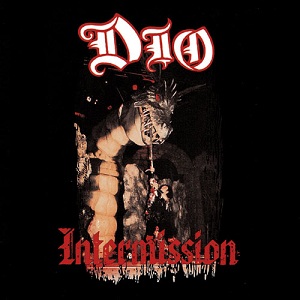
568. Dio / Intermission. 1986. 4.5/5


Back in 1986, in the middle of the Sacred Heart tour, guitarist Vivian Campbell quit the band, and former Guiffria guitarist Craig Goldy was drafted in to take his place. Amongst the confusion, Dio released this live (apart from one song) EP entitled Intermission, perhaps as a way of introducing Goldy to Dio fans, perhaps just to put some more material out there to keep the fans happy.

No matter what the plan, here then is Dio live sans Campbell, which to me was somewhat of a tragedy, as he was a hero of mine at the time (still is, I guess). And no matter how good this sounds, you immediately notice the difference in the guitaring between the original versions with Vivian, and the live versions with Craig. Now there’s nothing wrong with it being different – a guitarist should be able to put his own stamp on songs in a band – but it just isn’t Vivian, and I can’t get past that!
The live versions are also noticeable for the greater influence the keyboards have, certainly more pronounced here than they are on the studio versions.

Away from all of this, Intermission is a worthy instalment in the Dio legacy. A selection of the band’s best is here, along with an excellent medley version of “Rock ‘n’ Roll Children” with Rainbow’s “Long Live Rock and Roll” and “Man on the Silver Mountain”. Slap in the middle (which was Track One of Side Two for those that had the vinyl like me) is the only studio track on the album, “Time to Burn”. It mightn’t be a world beater, but it again introduces Craig Goldy’s guitaring to the Dio universe, and is catchy enough.

This was released in Australia just before his tour in September 1986, and served as an excellent appetiser to that wonderful moment when I first saw Dio live. As a live EP in a collection of a career spanning five decades, it a pretty fair listen still.

567. Yngwie Malmsteen / Instrumental Best Album. 2004. 3/5


Wow! What an innovative idea! Yngwie Malmsteen puts out a best of album that contains just his instrumental work! Can you believe it?

Well – let’s look at it. He has spent the better part of three decades trying to become a commercial star, with the singles he released become more and more pop-rock oriented. When that doesn’t work, and in fact puts a big dent in his popularity, he decides (or his record company decides…) to try and buy back a little bit of the lost fans, and put together a compilation of his vocal-less work.

Anyway, the songs here showcase Yngwie’s guitaring to the hilt. There is lots of flash and lots of flailing. Whether you could actually say it is his ‘instrumental best’ when it doesn’t contain “Black Star” and “Far Beyond The Sun”, the two songs that made everyone stand up and take notice of Yngwie back in 1984. Still, if you want to listen to the man show off his stuff, then this is worth a listen.

Monday, March 29, 2010

566. Dio / Donington Monsters of Rock Festival 22-8-1987 [Bootleg]. 1987. 5/5


Ah, Donington. If only we could all travel to England and see this festival. Well, and also travel back in time. One day I'll build that DeLorian...

This is a brilliant bootleg of Dio's set from the 1987 festival, taken from the Dream Evil tour, and is the first time I have heard anything from this tour. It is soundboard recording, meaning A+ sound.
It's great to hear the songs chosen from the album live - "Dream Evil", "Naked in the Rain" and "All the Fools Sailed Away". They all sound superb. In fact, the entire set list is awesome. Great versions of "Neon Knights", an absolutely blistering performance of "The Last in Line", which moves seamlessly through "Holy Diver" and "Heaven and Hell", a sensational rendition of "Rock 'n' Roll Children", the great Rainbow songs "Long Live Rock and Roll" and "Man on the Silver Mountain", and not forgetting "Rainbow in the Dark". Every song is at its peak.

Ronnie himself is is awesome form. I'm not sure he has ever sounded better on a live album that he does here. His voice is just so powerful and awe-inspiring, it sends chills down the spine. Backed by Craig Goldy, Jimmy Bain, Vinny Appice and Claude Schnell, this is a scintillating hour of some of the best music Dio has given us up until 1987. I don't have enough superlatives to praise this effort enough. If only I had been there in person. 23 years later, I can at least be happy with this recording, and to finally hear it in all its glory.

Friday, March 26, 2010

565. Yngwie Malmsteen / Inspiration. 1996. 4/5


So this album is supposed to represent the Inspiration of Yngwie Malmsteen’s career. No problems there, it’s actually a pretty good idea to base a covers album around. With eleven songs recorded, you’d think that it would have a pretty fair range of artists to showcase what it is that has made Yngwie the guitarist that he is today.

Error.

Two songs come from the influential Jimi Hendrix, and that’s fine. He probably deserves two. Other songs come from UK (whoever they are), Rush, Kansas (and really – “Carry On Wayward Son” does seem to get a fair hearing from a lot of artists in regards to being covered, or cited as an influence – but I just don’t see it myself. I think the song is dull and uninspiring) and Scorpions (and there are a hundred better songs to do than “The Sails of Charon”, but that’s just me).
That leaves five more songs, which end up being four Deep Purple songs and a Rainbow song – all of which the original version feature one Ritchie Blackmore on guitar. So it’s fairly probable that Ritchie was a pretty influential person on Yngwie’s career! The Rainbow song, “Gates of Babylon” also appeared on Holy Dio: A Tribute to the Voice of Metal: Ronnie James Dio, and on the sleeve notes all Yngwie talks about is his love of Ritchie Blackmore, and doesn’t mention the subject of the tribute album at all! I guess that’s Yngwie though in a nutshell. Apart fro that – all great Deep Purple songs as well, and these versions are great, if perhaps a little overburdened by the guitar side of things.
The songs feature three main lead vocalists – Jeff Scott Soto, Mark Boals and Joe Lynn Turner, and each does a good job of their renditions. There is no argument with the musicianship and the quality of Yngwie’s guitaring. Like most cover albums though, eventually you just want the original rather than the re-recorded.

Well worth a listen – but as good a guitarist as Yngwie is, what this proves is that a great guitarist in one era is still a great guitarist in another, and the original guitarists in the original songs have lost none of their lustre.

564. W.A.S.P. / Inside the Electric Circus. 1986. 4/5


Like another "third" album I've just reviewed (Gamma Ray's Insanity and Genius) this is a mixed bag and a little uneven, with some classic songs and others that are not forgettable, but slightly unmemorable.

Probably a little strangely, there are two cover songs on this album - Ray Charles' "I Don't Need No Doctor", the version here which is just brilliant, and has become one of W.A.S.P's greatest hits. The riff throughout is spectacular, and they have made this their own in the same way as Judas Priest did with "Diamonds and Rust". The other cover is Uriah Heep's "Easy Living" which is also one of the better songs on the album. It is just a little funny that having put together two great albums of original material, the band (sorry - Blackie) felt it necessary to put two cover songs in here to 'pad it out'. Had they/he run out of ideas? No matter - it works, and they are great, and it wouldn't be the last cover tune on a W.A.S.P. album.

There is plenty to like here. The title track “Inside the Electric Circus” is a great opener. “Restless Gypsy” and "I'm Alive" are both great songs that follows the W.A.S.P. doctrine. And while songs like “9.5.-N.A.S.T.Y” and “Shoot From the Hip” and “Sweet Cheetah” and “Mantronic” are good songs, they are all very similar musically and even lyrically. With the exception of “I'm Alive” and "Easy Living", the second half of the album (second side if you owned this on vinyl like I did back in the day) is almost like one long song. It’s not necessarily a bad thing, but at times it becomes monotonous.

In the long run, either because the album is good on its own merits, or because I have owned and listened to it for so many years I don’t count the flaws against it, I still love this album. It is the poor cousin as such of the two preceding and two following studio albums, but it still holds a place in my heart.

Wednesday, March 24, 2010

563. Gamma Ray / Insanity and Genius. 1993. 3.5/5

In the first three years of the band’s existence, Gamma Ray had not only recorded two excellent albums in “Heading for Tomorrow” and “Sigh No More”, they had also toured around Europe and other countries to rapturous applause, and their profile had been growing at an exponential rate. All of this was occurring despite the fact that the band lineup itself was in a constant flux. Having begun with Uwe Wessel on bass and Mathias Burchardt on drums, and with Kai Hansen playing all guitars, on “Sigh No More” Uli Kusch had come in on drums, and Dirk Schlacter was on rhythm guitar. Following the tour to promote this album, both Wessel and Kusch left, citing disagreements with what was happening within the band. Kusch eventually went on and replaced Ingo Schwichtenberg in Helloween. This meant that Gamma Ray had to recruit two new players again, and so in their places came Jan Rubach on bass guitar and Thomas Nack on drums, both from the band Anaesthesia.
With the new lineup now in place, it came time to write and record for the follow up album. However, the difficult part about this was that while the majority of the band lived in Hamburg, lead singer Ralf Scheepers lived almost 700km away, and didn’t want to relocate to Hamburg because he still had a job he was working in back where he was living. This meant that he would only show up for weekends to check out how the writing process was going, or to rehearse with the band. As Kai himself was quoted as saying in an interview some years later, “there was one problem with that because when we wrote the songs I was always trying to think of his voice but on the other hand it would have been a lot better if he writes his own vocal lines, melodies and lyrics. When he came to Hamburg most of the times I was singing in the rehearsal room when he was not there and I was singing on my demos so it was like everything was more or less fixed and he could not really change it.”
All of this lead to what turns out to be the most haphazard Gamma Ray release ever, and given that this was the way it was written and recorded, it isn't too much of a surprise why.

From the outset there seems a definite move away from the more serious tone taken on the “Sigh No More” album and return to the more carefree upbeat feeling of the debut album. Whether or not this came about more from Ralf’ absence in the writing stage is unclear, as he had been a main contributoir to the lyrics for that album, but had very little on this new album.
"Insanity and Genius” kicks off as brilliantly as you would expect, with an opening triumvirate of songs that showcase the best that the band has to offer. "Tribute to the Past" is a fast paced and fun filled journey, with bright and breezy lyrics and great guitars that set off a great start. This is followed by “No Return” where Ralf’ vocals dominate throughout and set the tone for what is to come. The third of these three opening Hansen penned tracks is “Last Before the Storm”, where the Nack’s double kick rumbles the song along at the great pace that Gamma Ray like to set with their opening tracks, and keep the momentum going.
After this great beginning, I must admit that I feel the album from this point on is just a bit uneven. Indeed, the tracks through the middle of the album are just a bit average. Everyone has their chance to contribute to the writing here, and perhaps that is part of what muddles up the overall picture, but in the end there are songs here that are fine to listen to but they become just a tad boring. “The Cave Principle” and “Future Madhouse” are just middle-of-the-road tracks, along with both “Insanity and Genius” and “18 Years”. Even the cover of Birth Control's “Gamma Ray” lacks a certain presence that a later update down the track with Kai on vocals really does fix nicely.
The final three songs do return some of the band’s best elements to the album. Two songs are left to other band members to sing, which can only have eventuated from the fact that Ralk was not around to do the vocals in the studio and so they were turned over to the other band members. “Your Torn is Over” is written by Dirk, and so he also sings it here, and it is a great track, with plenty of enthusiasm from the fill-in vocalist to make it a good song to listen to. This is followed by the live favourite "Heal Me" which is sung by Kai, his first lead vocal on a song since Helloween’s debut album “Walls of Jericho”. It is interesting that Kai did this, given what happened on future releases by Gamma Ray. I'm not as big a fan of "Heal Me" as most other Gamma Ray fans seem to be. I think it's OK but not brilliant.
The final song is “Brothers”, a song about being ‘brothers in rock’, co-written by Hansen, Scheepers and Schlacter, and an interesting statement by the three solid core members of the band... up to this point.

I was ecstatic when this album was released. Those who have listened to the episode of this podcast from Season 1 about their “Sigh No More” album will know how obsessed I became over it when I got it, and I can tell you that my excitement levels for this album were humongously over the top. And in the main, we all know just what happens when you build an album up too much before its release. And that is exactly what happened to me with “Insanity and Genius”. I expected and wanted more of what I had got with “Sigh No More”, and that is not what this album offered. Once again, as with most albums such as this, it isn’t a bad album. It’s just that I expected something different, something... BETTER! And that’s not what this is. And, what hurts this album even more, is that later on when the band released their best-of album, and to do so they re-recorded all of their past songs with their current line-up so that it wouldn’t just be a generic best of album, and they re-recorded four songs from this album with Kai singing and the songs given even better guitar treatment, they left these versions in the dust.
So yes this album is fine, but for me it is my least favourite of all Gamma Ray albums – by a long way.
This was Ralf's final album with Gamma Ray, as he and the band parted amicably as he went off to try and become Rob Halford’s replacement in Judas Priest. When he missed out on that gig he went and formed his own band, and though he has made an excellent fist of his move to Primal Fear, in some way this album seems to suffer from his appearance (or lack of it). It is a pity that his final fling with the band proves to be a little disappointing. The golden age of Gamma Ray began with their following album, “Land of the Free”. It's funny how I almost missed that, as after this album my adoration of the band went a little cold, and I didn't rush out to find the next release straight away. Imagine if I hadn't! But that was how this album left me in the long run - a little uneasy, and not really sure if they could recover. That they did in amazing style is something we can all be very very glad of.

Monday, March 22, 2010

562. Iron Maiden / Infinite Dreams [Live Single]. 1989. 5/5


One of two live singles released to coincide with the Maiden England video, recorded on the Seventh Tour of a Seventh Tour in 1988.

This contains three excellent live renditions three song - “Infinite Dreams”, “Killers” and “Still Life” – none of which appeared on the eponymous Live After Death, which not only makes it worthwhile buying for that reason, but to sample how these brilliant songs are almost improved in a live setting. Bruce’s vocals are probably the key here, as being able to sing them almost note for note as the studio versions is a remarkable thing. If you don’t have this single, you won’t be disappointed.

561. Queen / Innuendo. 1991. 4.5/5


Everything that took place in the world of the band Queen between the release of their thirteenth album “The Miracle” in May of 1989, and the release of their fourteenth album “Innuendo” in February of 1991 is something that has been documented in books, articles and documentaries for the last 35 years. Interviews with all of the band members, close friends, producers and management – all of them have offered just what that time was like for everyone involved, and of course mainly for the frail and failing of body of Freddie Mercury himself. But though his body may have been slowly wasting away, his mind and desire to work continue to burn brightly. Following the release of “The Miracle”, it was the first time the band had not toured to promote a new album. In an interview at the time on BBC Radio, Mercury had said that he wanted to break from the "album – tour – album – tour" routine. That assessment of course could have held water, given the amazing live schedule the band had kept over the preceding 16 years. What was not yet known at that time though was that Mercury had privately been diagnosed as HIV-positive in 1987, and at the time of the interview had been diagnosed with AIDS, which was also not yet publicised. Rumours abounded of course, because it was impossible to ignore the changing physique of the once athletically strong and bounding lead singer. His gaunt appearance and obvious weight loss led speculation that he was ill, and on the best knowledge basis it was probably AIDS related. While Mercury moved out of the public spotlight, his bandmates continued to deny anything was wrong. In February 1990, Queen won the Brit Award for Outstanding Contribution to British Music. At the ceremony, Mercury was handed the award, but it was Brian May who spoke for the band. Freddie was gaunt and colourless, a shadow of his former self, and only further fuelled discussion of his possible illness. It was the final time he appeared in public.
Behind the scenes, the band and its close circle tried to keep him safe from the wolves, while also acceding to his own wishes. He was determined to continue working on music with Queen for as long as he could, saying that he would "keep working until I fucking drop". The media, as is their want, were persistent in staking out his home in London, making it impossible for anyone to enter without being known, or for Freddie to leave of his own accord. This led to the band relocating to Mountain Studios in Montreux, which gave Freddie and the band the space and comfort to work at their own pace. Mercury had his own retreat which enabled him to rest as much as he needed to during the writing and recording process.
As had occurred with “The Miracle”, all of the tracks on the album were credited to Queen rather than the main composers. May was quoted as saying that this decision helped the recording process and the compilation of the songs as a whole, while Roger Taylor believed that it eliminated the egotistic arguments that had sometimes cropped up when it came to whose songs would be released as singles, or would even make the completed album.
Through all of this turmoil, Queen’s fourteenth studio album was released without a barrage of publicity, but in the pomp and style that only Freddie Mercury and Queen could provide, on the back of the title track whihc had been released as a single three weeks earlier, which fuelled a demand and interest that hadn’t accompanied a Queen album in over a decade, the magnificent and truly incredible album called “Innuendo”.

“Innuendo” is the opening title track and lead single, partially inspired and written as a tribute to Led Zeppelin’s song Kashmir, deals with mankind’s inability to live with each other and constant search for meaning. It began as a jam session amongst May, Taylor and Deacon, which was overheard by Freddie and who then turned it into a song, creating the melody and starting off the lyrics before they were completed by Taylor. Roger Taylor’s drum roll and drum beat to enter the track marks an epic storm arising. May’s guitar backed by the keys, and John’s beautiful bass thump along the way, as Freddie and his vocal rises like the hero entering the throng, that incredible voice booming through the speakers.
And then the magnificent interlude of flamenco guitar, played exorbitantly and magnificently by Steve Howe, guitarist from the band Yes. And then comes the fait accompli, the powerful amazing solo from Brian, backing by the full overblown synth orchestra. Shivers down the spine stuff, before we crash back into the storm of the track, and the fullness of the band that comes through, of guitar and drums and bass, it fills the room and your ears. Epic doesn’t even begin to describe this song.
The opening synth of “I’m Going Slightly Mad” follows, as Freddie captures your attention immediately, and are the lyrics he is singing autobiographical? The song started composition in Mercury's London house, after he had the idea of writing a song about madness, inspired by Noël Coward's camp one-liners. Most of the lyrics like "I think I’m a banana tree" or "knitting with only one needle", came from both him and his friend Peter Straker, who stayed up all night in Mercury's kitchen. My favourite lines include: “I'm one card short of a full deck, I'm not quite the shilling, One wave short of a shipwreck, I'm not at my usual top billing”.
When “Headlong”, it is immediately a Brian May song, it has his guitar and the hard and heavy feel about it from the outset. Roger’s drums sonically are louder and hit harder. The bass sound from John rumbles in a more meaningful way, and of course Brian’s guitar is at the forefront. Freddie sings with great purpose, and with your eyes closed I can see him in his pomp, that black and white chequered tight pants phase when he is brandishing that microphone and stand with feeling, singing this song. It is how I see him doing it, despite the time difference between the two eras. This song has such a great tempo and jump about the track. I’m sure Freddie would have loved to have performed this on stage, revving up the crowd and getting them to join in. You get the feeling Brian thought so too, because he was apparently actually writing this song for his own solo album that became “Back to the Light”, but changed his mind after hearing Freddie sing it. And it works perfectly in that regard. He was quoted saying: “‘Headlong’ came from me, at our studio in Montreux, a home recording studio for us that’s very state-of-the-art, lovely for creating. The ideas came in a couple of days. At first I thought about it as a song for my solo album (Back To The Light) but, as always, the band is the best vehicle. As soon as I heard Freddie sing it, I said, ‘That’s it!’ Sometimes it’s painful to give the baby away, but what you gain is much more. It became a Queen song.”
“I Can’t Live with You” is another song Brian was writing for his sool album, but the other three were so enamoured with it that it became a Queen track instead. Brian’s original vision for the song was apparently a much harder heavier version, while this version drew more on keys and synths to soften it for a Queen audience. It is a powerful love lyric throughout, highlighted by the lines: “I can't live with you, But I can't live without you, 'Cause I'm in love with you, Ooh, and everything about you”. Once again the harder edge to the music is pure Brian May, while Freddie’s energetic vocal leads the emotion of the song.
“Don’t Try So Hard” is a beautiful Freddie Mercury ballad, one that channels moments of the Highlander soundtrack with its musical composition and soaring vocals, and even the way the lyrics tie together. May’s guitar also offers visions of that film and the music that came from it on the “A Kind of Magic” album. Brian May ranks it as one of his personal favourite Queen tracks and favourite Mercury performance. Freddie’s vocals are the absolute hero of the track, hauntingly mesmerising.
“Ride the Wild Wind”. Roger Taylor brings us his ever present classic track, and this is outstanding. His drumming here, that backs the guitar driven beauty from Brian, that perpetuates the song into a never ending race, is incredible. Brian’s guitaring and solo is top shelf, and the heavier emphasis in the middle is wonderfully coordinated, and of course Freddie and Roger both bring home this song with their glorious vocal contributions. The smooth interpretation of the lines “Get your head down baby (Yeah), We're gonna ride tonight, Your angel eyes are shining bright, I wanna take your hand, lead you from this place, gonna leave it all behind, check out of this rat race” are moodily mixed with car sounds throughout which accentuate the motion and velocity of the song. But the star turn of the track is John Deacon and his bass line throughout. Listen back to the track and just listen to what he is doing throughout the song underneath everything else you can hear. He is the Reason this track is so magnificent, fingers running up and down that fretboard, never understated and yet never trying to take the focus off the other three - but this song does not work without what he plays on his bass guitar. John’s contributions to Queen have been without question, and his genius is unquestioned, but for me this is his most remarkable achievement, the place where he explodes out of the speakers and demands attention. This is hands down one of my favourite ten songs ever by Queen. It is one of the greatest songs ever produced, and concludes arguably the best first half of a Queen album ever.

With such a rush, the second half of the album has a lot to live up to, and perhaps because of that, there is a slight letdown for me when I get into it. “All God’s People” is a gospel song, or certainly as close as Freddie Mercury could come to writing one. Coming as it does, after such a strong selection of tracks with high energy and tempo, this is one that takes some getting used to, especially for the larger number of keys and synths used, recorded by Mike Moran. Initially it was set to be on Mercury’s ‘Barcelona’ album, but came to be used here instead.
“These Are the Days of Our Lives” is perhaps better known and more significant through the music video, which was the final one made by the band. In it, an obviously gaunt and weight deprived Freddie Mercury appears. By the time the video was made, it had become impossible to disguise that Mercury was seriously ill. The video was filmed in colour, but converted to black and white to minimise Mercury's frail appearance. But it was the final act of the video, and the final line of the song that is most remembered, as Freddie looks directly at camera and says “I still love you”, before he disappears off screen with a flourish of his hand… and was never seen again. It is an emotional moment, both on video and in the song itself. This was composed by Roger Taylor, and one can actually hear him singing it in your head if you listen to the composition and imagine his voice. And the lines are his, that are so poignant: “Those were the days of our lives, the bad things in life were so few, Those days are all gone now, but one thing's still true, When I look and I find I still love you”.
When it comes to “Delilah”… well, I can only agree with Taylor, who in the years since has aired his own disappointment with the song. It’s a bit of an ‘Oh dear’ moment. Freddie wrote it about his favourite cat. It’s a bit too cutesy.
“The Hitman” surprises as it was started by Mercury himself, with the original version apparently on keyboards and in a different key. May took this and changed the key and recorded a demo of the heavy version. John Deacon then re-arranged the structure, and the band finished it off together. I love this song, solely for the sheer heavy metal guitar evident from Brian and the vocal to match from Freddie. There would be many Queen fans who would be less enamoured by the song’s tone and harshness, but for me it is a gem. A ripper. A beauty. Because I am the hitman!
"Bijou" was an idea Mercury and May had of making a song "inside-out", having guitar doing the verses and the vocal doing the break. Mercury put the chords, title and lyrics, and the two of them worked on the guitar parts. The song was finished without any input from Taylor or Deacon. It is the second of the beautiful tracks on the album, where Freddie and Brian gives us a performance for the ages.
The album concludes with the piece de resistance, “The Show Must Go On”. Is there a more poignant, more emotional, more incredibly sad yet exhilarating song ever written than “The Show Must Go On”?. Freddie was ill, so ill that Brian feared he would be unable to sing the song in the studio with the energy and sheer velocity that it required. And yet, he appeared, and gave us the vocal that is apparent on this track. How do you come out and sing this song, suffering as he must have been, with the lyrics as they are, obviously expressing the fear that Brian and his bandmates had for their closest of friends and the struggle he was going through? It seems like a bridge too far. And instead, Freddie made it an anthem, and a sheer fist pumping anthemic track like he had done in the past, and took Brian’s song and made it about him, but not in a despondent or sad or tragic way – he made it the positive and uplifting song that he did with most Queen tracks, one that he could have been singing for the next 35 years. Instead, we got this performance, that will still live forever.

Unlike a proportion of Queen’s fandom of the time this album was released, I loved the Queen albums of the mid-to-late 1980’s. My first album experience of the band had been “The Works”, which I loved and love. Then had come the film ‘Highlander’ and the album that it is married to, “A Kind of Magic”, which I loved and love. And then came “The Miracle”, that created yet another obsession within me, and an album I loved and love. The music of those three albums covered three different eras of my existence – the start of high school, the latter years of high school, and the early years of life out of school. Each played a significant part in the soundtrack to those years for me.
My first time listening to this album came at my friend’s house, another Queen fan in Anthony who was on our Queen Retrospective episode on this podcast in Season 1. It is still there if you are interested. Five of us gathered to sit around the stereo and listen to the album – my first time, definitely not theirs given they were all unemployed. And what I heard was PRETTY much everything that I could have expected of the release. Even on first listen, the heavy hitters of the album were immediately obvious, as were the songs that perhaps don’t quite reach the heights one may have wanted. You’ve heard all of those thoughts already. And they haven’t really changed that much over the years. I remember that first time though, looking around at my firends and marvelling at the title track, and “Headlong”, and “I Can’t Live with You”, and the closing epic of “The Show Must Go On”. And while those immediately jumped out as the main songs to be heard here, it was the cacophony of the entire album that drew breath from that moment. Unlike some other bands and albums, I had not even thought of perhaps hyping this up too much to the point that I would dislike it. This was Queen. There just didn’t feel as though there could be any way they would stuff this up. And they did not.
1991 was an interesting year in the albums and bands that I listened to, in that the first five months of the year had almost nothing released that came into my field of vision. I was still dining out on those amazing albums released in the last bit of 1990, and that is what I remember still being in love with. Which meant that “Innuendo” had a lot of free space to capture my imagination and get played to death in. Which is exactly what happened. It was always in my CD player at home, the taped cassette version was always in the car. I bombed my senses with this album over and over again, and just never seemed to grow tired of it. This continued for most of 1991, right through until the final throes of the band as we knew it with the passing of Freddie in October 1991. And then it just went back into heavy rotation as a result, through until the Tribute concert at Wembley in April 1992, and further. Indeed, apart from “The Miracle”, this would be the Queen album that I have listened to the most, And it would not be overplaying the statement to say that I would have listened to this album over a thousand times.
So. This anniversary comes up. And, it is one of those big moment albums for me. I can’t afford to stuff up this review. I have to be able to express exactly what this album means to me without just gushing over it endlessly. I need to be able to explain WHY I love it so much, and why some of these songs still mean so much to me. And once again, I know even as I say this that I probably haven’t done it. The emotion I feel when I listen to and try to sing along with songs like “Innuendo”, “The Show Must Go On” and “Ride the Wild Wind” can really only be experienced by being here with me when I listen to this album. And yes, that mostly comes from knowing it was Freddie’s last hurrah, and that while he was performing these songs in the studio he knew they would be his last. And that his band mates knew it would be their last times together as well. That’s a huge emotional burden to carry. And it does weigh upon me at times when listening to the album.
On this review I have tried to be candid and honest. No, not all of the tracks hit me in the same spot. But that is true of most Queen albums. There is almost always a couple of tracks that I am not as excited about as the majority, and that comes from the fact that all four members of the band have different loves when it comes to listening to and composing music, and that comes through in their tracks when they are involved at that level. So not everything is 100% here for me. But listening to it again over the last few days, what gets me most is the musicianship of all four members. The quality of their playing is so outstanding that it is hard to believe they have done so little since the release of this album. The recording of the instruments is somewhat amazing. Roger’s drumming, Brian licks and solos, Joh’s simply incredible bass lines, and the other instruments they utilise along the way. And of course those voices, brought together one last time. That’s what still gets me to this day. Perhaps not every song is, as my son would say, a banger, but there is no question of the quality of the four men and their musical magnificence.
As a closing chapter, “Innuendo” could hardly have been better presented. Yes, “Made in Heaven” was to come, but this was truly where the band came to the finish line, and it is an album worthy of finishing on. At least they got the chance to be able to produce this. The fact that they were together for just 20 years and 14 (or 15) albums draws comparisons with The Beatles in regard to the number of albums and quality of the discography they produced in a significantly short career space. 35 years on – and just saying that out loud makes me realise how old I have gotten, more than a decade older than Freddie himself walked this earth – and this album still resonates with all of the epic grandeur it did on its release. And it remains as one of their most beloved releases.

I’ll face it with a grin, I’m never giving in, on with the show.

Wednesday, March 17, 2010

560. DragonForce / Inhuman Rampage. 2006. 2/5

When I first heard a song by this band (it happened to be “My Spirit Will Go On” off Sonic Firestorm) I was amazed at everything to do with it – the frenetic guitars, the amazing vocals, the precision drumming and the rhythmic keyboards. It all seemed to blend into a wonderful mesh of power metal glory.
Little was I to know that it appears that they just seem to reproduce the same song ten times over, record them and then call it an album. And repeat.

I can’t help but feeling I must be missing something, but all the facts are before me once again. The squeals and twiddles on the guitars are the same during each solo break. The breaks to allow the vocals to punctuate in the middle of the song are the same. The build-up to resumption at this point is the same. All the songs seem to be 7+ minutes of the same thing. The melodies are either all exactly the same or so similar it is impossible to tell the difference.
There is nothing wrong with having a standard set up with your sound and song format. However, by album number three I reckon you’d have at least SOME variety in song structure. But no, it appears we are going with the same tried and true formula, except that for me, it has worn too thin to hide. It obviously works for them. I meet lots of 18-25 year olds who think they are the greatest thing around. Perhaps these guys just aren’t aiming at me.

In the long run, there is enough here to like if you a) don’t look too far beneath the surface, and b) don’t mind a bit of repetition. I have since decided against following up on future releases.

559. The Cavalera Conspiracy / Inflikted. 2008. 2.5/5

I’m guessing a lot of people would have gone out of their way to check this out purely for the fact that the Cavalera boys had worked together again. Count me in as one of that crowd. Though I had never been a huge fan of Sepultura, I had listened to enough of their stuff, and seen them live twice, to make it worth my while to see what they had to offer now.

There is nothing new or startling on offer here, which is not to denigrate the album before I’ve started. This follows a formulaic theme, unlike Sepultura’s groundbreaking early material. But these guys were a part of that, so this shouldn’t be seen as being that kind of album. It is a reunion of sorts, and while I was able to take in a lot of this kind of material when I was 20, I can’t quite take it in large doses now that I’m 40. Actually – I’m not sure I could when I was 20 either. :)

“Inflikted”, “The Doom of All Fires”, "Bloodbrawl" and “Sanctuary” rate with me as the better tracks on the album. The fans of the lads will no doubt enjoy this immensely and play it ad nauseum. As I have done over the last couple of days, I can put it on and listen to it, but I have no desire for continued repeat listenings.

558. Stratovarius / Infinite. 2000. 2.5/5


I’m still not sure whether this album signalled the conclusion of what I would consider to be the Stratovarius golden age, or if that happened on one of the previous releases. In any respect, having had the album on rotation for the past couple of days it has been increasingly difficult to listen to it on a constant basis. The major reason behind this is that, once you get through the opening two songs the album seems rather bland and tame, without something to jump out and grab you with intent.

The album starts off OK with “Hunting High and Low” and “Millenium” very much in the typical vein of this band’s songs. However, the accursed power metal ballad rears its ugly head here with “Mother Gaia”, which I’m afraid is a truly terrible song, and reminds me of what I despise most about power metal. I must admit that I don’t understand having such a song so early in an album, as it completely changes the tone and stops the momentum. From this point on, it is very hard to save what follows, but “Phoenix” makes a valiant effort to do so. “Glory of the World” is also a much better up-tempo song. The songs are full of Jorg Michael’s double kick drums and Jens Johansson’s keyboards, which perhaps both dominate just a little too much. The songs here are at their best when it is the guitaring that dominates, and not the keyboards. The solo’s in “A Million Light Years Away” is a case in point – they sound great, but once the keyboards take back over the song loses its strength.

If you are in the right mood for this album it is still (for the most part) a good listen. Timo’s vocals are still spot on, and if the mix between guitars and keyboards was switched so that the keys were more in the background instead of basically dominating, then this could have been a terrific album. Instead, it is another average release that doesn’t make you gag, but leave’s you just a little disappointed in the end result.

Tuesday, March 16, 2010

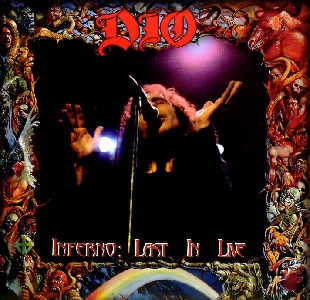
557. Dio / Inferno: Last in Live. 1998. 4/5


This live album, the first one released for the band Dio (apart from the 1986 EP Intermission), always had one huge hurdle in its path. This was recorded on the tour to promote the most average album Dio has ever released, Angry Machines, and as a result has a couple of those included on this release. Fortuitously for everyone, the songs “Double Monday” and “Hunter of the Heart” sound much better live than they do on the studio album.
Add to this the inclusion of “Drum Solo” and “Guitar Solo”, which is an automatic ‘skip’ when you listen to most live albums. Vinny Appice has been playing the same drum solo for 30 years, and Tracey G does do a good enough job on the guitar, but no matter how skilful both are with their instruments, it really isn’t that interesting to listen to in the comfort of your home (or car or workplace for that matter).

Taking all of that into account, this is still an excellent live album. Dio’s vocals are as wonderful as ever, and take centre stage as they always have. The music itself feels a bit sludgy at times (very much in keeping with how Angry Machines sounds), which is either the way Tracey G plays it (possible) or the way RJD wanted it at the time (probable - though he soon realised it was a mistake). The setlist is mostly from the definitive first three albums of the band’s career, and they all sound great. There is also a great version of Deep Purple’s “Mistreated” (which Ronnie also played in his time in Rainbow) and Black Sabbath’s “The Mob Rules”. You cannot fault the material here, though the complete lack of any songs off Dream Evil and Lock Up the Wolves is a slight disappointment. In the long run this is a pretty fair live album, which the band would eventually outstrip in two future releases, Evil or Divine: Live in New York City and Holy Diver Live.

556. Therapy? / Infernal Love. 1995. 2.5/5


1994’s “Troublegum” had been enormously successful album, a real breakthrough internationally for the band Therapy? The angst-ridden, emotionally anger-charged album struck a chord with its fan base and then increased it exponentially. They toured the world, and saw an increase in the sales of their previous three albums on the back of it. Overall, it was a massive success. Then came the tricky part. How do you follow up an album such as that? Lyrically and musically, it had channelled as much anger and human emotion that you could possibly imagine. It was like Joy Division trying to find a way to make another album that was as bleak and starkly desolate as "Unknown Pleasures”. Given that Therapy covered a Joy Division song on that Troublegum album, the line drawn between the two parallels probably isn’t as obscure as it may sound.
The three piece which comprised guitarist and vocalist Andy Cairns, drummer Fyfe Ewing and bass guitarist Michael McKeegan had the job ahead of them. Cairns, as the majority stakeholder in the song writing, was the one who everyone was looking at as to what he would come up with next. What the band brought forward was a seismic deviation from the punk-metal alternative sound that they had produced on “Troublegum” to a sound that incorporated many different ideals and segues, one that almost completely differentiated it from the album that had brought them to international attention. The question that was to be asked was, did this album’s skewing of its sound have the potential to bring in more fans from a different base, or did it risk alienating all of the new fans they had just collated from their previous album. That question could only be answered once the album hit the shelves, which “Infernal Love” did in June of 1995.

There will always be unfortunate comparisons of this album to its predecessor, and that is especially true of the beginning o the album. Because the first four songs on “Troublegum” are insanely intense, fast, heavy, angry. They set that album up for what came next, dragged in the listener kicking and screaming, and kept them enthralled to the end. Most would have come to “Infernal Love” looking for exactly the same beginning, hoping it was just as marvellous.
The album does open at a cracking pace, with “Epilepsy” coming out of the speakers likely an angry Jimmy Page riff and John Bonham drum crash and smash. It ain’t Robert Plant singing mind you, and the lyrics are pretty sparse and deliberate, but it comes at you with the intensity you would be hoping for. It’s also a great bass riff through this song as well. Andy Cairns integrates that angst and anger straight into the mix as fans were hoping for, and it is a great opening to the album. This is followed up by “Stories”, the angsty warning against hope, the driven vocal line of “Happy people have no stories” creating the key to the song. The parallels to the same number track on the previous album are obvious, with “Stories” playing up to the same themes as “Screamager” on that album, the singalong chorus an automatic crowd pleaser, and the angst and desolation of the moody teenagers embedded in the track. So far, “Infernal Love” is two for two and sounding great.
The change in this album from the previous comes with “A Moment of Clarity”. This is more Joy Division than anger and heavy. It dials the music back, and Cairns showcases a different side to his vocals that we haven’t really heard before. It is a fork in the road, the point of difference that this album was no doubt looking for. Stretching out to six minutes, fading in and out of slight aggression to pure desolate angst, it is a story in itself, a moment where the band treads new territory. It also separates the fans in regards to what they were expecting and what they wanted. More of the same with “Jude the Obscene”, a more mainstream guitar and drum riff throughout and Andy’s vocals as well. There is less punky metal here than there is alternative, the short and sharp solo from Cairns is actually building to something significant before being cut short to get back into the verse chorus of the song. Then comes “Bowels of Love”, with more of the cello brought in, Andy’s angst crying vocals return as the cry for help he sounds like he is asking for on this album. There is more of the Joy Division styled here once again, perhaps overplaying the style for the sake of abandoning the metal style of the previous album.
“Misery” restores a little of the more recognisable Therapy? sound with a solid and recognisable riff and more exciting drum beat and bass line, with the vocals also being more proactive again with a forceful reply rather than a dry mournful rise. “Bad Mother” starts with another recognisable riff and vocal tone, with the depressing lyrics drowning in Andy’s distinctive sad vocal style. Andy’s guitar that again mirrors The Clash here is overwhelmed by the emotionally charged doubling of vocals through to the end of the track. The arrival of “Me vs You” is perhaps the most significant difference of music and songs on this album. This drains you of your will to live with the dire and post-mortem-like hopelessness of both the lyrics and music on this track. If you want a track that will send you to the absolute depths of depression, then this is the one. It is perfectly written for that purpose. And that’s great if that is what you are coming to this album for. And for me, it is where the album both succeeds and fails. Because I don’t look for an album to send me into fits of depression, I want an album to lift me OUT of that state.
“Loose” at least achieves that to a certain degree. It is very reminiscent of the kind of alternative songs that found their way into circulation through the mid-to-late 1990’s often on teenage movie soundtracks such as for “Empire Records” and “Can’t Hardly Wait”. If that was what they were aiming for, then mission completed. Then comes the most played and most popular song n the album, the cover of the Husker Du song “Diane”. But unlike the post punk original version, this is performed entirely with acoustic guitars and the introduction of the cello. And while this version of “Diane” has been regarded as a high water mark in the band’s career – well, it just doesn’t do it for me. To me it is the almost ultimate weak link of the album. Sure, it created yet another highlight of the different direction the band looked to try out with “Infernal Love”, and probably that’s why I’m not a fan of it. The album then concludes with “30 Seconds”, where the pace quickens up for one of the few times along the way, the band draws inspiration from the actual Husker Du catalogue musically, and while repeating over and over, “there is a light at the end of the tunnel”, is it only because the album has come to its final conclusion?

I was one of the people who discovered this band on their previous album. It was in that blackout year of 1995, when I was lucky enough to see the band on their only Australian tour when they played at the Alternative Nation festival at Eastern Creek in Western Sydney in 1995. I had gone to see them only based on the poster that hung on the wall of Adam Sandler’s characters wall in the movie “Airheads”, and they were awesome. Within a week I had bought their two previous albums, but I was completely hooked on “Troublegum” from the outset. It became an album that helped get me through that year and has been tied closely to me ever since. "Infernal Love" was released some three months after that festival, and having submerged myself in “Troublegum” for that entire time, this new album coming on so close to the time that I had first discovered the band was exceptionally good timing for me. Or so I thought.
So, I bought the CD, brought it home, and got myself prepared for “Troublegum” Part 2. That was a massive error on my part. The single, “Stories”, grabbed me effortlessly. But beyond that, I really didn't have a clue as to what I had stumbled upon. There were moments here that I could listen to and enjoy, but even those felt like they were… off. They just weren’t what I had come to love from the band. There was angst here, but the outright anger mostly seemed to have evaporated. And, as I was still in the year of 1995, I really wanted or perhaps needed that anger from the band. And it wasn’t here. And what really did it for me was the cover of Husker Du’s “Diane”, replete with cellos and saxophone and without the real power that the original gave us. I just didn’t relate and couldn’t connect with what this album was compared to the one I had just fallen into obsession with. So I gave it a dozen listens, and it fell into the pile of CDs that I had bought that then found themselves on the outer.
Over the years, I have returned to this album on any number of occasions. Because I really wanted to like it. I wanted to find what it was that had sparked the writing of this album and be able to connect with it on the same level as the previous album. And I have never been able to do that. It is simply a different album, heading in a new direction, and that’s fine. As a band, and as an artist, I imagine Andy was not looking to get pigeonholed in the style that had created such popularity for his band. I needed more from it when I first bought it, and since then I have WANTED more from it than it has to offer me.
It came off the shelves again this week as I sat down to compose this podcast episode, and once again I found myself hoping that I had changed enough to find where the secret of this album lay. I once again really wanted to like it, to be able to say that after 30 years I had cracked the code and found what makes this album one that is worth listening to. And once again I found myself disappointed. Yes, the same songs that I could listen to back when I first bought the album were the same ones I could find myself listening to again. But beyond that, it just feels like an average album. There’s nothing wrong with that, the majority of artists out there would kill to have an average album. I just wanted so much more for this to be better than that.
Therapy? is still going, and every album I am waiting for the next “Troublegum”. That’s extremely unfair on the band, but there you have it. They got close with a couple of albums down the track. And while “Infernal Love” is only an average album with a couple to a few songs that are worth listening to, no doubt at some stage in the future I will go through this charade again, all in the hope that I will find a love for this album.

Monday, March 15, 2010

555. Def Leppard / On Through the Night. 1980. 4/5


The beginnings of what would become the band Def Leppard can be traced back to three students who were attending Tapton School in Sheffield, England. Bass guitarist Rick Savage, along with drummer Tony Kenning and guitarist Pete Doubleday, all attended school together and decided to form a band, initially named Atomic Mass in 1976. The following year, a second guitarist was added in the form of Pete Willis. As is always the case when a band has formed, especially in high school, there were a lot of comings and goings to the line-up. Several changes occurred through the months of 1977 including three different lead vocalists. Towards the end of 1977, Willis had a chance meeting with an 18-year-old named Joe Elliott when he had missed a bus. Fortuitous it turned out to be, as Elliott then tried out for the band...as a guitarist. However, it was during his audition that it was decided by the rest of the band that he would be better suited as lead singer of the band, and as such his place was set.
Elliott’s next major piece in the band’s puzzle was to propose a new name, that being “Deaf Leopard”, spelt as such. Apparently, this was a name that he thought of while he was designing band posters in art class at school. This seemed to go across well, although Tony Kenning did suggest that the spelling was slightly modified to make it seem less like the name of a punk band, the genre with whom the band was currently in competition with at that time in the UK. Which is why we have the now well-known spelling of as such. In January 1978 the band was back to one guitarist, Pete Willis, and decided to audition for a second guitarist replacement. It was at this time that Steve Clark arrived on the scene. According to an interview with Elliott, Clark secured his spot in the band by playing Lynyrd Skynyrd's "Free Bird" in its entirety during his audition. The band then played extensively through the UK for much of the year, before deciding to record an EP. However, in November 1978, just prior to recording sessions for the three-song release that would become known as “The Def Leppard E.P”, Kenning abruptly left the band. With a fast option required to complete the recording, he was replaced for those sessions by well-known drummer Frank Noon. Sales of the EP soared after the track "Getcha Rocks Off" was championed by BBC Radio 1 DJ John Peel, an influential person at the time in the cause of emerging punk and hard rock bands considered at the time. By the end of the month, Rick Allen, then only 15 years old, had joined the band as its full-time drummer.
On the back of the success of the EP and their constant gigging, Def Leppard found a devoted following through the UK. The burgeoning NWoBHM movement had taken them on board, though the band themselves never felt as though they belonged in the group of bands that were being coined with that term. While their sound did fit in nicely to what those British bands were producing at the time, their music direction was closer formed to the bands they admired from the 1970’s rock and glam era, and their focus was firmly on making a break into North America. Their growing popularity led to a record deal, and on the back of changing their management team the band spent December of 1979 in Startling Studio in Berkshire recording what would become their debut studio album, titled “On Through the Night”.

The album opens with the hard blazing styles of “Rock Brigade”, a song that praises their fan base and gives them an anthem to sing along to from the very beginning. It’s a great start to the album, and gives their fans of their harder material a song to grab a hold of and ride down the wave with. “Hello America” on the other hand is a very direct message to everyone across the pond from where Def Leppard were currently plying their trade. And that message was – here is a very commercial hard rock song that we think will appeal to your audiences, and the lyrics themselves are pointedly asking you to love us and adore us, and will you please take us on? It is a real change from the opening track on the album and of course is a pointed as to where they wanted their music to go in the future. So, although it did appear to alienate some of the local media and some of their local fans, it was an indication from very early on that they wanted to make it big in America, and if the rest of the world followed that would be great.
“Sorrow is a Woman” is a song of two parts, again with the first half trying to incorporate itself into a soft rock ballad with the kind of AOR sound that was proliferating the US FM radio market at the time, and was of the kind of genre their favourite bands were making music in. “It Could Be You” picks things back up again nicely, moving along at a good clip and with a great bassline throughout and a nice solo slot for the two guitars to fill in. Joe’s vocals don’t seem to be able to find their calling in this song though, they are a bit hard up and almost break as he reaches for the higher tones. “Satellite” again moves along like a softer rock song, never really getting out of second gear and with Joe singing effectively but not with a real feeling in his voice. The solo section again comes across as the best of the song with Clark and Willis delivering again. “When the Walls Came Tumbling Down” is perhaps the one song on this album that showcases the band’s love of prog rock and then deciding to incorporate it into their own music. The verses seem muted and yet musically crashing into each other, before the chorus kicks in and becomes more streamlined with the lyrics and then the guitars and drums breaking into their own artform.
Side Two kicks off with the awesome “Wasted”, where we get as close as Def Leppard can on this album being the heavy metal band many wanted them to be. The music is terrific, Clark and Willis’s riffing throughout here is superb, and driving along with the great drumming from Rick Allen and bass line from Ric Savage. Joe’s vocals don’t really go to full throttle though, preferring to sit back without extending themselves into ta stratosphere that would really have made this an all-time classic metal track. Steve Clark’s soloing in this song is superb. This is followed by the perfect riposte in “Rocks Off”, which sticks to that perfect hard and heavy tempo with a great riff again. The bass riff from Savage underneath again is ripping and holds the song together throughout, joined in the middle of the song by Allen terrific drum beat that pushes the song to a harder tone again, followed by Clark’s solo again. The faux live sound is unnecessary but adds its piece at the song’s conclusion. “Don’t Matter” is reminiscent of this era of the band Kiss in tempo and on off staccato guitars with Joe singing over the top in the gaps. A change of singer would almost have you believing it was from another band. Deliberate or coincidence? You be the judge. “Answer to the Master” has the kitchen sink thrown at it musically. Everyone gets a chance to shine within the song, Allen’s solo drum piece, Savage’s excellent bassline up and down the fretboard is particularly impressive here even though it is low in the mix, and both Wills and Clark have the chance to individualise their solo.
The album concludes with “Overture” which initially appeared on the debut EP. This is a return to their prog rock loves, the longest track on the album at almost eight minutes, and reminiscent in places of Rush and bands of their ilk. It is so unlike the music that they went on to make over the rest of their career that it is still almost a shock when you listen to this album and get to this final track. It is completely out of place on the album, and yet it is a terrific song. It’s one that it is very unlikely that the fan base that came on to the band anytime after this album was released would even know was a Def Leppard song. And that is a great shame.

Is there are reason that this album doesn’t quite match up to the next two in their catalogue? For me, there is a distinct lack of true energy and excitement in the delivery of the majority of these songs. As they are written they certainly seem to have all the ingredients you need to push this hard and make it a really great hard to heavy album. And perhaps that is the first indication that Def Leppard didn’t want to BE that, because most of the tracks here have the bones to do so, and the soloing of both Steve Clark and Pete Willis is generally where the songs sound at their best as they both push to increase that energy, but as to the rest of the song – in almost every song – it feels like the band is turning up to work but only putting in the bare minimum. Perhaps that is a harsh judgement, but this album has always annoyed me because of the perceived perception that here is a perfectly good debut album that could be a real headbanger, and yet it doesn’t often live up to that. Songs like “Rock Brigade” and “It Could Be You” and “Satellite” and “Answer to the Master” should have been hard rock anthems, but they lack that vital kick over the top both musically and vocally that would have done that, and that could only have been a deliberate decision to keep them how they are.
These are the musings from someone who adores the band’s second and third albums. The first Def Leppard album I heard was “Pyromania” which came via my heavy metal music dealer, and I just loved that album to pieces, which is in fact what eventually happened to the cassette he recorded it onto for me, through overuse. I then got “High and Dry”, which I loved just as much if not more, and then came the release of “Hysteria” which blew up all over the world. So, when I finally picked up a copy of this album after all that excitement and brilliance, I was obviously expecting more of the same from their debut album. It is quite possible I was overhyped and expected too much. Well, no, that wasn’t it. What I wanted was a hard rock come heavy metal album like the first two albums of the band that I’d heard. And what I found is almost as I have described earlier. I heard an album that was… heavy metal adjacent. It was an album with songs that sounded like they wanted to be heavy metal songs of the era of its release, but the band who composed them wanted something… not quite that.
I’ve had the album on again this week, and it has been great. It really is an excellent debut album. I have offered some slight criticisms here of the album, but only from the point of view of what I was hoping for rather than what it is. It sounds like albums released in that era in the UK, and you can hear why they were spoken of as one of the leaders of that new wave. But the band themselves weren’t interested in that, they already had their eyes on another direction.
Of Def Leppard’s 12 studio albums to this point, this is ranked #4 on my list. It has the most varied song material of any Def Leppard album and as a result is still a great listen. It is a shame that, for the most part, the band seems to ignore this part of their history, which is a real shame.

Saturday, March 13, 2010

554. Helloween / Unarmed - Best of 25th Anniversary. 2009. 3/5


It is almost impossible to know where to start with this album. We’ve had a greatest hits package where the songs have been re-recorded rather than remastered (see Gamma Ray’s Blast From The Past), we’ve had songs re-recorded acoustically (see a thousand examples), we’ve had band’s record with orchestra’s (Deep Purple, Metallica, Scorpions) – but this goes beyond that by combining all three in a greatest hits celebration of Helloween’s 25 year anniversary.
By doing this, you can only admire the band for moving so far away from the style that their fan base loves, and trying something different to spice up a boring old greatest hits album. There should also be no prizes for guessing that there will be a lot of alienated fans of Helloween after listening to this. And in the long run, those two sentences explain my feelings about this album – a brave and innovative move that is not to my taste at all and makes me wonder what is to come in the future.

The jazzed up version of “Dr Stein”, with sax and horns all over the place is up-tempo enough, and is bearable. The songs that follow though have a definite acoustic down-turning. In the long run, it is the toning down of the speed of the songs that creates more problems for me with the material than anything else. Playing them as semi-acoustic, and adding orchestral parts to them, isn’t completely degrading the original material, but softening the tone and playing at a slower tempo does make it more difficult to enjoy. Let’s face it – this is the kind of stuff that former singer Michael Kiske has been trying to pursue since his sacking from Helloween for pushing this exact kind of stuff!! Take a listen to his album Past in Different Ways from last year, and you’ll almost see the birth of this album in the process. If ever the opportunity had arisen to invite him back for a cameo, this was it!
“Future World” to me is just blah as a result of this. “If I Could Fly” isn’t so bad, as it was always the kind of song that could lend itself to such a reimagining. I think “Where the Rain Grows” suffers terribly from having the pace of the song ripped from its heart, it just loses all of its emotional value.

“The Keeper’s Trilogy”, a seventeen minute operatic meshing of “Halloween”, “Keeper of the Seven Keys” and “King for 1000 Years” is worth a listen, and is very well put together. Personally, I think all three songs could have been recorded on their own, backed by an orchestra in the same way as Metallica did on S&M, because all three songs sound great here. But they should have been played as they were recorded and then have the backing of the orchestra, rather than change the personality of the songs to suit an orchestra, as they have done here. Apart from that, this is the shining star of the album without a doubt.

“Eagle Fly Free” is practically destroyed as a slow paced acoustic ballad. It was very hard to take. “Perfect Gentlemen” doesn’t quite work for me either, but I can almost feel where they were taking it, and it possibly almost works. “Forever & One”, “Falling to Pieces” and “A Tale That Wasn’t Right” are also songs that could tend to lean in the direction they have been recorded here, but again I just can’t help but think that they were fine in their original format, and that by slowing and dragging out the songs they have done them a disservice. Possibly strangest of all, “I Want Out” in acoustic, with the help of a kid’s choir in the background, is one of the closest songs to working in this environment. Don’t ask me why – it just does.

So – very difficult to rate. As brave and bold as it is, it’s not something you could ever keep coming back to. Musicianship-wise it is terrific, but I just want the original versions in the long run. The score is based on the innovativeness of the idea, crossed with my genuine lack of feel for the appeal overall.

553. Fear Factory / Mechanize. 2010. 2/5

Look. Here's the thing. Fear Factory started something new back in the 1990's when they first came on the scene. It was different and it was a little scary, just the right elements to draw fans in from any number of genres of music. There has been a lot of good stuff, and some average stuff. With the previous three albums (two of which did not have original guitarist Dino Cavares involved) it has been the same, a lot of good stuff mixed with a bit f the average. One of the problems that appeared to be raising its head as these albums progressed was that... well... they all seem to be sounding a little on the similar side. I mean, if you didn't know the band, and you threw on Archetype and then threw on Transgression would you really know that the albums had been changed? For heavens sake, I like a lot of Fear Factory, and I have trouble discerning between the two myself! So when it came to first getting and listening to Mechanize I wondered if the title was giving something away about the music itself. So yes, trepidation confronts me as I approached this new Fear Factory album. Whilst for the majority I enjoyed Archetype, the bad taste of Transgression still sits like a mouthful of out of date chunky sour milk.

Despite the circumstances around the abandonment of original members Raymond Herrera and Christian Olde Wolbers for this album, I could only applaud the recruitment of Gene Hoglan to play drums for this album. He is incredible under most circumstances, but his work here is quite astounding. I'm really not sure how many arms and legs he has in real life, because the speed and precision with which he plays his instrument on this album is quite extraordinary. Dino's guitaring (playing all guitars and bass on the album) is as precision perfect as always, while Burton's vocals move between the menacing growl to the clear anguish cries with abandon. And it's quite a change between the two when it occurs too. I sometimes wonder if it is too much, in the same way on early Trivium albums Matt Heafy does the same huge change between growl and clear vocals. Probably it's just me being too precious.
OK, so we've considered what could be seen as the similarity between songs and albums musically, and we've considered the vocal techniques used. As to the album itself taking those things into the mix, I still like most of this album. the opening track "Mechanize", it hits the ground running with aggression and power, with Burton's vocal chords getting a huge work out at every level throughout. The album flows nicely into "Industrial Discipline", "Fear Campaign" and "Powershifter", all the while being pushed along at speed by Hoglan's machine gun drumming. More is to come, with "Christploitation" careering through into "Oxidizer" and "Controlled Demolition". "Designing the Enemy" uses a similar theme and tracking, but the vocals by now start to grate, though more succinctly the randomness between the almost incomprehensible deep growling into the moaning clear vocal over the top of the synth programming with those drums still underneath. It's all a little too much for me by this stage. I don't like the structure and having made it so far into the album with some degree of enjoyment it is beginning to seep away. The instrumental joiner "Metallic Division" introduces itself into the final track "Final Exit", which combines the fast paced intro into the clear guitar and vocal combination before ebbing and flowing throughout the track, with a complete fade out to the finish. Given how the album started, this is a real character change to complete the album.

There was a real excitement about this when it was released, with the return of Dino to the fold, and while many parts of this album are enjoyable for me, as an overall package I didn't get as much from it as I expected. Still, for the drumming alone, this is worth a listen to try and figure out just how Gene Hoglan can play like this. And then wonder why they went with a drum machine on the next album.

Rating:  Dawn of our extinction, the human affliction.  3/5

Friday, March 12, 2010

552. Fozzy / Chasing The Grail. 2010. 3/5

I must admit that it came as some surprise when I found out Fozzy were putting out another album. Having ‘proven’ themselves as a band with the release of All That Remains and with Chris Jericho back in the swing of things in the WWE, I had pretty much written off any chance of new material from the band.
The start of the album could almost have picked up right where they left off with All That Remains, with “Under Blackened Skies” and “Martyr No More” retaining the best of what Fozzy showed us on that album. From this point on, though, there is a lot more experimentation with their style.

“Broken Soul” is an average attempt at ballad-type song. It just lacks the power and enthusiasm that most of the songs here contain, and as such it feels a bit half-arsed. It almost sounds as though they were attempting such a song just to see if they could pull it off. They could not.Add to this “New Day’s Dawn”, because this seems to be attempting something similar, and it really doesn’t work. Both these songs for me detract from the album. I’m not a nu-metal fan, and it seems to be where this track in particular is leading.

Redemption is immediate with the excellent “Let the Madness Begin” and “God Pounds His Nails”. Both are much more up-tempo, and Jericho’s vocals are at their best here.“Pray For Blood” is a bit cheesy, but Jericho is able to make it work. “Revival” is almost epic in stature, attempting to bring all of the instrumental aspects of the band to a symphonic rhapsody.
Probably the highlight of the album is the closer, “Wormwood”. Unapologetically Dream Theater-esque, this is Fozzy’s attempt at prog rock/metal, and they pull it off brilliantly. Everything about the song shows the amazing versatility of the band. There is no pretence as to the direction this song is written musically, and though it is not Fozzy’s typical song style they do it so well you cannot help but be impressed.

Overall, the album sits above average. Rich Ward is again the stand-out here, his guitaring and riffs once again fully underrated in the wider community. Whether the band has enough commitment to continue in their current line-up is possibly open to question, but this release certainly justifies their continuing efforts to do so.

Thursday, March 11, 2010

551. Blaze Bayley / Promise and Terror. 2010. 3/5

With such a solid volume of work behind the band in the past decade, there was some honest anticipation towards this new release from Blaze Bayley.
What I discovered on the first few listens to the album was that it seems quite flat. In many ways, there is little to differentiate between each song, and the power and intensity just doesn't seem to be prevalent. Yes, the songs do start to sound the same, and even after many listens I have trouble distinguishing between the songs.

To be fair to this album in comparison to those he has released up to this point, it had a lot to live up to. Where this release falls down is that it doesn’t maintain the rage for heavy metal like Blood & Belief in particular does. It doesn’t contain anything unexpected or new. The riffs and melodies are all very similar, without the hook to grab you from the outset. No doubt Blaze had a lot on his mind when he was producing this album, and though it is often good to have a general theme running through an album, you need a change in the tone.
Best for me are the openers "Watching the Night Sky" and "Madness and Sorrow".

It is not a bad album, but it is for all intents and purposes an average album. Perhaps the plateau has been reached. I like the album and have no problem listening to it more than a month after first getting it, but how long that lasts for I can't say.

550. Gamma Ray / To The Metal. 2010. 4.5/5

As with pretty much every Gamma Ray release in the band’s history, I was looking forward to this album for months before its release. In these cases you can usually build it up too much in your mind, and as such have some initial disappointment in the outcome (see Heaven & Hell’s The Devil You Know in 2009 for reference). Sometimes this disappointment is too difficult to get past; sometimes you soon see the album in all its glory (as occurred with The Devil You Know).
With To The Metal I initially found small flaws.

There is little doubt that this album harks back more to the power metal aspect of the genre, but there is little compromising from that point on. The arrangement of the songs may be slightly different from recent releases, and the keyboards perhaps are more prominent, but not in a bad way.
The opening tracks are swift and powerful. “Rise” and “Deadlands” in particular are excellent additions to the Gamma Ray legacy. My initial doubts lay in the middle of the album.
“No Need to Cry” is a generic power metal ballad, (written by Dirk apparently over the death of his father, and with Dirk’s vocals through the middle of the song) though with a Gamma Ray twist that helps to make it more bearable than most. This is followed by “Empathy” which is not so generic, but is less in the vein of songs in recent releases. Then comes the title track “To The Metal” which, by all rights, should be the heaviest song on the album, but is more just a chance to chant “hail to the metal” a number of times over and over.
“All You Need To Know” is a lot faster and heavier than the previous three songs in the middle of this album – except when it comes to the chorus, which seems almost deliberately toned down. This is the chorus sung by former Helloween band mate Michael Kiske, whose current aversion to heavy metal is well publicised. It therefore seems a strange choice of song for him to be involved in. Surely on reflection “No Need to Cry” is more his style! Strange…

OK, so I’ve just picked apart the middle of the album, and yes I am being over critical, because I love this band so much, and everything they have produced over twenty years. The truth of the matter is, even though I may appear harsh, I still think all these songs are brilliant. As can probably be guessed, once I got through the first five or six listens, To The Metal had fully grown on me, and I had recognised its excellence.

The continuing brilliance of the musicianship, along with Kai’s scintillating vocals, are just two of the obvious reasons why Gamma Ray is in the top echelon of all metal bands. One often wonders how they can continue to put together such marvellous collections of songs.