Podcast - Latest Episode

Saturday, February 04, 2012

586. Metallica / Beyond Magnetic [EP]. 2011. 3/5

Given that, of the 12 songs that eventually found their way onto Metallica's Death Magnetic album, I found six were in a good-to-excellent catagory, and six were in an average-to-poor catagory, it was always going to be hard to get into this EP. Let's face it, if they didn't make the cut in the first place, and there were average songs on the album, could they be better than those?
 
Cutting a long story short, the four songs here are OK. Not super, not complete rubbish. All four clock in at about 7-8 minutes each, which really is a bit of overkill, especially when you are trying to retain some sort of interest. There are some reasonable ideas here, and some better than OK soloing and riffs. Kirk's solo in "Rebel of Babylon" in particular is memorable.
 
If nothing else, given this release and the aforementioned last album, it does raise some hope that Metallica may well be getting back to a place where they were in their infancy. they will never produced another Master of Puppets or ... And Justice for All, but neither will anyone else. Cut off the fat off these songs, pulling them back to 4-5 minutes, and you'll have a much better collection. Getting Hetfield to listen to that advice would of course be the more difficult problem.

Friday, February 03, 2012

585. Deep Purple / The House of Blue Light. 1987. 4.5/5

The work that must have gone into getting the Mark II lineup of Deep Purple to reform, and then record that comeback album Perfect Strangers is staggering, and though that is not part of this episode it will be an interesting one to relive in a couple of years time. However, the time between the end of that tour, and the release of The House of Blue Light seemed to have old tensions resurface when it came to writing and recording. While it was said by Jon Lord that Perfect Strangers seemed to write itself, it was not such easy work when it came to the follow up. Writing and recording of the album took place over six months through 1986, with all members of the band later commenting that there was little cohesiveness within the individuals, that ideas were difficult to cultivate and trying to cobble together all parts of the songs into an album was time consuming and problematic.
In the long run, it appears that many of the same tensions that crept up on the group prior to their first dissolution were back again. Ian Gillan spoke about it being as difficult to write and record as the Who Do We Think We Are album, and for similar reasons. Fatigue was brought up as a factor, as the band had been writing, recording and touring for three years straight without a break from 1984 to 1987. Back when Who Do We Think We Are was recorded the feeling was the same, and Gillan said that if they had proper management, they would have made them all go on holiday for three months. Gillan and Glover left the band after that tour and Blackmore followed 18 months later. In 1987 the band were in a similar predicament, looking to capitalise on their resurging fame. Moreso by this time was the difficulty in the relationship in particular between Blackmore and Gillan, one that caused much friction in the band for close to the next decade.
Despite all of this, the album was recorded and delivered, and the world got another taste of the most famous form of the Deep Purple band.

Whether or not you subscribe to the thought that Deep Purple was looking to modernise their sound on this album, it is certainly a much more 1980’s kind of musicianship than what the band performed in the 1970’s, which is as it should be. From the opening bars of the opening track “Bad Attitude”, both Ritchie Blackmore’s guitar and Jon Lord’s Hammond organ don’t take their usual place at the helm of the song. Indeed, initially the album is led by Ian Gillan’s vocals and Ian Paice’s drums, stamping their ample brilliance onto the tracks. What hasn’t changed for Deep Purple is that everyone has their opportunity in each track to make their mark which is an important part of the continued relevance in the music industry. There isn’t as much duelling between Blackmore’s guitar and Lord’s organ as there used to be, and that perhaps is a shame and an obvious victim of the attempt to update to an 80’s sound. What there is though is excellent. Roger Glover’s bass locks in beautifully with Paice’s drums to hold everything together.
The opening of “Bad Attitude” is right in the wheelhouse of 1980’s Deep Purple, and is followed by “The Unwritten Law” which also is favoured by Gillan’s vocal melody and Paice’s drumming. “Call of the Wild” was the first single from the album, and whether deliberately by design or chosen because of its structure, it sounds like a single. The middle songs of the first side “Mad Dog” and “Black and White” are the solid Deep Purple tracks that bolster the album rather than provide highlights, and by that I don’t mean to say they are average songs, they are good solid tracks that are important in the fleshing out of the album. This is then followed by the faster paced “Hard Loving Woman”, a song that could have come straight from the band’s salad days, combining everything that makes this band great. The playing off of Blackmore’s guitar and Lord’s organ, Paice’s drums locking in with Glover’s wonderful bass guitaring, and Gillan’s vocals perfectly emoting the story of the lyrics throughout.
Not everything works to 100% but they are not so dull that they influence the rest of the album. And any real doubts about the album occur in the second half. “The Spanish Archer”, “Strangeways” and “Mitzi Dupree” all tend to overstay their welcome just a little. “Mitzi Dupree” is a song with a vastly different set up and style from every other song on the album, almost in a swing/jazz style of tempo that feels out of place after the hard rock style of song that dominates the album before it. And for me both “The Spanish Archer” and “Strangeways”, if I am to be critical, are a little long without anything much interesting going on. This is all forgiven once we reach the closing track “Dead or Alive”, which rushes at you at speed and power. It is another terrific Deep Purple song that completes an album that was the second and final studio release by the band for the 1980’s.

1987 was my final year of high school, and as a result there are a lot of albums that were released in this year that hold special memories for me. And I had really enjoyed the previous album, so the release of this album was an exciting moment, which also brought the hope that the band would tour Australia again as they had in 1984 (they did not, and in fact didn’t return until 1999). Indeed, the album was dubbed ‘The House of the Red Light’ by my friends group for fairly obvious reasons. Ah, teenage boys...
So this album got a lot of listening throughout that final year of school, and there is little doubt that for that reason I hold it in higher stead than I may have if it had been released at a different time. Because I know that there are other people I know who have come across the album in the years since who hold a much lower opinion on it. And it is certainly true that while I still enjoy the band’s future release of The Battle Rages On..., I don’t find it as attractive as this, and when I had occasion to consider why this may have been, my main reaction was that The Battle Rages On... was released at a time in my life that doesn't hold such strong memories as 1987 does.
Is that the ONLY reason I enjoy this album? I don’t think so, but I think it does explain why I rate it much higher than most of the fan base does. In fact, it is hard to find any reviews of the time that give it more than 3/5, and many are much lower. Some have accused the band of trying to modernise their sound on this album, and thus it doesn’t gell with the fanbase as other albums do, and this could certainly be a point. From not having released an album since 1975’s Come Taste the Band, Deep purple had arrived in the 1980’s 9 years later with Perfect Strangers and now were looking to find their path forward with the reunited line up, and that probably meant finding their place in the new decade. To be fair, they went another step away from it with their next album Slaves and Masters before trying to recover ground with “The Battle Rages On”. Realistically they did not find their mojo again until Ritchie Blackmore’s departure and the recruiting of Steve Morse, and the album Purpendicular in 1996.

My own opinion remains that this is a sister album to Perfect Strangers. It has many of the same qualities, with some strong singles and the majority of the songs solid enough to back them up, and then a couple of songs that may be on the average side. If anything perhaps the band’s strengths are not allowed to shine through here, in an effort to not rebrand as such but to modernise their sound. But I don’t think that takes away from some great songs, and an album I still love very much.

Monday, June 27, 2011

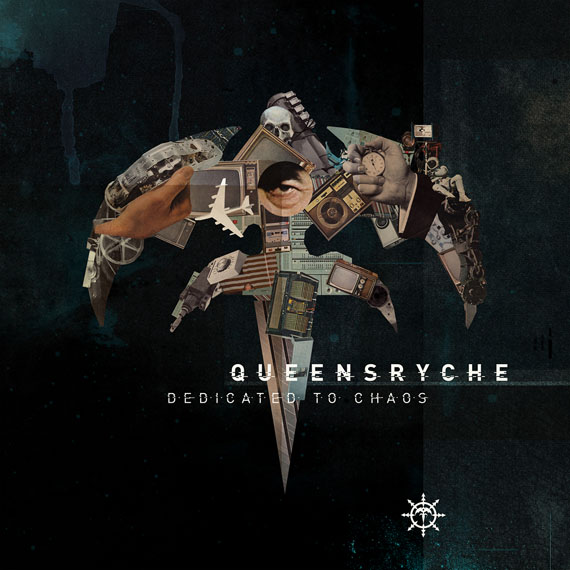
585. Queensryche / Dedicated to Chaos. 2011. 1.5/5


Waiting for a new Queensryche album in recent years has been like waiting for the birth of you first child, and wondering will it be a boy or a girl - the difference being, you wonder whether the Queensryche you love will show up, or the one you are indifferent to. Queensryche albums have had a difficult time trying to live up to the band's initial releases, and one could only begin to guess where their latest release would be trending towards.
Simple answer... it’s like listening to a lounge club act. Is it a truly bad album? No, the musicianship and vocals are as good as ever. But it is so radically different from what I love from this band.
It’s just one of those things. 20 years ago, Def Leppard made a permanent move away from heavy music to begin producing the sugar-coated syrupy stuff they have recorded from Slang onwards. There was no pretence on their part. As a band they just decided that this was the music that they wanted to produce, and you either liked it, or complained about it, or moved on. Queensryche has been on a similar path for over a decade themselves, though it has been disguised a little more over the course of several albums. With this release however, they have completed that journey, and again, as with Def Leppard, there is no pretence.

This is almost a grunge album, more than a decade after this type of music really began to phase out. There are no super solos, there is none of the brilliant intricate drumming that Scott Rockenfield is renown for. There are no super soaring vocals from Geoff Tate. Every song blends into the next. On the first five or six times that I listened to the album, I truly did not know where one song ended and the next started.

I think this needs to be approached from a different angle if you are to get anything out of it. Those who listen to this without any ideas of the history behind the band may well find they enjoy it. Fans of the band who are able to roll with the punches and accept that this is the final direction that this band has headed may also be able to find some goodness in it. Many old school fans will be enormously disappointed.

I guess all I can reiterate as a personal valuation is this; technically in musicianship and mixing, this album sounds great. For someone who still believes that Operation: Mindcrime is one of the five best albums ever recorded, this may as well have been a Coldplay album. And I hate Coldplay with a passion. Et tu Queensryche? Et tu...

Thursday, February 03, 2011

584. Therapy? / We're Here to the End. 2010. 3.5/5

It has taken over 20 years for Therapy? to put out a live opus, but when they did, they crammed it full of every song imaginable - all 36 of them stuffed onto 2 CDs. Quite an amazing feat. And whilst I was looking forward to the album, I wondered how the material was going to hold up under a stern examination.

On my first listen I admit I was disappointed. Many of the songs seem to have been played at a slower tempo, and just don't live up to anger and angst that the studio versions emit. In essence, pretty much all the live versions of songs off Troublegum still just don't match up to those original versions, and that's after having seen them live, and having the live DVD Scopophobia and various webcasts and bootleg videos of the band playing live. This was another test of their performance, and they still can't bring the magic of Troublegum to a live setting.
OK, so stop harping on that and get over it. Listen again. Take in the performances. Feel the energy of the crowd, and how the band are feeding off that. Listen to the song streak of "Die Like a Mother Fucker", "Stories" and "Meat Abstract". Revel in the joy that is the live version of "Diane" without cellos! Sure, you can cringe through songs like "A Moment of Clarity", but be redeemed by "If it Kills Me" and "Knives" and " The Head That Tried to Strangle Itself".
The audience reaction/participation is at the forefront in this recording, and that does add an authenticity to it. Some bands these days try to remove the audience from live recordings - why? I don't know. On this live album the crowd is a member of the band and a vital part of the recording. They in fact enhance this release, because they are singing what you are singing while listening to it.

The band sounds great. Andy's vocals do not always withstand the clinical environment of listening to a live album in the home. When in attendance at the gig, his vocals blend with the crowd and thus sound great. Without the crowd in my living room, some songs are unable to withstand the sometime off-key vocals. But that's why live albums are never as good as actually being at the gig, because they can never completely recreate the live experience. Once again, I try to stop harping on it and just enjoy it.

This is a good live album that covers twenty years of the band's history. Fans will love it, detractors will not. I still sit on the positive side of the fence in the middle.

583. Stryper / The Covering. 2011. 3/5


I think there is always an initial excitement when a band you like brings out a 'covers' album, especially when so many of the songs/artists on said release are also big favourites of your own! And so it was when this release was first announced that I felt a tingle of anticipation.
 Having said that, the other main thing that must be made about covers albums is that the versions of the songs done very rarely match up to the original versions, and after a few listens the cover album generally gets placed on the CD shelf and is left to its own devices.

In all respects I could leave the review there, but that may be a little unfair.

The songs chosen could easily have been a best-of selection of 1980's heavy metal - could almost have been the song list I would have chosen if I was putting together just such a compilation. I guess there is an inherent danger in taking on songs of this magnitude - they are some of the most recognisable songs in heavy metal history, and if they aren't done justice it can be a cruel blow.
Cutting to the chase, and the good news is that the boys have done a good job on the album. The songs have been somewhat "Stryper-ised", in that they do not possess the raw power and heavyness of the original material, and they have quite rightly attuned the guitars and music to a "Stryper-ised" sound without compromising the basis of the music. So if you have come looking for a modern metal take on these songs you have come to the wrong place. However, if you have come to see how this very good band interprets some of the best metal songs of all time, then it is worth a listen.

Most of the songs have the tempo just dialled back a little from the original versions. My interest was always going to be focused on two specific elements. First was the guitaring of Oz Fox and Michael Sweet, and the best way to describe it is 'efficient'. Having seen the band live I guess I was hoping for some ripping solos from the two of them. What you get is some very good guitaring which never really breaks out of the mould, apart from perhaps the Kansas song "Carry on Wayward Son". Mind you, they are up against some of the best of all time, so it's a tough task. Second was the vocals of Michael Sweet, and how he approached the task at hand. There is a lot of double tracking of vocals, which works on most songs, though perhaps not on Iron Maiden's "The Trooper". Sweet has always had an awesome voice, but again is up against some of the best in the business in Dickinson, Halford, Osbourne and Dio.
In conclusion, I can but repeat my remarks from the beginning of the review. It's great to hear a band love the same songs that you do, and make an album of them. Once you have listened to it 8 to 10 times, as I have since buying it two days ago, you begin to crave listening to the original songs again, and start burrowing through the CD shelves to find them. They are good versions of these great songs, and the band is faultless in their musicianship. Michael Sweet's vocals soar as they always do. But the novelty can only last for a certain period of time, and then you will move on.

Thursday, December 02, 2010

582. Jorn / Dio. 2010. 4/5


Released scarily just a few short weeks after the sad loss of Ronnie James Dio to cancer, this album is well worth a listen whether you are a fan of either of those two gentlemen or not. Recorded as Jorn's own tribute to a man who is obviously a great influence on his own career, this is an interesting collection of songs.

It leads off with Jorn's own tribute, "Song for Ronnie James", an 8 minute composition that meshes in lyrics and song titles from Dio's career. Though I do think it is a bit long winded, it grew on me over time.
Following this is a selection of songs that intertwines Dio's career with Rainbow, Black Sabbath and his own band Dio. What impresses me most about them is that they are true to the originals musically and vocally, without being exact replicas of them. In essence they are a good updating of each song. Some stand out more than others - for me the best include an awesome version of "Lord of the Last Day", "Kill the King", "Push" and "Invisible" - but overall they are all wonderfully done.

Like all of Dio's music, nothing will ever compare to the originals along with the Master's voice. As one man's (and his band's) tribute to his music, however, this is an excellent album.

583. Ozzy Osbourne / Scream. 2010. 2/5

As per usual, no one really seems to know what is happening with Ozzy Osbourne. In a lot of ways, that is as good as any other explanation for this album, its production and writing and its eventual release. Even for Ozzy there seems to be a lot of action going on in his life without him actually doing anything, and on this album there feels like there has been a lot of rush to produce the songs, get them recorded and get them released, without any real substance being attached to them.

One of the major holes with this album is the (what appears to be final) parting of ways with long time guitarist and collaborator Zakk Wylde - for whatever reason, and from whatever quarter. As always there isn’t a lot of information coming through. Certainly from my point of view, this always meant that there would be a lot more judgement of this album, either positively or negatively. While Zakk has been involved, whether as both songwriter and performer, or even only one of those things, there was a confidence that what was going to be on the album would have a solid base of hope for the material produced. That is not to pre-judge new guitarist Gus G, as he is good enough that he doesn't warrant comparisons with any of Ozzy’s previous guitarists, and his contributions can stand alone.
 
That isn't enough to save this album. It is tired. It is formulaic. It pretty much tries to rehash the success of Ozzy from another era, and wash it up to make it sound like a new version. It fails on this level. Artists that have been around as long as Ozzy are often on a hiding to nothing – if you look to change your style you risk alienating your long-term fans. if you look to stay true to your style you’ve cultivated over years, you could be accused of being unimaginative and unable to move with the times. I think the problem with Scream is that it fails to do either, and so it is stuck in the loop.
Why does it not work? I don't claim to know the full answer, all I know is that this doesn't feel like a traditional Ozzy Osbourne album, nor does it feel like a new venture. Apart from the first single, "Let Me Hear You Scream", which in itself is very formula-written and though it is catchy does tend to become repeatable, there is no magic in the remaining songs on the album. Most of it is stuck in a very similar slow and sludgy rhythm. “Soul Sucker” is a good example of this, as is "Latimer's Mercy", just plodding songs that can't get out of first gear, and yet Gus G’s solos try to rip along at a faster pace which just confuses the whole basis of the song. Either be a grunge song or a metal song, but the complete change of tempo within the song doesn’t work. The opening track “Let it Die” seems to drag on forever in a never-ending malaise. “Life Won’t Wait” and “Diggin’ Me Down” tend to do the same. The tempo of the album just doesn’t get to the point that the songs become fun to listen to. “Fearless” comes closest to working here, with its relatively short punch and faster rhythm throughout making it more enjoyable. “Time” feels like it stretches out for eternity. “I Want it More” is tolerable, while the closing hymn of “I Love You All” is a bit schmaltzy even for latter day Ozzy. And, not to mention that a number of the riffs on this album come close to those on some of the songs on the last three albums. Running out of ideas?
 
Ozzy’s co-writer of the album Kevin Churko has worked with a lot of different artists, such as Five Finger Death Punch, Disturbed, Papa Roach and... Shania Twain, so the different track these songs have taken, along with no guidance from Zakk or even Gus G as the hired replacement probably goes some way to explaining the lackluster feel of the album.
I can also add that for me there is no desire to hear any of it live, and after the initial rotation that all new albums get on my stereo and assorted mp3 players, it has remained on the shelf, and I’m not sure it will ever come back off it.

Could this be the end for Ozzy? It's quite possible. With the passing of Ronnie James Dio this year, the possibility of a Black Sabbath reunion album with Ozzy back on vocals will no doubt now be resurrected, especially given the success of the Heaven and Hell project over the last four years. An album co-written with Iommi and Butler may be all Ozzy has left to keep his own career afloat. If this album was to signal the end of his music career, it would be a sad way to bow out.

Best: “Let Me Hear You Scream”, “Fearless”.

Rating: “I'll take this rage, rattle your cage, nobody said it's easy!” 2/5.

582. Black Label Society / Order of the Black. 2010. 3.5/5


After a succession of very average albums (unless you enjoy his piano-laden recent releases) it was only out of sheer loyalty to the man that I decided to check out this latest offering. Given that he had been finally cast aside by the Osbourne Foundation, was it possible that he could rekindle his metal spirit and deliver something that fans of Black Label Society's initial releases were craving?
Somewhat surprisingly, the answer is a cautious 'yes'.
Order of the Black is a much better balanced album than anything the band has done since perhaps 1919 Eternal. There are songs here that you can actually get enthusiastic about, sing the lyrics loudly with a lungful of air and even play a little air guitar to. While I admire Zakk's musical ability, it's the heavier songs that really make him what he is, and he had not produced enough of that lately until this album.
OK, they mightn't be the calibre of songs that he had with Ozzy in early 1990's, and his vocals have never been Ozzy's, but that doesn't detract from the product here. To be quite honest, this album outrates Ozzy's Scream on every level. Whether that is much of an achievement is open to question.
My favourites are, probably unsurprisingly, the opening three songs of the album, "Crazy Horse", "Overlord" and "Parade of the Dead", but there are other good songs here too. The two ballads again, for me, tend to destroy the momentum of the album, but better that there are only two and not ten of them.

Those that have abandoned Black Label Society before this should somehow grab a copy and at least give it a try before all hope is lost. I like the album, and to me it does raise some hope that we may yet see more good material from one of the finest guitarists we have seen in the past twenty years.

581. Megadeth / Rust in Peace Live. 2010. 4.5/5


For the past decade it has become a popular pastime for bands to either a) cover an entire album live of one of their influences (see Dream Theater's efforts) or b) play one of your own albums in its entirety live. The decision to record and release these performances is a no brainer, especially when it is arguably your finest album.

Here then is Megadeth, having recently re-recruited founding member Dave Ellefson back into the fold, letting loose with Rust in Peace Live. Though some of the songs have remained in the band's setlist since 1990 ("Holy Wars... The Punishment Due", "Hangar 18" and "Tornado of Souls") some have not been played since the tour of that album, and other never at all. That is why that, as a fan, this album/DVD did not kick in seriously until it reached the third song. "Take No Prisoners" has always been a favourite, and the band really brings it home here, driving with the speed and intensity of the original. Having warmed up by now, they fly on through the remainder of the Rust in Peace album. The musicianship is faultless, and only Dave's vocals in places seem a little forced. Given that it is generally on the songs that the band rarely performs, this is not surprising, and really not an issue. Singing live is not like singing in layers in the studio.
The set is padded out at the end with crowd and band favourites, with "In My Darkest Hour", "She Wolf" and especially the awesome crowd-inducing "Peace Sells" rounding out a fabulous live set.

This is an excellent live release from a band that has rarely compromised and is still able to deliver the best that heavy metal could hope for. More than worth the effort to add to your collection.

Wednesday, November 24, 2010

580. Helloween / 7 Sinners. 2010. 4/5


Given the chosen directional change that Helloween adapted for their 25th anniversary Unarmed best of album, I can admit that I approached this new album with a certain amount of trepidation. The band had promised their fans that they would be returning to their heavy metal roots for this release, but one could only wait and hope.

So let's say from the outset that Helloween have succeeded in continuing their excellence in releasing yet another powerful album. What is immediately obvious is the pushing forward of the keyboards in the mix in all songs, even more so than for instance Rabbit Don't Come Easy and Gambling With The Devil. While it came as quite a surprise initially, once you are used to it being there so prominantly again you can accept it. After all, the power metal genre relies on keyboards so much, that it shouldn't be a surprise that one of the godfathers of the genre should fall back on one of its key elements (no pun intended).

Everything works here. Dani Loble's drumming is superb, even scintillating in places. With some high profile drummers in the world tinkering with their artform (and not in a good way) it is refreshing to hear a drummer who may not be one of the bigger names outside of Europe, but plays superb breaks and rolls and has a great sound out of his kit. Markus Grosskopf is magnificent on bass again, while guitarists Weikath and Gerstner are both brilliant. Throw in Andi Deris and his still awesome vocals and everything is still working in Helloweenworld.
I love the way the album starts, with "Where the Sinners Go", the anthemic "Are You Metal?" and "Who is Mr Madman?". Other fave songs for me include "World of Fantasy" and "Far in the Future".
While there is still a couple of dalliances with slower songs, it is most definitely the faster and heavier songs that stand apart on the album, and also make the album's mark.
In regards to recent releases, 7 Sinners doesn't quite match up to The Dark Ride or Keeper of the Seven Keys: The Legacy but I think does stack up better than Rabbit Don't Come Easy and Gambling With The Devil. What is most pleasing is that it proves that Helloween are not a fading force, and that they still have plenty to offer the world of metal.