Accept feels like they have been around forever, but there are two distinct eras to the band. After sitting in a self-imposed retirement for almost 14 years after the band had gone on to separate projects, original band members guitarist Wolf Hoffmann and bass guitarist Peter Baltes got together and found they still had music to write together. With original vocalist Udo Dirkschneider not interested in a return to the band, former vocalist for T.T. Quick Mark Tornillo was recruited to take his place, and the album Blood of the Nations was released, and became was a barnstorming moment, and though many critics felt that after such a lengthy absence and without Dirkschneider that the band should have let good enough be enough and not resurrect the name of Accept, they were shown to be wrong.Three more albums have followed since then, each of them excellent in their own way, and now their fifth studio release since their renaissance has been released, titled Too Mean to Die. It hasn’t been without loss however, with both guitarist Herman Frank and drummer Stefan Schwarzmann leaving the band prior to “The Rise of Chaos” album, and then long time bass guitarist Peter Baltes moving on after that tour. It left Wolf Hoffmann as the last of the original band, but onwards they moved forward. Indeed, Accept has been a strange beast, and as popular as their albums from the 1980’s had been, since their return in 2010 they actually appear to have gotten heavier, shaking off their tag of being an AC/DC type clone in the big selling days. In many ways this has been through the addition of American Tornillo on vocals and as a songwriter, as his background appeared to energize the group and their song output.
Martin Motnik, former bass guitarist for Uli Jon Roth, joined the band for the new album, and alongside newer members Uwe Lewis and Christopher Williams came a third guitarist in Philip Shouse, and even though it may not be the Accept band that everyone remembers from all oof those years ago, it is an Accept that has found a way to produce hard electrifying music.
In many ways, Too Mean to Die is a result of the old saying “If it ain’t broke, don’t fix it”. Although the band lost a third of its song writing team with the departure of Baltes, Hoffmann and Tornillo along with Hoffmann’s wife and band manager Deaffy continue on in hard hitting fashion. And while the music still holds that same flavour that Accept has had throughout its existence, it does have a heavier feel about it. Back in the 1980’s on those early albums, it was more of a hard rock feel, but now well into the new century and in the second era of Accept things have progressed. Blazing guitars, plenty of hard hitting and double time drums, and vocals that aren’t that far removed from what Udo provided back in the day. Not only is the song writing terrific, the lyrics are excellent, harping on issues such as addiction to phones and social media, social media influencers, fearmongering by the media, and of course the pandemic that stretches around us. The addition of a third guitarist to the recording band does add to the great sound produced, and in some songs brings out further highlights so differently from the days when Wolf Hoffmann was holding the fort alone.
Even if you haven’t heard any Accept albums before – and really, if you haven’t, you must be living on another planet – you will find plenty to like here. Starting off with the excellent “Zombie Apocalypse” and the title track “Too Mean to Die” the album comes at you with a kick from the beginning. The band still shows its versatility throughout, mixing the straight up metal heaviness of “Sucks to be You” and “Symphony of Pain” and “Not My Problem” with the middle of the road hard rock tidings of songs like “The Undertaker”, and even the (somewhat unfortunate) standard power ballad that European bands still feel they need to poke us with in “The Best is Yet to Come”. I can guarantee you that I would still rather more songs like the former three than like the power ballad. I’m sure they appeal to some of you out there, but honestly if you take out “The Best is Yet to Come” and add in another track similar to “Sucks to be You”, this becomes a ball tearer of an album rather than just another very good entry into the Accept discography.
I don’t mind admitting that I was surprised by how good Accept’s comeback album was back in 2010. Accept’s classic albums have some great songs on them, but they are most definitely tied to the era they were recorded. They are generally hard rock, in an AC/DC fashion that in some ways held them back on their first albums. But their albums over the last decade have been a revelation, finding that extra grunt and excitement and kick that has given them more life than anyone could have expected. And while band leader Wolf Hoffmann must take a lot of the credit for that, Mark Tornillo and his vocals have been a revelation, and continue to be here on Too Mean to Die. No one expected the band to succeed without Udo Dirkschneider on vocals, and yet they have done more than that, they have thrived and gone to another level, and that is something rare in the music industry.
This album continues the band’s upward trend, and given the problems faced by the music industry since the beginning of 2020 this is quite a feat. Having given this album a good workout over the last couple of months I would love to get the chance to hear some of these songs live, because I think that is where they would get to the next level, in that live environment.
One middle-aged headbanger goes where no man has gone before. This is an attempt to listen to and review every album I own, from A to Z. This could take a lifetime...
Podcast - Latest Episode
Wednesday, September 08, 2021
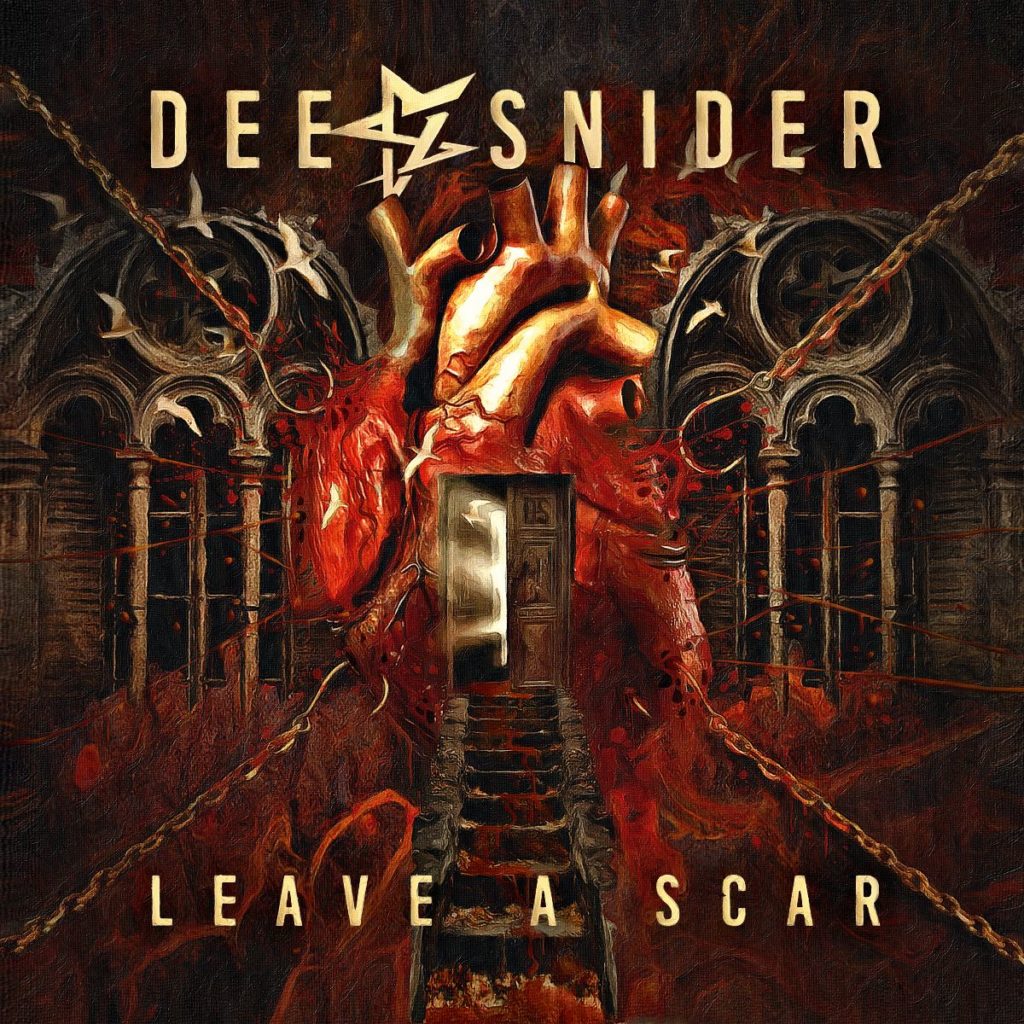
1123. Dee Snider / Leave a Scar. 2021. 3/5
Everyone knows Dee Snider... well, that’s probably not necessarily true. But everyone knows Twisted Sister, and if you know Twisted Sister, then you know the big lead singer with make-up and long blond hair as the lead singer, and that is Dee Snider, in his most famous role. But Twisted Sister has been and gone for some years now, and Dee has been out there changing up the course of his life.In the years following Twisted Sister, Dee has done television shows both in guest roles and acting roles, including his family’s own reality show, “Growing Up Twisted”. And he has still been in and around the music industry, appearing live on stage and on other projects, including “Dee Does Broadway”, which as you can imagine was a bit of a stretch. None of those albums made a huge impact, and so it wasn’t until three years ago when Jamey Jasta from Hatebreed came along and suggested putting together a metal album for the current day that things began to come back into focus. That album, For the Love of Metal, was written by Jasta along with his bandmates from Kingdom of Sorrow, Charlie and Nick Bellmore who also performed all the guitars and drums, and included guest performances from other vocalists such as Howard Jones and Alissa White-Gluz. Dee was more or less just the ‘hired gun’ as vocalist, but the album was a success, and it brought Dee back into prominence in the metal community which more than anything else was something he had wanted to achieve.
Coming into this new album, Dee had decided that he wanted to be a part of the writing process again, which is great to see given the success he has had with that during his long career. It also gave him the opportunity to continue to build the new-metal-with-old-metal sound that the previous album had begun. And with the same crew together to record the album, and a pandemic of time to spend the time wisely, Dee Snider has come up with an album that, if nothing else, has the right sound about it to connect with fans old and new.
From the very beginning, you can see that the main reason Dee wanted to be involved in the writing process again, and especially the lyrics, is that he had a fair bit on his mind and he wanted to get it off his chest. Snider has never been backward in coming forward when it comes to his opinions on anything and everything. Indeed he was quoted in interviews about this album as saying “I knew I not only had to get back into the studio, but for the first time since the ’90s, I needed to be a part of the writing process. ‘Leave a Scar’ is filled with messages to and for the silent voices in the world who need someone to speak out on their behalf.” That sentiment is captured from the beginning of the album with his lyric “While my mind is still screaming, I can’t stop” and “You will never feel the same, until we rock again”.
From the outset the album finds the right tempo and balance between aggression and anthem. Dee of course is no stranger to being involved in an anthemic tune, and that is utilised here well, along with fast paced and raucous guitars and drums driving along. There is little left to the imagination in songs named “I Gotta Rock (Again)” and “All or Nothing More” and “Down But Never Out”. For a guy who is now aged in his mid-60's, there is an impressiveness in his vocals on this album, and his subject matter is taken and composed on the positive side of the ledger, looking to inspire and rise the spirits rather than take any morbidity within. Even with “Before I Go” where he sings “your fate depends on who you save” he keeps looking for the light.
There are lots of different subjects covered here, and no doubt the downtime during the 2020 covid pandemic has given him plenty of time for reflection, and a desire to use that in his music. The best songs here are the ones with the drive of the drums and the heavy riffs with Dee chanting hard at the microphone, but even when the band changes things up a bit, such as on songs like “Silent Battles” and the closing track “Stand” they still work. There is even a guest vocal from Cannibal Corpse front man Corpsegrinder on the song “Time to Choose”, which is an interesting confluence of vocal styles. There are times during the album that the same can feel a bit samey, a bit too similar in the backgrounds rhythm, and that they may blend too easily into each other. That may bother some people but it’s more a reflection of preference. I am still confused as to why artists at times choose to close out an album with a power ballad as Dee has done here with “Stand”. With all of the heavy material that has come before it, this does finish the album in a strange way.
I came into this album on the back of that previous release For the Love of Metal. Dee had toured Australia on that album, indeed recorded some of the tour for a live release and was a gig that I had wanted to get to but for other reasons was unable to attend. There had been things I had enjoyed on that album, and I was interested to hear if this was any different. What I found was an album that I must admit I found much more comfortable, simply because it felt as though it was Dee’s words I was hearing here this time, that it was a personal reflection on the world, rather than just him delivering someone else’s speech. And I think that was important in the context of someone like Dee Snider, because he is looked up to in the music world for what he has done in the past and for what he has stood for since, and I think you need to know that it is his words you are listening to him sing and not those of someone else. There is nothing ground-breaking here, nothing that will have you digging deep for superlatives when it comes to describing the album and what you think about it. Much as I am doing here. It is a good solid album, one where the songs are perhaps a little formulaic, and where at time you may think they have just rolled off a production line. But there are moments where something hits you and you realise that there is something just a little special about hearing this man back behind the microphone. Dee Snider is a legend of the industry, and should the word recover just enough to allow him the chance to get out there and play these songs in a live setting with a big crowd, I think we will see the best of what has been written at that time. Because if one thing is true, Dee Snider is a phenomenon on the stage, and that is where he is at his best.
Coming into this new album, Dee had decided that he wanted to be a part of the writing process again, which is great to see given the success he has had with that during his long career. It also gave him the opportunity to continue to build the new-metal-with-old-metal sound that the previous album had begun. And with the same crew together to record the album, and a pandemic of time to spend the time wisely, Dee Snider has come up with an album that, if nothing else, has the right sound about it to connect with fans old and new.
From the very beginning, you can see that the main reason Dee wanted to be involved in the writing process again, and especially the lyrics, is that he had a fair bit on his mind and he wanted to get it off his chest. Snider has never been backward in coming forward when it comes to his opinions on anything and everything. Indeed he was quoted in interviews about this album as saying “I knew I not only had to get back into the studio, but for the first time since the ’90s, I needed to be a part of the writing process. ‘Leave a Scar’ is filled with messages to and for the silent voices in the world who need someone to speak out on their behalf.” That sentiment is captured from the beginning of the album with his lyric “While my mind is still screaming, I can’t stop” and “You will never feel the same, until we rock again”.
From the outset the album finds the right tempo and balance between aggression and anthem. Dee of course is no stranger to being involved in an anthemic tune, and that is utilised here well, along with fast paced and raucous guitars and drums driving along. There is little left to the imagination in songs named “I Gotta Rock (Again)” and “All or Nothing More” and “Down But Never Out”. For a guy who is now aged in his mid-60's, there is an impressiveness in his vocals on this album, and his subject matter is taken and composed on the positive side of the ledger, looking to inspire and rise the spirits rather than take any morbidity within. Even with “Before I Go” where he sings “your fate depends on who you save” he keeps looking for the light.
There are lots of different subjects covered here, and no doubt the downtime during the 2020 covid pandemic has given him plenty of time for reflection, and a desire to use that in his music. The best songs here are the ones with the drive of the drums and the heavy riffs with Dee chanting hard at the microphone, but even when the band changes things up a bit, such as on songs like “Silent Battles” and the closing track “Stand” they still work. There is even a guest vocal from Cannibal Corpse front man Corpsegrinder on the song “Time to Choose”, which is an interesting confluence of vocal styles. There are times during the album that the same can feel a bit samey, a bit too similar in the backgrounds rhythm, and that they may blend too easily into each other. That may bother some people but it’s more a reflection of preference. I am still confused as to why artists at times choose to close out an album with a power ballad as Dee has done here with “Stand”. With all of the heavy material that has come before it, this does finish the album in a strange way.
I came into this album on the back of that previous release For the Love of Metal. Dee had toured Australia on that album, indeed recorded some of the tour for a live release and was a gig that I had wanted to get to but for other reasons was unable to attend. There had been things I had enjoyed on that album, and I was interested to hear if this was any different. What I found was an album that I must admit I found much more comfortable, simply because it felt as though it was Dee’s words I was hearing here this time, that it was a personal reflection on the world, rather than just him delivering someone else’s speech. And I think that was important in the context of someone like Dee Snider, because he is looked up to in the music world for what he has done in the past and for what he has stood for since, and I think you need to know that it is his words you are listening to him sing and not those of someone else. There is nothing ground-breaking here, nothing that will have you digging deep for superlatives when it comes to describing the album and what you think about it. Much as I am doing here. It is a good solid album, one where the songs are perhaps a little formulaic, and where at time you may think they have just rolled off a production line. But there are moments where something hits you and you realise that there is something just a little special about hearing this man back behind the microphone. Dee Snider is a legend of the industry, and should the word recover just enough to allow him the chance to get out there and play these songs in a live setting with a big crowd, I think we will see the best of what has been written at that time. Because if one thing is true, Dee Snider is a phenomenon on the stage, and that is where he is at his best.
Friday, August 27, 2021
1122. Bon Jovi / Slippery When Wet. 1986. 4/5
By the time 1986 had come around, Bon Jovi had already been around for a few years, and had released two albums, the eponymous Bon Jovi released in 1984 and the follow up, 7800° Fahrenheit released in 1985. Both albums had been a moderate success and had managed to get themselves noticed by the, again, moderately successful singles, “Runaway” from the debut album and “In and Out of Love” from 7800° Fahrenheit. But the band was ambitious, and in their two main members, lead singer Jon Bon Jovi and guitarist Richie Sambora, they had a pair of song writers who had the ideas to get them there. But they decided that they needed some help to get them started on their next album if it was to achieve what they were hoping. They were looking for a more mainstream sound than they had had on their first two albums – though, from a personal perspective in this instance, what they were actually looking for was material that struck a chord rather than looking to be more commercial. So in putting together their new album, they made some, in retrospect, canny decisions. Bruce Fairbairn was brought in to produce the album, man who had already had success with Loverboy and Aerosmith, and would do so after this with bands such as AC/DC, Scorpions and Van Halen. Bob Rock, who would produce mega albums from bands such as Motley Crue and Metallica following this, was brought in to mix the album. And a phone call was made to the man known as “The Hit-Maker", Desmond Child, to help collaborate with Bon Jovi and Sambora on a few tracks to help them get the kind of sound and appeal that they were looking for. From all reports and interviews, the band put together something like 30 songs in the writing process, and eventually auditioned them to locals to judge which songs would eventually go on the album.Did hiring Desmond Child have an influence? Well, you would have to judge that for yourself I guess. Child co-wrote four songs on the album, the balladesque “Without Love” and rock ballad “I’d Die For You”, and also two other songs you may know, “You Give Love a Bad Name” and “Livin’ on a Prayer”. So yeah, I’d say he was worth whatever he got paid for helping out in the writing department.
Slippery When Wet became a template for the most commercially successful albums through the second half of the 1980’s, and one that most hair metal bands in particular tried to follow to replicate this album’s success. It is a combined selection of rock tracks and unashamed soft rock ballads, of harder songs that don’t always get the attention of the million selling singles, and of slower tempo tracks. Because of the mega success of the singles released from the album, many people don’t even know half of the songs on the album, even though they probably have a copy of it at home.
The timing of the release of the singles from the album kept Slippery When Wet and Bon Jovi in the music charts and on the stereos of people worldwide for an 18 month period from mid-1986 through to the end of 1987 and beyond. Four singles were released, each spaced roughly four months apart so as not to step on the toes of each other. You know them all, and you know the words to them all as well. “You Give Love a Bad Name” was brought out a few weeks prior to the album’s release and immediately caught on radio and MTV which set up the album’s release perfectly. This was followed by “Livin’ on a Prayer” which is the song everyone still knows Bon Jovi for. It is the anthem that never stops being sung anywhere in the world, by the young and the young at heart. We’re always halfway there. It stayed on rotation on music video shows for a year, and feels as though it has never left radio rotation for the last 35 years. Six months later came “Wanted Dead or Alive”, a completely different tempo song with the acoustic guitars which again caught the attention of the 16-30 years olds and made them swoon over Bon Jovi and Sambora all over again. And the fourth and final single was the rock ballad “Never Say Goodbye”, surely always tagged as being a single and one they would have hoped would be a winner. And it did well but given the amazing success of the album’s first three singles it was probably always on a hiding to nothing.
On the back of these singles, the album was a raging success. Both “You Give Love a Bad Name” and “Livin’ on a Prayer” went to number one around the world including the US and Australia, while “Wanted Dead or Alive” reached top ten. This meant that Slippery When Wet became to the first album of the metal genre to have three top ten singles on it.
But an album can’t be considered great on the singles alone, and as much as I enjoy those three main singles released from the album, they aren’t what just makes this album terrific – because if you were only putting the album on for those songs you would eventually be sorely disappointed. You have to take a look at the rest of the contributors to realise what makes this album so special. The opening blast of “Let it Rock” actually is the perfect set up for the album, the mid-tempo anthemic chanting draws you in from the start, making you feel a part of the crowd and the experience itself. Once the two multi-million selling singles follow this you have “Social Disease” which is just as important in the scheme of the album and not far behind them regarding great Bon Jovi songs. “Raise Your Hands” is probably still my favourite song from the album, it is the hardest track on the album as far as I’m concerned, and in regard to getting the blood pumping it is the winner here.
For the lovers of the soft rock ballads, the back half of the album is where they are hiding, and if you enjoy that part of the genre then this is the money shot for you. “Without Love” is very much in this category, for me a little whiny on vocals. “I’d Die For You” harks back to the early Bon Jovi years, and indeed reminds me constantly of their first single “Runaway” such is the dominance of the keyboards here. Then the final single “Never Say Goodbye”, where the band goes into full-on soft ballad mode. The album is then concluded by the hard rocking “Wild in the Streets”, concluding the album the way it started on a positive note.
The album spanned musical tastes and the generations. Radio listeners loved it, pop fans loved it, rock fans loved it, metal fans loved it. The album was loved by primary school kids and adults from 20 to 50. Everyone could find something on here to their musical taste, and once the album had that in, it was able to drag them into enjoying the rest of it.
On the other side of the coin, I doubt that the album has the same impact on those that didn’t grow up with it at the time of its release. It’s popularity today is based more on the blanket warmth of memories that it inspires rather than the relevance and timelessness of the songs the album produced. Many from the following generations indeed appear bemused when this album is brought up in conversation as one of the great albums, and you can see why that would be. Not only have parts of this album dated over time, anchored to the decade that it was written and recorded, Bon Jovi’s recession into an almost easy-listening act in recent times does nothing when trying to articulate just how huge and important this album was back when it was released. Perhaps today, on the 35th anniversary of its release, it is a day for reflection on that. Because in its time it was an album that almost every music fan of every genre of music owned a copy of. And that more than anything else showed its importance of its age.
Slippery When Wet became a template for the most commercially successful albums through the second half of the 1980’s, and one that most hair metal bands in particular tried to follow to replicate this album’s success. It is a combined selection of rock tracks and unashamed soft rock ballads, of harder songs that don’t always get the attention of the million selling singles, and of slower tempo tracks. Because of the mega success of the singles released from the album, many people don’t even know half of the songs on the album, even though they probably have a copy of it at home.
The timing of the release of the singles from the album kept Slippery When Wet and Bon Jovi in the music charts and on the stereos of people worldwide for an 18 month period from mid-1986 through to the end of 1987 and beyond. Four singles were released, each spaced roughly four months apart so as not to step on the toes of each other. You know them all, and you know the words to them all as well. “You Give Love a Bad Name” was brought out a few weeks prior to the album’s release and immediately caught on radio and MTV which set up the album’s release perfectly. This was followed by “Livin’ on a Prayer” which is the song everyone still knows Bon Jovi for. It is the anthem that never stops being sung anywhere in the world, by the young and the young at heart. We’re always halfway there. It stayed on rotation on music video shows for a year, and feels as though it has never left radio rotation for the last 35 years. Six months later came “Wanted Dead or Alive”, a completely different tempo song with the acoustic guitars which again caught the attention of the 16-30 years olds and made them swoon over Bon Jovi and Sambora all over again. And the fourth and final single was the rock ballad “Never Say Goodbye”, surely always tagged as being a single and one they would have hoped would be a winner. And it did well but given the amazing success of the album’s first three singles it was probably always on a hiding to nothing.
On the back of these singles, the album was a raging success. Both “You Give Love a Bad Name” and “Livin’ on a Prayer” went to number one around the world including the US and Australia, while “Wanted Dead or Alive” reached top ten. This meant that Slippery When Wet became to the first album of the metal genre to have three top ten singles on it.
But an album can’t be considered great on the singles alone, and as much as I enjoy those three main singles released from the album, they aren’t what just makes this album terrific – because if you were only putting the album on for those songs you would eventually be sorely disappointed. You have to take a look at the rest of the contributors to realise what makes this album so special. The opening blast of “Let it Rock” actually is the perfect set up for the album, the mid-tempo anthemic chanting draws you in from the start, making you feel a part of the crowd and the experience itself. Once the two multi-million selling singles follow this you have “Social Disease” which is just as important in the scheme of the album and not far behind them regarding great Bon Jovi songs. “Raise Your Hands” is probably still my favourite song from the album, it is the hardest track on the album as far as I’m concerned, and in regard to getting the blood pumping it is the winner here.
For the lovers of the soft rock ballads, the back half of the album is where they are hiding, and if you enjoy that part of the genre then this is the money shot for you. “Without Love” is very much in this category, for me a little whiny on vocals. “I’d Die For You” harks back to the early Bon Jovi years, and indeed reminds me constantly of their first single “Runaway” such is the dominance of the keyboards here. Then the final single “Never Say Goodbye”, where the band goes into full-on soft ballad mode. The album is then concluded by the hard rocking “Wild in the Streets”, concluding the album the way it started on a positive note.
The album spanned musical tastes and the generations. Radio listeners loved it, pop fans loved it, rock fans loved it, metal fans loved it. The album was loved by primary school kids and adults from 20 to 50. Everyone could find something on here to their musical taste, and once the album had that in, it was able to drag them into enjoying the rest of it.
On the other side of the coin, I doubt that the album has the same impact on those that didn’t grow up with it at the time of its release. It’s popularity today is based more on the blanket warmth of memories that it inspires rather than the relevance and timelessness of the songs the album produced. Many from the following generations indeed appear bemused when this album is brought up in conversation as one of the great albums, and you can see why that would be. Not only have parts of this album dated over time, anchored to the decade that it was written and recorded, Bon Jovi’s recession into an almost easy-listening act in recent times does nothing when trying to articulate just how huge and important this album was back when it was released. Perhaps today, on the 35th anniversary of its release, it is a day for reflection on that. Because in its time it was an album that almost every music fan of every genre of music owned a copy of. And that more than anything else showed its importance of its age.
Rating: "Oooohhhh, we're halfway there..." 4/5
Thursday, August 26, 2021
1121. Powerwolf / Call of the Wild. 2021. 3.5/5
Powerwolf has been proficient in releasing albums, with Call of the Wild being their eighth studio album. In amongst that they have had songs that have charted in countries through their native Germany and other parts of Europe, including “We Drink Your Blood”, “Sanctified with Dynamite” and “Demons Are a Girl’s Best Friend”. The lyrics of the band are characterised by the treatment of Christianity and ancient Romanian legends. Indeed, werewolves and vampires are just a part of the Powerwolf lyrical mysticism, with creatures and beasts from legends throughout other parts of the world also being using as the basis of their songs. They also mix in religious overtones, without coming out and specifying what particular side of the divide they may inhabit themselves. Powerwolf, however, do not consider themselves a religious band, but rather call themselves spiritual. In an interview with Metal Hammer in 2019, titled “Too many bands take themselves too seriously”, Matthew Greywolf was asked if he considered himself to be a Christian or a Satanist. His answer was perfect: "I am a metallist, a metal fan. Metal is my religion. Look at all these people, what unites them? I can tell you, it's the fucking metal." Now THAT’S the kind of answer you want to hear from someone in that position!
Powerwolf play a different type of the power metal genre than most bands who get lumped into that faction. While the keyboards are always prevalent and add a lot to the atmospheric sound that the band utilises, they do not dominate in the way that power metal bands usually have them, as a duelling role against the single guitar that most of these bands possess. Here the keyboards are an important component of the music, but in a keyboard/guitar trade off. With two guitarists, they still dominate the main passages of the songs, which is what gives them their edge over those power metal bands that only have a single guitarist.
For the fans of Powerwolf they do cover most bases here on Call of the Wild. There is even their power ballad, something they have kept clear of for most of their career, which has been a point I have admired of them to this time. “Alive or Undead” pushes their boundaries in a direction hitherto unexplored, but as you would expect they do a great job of it without resorting to making it overly emotional and (to be honest) boring. If you have to do a power ballad, this is the way to make it work. And as always there is their slightly left of appropriate song, this time the catchy and fun “Undress to Confess”, a song that may draw some negative comments from some on social media, but for me just reinforces the fun that this band has with its music. Because of the grand design of keyboards and even organ on this album that is making its presence felt more on this album, there is a certain symphonic sound to their music which, if you are not a fan of it will probably make it harder to get yourself into this album, given the way the band has been developing over recent albums. Songs such as “Glaubenskraft” and “Blood for Blood” have that congregational feel to them, something that some fans have trouble reconciling. But for others the speed and heavier guitaring from songs like the title track “Call of the Wild”, the opening track “Faster Than the Flame”, “Dancing With the Dead”, “Vercolac”, “Sermon of Swords” and the first single “Beast of Gevaudan” are more likely to be your style. It isn’t hard to pick up the band’s stated influences, certainly in some of the guitar solos where their love of Iron Maiden is obvious, and in their gothic atmosphere their love of Mercyful Fate and Forbidden comes through.
I was surprised just how much I enjoyed this album from the first time I put it on. I initially came across the band the way I generally find new bands in this day and age, by the annual rating charts of albums on the rateyourmusic.com website that I have been a part of for over 15 years. From that I found their covers album and then The Sacrament of Sin album, and from that point I went backwards and checked out their entire discography. But for some reason this album resonated with me immediately. I enjoy all of their other albums, but perhaps not all of them in their entirety. Here on Call of the Wild, I pretty much enjoy the entire album from start to finish, and that includes the power ballad “Alive or Undead”, only the band’s second true power ballad in their existence. As much as I enjoy it, I hope it isn’t something they decide to do more of!
Rating: "And at night we're going wild when we set the world on fire" 3.5/5
For the fans of Powerwolf they do cover most bases here on Call of the Wild. There is even their power ballad, something they have kept clear of for most of their career, which has been a point I have admired of them to this time. “Alive or Undead” pushes their boundaries in a direction hitherto unexplored, but as you would expect they do a great job of it without resorting to making it overly emotional and (to be honest) boring. If you have to do a power ballad, this is the way to make it work. And as always there is their slightly left of appropriate song, this time the catchy and fun “Undress to Confess”, a song that may draw some negative comments from some on social media, but for me just reinforces the fun that this band has with its music. Because of the grand design of keyboards and even organ on this album that is making its presence felt more on this album, there is a certain symphonic sound to their music which, if you are not a fan of it will probably make it harder to get yourself into this album, given the way the band has been developing over recent albums. Songs such as “Glaubenskraft” and “Blood for Blood” have that congregational feel to them, something that some fans have trouble reconciling. But for others the speed and heavier guitaring from songs like the title track “Call of the Wild”, the opening track “Faster Than the Flame”, “Dancing With the Dead”, “Vercolac”, “Sermon of Swords” and the first single “Beast of Gevaudan” are more likely to be your style. It isn’t hard to pick up the band’s stated influences, certainly in some of the guitar solos where their love of Iron Maiden is obvious, and in their gothic atmosphere their love of Mercyful Fate and Forbidden comes through.
I was surprised just how much I enjoyed this album from the first time I put it on. I initially came across the band the way I generally find new bands in this day and age, by the annual rating charts of albums on the rateyourmusic.com website that I have been a part of for over 15 years. From that I found their covers album and then The Sacrament of Sin album, and from that point I went backwards and checked out their entire discography. But for some reason this album resonated with me immediately. I enjoy all of their other albums, but perhaps not all of them in their entirety. Here on Call of the Wild, I pretty much enjoy the entire album from start to finish, and that includes the power ballad “Alive or Undead”, only the band’s second true power ballad in their existence. As much as I enjoy it, I hope it isn’t something they decide to do more of!
Rating: "And at night we're going wild when we set the world on fire" 3.5/5
1120. Yngwie Malmsteen / Parabellum. 2021. 4/5
Yngwie Malmsteen has had a long and storied career in the music industry. He made his name with his amazing guitar skills, and a slew of albums through the 1980’s including Rising Force, Marching Out, Trilogy and Odyssey that sent his reputation soaring. His desire to become a commercial hit drove him constantly and meant an ever-changing and mass rotation of band members and song styles that often found his star either glowing or waning depending on which stanza you found him at. This was especially true of his lead vocalists, who came and went as though through a revolving door. His reputation for perfection and for being difficult to work with meant that sooner or later you felt that the only way he was going to be able to keep producing albums that he wanted to hear was to actually work on them himself, and write and record them pretty much on his lonesome. And to the great surprise of no one, that is eventually the road he went down. In recent years, and certainly here in the case of Parabellum, Yngwie plays all of the guitars, all of the bass, does all of the drum programming, and where it becomes necessary, provides all of the vocals.
In an interview with Guitar World magazine from May this year, Yngwie was quoted about what went in to recording this new album: “I always try to push myself on every album I do, and attempt things which are more extreme than previously. But what has helped this time is that I wasn't able to go on the road because of the pandemic. It meant I could take much longer in the studio, both to write and record. Because I am usually always on tour, which is great, I haven't had the luxury of spending a lot of time working on new music for more than 20 years. But I suddenly had no pressure at all on that front. And I feel the album has benefited enormously as a result.”
While Yngwie’s albums have generally employed a lead vocalist for a majority of the songs through his career, in his most recent albums and also again here on Parabellum, Yngwie has ditched the lead vocalist, and done all of the vocals himself. This has inevitably led to more songs once again becoming just instrumentals as Yngwie lets his guitar doing the talking instead. Indeed, just four songs on Parabellum have lyrics. And his vocals aren’t bad as such, but they aren’t a strong lead vocal like fans were used to when people like Mark Boals, Joe Lynn Turner, Doogie White and Jeff Scott Soto. Of the four songs that contain vocals, there is a mixture in the quality. “Wolves at the Door”, “Relentless Fury” and “(Fight) The Good Fight” all, for the most part, sound very similar. This comes about because the sections where Yngwie is singing all have the same double time double kick operating underneath a rhythm riff that is basically just filler, allowing him to sing over the top of it. And, to be fair, his vocals as I said are not strong, and also sit in a very narrow range that doesn’t really ever change. So while they aren’t terrible, they just aren’t very interesting either, adding little to those songs. Now, once the songs break out of the vocals part, and Yngwie gets back to doing what he is good at which is playing elaborate guitar solos, then each of these songs is on the improve.
“Eternal Bliss” though is sadly a terrible attempt at the power ballad. Terrible. It is slightly reminiscent of his days in the early 90’s when he hoped to be a commercial success, and for me at least turned me off his music for about a decade. This song is the glaringly awful song on the album, the one that sucks a great deal of the joy one feels about it just by being there.
The remainder of the album is a collection of great instrumental tracks in the best Yngwie Malmsteen method. His guitaring has returned here to his neoclassical roots, and his fingers fly over the fretboard to keep us all entertained. “Presto Vivace in C# minor” - yep, that’s the name of the track – is fantastic, reminding us all how proficient he is at playing classically written music on the guitar. The title track “Parabellum” is another hard packed guitar track, charging to its conclusion with riffs that must have made his fingers bleed. “Toccata” and “Magic Bullet” are also great fast paced songs that will remind you of Yngwie’s heyday. “God Particle” is a slightly different song from the others on the album, mixing the vibe with classical guitar and electrified shredding, while the closing track “Sea of Tranquillity” is another beauty, though perhaps if one is to be slightly picky, it does feel as though it goes on a bit long toward the end of the track.
Maybe Yngwie is right in suggesting that because he had time to sit down and write and record this album because he couldn’t do anything else because of the covid 19 pandemic, that this makes this album the best he has done for some time. Because I really feel that listening to this album. The last Yngwie album I really got excited about and enjoyed was 2005’s Unleash the Fury with Doogie White on vocals. Prior to that you’d probably have to go back to 1988’s Odyssey. In between there have been albums I was excited about, such as 1990’s Eclipse and 2008’s Perpetual Flame, but in both of those cases I felt extremely let down and indeed steered clear of Yngwie for a time after both of those albums.
Here on Parabellum it sounds as though he has the mix right again. The majority of the songs here are just Yngwie banging away on his guitar, producing the amazing sounds that are the reason we all discovered him in the first place. And more importantly, they are brilliant guitar sounds, showcasing his wonderful talent without trying to find a format or written way to express himself. If he just spent his time over this last 12 months just hammering away with licks and riffs, and then found the best way to put them together into songs, then he should be doing that all the time from now on, because this really works terrifically well.
Rating: No need for lyrics, the master is back. 4/5
In an interview with Guitar World magazine from May this year, Yngwie was quoted about what went in to recording this new album: “I always try to push myself on every album I do, and attempt things which are more extreme than previously. But what has helped this time is that I wasn't able to go on the road because of the pandemic. It meant I could take much longer in the studio, both to write and record. Because I am usually always on tour, which is great, I haven't had the luxury of spending a lot of time working on new music for more than 20 years. But I suddenly had no pressure at all on that front. And I feel the album has benefited enormously as a result.”
While Yngwie’s albums have generally employed a lead vocalist for a majority of the songs through his career, in his most recent albums and also again here on Parabellum, Yngwie has ditched the lead vocalist, and done all of the vocals himself. This has inevitably led to more songs once again becoming just instrumentals as Yngwie lets his guitar doing the talking instead. Indeed, just four songs on Parabellum have lyrics. And his vocals aren’t bad as such, but they aren’t a strong lead vocal like fans were used to when people like Mark Boals, Joe Lynn Turner, Doogie White and Jeff Scott Soto. Of the four songs that contain vocals, there is a mixture in the quality. “Wolves at the Door”, “Relentless Fury” and “(Fight) The Good Fight” all, for the most part, sound very similar. This comes about because the sections where Yngwie is singing all have the same double time double kick operating underneath a rhythm riff that is basically just filler, allowing him to sing over the top of it. And, to be fair, his vocals as I said are not strong, and also sit in a very narrow range that doesn’t really ever change. So while they aren’t terrible, they just aren’t very interesting either, adding little to those songs. Now, once the songs break out of the vocals part, and Yngwie gets back to doing what he is good at which is playing elaborate guitar solos, then each of these songs is on the improve.
“Eternal Bliss” though is sadly a terrible attempt at the power ballad. Terrible. It is slightly reminiscent of his days in the early 90’s when he hoped to be a commercial success, and for me at least turned me off his music for about a decade. This song is the glaringly awful song on the album, the one that sucks a great deal of the joy one feels about it just by being there.
The remainder of the album is a collection of great instrumental tracks in the best Yngwie Malmsteen method. His guitaring has returned here to his neoclassical roots, and his fingers fly over the fretboard to keep us all entertained. “Presto Vivace in C# minor” - yep, that’s the name of the track – is fantastic, reminding us all how proficient he is at playing classically written music on the guitar. The title track “Parabellum” is another hard packed guitar track, charging to its conclusion with riffs that must have made his fingers bleed. “Toccata” and “Magic Bullet” are also great fast paced songs that will remind you of Yngwie’s heyday. “God Particle” is a slightly different song from the others on the album, mixing the vibe with classical guitar and electrified shredding, while the closing track “Sea of Tranquillity” is another beauty, though perhaps if one is to be slightly picky, it does feel as though it goes on a bit long toward the end of the track.
Maybe Yngwie is right in suggesting that because he had time to sit down and write and record this album because he couldn’t do anything else because of the covid 19 pandemic, that this makes this album the best he has done for some time. Because I really feel that listening to this album. The last Yngwie album I really got excited about and enjoyed was 2005’s Unleash the Fury with Doogie White on vocals. Prior to that you’d probably have to go back to 1988’s Odyssey. In between there have been albums I was excited about, such as 1990’s Eclipse and 2008’s Perpetual Flame, but in both of those cases I felt extremely let down and indeed steered clear of Yngwie for a time after both of those albums.
Here on Parabellum it sounds as though he has the mix right again. The majority of the songs here are just Yngwie banging away on his guitar, producing the amazing sounds that are the reason we all discovered him in the first place. And more importantly, they are brilliant guitar sounds, showcasing his wonderful talent without trying to find a format or written way to express himself. If he just spent his time over this last 12 months just hammering away with licks and riffs, and then found the best way to put them together into songs, then he should be doing that all the time from now on, because this really works terrifically well.
Rating: No need for lyrics, the master is back. 4/5
1119. W.A.S.P. / Unholy Terror. 2001. 4/5
The band W.A.S.P. had had a lot of ups and downs in the decade leading up to the recording of this album. Band founder Blackie Lawless remained the only original member to survive throughout the 1990’s, with lead guitarist and hero to the masses Chris Holmes having first left the band after the tour to promote “The Headless Children” album, though he did then return to the band in 1995 following advances from Blackie to do so. This led to two controversial albums being recorded with the dynamic duo intact in “K.F.D”. and “Helldorado”. Both were albums with a completely different focus musically and lyrically, with “K.F.D.” having a very serious and hardline core about it, focusing on a more serious nature and a more dour approach to the music and lyrics, while “Helldorado” had been a return to the early W.A.S.P. form with fun-loving sexual innuendo lyrics mixed with high tempo fast paced hard rocking tracks. In many fans eyes and also those of the critics, the band had managed to go from one extreme to the other, and perhaps in both cases finding a middle ground would have been the preferable option.
Then followed a period of two years between 1999 and 2001 where this particular album was being formulated, composed and then recorded. In Blackie’s own words, this turned out to be a painful process, something that he proclaims most writing periods are for him, but this one had been particularly difficult. The fact that he had taken on the role as sole composer of the songs probably didn’t help this, but this mirrored the way he was taking the band as a whole at this time.
In the liner notes of the album, Blackie goes into detail on what he was thinking during the writing and recording of this album, and a lot of it lines up with the direction he was heading both spiritually and in his life and career. Having been brought up in a strict religious environment as a child, he had more or less shrugged that off in his adulthood – but here he appears to be in conflict with his beliefs, and this time and album appears to be where he was tipping back towards becoming the born again Christian he eventually became. It isn’t as if the whole album is composed with that direction in mind, but lyrically Blackie seems to be struggling with the concept. He does write in those liner notes that there was much of his upbringing that he was uncomfortable with, in the main the idea that good always triumphed over evil. This rings true in songs that appear on this album such as “Unholy Terror” and “Charisma”, which deal with the madmen of the past two thousand years, and “Locomotive Man” which is about the gunmen who go into schools and start shooting innocent victims, Blackie’s belief it is all being about their need to be seen and to gain attention to themselves. The senselessness of these things is what is explored in these songs, and Blackie seems to be searching for answers, ones that theoretically he returned to religion to find.
Where there is conjecture on this album is over the contribution of long time W.A.S.P. guitaring legend Chris Holmes himself. Holmes himself still insists to this day that he didn't play one note on the album, despite being listed on the liner notes. And listening to the album, this is quite obvious. Because the songs lack his presence to lift this above the standard that it is at. There are no memorable solos or slick licks like you expect from these kinds of songs when Chris is a part of them.
This then became the next chapter of the W.A.S.P. story, the rollercoaster of emotion and style of music that had come to pass over the previous three albums, and would once again make its chameleonic shedding of the skin apparent here. Although the non-appearance of Chris Holmes was a downer, it didn’t and doesn’t detract from the anticipation that was felt with the arrival of this new offering, titled “Unholy Terror”.
Beyond the deepening thoughts that Blackie delved into to create the material for this album, the songs themselves stand up well, and any fan of W.A.S.P.’s work will find plenty here to enjoy. Apart from a couple of exceptions, the tracks are the high-octane hard rock that W.A.S.P. built its reputation on, uncompromising and fast and furious through to the conclusion. Blackie again handles vocals and guitar duties throughout, Mike Duda returns on bass guitar and supporting vocals, while Frankie Banali and Stet Howland again share drumming duties on different songs throughout the album. As always, Stet’s double kick is prominent and a redeeming feature in the songs he was asked to perform on.
The opening of “Let it Roar” is indeed prophetic in its title, the rollicking guitar riff and hard hitting entry of the drums, followed by Blackie’s vocals entering the arena, that familiar cry that was always so prominent on the early W.A.S.P. albums. Lyrically it is another perfect singalong song led by Blackie’s anthemically present vocals. It is notieceable though that the whole middle of the song, where ideally you would be hit in the face by a Chris Holmes wailingly brilliant solo, is left to fend for itself in a solid rhythm pattern instead, which works fine, but showcases an opportunity not taken. It’s a great opening track. This is followed by the rip and tear aggression of “Hate to Love Me”, another great example of this album taking in the past but creating a modern take on the W.A.S.P formula. Blackie just charges along here on lead vocal, driven by Frankie Banali’s wonderful drumming and the great bass line from Mike Duda. Blackie unleashes a suitable solo through the middle of the track before crashing back into the heart of the song. Another great chorus that you can't help but walk around and sing while wandering through the office of the workplace, waiting for the inevitable reaction. Another great song to start off the album, which fades out to be replaced immediately by the opening riff of “Locomotive Man”, building through the first minute and increasing in power to the opening verse. Blackie takes over from here, also building in intensity in his lyrics in the power of his voice. This is a powerful song musically and lyrically, as Blackie explores the evil of the mass murderer. Great, amazing lyrics such as “I feel the rage that brings, the fame of that I need, I’m now a face forever more, Living with the fears, that hear those fantasies in me, Come and see sadness you never saw. No love for killer babies, my pain is written on your walls, oh it’s time I leave you now, Mama look what you made me, Your locomotive killer calls, Oh I know you hear me now”. Stepping inside the mind of the lunatics who have created school mass murders, Blackie is looking for the light but only seeing the dark. It’s a brilliant song, one of the best the band has produced in the second half of its career. Here again though, given how wonderful these three opening songs are, the lack of Chris Holmes’s guitar comes through. The songs remain terrific, but they miss that signature that he was able to offer as a postscript.
The expression of the depths of Blackie’s internal conflict within his faith is explored further in the dual tracks of the title track “Unholy Terror” into “Charisma”. “Unholy Terror” is the first of the slow acoustically driven tracks that allows the emotional response of Blackie’s own questioning to rise to the surface, before the drive into the rhythmic blast of guitars and bass break into “Charisma”. This even toned base tempo track settles into its groove, that again allows Blackie here to pontificate his deepest thoughts. And the conflict is again hard core. When he comes at you with lyrics such as “I'm a liar blinding your vision, Vatican Man, reaching fear and using religion with the bible and koran, I wrap myself in the American Flag and tell people I'm for which it stands, I'm coming back till you know I'm God, Till you believe, till you know my Charisma”. The stoney tone and mood of the track helps to amplify the lyrics into the focus of the song.
Perhaps by now you need a pick-me-up, and “Who Slayed Baby Jane?” is just the song to do it! This is lyrically right back into the satirical blood-splatter horror tone of the band and Blackie’s lyrics. Don’t try and read too much into them here, its like watching B-Grade Horror, just sit there and go along for the ride. The guitar solos here on this track may also sound like they are in a better form than those earlier in the album, so it should be no real surprise that it is Roy Z, better known from Tribe of Gypsies and contributions to Bruce Dickinson and Rob Halford’s solo albums, that shreds away on this song. It adds a nice element to the song. The album then drops back into the 3.5 minute instrumental “Euphoria”, one that has a Sabbathy vibe about its composition (yes, take a listen, there is a little bit of “Planet Caravan” about it musically!). Once it has completed its tour of alternate musical places we crash back into “Raven Heart”, one where Blackie explores the dark side of perceived immortality, surrendering to the supernatural to explore escaping death. Lyrically this is more of Blackie’s spiritual exploration and attempt to find what it is he seeks. Musically it lifts the album back up again and fires up the momentum that the instrumental had paused. This though again is brought back to heel with “Evermore”, Blackie’s attempt to revisit past glories in his power ballad phase. Like the previous track there is a mystical aspect to the lyrics here, and by mixing it with the changing musical focus as he attempts to rekindle memories of songs such as “Sleeping in the Fire” and “Forever Free” it all comes together with a purpose.
Thankfully for all, this is rectified by the fantatsic closing track on the album, arguably the most upbeat musically of the opus. The barreling opening riff sets the song off, and Blackie’s lyrics focus back to olden times, of the band’s beginnings on the strip in LA, the excesses of drugs and alcohol and of those who were indulging them. “Wasted White Boys” is not a title used lightly in this respect. There is a feeling of this being a leftover or revisiting of the band’s previous album “Helldorado” which specialised in songs of this description and character and lyrical content. And on an album that has taken a far deeper and more serious look into what Lawless was feeling during the composing of this album, it feels like it is out of place. But perhaps that was all a part of Blackie’s makeup during this time. Maybe, during his retrospection on his own life and the conflict he had within him at that time, that a part of him just wanted to return to those carefree days of 1984, where this was what surrounded him and his band, and they just had a good old time. Perhaps that is the significance of this song placed here at the conclusion of this album. I don’t know for sure, it is just speculation. What ISN’T speculation is the brilliant Roy Z again coming on board, and shredding for what feels like the final 20 minutes of this song, just charging away and not giving a toss as to when the song is supposed to finish. In many ways, that’s the perfect way to end what has been a hard core album.
This album was the true maturing of W.A.S.P. the band, and Blackie’s changing persona was probably a huge part of that. But the band had been together for some time now, and the sound that they produced had been drummed into them like everything else about it. It was regimented, it has been formulated, and it works. Yes, there is a similarity of the music here to songs and albums of previous days, and in many ways with W.A.S.P. every album since “The Crimson Idol” seemed to retain a piece of that style of riff rhythm about it. But the music continues to be great. Aside from the Chris Holmes factor being missing, the rhythm guitars always do the job, while the bass and drums stick together like glue. Here in the studio, Blackie gets his vocals sounding perfect, the harmonies and melodies sound brilliant.
This album for me is highly underrated, because it is so difficult to compare it to the three previous releases. I felt that on this album, the balance was restored. “Still Not Black Enough” had overtones of “The Crimson Idol” about it, “K.F.D” went into overdrive in aggressiveness and in trying to create something of a completely different sound than the band had ever produced before, and “Helldorado” overcorrected that by bringing back the original sound and feel of the band, but also with the overcooked sexual innuendo of the lyrics. “Unholy Terror” balances all those elements nicely. The music is brilliant, the subject matter of the songs worthy and enjoyable. You could sing these songs without cringing at the over seriousness of the subject matter or shaking your head at the silliness of it. The opening three songs are killer W.A.S.P. songs - “Let it Roar” hot off the plate, “Hate to Love Me’ hard hitting and catchy, and “Loco-Motive Man” straight out of that late 80’s W.A.S.P brilliance, even without Chris Holmes. “Unholy Terror” is the first of the slow acoustic driven tracks, and the sister track “Charisma” works fine as the segue. “Who Slayed Baby Jane” is classic W.A.S.P, and “Ravenheart” is of a similar ilk, but is wedged between the quiet instrumental “Euphoria” and then “Evermore”, where it is obvious that Blackie is trying to recreate the next “Forever Free”, and the rampant closing track “Wasted White Boys” is a beauty, with Roy Z laying waste to the song with a ripping closing guitar solo.
I bought this album on its release date, still tremendously excited about the prospect of a new W.A.S.P album. I had been obsessed with the band in my university days, and each new album had been gold to me, despite the changing lineups and style of music Blackie was choosing to create for each album. This one struck a tone with me, comparable to the serious tone of “The Headless Children” compared to its earlier albums. When this album first came out, I just loved it. Apart from the songs “Unholy Terror”, “Euphoria” and probably “Evermore”, I loved the energy of what had been produced. I loved the way that the different parts of the band’s past had been tinkered and ironed and then brought out on this collection. Yes, the disappointment that Chris Holmes was gone from the band forever was overriding, but this album still sat in my CD player for that 3-4 months period that the good new albums did. As it turns out, even though I have enjoyed most of the albums the band has released after this, it was probably the last time I felt REALLY good about a new W.A.S.P. album.
Listening to it again now for the past two has been instructive. I may not listen to this album every year, but it is every two years at worst. And this week, as with most of the times I put it on, I was struck once again by how very very good it really is. It is an album that rarely gets its dues or is mentioned as a great W.A.S.P. album – the great podcast host Matt from Kansas City is one of the few who truly mentions this on a regular basis... hi Matt! - and yet it really does stick out as one of their best.
This may well have acted as a catalyst for the continued album releases that followed it. Indeed, the next album came within 12 months of this release, though its subject matter that referenced a disaster that hit home extremely hard for Blackie drove his black heart into overdrive. And we will of course cover that event in the not too distance future.
Then followed a period of two years between 1999 and 2001 where this particular album was being formulated, composed and then recorded. In Blackie’s own words, this turned out to be a painful process, something that he proclaims most writing periods are for him, but this one had been particularly difficult. The fact that he had taken on the role as sole composer of the songs probably didn’t help this, but this mirrored the way he was taking the band as a whole at this time.
In the liner notes of the album, Blackie goes into detail on what he was thinking during the writing and recording of this album, and a lot of it lines up with the direction he was heading both spiritually and in his life and career. Having been brought up in a strict religious environment as a child, he had more or less shrugged that off in his adulthood – but here he appears to be in conflict with his beliefs, and this time and album appears to be where he was tipping back towards becoming the born again Christian he eventually became. It isn’t as if the whole album is composed with that direction in mind, but lyrically Blackie seems to be struggling with the concept. He does write in those liner notes that there was much of his upbringing that he was uncomfortable with, in the main the idea that good always triumphed over evil. This rings true in songs that appear on this album such as “Unholy Terror” and “Charisma”, which deal with the madmen of the past two thousand years, and “Locomotive Man” which is about the gunmen who go into schools and start shooting innocent victims, Blackie’s belief it is all being about their need to be seen and to gain attention to themselves. The senselessness of these things is what is explored in these songs, and Blackie seems to be searching for answers, ones that theoretically he returned to religion to find.
Where there is conjecture on this album is over the contribution of long time W.A.S.P. guitaring legend Chris Holmes himself. Holmes himself still insists to this day that he didn't play one note on the album, despite being listed on the liner notes. And listening to the album, this is quite obvious. Because the songs lack his presence to lift this above the standard that it is at. There are no memorable solos or slick licks like you expect from these kinds of songs when Chris is a part of them.
This then became the next chapter of the W.A.S.P. story, the rollercoaster of emotion and style of music that had come to pass over the previous three albums, and would once again make its chameleonic shedding of the skin apparent here. Although the non-appearance of Chris Holmes was a downer, it didn’t and doesn’t detract from the anticipation that was felt with the arrival of this new offering, titled “Unholy Terror”.
Beyond the deepening thoughts that Blackie delved into to create the material for this album, the songs themselves stand up well, and any fan of W.A.S.P.’s work will find plenty here to enjoy. Apart from a couple of exceptions, the tracks are the high-octane hard rock that W.A.S.P. built its reputation on, uncompromising and fast and furious through to the conclusion. Blackie again handles vocals and guitar duties throughout, Mike Duda returns on bass guitar and supporting vocals, while Frankie Banali and Stet Howland again share drumming duties on different songs throughout the album. As always, Stet’s double kick is prominent and a redeeming feature in the songs he was asked to perform on.
The opening of “Let it Roar” is indeed prophetic in its title, the rollicking guitar riff and hard hitting entry of the drums, followed by Blackie’s vocals entering the arena, that familiar cry that was always so prominent on the early W.A.S.P. albums. Lyrically it is another perfect singalong song led by Blackie’s anthemically present vocals. It is notieceable though that the whole middle of the song, where ideally you would be hit in the face by a Chris Holmes wailingly brilliant solo, is left to fend for itself in a solid rhythm pattern instead, which works fine, but showcases an opportunity not taken. It’s a great opening track. This is followed by the rip and tear aggression of “Hate to Love Me”, another great example of this album taking in the past but creating a modern take on the W.A.S.P formula. Blackie just charges along here on lead vocal, driven by Frankie Banali’s wonderful drumming and the great bass line from Mike Duda. Blackie unleashes a suitable solo through the middle of the track before crashing back into the heart of the song. Another great chorus that you can't help but walk around and sing while wandering through the office of the workplace, waiting for the inevitable reaction. Another great song to start off the album, which fades out to be replaced immediately by the opening riff of “Locomotive Man”, building through the first minute and increasing in power to the opening verse. Blackie takes over from here, also building in intensity in his lyrics in the power of his voice. This is a powerful song musically and lyrically, as Blackie explores the evil of the mass murderer. Great, amazing lyrics such as “I feel the rage that brings, the fame of that I need, I’m now a face forever more, Living with the fears, that hear those fantasies in me, Come and see sadness you never saw. No love for killer babies, my pain is written on your walls, oh it’s time I leave you now, Mama look what you made me, Your locomotive killer calls, Oh I know you hear me now”. Stepping inside the mind of the lunatics who have created school mass murders, Blackie is looking for the light but only seeing the dark. It’s a brilliant song, one of the best the band has produced in the second half of its career. Here again though, given how wonderful these three opening songs are, the lack of Chris Holmes’s guitar comes through. The songs remain terrific, but they miss that signature that he was able to offer as a postscript.
The expression of the depths of Blackie’s internal conflict within his faith is explored further in the dual tracks of the title track “Unholy Terror” into “Charisma”. “Unholy Terror” is the first of the slow acoustically driven tracks that allows the emotional response of Blackie’s own questioning to rise to the surface, before the drive into the rhythmic blast of guitars and bass break into “Charisma”. This even toned base tempo track settles into its groove, that again allows Blackie here to pontificate his deepest thoughts. And the conflict is again hard core. When he comes at you with lyrics such as “I'm a liar blinding your vision, Vatican Man, reaching fear and using religion with the bible and koran, I wrap myself in the American Flag and tell people I'm for which it stands, I'm coming back till you know I'm God, Till you believe, till you know my Charisma”. The stoney tone and mood of the track helps to amplify the lyrics into the focus of the song.
Perhaps by now you need a pick-me-up, and “Who Slayed Baby Jane?” is just the song to do it! This is lyrically right back into the satirical blood-splatter horror tone of the band and Blackie’s lyrics. Don’t try and read too much into them here, its like watching B-Grade Horror, just sit there and go along for the ride. The guitar solos here on this track may also sound like they are in a better form than those earlier in the album, so it should be no real surprise that it is Roy Z, better known from Tribe of Gypsies and contributions to Bruce Dickinson and Rob Halford’s solo albums, that shreds away on this song. It adds a nice element to the song. The album then drops back into the 3.5 minute instrumental “Euphoria”, one that has a Sabbathy vibe about its composition (yes, take a listen, there is a little bit of “Planet Caravan” about it musically!). Once it has completed its tour of alternate musical places we crash back into “Raven Heart”, one where Blackie explores the dark side of perceived immortality, surrendering to the supernatural to explore escaping death. Lyrically this is more of Blackie’s spiritual exploration and attempt to find what it is he seeks. Musically it lifts the album back up again and fires up the momentum that the instrumental had paused. This though again is brought back to heel with “Evermore”, Blackie’s attempt to revisit past glories in his power ballad phase. Like the previous track there is a mystical aspect to the lyrics here, and by mixing it with the changing musical focus as he attempts to rekindle memories of songs such as “Sleeping in the Fire” and “Forever Free” it all comes together with a purpose.
Thankfully for all, this is rectified by the fantatsic closing track on the album, arguably the most upbeat musically of the opus. The barreling opening riff sets the song off, and Blackie’s lyrics focus back to olden times, of the band’s beginnings on the strip in LA, the excesses of drugs and alcohol and of those who were indulging them. “Wasted White Boys” is not a title used lightly in this respect. There is a feeling of this being a leftover or revisiting of the band’s previous album “Helldorado” which specialised in songs of this description and character and lyrical content. And on an album that has taken a far deeper and more serious look into what Lawless was feeling during the composing of this album, it feels like it is out of place. But perhaps that was all a part of Blackie’s makeup during this time. Maybe, during his retrospection on his own life and the conflict he had within him at that time, that a part of him just wanted to return to those carefree days of 1984, where this was what surrounded him and his band, and they just had a good old time. Perhaps that is the significance of this song placed here at the conclusion of this album. I don’t know for sure, it is just speculation. What ISN’T speculation is the brilliant Roy Z again coming on board, and shredding for what feels like the final 20 minutes of this song, just charging away and not giving a toss as to when the song is supposed to finish. In many ways, that’s the perfect way to end what has been a hard core album.
This album was the true maturing of W.A.S.P. the band, and Blackie’s changing persona was probably a huge part of that. But the band had been together for some time now, and the sound that they produced had been drummed into them like everything else about it. It was regimented, it has been formulated, and it works. Yes, there is a similarity of the music here to songs and albums of previous days, and in many ways with W.A.S.P. every album since “The Crimson Idol” seemed to retain a piece of that style of riff rhythm about it. But the music continues to be great. Aside from the Chris Holmes factor being missing, the rhythm guitars always do the job, while the bass and drums stick together like glue. Here in the studio, Blackie gets his vocals sounding perfect, the harmonies and melodies sound brilliant.
This album for me is highly underrated, because it is so difficult to compare it to the three previous releases. I felt that on this album, the balance was restored. “Still Not Black Enough” had overtones of “The Crimson Idol” about it, “K.F.D” went into overdrive in aggressiveness and in trying to create something of a completely different sound than the band had ever produced before, and “Helldorado” overcorrected that by bringing back the original sound and feel of the band, but also with the overcooked sexual innuendo of the lyrics. “Unholy Terror” balances all those elements nicely. The music is brilliant, the subject matter of the songs worthy and enjoyable. You could sing these songs without cringing at the over seriousness of the subject matter or shaking your head at the silliness of it. The opening three songs are killer W.A.S.P. songs - “Let it Roar” hot off the plate, “Hate to Love Me’ hard hitting and catchy, and “Loco-Motive Man” straight out of that late 80’s W.A.S.P brilliance, even without Chris Holmes. “Unholy Terror” is the first of the slow acoustic driven tracks, and the sister track “Charisma” works fine as the segue. “Who Slayed Baby Jane” is classic W.A.S.P, and “Ravenheart” is of a similar ilk, but is wedged between the quiet instrumental “Euphoria” and then “Evermore”, where it is obvious that Blackie is trying to recreate the next “Forever Free”, and the rampant closing track “Wasted White Boys” is a beauty, with Roy Z laying waste to the song with a ripping closing guitar solo.
I bought this album on its release date, still tremendously excited about the prospect of a new W.A.S.P album. I had been obsessed with the band in my university days, and each new album had been gold to me, despite the changing lineups and style of music Blackie was choosing to create for each album. This one struck a tone with me, comparable to the serious tone of “The Headless Children” compared to its earlier albums. When this album first came out, I just loved it. Apart from the songs “Unholy Terror”, “Euphoria” and probably “Evermore”, I loved the energy of what had been produced. I loved the way that the different parts of the band’s past had been tinkered and ironed and then brought out on this collection. Yes, the disappointment that Chris Holmes was gone from the band forever was overriding, but this album still sat in my CD player for that 3-4 months period that the good new albums did. As it turns out, even though I have enjoyed most of the albums the band has released after this, it was probably the last time I felt REALLY good about a new W.A.S.P. album.
Listening to it again now for the past two has been instructive. I may not listen to this album every year, but it is every two years at worst. And this week, as with most of the times I put it on, I was struck once again by how very very good it really is. It is an album that rarely gets its dues or is mentioned as a great W.A.S.P. album – the great podcast host Matt from Kansas City is one of the few who truly mentions this on a regular basis... hi Matt! - and yet it really does stick out as one of their best.
This may well have acted as a catalyst for the continued album releases that followed it. Indeed, the next album came within 12 months of this release, though its subject matter that referenced a disaster that hit home extremely hard for Blackie drove his black heart into overdrive. And we will of course cover that event in the not too distance future.
Saturday, July 10, 2021
1118. The End Machine / Phase 2. 2021. 3.5/5
Back in the 1980’s, when hair metal was at its peak, US band Dokken had dominated sales and airwaves with albums such as Tooth and Nail, Under Lock and Key and Back for the Attack. While Don Dokken was lead vocalist, they had George Lynch on guitar, Jeff Pilson on bass and Mich Brown on drums, all of whom were also invested in the writing of the material. When the band broke up or went on hiatus or whatever you wish to term their split as being, Lynch and brown went on to form the band Lynch Mob who released two successful albums of their own. For Lynch Mob, they recruited a singer named Oni Logan, who for the second album was replaced by Robert Mason. For all of those years between 1989 and 2018 there were several reunions and disassembling of line ups of both Dokken and Lynch Mob, with varying degrees of success.In 2019, the three band members of Dokken whose surname was not Dokken – ie, Lynch, Pilson and Brown – and three members of Lynch Mob – ie, Lynch and Brown, along with Mason – formed a new band called The End Machine. They released their debut album with the eponymous title in 2019, which received good reviews. When you listen to that album, while the songs are fine and well written, it is only natural to compare them to that bygone era, to subject them to a comparison to the great Dokken and Lynch Mob albums of the past. And as far as that debut album went, it had no semblance of anything from that era. It is a good album but to be fair nothing really stands out as amazing on it.
Here on Phase2, Mick Brown has moved into retirement and has been replaced on drums by his brother Steve, keeping everything nicely in house for The End Machine. And there is an immediately noticeable difference to the songs on Phase2 than there was on the debut album. There is that immediate sound of something Dokkeny going on. But don’t get me wrong, this isn’t Dokken and it isn’t Lynch Mob. Recreating a sound from those albums would be a one way ticket to disaster. It isn’t 1987 anymore, and no one wants to hear another The Final Countdown, for instance, do they? But, whereas the first album felt like it was trying to avoid any comparison to that long bygone age, Phase2 doesn’t appear to be doing that. The melodic hard rock sound that was a hallmark of those two bands is definitely here, not with the 80’s poppy vibe perhaps, but in a more mature form that befits the 30 odd years that these gentlemen have since those days of spandex and hairspray and the like.
As you can hear from the opening, Phase2 has a familiar sound to it without trying to recreate that era. From the very beginning it is great to hear the tight combination of Brown and Pilson in the rhythm section, giving Lynch’s guitar the base to make his magic happen, while the vocals from Mason jump straight in and grab you. This is followed up on “We Walk Alone”, another great track where Mason and Pilson’s vocals strike a great anthemic chord to get the listener involved.
“Dark Divide” is perhaps the best example of the mature sound of the past greatness of the band’s previous incarnations. A free-flowing guitar and bass riff held in check by a perfect rolling beat and wonderful vocal melodies from Mason and Pilson. It has a terrific groove and has all of the hallmarks and talents that this foursome bring to the table. There are plenty of what I call ‘comfort songs’ on this album, and what I mean by that is that the songs themselves aren’t frenetic or super guitar driven or have technical drum or bass patterns throughout. They are songs that sit into a comfortable groove, one where you nod your head along in time rather than thrashing hard or crooning in a balladeer way. “Plastic Heroes”, “Shine Your Light”, “Born of Fire” and especially the closing track “Destiny” do this in a most effective way. There is no high speed tempo in these tracks, but they just oooooze along, lulling you in with Mason’s wonderful vocals and the smooth rhythm that folds around everything.
On the other hand there is the ballad that all bands in this style of genre MUST produce for every album, and in this instance it is “Scars”. This actually comes closest to reminding me of a Dokken song, one of their most famous power ballads “Heaven Sent”. This has a very similar tone to that song. This isn’t a poor song but its very makeup makes me want to reach for the skip button immediately.
Of course, then you have a song like “Crack the Sky”, which showcases the style that George Lynch contributes, upping the tempo and energy in Mason’s vocals, and with Lynch’s guitar tricks punctuating throughout the song.
I came across The End Machine completely by accident, actually learning about it on an interview with Jeff Pilson on a podcast where they spoke of, amongst other things, about the imminent release of this album. So I looked it up and checked it out, as well as its predecessor. And while I enjoyed the first album, this is the one that I actually found I had more in common with. It grabbed my attention in a way the debut album did not, and my belief is that it has more to do with the greater influence of their melodic roots of metal than anything else.
Phase2 probably isn’t modern enough to catch the ear of the kids today, but for those of us old enough to remember the heady days of hair metal through the 1980’s, even though this ISN’T that, it is a much more mature version of that, you will feel comfort enough in the song structure and melodic harmony tones of this album.
I wasn’t sure I was going to enjoy this album. It’s always a difficult thing to find out about a new band or release and come into it with any pre-conceived ideas about how it should sound and what you expect it to be like. With so much music out there in the world now, the ability to come up with something that will appeal to old fans and yet not be just a rehash or copy of the music that they know you for is a pretty difficult balancing act. What I eventually loved most about this album was the fact that it didn’t try to be anything that it wasn’t. It is an album by 55-65 year old guys whose experience allows them to fall comfortably into the music they have written, and perform it so well that you can’t help but like it. It is anything but a hard rock album, but it has songs that fit that profile. It is not an easy listening album, but it has moments that drift into comfort listening. More than anything else, it sounds great, and each of the members of the band do their job wonderfully well, and that makes it great to listen to.
Rating: "We walk alone". 3.5/5
Here on Phase2, Mick Brown has moved into retirement and has been replaced on drums by his brother Steve, keeping everything nicely in house for The End Machine. And there is an immediately noticeable difference to the songs on Phase2 than there was on the debut album. There is that immediate sound of something Dokkeny going on. But don’t get me wrong, this isn’t Dokken and it isn’t Lynch Mob. Recreating a sound from those albums would be a one way ticket to disaster. It isn’t 1987 anymore, and no one wants to hear another The Final Countdown, for instance, do they? But, whereas the first album felt like it was trying to avoid any comparison to that long bygone age, Phase2 doesn’t appear to be doing that. The melodic hard rock sound that was a hallmark of those two bands is definitely here, not with the 80’s poppy vibe perhaps, but in a more mature form that befits the 30 odd years that these gentlemen have since those days of spandex and hairspray and the like.
As you can hear from the opening, Phase2 has a familiar sound to it without trying to recreate that era. From the very beginning it is great to hear the tight combination of Brown and Pilson in the rhythm section, giving Lynch’s guitar the base to make his magic happen, while the vocals from Mason jump straight in and grab you. This is followed up on “We Walk Alone”, another great track where Mason and Pilson’s vocals strike a great anthemic chord to get the listener involved.
“Dark Divide” is perhaps the best example of the mature sound of the past greatness of the band’s previous incarnations. A free-flowing guitar and bass riff held in check by a perfect rolling beat and wonderful vocal melodies from Mason and Pilson. It has a terrific groove and has all of the hallmarks and talents that this foursome bring to the table. There are plenty of what I call ‘comfort songs’ on this album, and what I mean by that is that the songs themselves aren’t frenetic or super guitar driven or have technical drum or bass patterns throughout. They are songs that sit into a comfortable groove, one where you nod your head along in time rather than thrashing hard or crooning in a balladeer way. “Plastic Heroes”, “Shine Your Light”, “Born of Fire” and especially the closing track “Destiny” do this in a most effective way. There is no high speed tempo in these tracks, but they just oooooze along, lulling you in with Mason’s wonderful vocals and the smooth rhythm that folds around everything.
On the other hand there is the ballad that all bands in this style of genre MUST produce for every album, and in this instance it is “Scars”. This actually comes closest to reminding me of a Dokken song, one of their most famous power ballads “Heaven Sent”. This has a very similar tone to that song. This isn’t a poor song but its very makeup makes me want to reach for the skip button immediately.
Of course, then you have a song like “Crack the Sky”, which showcases the style that George Lynch contributes, upping the tempo and energy in Mason’s vocals, and with Lynch’s guitar tricks punctuating throughout the song.
I came across The End Machine completely by accident, actually learning about it on an interview with Jeff Pilson on a podcast where they spoke of, amongst other things, about the imminent release of this album. So I looked it up and checked it out, as well as its predecessor. And while I enjoyed the first album, this is the one that I actually found I had more in common with. It grabbed my attention in a way the debut album did not, and my belief is that it has more to do with the greater influence of their melodic roots of metal than anything else.
Phase2 probably isn’t modern enough to catch the ear of the kids today, but for those of us old enough to remember the heady days of hair metal through the 1980’s, even though this ISN’T that, it is a much more mature version of that, you will feel comfort enough in the song structure and melodic harmony tones of this album.
I wasn’t sure I was going to enjoy this album. It’s always a difficult thing to find out about a new band or release and come into it with any pre-conceived ideas about how it should sound and what you expect it to be like. With so much music out there in the world now, the ability to come up with something that will appeal to old fans and yet not be just a rehash or copy of the music that they know you for is a pretty difficult balancing act. What I eventually loved most about this album was the fact that it didn’t try to be anything that it wasn’t. It is an album by 55-65 year old guys whose experience allows them to fall comfortably into the music they have written, and perform it so well that you can’t help but like it. It is anything but a hard rock album, but it has songs that fit that profile. It is not an easy listening album, but it has moments that drift into comfort listening. More than anything else, it sounds great, and each of the members of the band do their job wonderfully well, and that makes it great to listen to.
Rating: "We walk alone". 3.5/5
Monday, July 05, 2021
1117. Sunbomb / Evil and Divine. 2021. 4/5
It is hard to go past a collaboration between two artists well known throughout the industry, but on slightly different parts of the music spectrum. Tracii Guns is best known for his work with his band L.A. Guns, a part of the LA hair metal scene of the late 80’s and early 90’s in particular, as well as Brides of Destruction with Nikki Sixx in the early 2000’s. Michael Sweet also emerged in the mid to late 1980’s as the guitarist and front man for the Christian metal band Stryper, and has also sung for mega band Boston and been in other projects such as with George Lynch.Now though both of the bands that these two are best known for hail from the same era of music and could rightly claim to be well entrenched in that 80’s hard rock and hair metal scene, and that their music genre would be in a similar category, they still seem like unlikely music partners. Michael Sweet is a Christian, and the majority of his music has been Christian related, at least lyrically, while Tracii Guns... is not... Christian, and the majority of his music lyrically would seem to have been the opposite of that... well, the tongue in cheek girl meets boy kinda lyric stuff. So on the face of it, this seems like a strange collaboration.From all reports, Guns and Sweet bumped into each other a few years ago, and got on well, becoming friends of a sort. Guns apparently tried to get a co-tour happening with LA guns and Stryper a couple of years ago, but by all accounts the record companies didn’t feel it was a good match. Go figure. So we come to Tracii deciding to write a new album, a new project, and he decided, in his own words, to do an album like what he was listening to as a teenager, and that had been closer to doom metal than what he played in LA Guns particularly. And so he did. It was an experiment, but one he was happy with. Guns wrote all the music, and when it came time to think of a vocalist, he came to Michael Sweet. It wasn’t such a stretch as you might imagine, as there is no doubt that Sweet’s writing and playing has been getting progressively heavier over the last few Stryper albums, as well as the two albums he had collaborated on with George Lynch. So musically, we have Tracii Guns writing doom metal songs, sung on by the high range melodic vocals of Michael Sweet in what is described in some quarters as a modern take on doom metal. Melodic doom metal? Well, probably not, but that’s where it heads, so it’s best to get your head around that from the start.
Tracii Guns is quoted as saying, “Sunbomb was an idea, then an experiment. When I heard the first vocal completed I was blown away by Michael’s voice. It’s an exciting album!”
Michael Sweet is quoted, “Hard to believe that I met Tracii for the first time just a few years ago. We hit it off right away and we obviously share the same love for metal. Traci sent me a song and I loved the vibe and then he eventually asked me to sing on the entire album. What I love about it is it’s definitely different not only for me, but for Tracii as well. I think fans will love this album”.
This is an album that will divide fans and critics alike, and sometimes that can be a good thing because it means that a band is pushing the boundaries of what people think of those musicians involved – and of course sometimes it isn’t a good thing. Evil and Divine is definitely heavier, darker, and more of a more modern metal sound than most fans will expect. There’s no doubt that, for both of the main artists here, the music is much heavier than either has ever produced before in their long and storied careers. But it is different, and it does take some getting used to. No happy go lucky praising of the Lord of chatting up sleazy rock chicks on this album, this is the real metal deal. But the style is variant depending on which song you are listening to, and that can be challenging. Sweet’s vocals come at you in a much different fashion than you will be used to. He spends a lot of top in his high register with trademark high pitched screams but also some with some real venom and force behind them that are not his typical way. At time he is almost raging, really getting into the songs with gusto, and again this takes some getting used to.
On the other side, Tracii really digs deep into his past love of doom metal, and not only pulls it off in a traditional way but also gives it a modern texture that overall works superbly. When he plays songs in that old time doom metal time signature, being kept in check with the slow tempo drums, you can almost imagine early Sabbath, Candlemass, Witchfinder General and Type O Negative playing on the album.
Tracii Guns is quoted as saying, “Sunbomb was an idea, then an experiment. When I heard the first vocal completed I was blown away by Michael’s voice. It’s an exciting album!”
Michael Sweet is quoted, “Hard to believe that I met Tracii for the first time just a few years ago. We hit it off right away and we obviously share the same love for metal. Traci sent me a song and I loved the vibe and then he eventually asked me to sing on the entire album. What I love about it is it’s definitely different not only for me, but for Tracii as well. I think fans will love this album”.
This is an album that will divide fans and critics alike, and sometimes that can be a good thing because it means that a band is pushing the boundaries of what people think of those musicians involved – and of course sometimes it isn’t a good thing. Evil and Divine is definitely heavier, darker, and more of a more modern metal sound than most fans will expect. There’s no doubt that, for both of the main artists here, the music is much heavier than either has ever produced before in their long and storied careers. But it is different, and it does take some getting used to. No happy go lucky praising of the Lord of chatting up sleazy rock chicks on this album, this is the real metal deal. But the style is variant depending on which song you are listening to, and that can be challenging. Sweet’s vocals come at you in a much different fashion than you will be used to. He spends a lot of top in his high register with trademark high pitched screams but also some with some real venom and force behind them that are not his typical way. At time he is almost raging, really getting into the songs with gusto, and again this takes some getting used to.
On the other side, Tracii really digs deep into his past love of doom metal, and not only pulls it off in a traditional way but also gives it a modern texture that overall works superbly. When he plays songs in that old time doom metal time signature, being kept in check with the slow tempo drums, you can almost imagine early Sabbath, Candlemass, Witchfinder General and Type O Negative playing on the album.
And honestly, the more you listen to the album, the better it gets, mainly because you begin to get used to what Tracii was trying to create with this album. In general it is the faster paced songs that sound best and will probably survive inquiry the longest because they keep the momentum up and drive the album along. “Life”, the opening track of the album, is fast paced with a great guitar riff and vocals, and an excellent solo from Tracii. “Better End” and “Born to Win” are in a similar category to these. And “No Tomorrows” also keeps the vibe up. There are other fairly obvious influences here, none more so than the slower track “Been Said and Done”, that has a bassline straight out of an Alice in Chains album, gutteral and dominating the track.
Some of it doesn’t quite work the way it probably should. In “Worlds Gone Wrong” it feels to me that Sweet’s vocals don’t fit the song the way it is written, and that as one of several true doom metal tracks on the album, it isn’t quite as good or well done as others. On the other hand, take a listen to the second song on the album, “Take Me Away”. This is the perfect example of the doom obsession Tracii has tried to create, and I think it is a ripper. The timing and tempo of the track is perfect, and Tracii has beautifully recreated his own version of that Iommi-like sound on his guitar, from the main riff and through into the solo. I think this song is a work of art.
In all of the reviews that I have read of this album, all of them have been ambivalent over almost everything on it. All seem to be able to pick out one or two songs that they can stomach, and then cast aside the rest as too different for their tastes. And it doesn’t surprise me, because it took me quite a long time to get it myself. There is a real range and mixture of sounds on Evil and Divine. Every song has a different feel and energy, and that takes some getting used to. If you just put this album on and listened to it two or three times, and then gave up on it, then you would probably feel the same way as these reviewers do.
But me? I had it on at work over a four-week period with several other albums on the same playlist that I was listening to, and gave it a lot of time, with albums of a different sound in order to gain some context. And then I finally put it on at home and everything magically fell into place. I found what I loved about the album, and what I didn’t.
And – I really do enjoy it. Because the band is and sounds great. Adam Hamilton on drums and Mitch Davis on bass are terrific, not just making up the numbers but really contributing, especially on the slower and moodier tracks. Tracii’s guitar sound is perfect for the album, not only in his rhythm riffs but also his classic metal solos. And Michael’s vocals are still the equal of anyone in the music business, and here he not only shows us what we know he can do, he also has some surprises. It is a fantastic compilation.
Will this be a one-off? I hope not, because if this is what this group can produce in a covid year of lockdown and isolation, imagine what they could do in a year of some semblance of returned normality!
Rating: "Is the future closer than the end". 4/5
Friday, April 23, 2021
1116. Adrian Smith & Richie Kotzen / Smith/Kotzen. 2021. 3.5/5
By all accounts, Richie Kotzen and Adrian Smith have been friends for some years, and have often spoken about doing some sort of project together. And all it took for it to happen was a worldwide pandemic that halted all live tours and essentially anything to do with people congregating together any time soon, for it to happen. Now, blues and blues rock are not at the top of my listening list. Obviously, many heavy metal and hard rock bands have had blues influences interwoven through their songs and albums over the last 50 years. A lot of early AC/DC songs is the best example of this. And being a great Gary Moore fan there was a lot of blues to listen to in his final twenty years, and at least his first two blues-only albums are still great to listen to. And Jeff Healey was another blues artist who I admired greatly, especially for his debut album.
So, coming into this album, once you know that the basis of all the songs is blues rock, then you can appreciate it for what it is and not for what you might have been hoping for. And let’s face it, Richie Kotzen’s greatest claim to fame is as a riffing blues hard rock guitarist. And while Adrian Smith may have spent the majority of his career in one of the greatest heavy metal bands of all time, he has shown a penchant for various styles of music outside of his Maiden hours, with the soft rock project ASaP album Silver and Gold, the differing hard rock project Psycho Motel albums State of Mind and Welcome to the World and the frenzied extreme project Primal Rock Rebellion album Awoken Broken. So, when the first teaser single was released, entitled “Take My Chances,” I always knew that we were not going to be getting a Bruce Dickinson's The Chemical Wedding or Paul Stanley’s Live to Win.
The reason we all came to the album was for the guitars, and in that respect there is no disappointment. Both men have shown themselves throughout their careers to be terrific guitarists, and they deliver fantastically throughout. Even when, in my humble opinion, a song is a little on the over-zealous or predictable side – yes, you can read ‘boring’ in there if you like and you wouldn’t be far off the mark – that is not the case with the traded guitar solo breaks. They are the highlight of each song and of the album overall. I don’t even think there is any element of one-upmanship going on. I just think they both genuinely enjoyed the challenge of playing with each other, and rather than try and outdo each other they played solos that complemented each other, and in a project like this, that must be a difficult thing to do at times. And this is best shown on the songs that have that little bit more momentum than the others.
Both Smith and Kotzen share all the duties between themselves throughout the album - guitars, bass, vocals, composing and production. No mean feat, but something that no doubt made writing and recording during a pandemic an easier and necessary thing to do. Kotzen also plays drums on five tracks and his touring partner Tal Bergman, Richie’s longstanding friend and touring partner, plays drums on the songs "You Don’t Know Me", "I Wanna Stay" and "'Til Tomorrow". The album also features a special guest performance from Iron Maiden drummer Nicko McBrain on "Solar Fire", which may have something to do with me thinking it is the best overall song on the album.
Blues rock has always been something that I can listen to, but probably choose not to on most occasions when it comes to looking for an album to listen to. And that doesn’t preclude the albums and artists I mentioned at the top of the episode. At work, having this album on has been great. It blends into the background and is really enjoyable when it comes to that office environment. However, I do not mind admitting that when I get home, I want something a bit more aggressive, a bit heavier, and bit more fist pumping. And while there will always be times in that environment that it will be good to put on, I fear that won’t be the case on a regular basis. For those that are fans of the genre, I think you will find this is an excellent album full of great guitar highlights. Richie is the main vocalist and is as good as ever, and Adrian’s additions along the way are also enjoyable. Some of the songs for me extend longer than they need to, or feel they need to at least. This isn’t what you would classify as an ‘easy listening’ album, but it is an album that in the right mood will slip comfortably into the background and enhance whatever it is you are doing. The skills of these two gentlemen are not in doubt, and by bringing them together in this project they have again shown their brilliant skills and musical versatility, and it is more than worth your while in giving it a listen.
Rating: "Well, they told me in school not to mess with the rules" 3.5/5
So, coming into this album, once you know that the basis of all the songs is blues rock, then you can appreciate it for what it is and not for what you might have been hoping for. And let’s face it, Richie Kotzen’s greatest claim to fame is as a riffing blues hard rock guitarist. And while Adrian Smith may have spent the majority of his career in one of the greatest heavy metal bands of all time, he has shown a penchant for various styles of music outside of his Maiden hours, with the soft rock project ASaP album Silver and Gold, the differing hard rock project Psycho Motel albums State of Mind and Welcome to the World and the frenzied extreme project Primal Rock Rebellion album Awoken Broken. So, when the first teaser single was released, entitled “Take My Chances,” I always knew that we were not going to be getting a Bruce Dickinson's The Chemical Wedding or Paul Stanley’s Live to Win.
The reason we all came to the album was for the guitars, and in that respect there is no disappointment. Both men have shown themselves throughout their careers to be terrific guitarists, and they deliver fantastically throughout. Even when, in my humble opinion, a song is a little on the over-zealous or predictable side – yes, you can read ‘boring’ in there if you like and you wouldn’t be far off the mark – that is not the case with the traded guitar solo breaks. They are the highlight of each song and of the album overall. I don’t even think there is any element of one-upmanship going on. I just think they both genuinely enjoyed the challenge of playing with each other, and rather than try and outdo each other they played solos that complemented each other, and in a project like this, that must be a difficult thing to do at times. And this is best shown on the songs that have that little bit more momentum than the others.
Both Smith and Kotzen share all the duties between themselves throughout the album - guitars, bass, vocals, composing and production. No mean feat, but something that no doubt made writing and recording during a pandemic an easier and necessary thing to do. Kotzen also plays drums on five tracks and his touring partner Tal Bergman, Richie’s longstanding friend and touring partner, plays drums on the songs "You Don’t Know Me", "I Wanna Stay" and "'Til Tomorrow". The album also features a special guest performance from Iron Maiden drummer Nicko McBrain on "Solar Fire", which may have something to do with me thinking it is the best overall song on the album.
Blues rock has always been something that I can listen to, but probably choose not to on most occasions when it comes to looking for an album to listen to. And that doesn’t preclude the albums and artists I mentioned at the top of the episode. At work, having this album on has been great. It blends into the background and is really enjoyable when it comes to that office environment. However, I do not mind admitting that when I get home, I want something a bit more aggressive, a bit heavier, and bit more fist pumping. And while there will always be times in that environment that it will be good to put on, I fear that won’t be the case on a regular basis. For those that are fans of the genre, I think you will find this is an excellent album full of great guitar highlights. Richie is the main vocalist and is as good as ever, and Adrian’s additions along the way are also enjoyable. Some of the songs for me extend longer than they need to, or feel they need to at least. This isn’t what you would classify as an ‘easy listening’ album, but it is an album that in the right mood will slip comfortably into the background and enhance whatever it is you are doing. The skills of these two gentlemen are not in doubt, and by bringing them together in this project they have again shown their brilliant skills and musical versatility, and it is more than worth your while in giving it a listen.
Rating: "Well, they told me in school not to mess with the rules" 3.5/5
Wednesday, April 21, 2021
1115. The Offspring / Let the Bad Times Roll. 2021. 3.5/5
Any time that a band that is as universally admired and loved as The Offspring was during the 1990’s and through the 2000’s that then finds itself in a lull of some years in regards to new material being released, will necessarily have questions asked of it. Even when you look at the story, and discover the legal problems that required fixing, the loss of their recording contract, the change of personnel within and around the band, and finally a pandemic that delayed the eventual release of their new material by almost 18 months, it is hard to fathom that there was a nine year wait between albums. That’s Metallica-like, though with the depreciating returns from album sales to artists it is becoming a more routine thing. Eventually though, after various writing and recording spurts and a final waiting call due to Covid19, we have the new Offspring album in our hands, titled Let the Bad Times Roll.
From the outset this is an album that lyrically is following a similar pattern to voicing how the world was witnessing the mood within the United States in particular over the past four years, if not longer. The vocals may not be as belligerently hostile as they were with the band 25 years ago, but there’s little doubt in the words exactly what they are saying. Lyrics such as these from the opening track, “This is Not Utopia” - “These dying streets are bruised and beaten, and riot flags are waving, poor and weak, we extend this streak, these lives we could be saving”. Even the title gives away the band’s thoughts on their home country – and this was recorded BEFORE what happened in the US during 2020. There’s a lot more material there just from those 12 months. This then leads into the title track, “Let the Bad Times Roll” – which musically at least to me is so much like a Fall Out Boy song. Lyrically and visually however it continues down the same path as the album opener, this time focusing on the fevered supporters of the former US President, with hard-hitting and relevant lyrics such as “Mexicans and blacks and Jews, got it all figured out for you, gonna build a wall let you decide, apathy or suicide”. No holds barred there, from the lead single released from the album a few weeks ago.
The songs become a bit more melancholy with “Behind Your Walls” and into “Army of One”. The Offspring have done these kinds of songs before (see “Self Esteem” and “Gone Away”), but “Behind Your Walls” lacks the same kind of massive angst and powerful music behind it that other songs of the genre hold. “Army of One” has much more in common with typical Offspring tracks, a great up-tempo push with positive spin on the lyrics, closer to what they are renown for. “Breaking These Bones” comes with an even more morbid observation on break ups... I mean, I know Taylor Swift has made a career out of writing songs on break ups, but is an angsty song by a band with members in their mid-50's just pushing that a little too far? Maybe it is me that is just too old, and songs like these aren’t aimed at me at all (no kidding Grandpa...).
“Coming to You” is one of the older songs appearing here, having first been played live back in 2015. If you are looking for the atypical Offspring song on this album, then this is where you come to. A jiving beat, lyrics that are alternately spitting yet amusing, and all with that great vocal quality of fun yet drive.
I still don’t know how to take “We Never Have Sex Anymore”. Is it comedy or serious or pisstake? The horns section comes in throughout, giving this a completely different feel to every other song on the album – that “big band” feeling with the trombones and trumpets and clarinet and saxophone. Does anyone else remember Helloween doing a brass version of their great song “Dr Stein” for their best of album “Unarmed”? Yeah, that’s how awkward I feel about this song. It’s the pisstake song of the album, the one that comes closest to being the track you sing like “Pretty Fly for a White Guy” and “Why Don’t You Get a Job”, but without the real fun usually involved. Though teenagers may get a kick out of it.
“The Opioid Diaries” and “Hassan Chop” are the two songs that should have combined as the album closers, and are as bombastic lyrically as the opening two tracks. “The Opioid Diaries” is where the band opens up and channels their finer alt punk moments, fast and furious musically and lyrically and hard hitting at the pharmaceutical companies. This is one of the best songs on the album. And then “Hassan Chop” continues the drilling pace and flows without favour on religious wars being waged, with both sides claiming that their God helps them win. Once again, both of these songs lyrics leave nothing to the imagination, fear no favour, and give their fans listening something to consider beyond the songs themselves.
While that should have been the close of the album, it is instead completed by a piano ballad version of their hit song “Gone Away”, followed by the acoustic “Lullaby”, which acts as a reprise of the chorus of the title track. Perhaps everyone involved felt it best to finish on this quiet note after the hard core of what preceded it, but personally I feel it acts as a slight letdown to the thoughtful songs that came before it.
When I first listened to the album, I was not overly enamoured. The kind of fast paced and in-your-face attitude that the band’s music gave us on albums such as Smash and Ixnay on the Hombre has been toned down, doubtless in the main because they were 25 years ago and musicians and bands and individuals all change over that lengthy period of time. But in many ways even the energy that flowed through Americana and Conspiracy of One isn’t quite as apparent here on Let the Bad Times Roll. And as I can appreciate with all bands with such a lengthy time span, that is a similar story. There is also the problem that nine years have passed since the release of Days Go By, and with the problems that have met the band at every turn during that time, it isn’t such a surprise that things get changed up, and that maybe some of the spark gets lost in the mix. And no band can ever be condemned for wanting to try some different ideas in their song writing.
But I shouldn’t focus on the past, I should be looking at the present. And in a world that would appear ready to explode with new recorded material, all composed and recorded during a year when there was little else to do but to observe the world as it is and write about it, Let the Bad Times Roll may well be at the forefront of that movement. The fact that these songs were composed before 2020 started is interesting, because most of the subjects the songs here are about were probably more relevant last year than before that. In essence, this album actually shows that of all the political and activism problems that blew up in 2020, they all had a base well before the year of the pandemic arrived. In a current historical sense, that could be seen to be eye opening.
For all of its less exciting moments, all mostly within the middle of the album, they are bookended by some excellent ripostes by a band that, although they had never gone away, still managed to release what may yet be considered as the comeback album of the year by the time we get to December 2021. And in the current world of music, that’s not a bad thing at all.
Rating: "Because our God is righteous, and yours the one to blame". 3.5/5
From the outset this is an album that lyrically is following a similar pattern to voicing how the world was witnessing the mood within the United States in particular over the past four years, if not longer. The vocals may not be as belligerently hostile as they were with the band 25 years ago, but there’s little doubt in the words exactly what they are saying. Lyrics such as these from the opening track, “This is Not Utopia” - “These dying streets are bruised and beaten, and riot flags are waving, poor and weak, we extend this streak, these lives we could be saving”. Even the title gives away the band’s thoughts on their home country – and this was recorded BEFORE what happened in the US during 2020. There’s a lot more material there just from those 12 months. This then leads into the title track, “Let the Bad Times Roll” – which musically at least to me is so much like a Fall Out Boy song. Lyrically and visually however it continues down the same path as the album opener, this time focusing on the fevered supporters of the former US President, with hard-hitting and relevant lyrics such as “Mexicans and blacks and Jews, got it all figured out for you, gonna build a wall let you decide, apathy or suicide”. No holds barred there, from the lead single released from the album a few weeks ago.
The songs become a bit more melancholy with “Behind Your Walls” and into “Army of One”. The Offspring have done these kinds of songs before (see “Self Esteem” and “Gone Away”), but “Behind Your Walls” lacks the same kind of massive angst and powerful music behind it that other songs of the genre hold. “Army of One” has much more in common with typical Offspring tracks, a great up-tempo push with positive spin on the lyrics, closer to what they are renown for. “Breaking These Bones” comes with an even more morbid observation on break ups... I mean, I know Taylor Swift has made a career out of writing songs on break ups, but is an angsty song by a band with members in their mid-50's just pushing that a little too far? Maybe it is me that is just too old, and songs like these aren’t aimed at me at all (no kidding Grandpa...).
“Coming to You” is one of the older songs appearing here, having first been played live back in 2015. If you are looking for the atypical Offspring song on this album, then this is where you come to. A jiving beat, lyrics that are alternately spitting yet amusing, and all with that great vocal quality of fun yet drive.
I still don’t know how to take “We Never Have Sex Anymore”. Is it comedy or serious or pisstake? The horns section comes in throughout, giving this a completely different feel to every other song on the album – that “big band” feeling with the trombones and trumpets and clarinet and saxophone. Does anyone else remember Helloween doing a brass version of their great song “Dr Stein” for their best of album “Unarmed”? Yeah, that’s how awkward I feel about this song. It’s the pisstake song of the album, the one that comes closest to being the track you sing like “Pretty Fly for a White Guy” and “Why Don’t You Get a Job”, but without the real fun usually involved. Though teenagers may get a kick out of it.
“The Opioid Diaries” and “Hassan Chop” are the two songs that should have combined as the album closers, and are as bombastic lyrically as the opening two tracks. “The Opioid Diaries” is where the band opens up and channels their finer alt punk moments, fast and furious musically and lyrically and hard hitting at the pharmaceutical companies. This is one of the best songs on the album. And then “Hassan Chop” continues the drilling pace and flows without favour on religious wars being waged, with both sides claiming that their God helps them win. Once again, both of these songs lyrics leave nothing to the imagination, fear no favour, and give their fans listening something to consider beyond the songs themselves.
While that should have been the close of the album, it is instead completed by a piano ballad version of their hit song “Gone Away”, followed by the acoustic “Lullaby”, which acts as a reprise of the chorus of the title track. Perhaps everyone involved felt it best to finish on this quiet note after the hard core of what preceded it, but personally I feel it acts as a slight letdown to the thoughtful songs that came before it.
When I first listened to the album, I was not overly enamoured. The kind of fast paced and in-your-face attitude that the band’s music gave us on albums such as Smash and Ixnay on the Hombre has been toned down, doubtless in the main because they were 25 years ago and musicians and bands and individuals all change over that lengthy period of time. But in many ways even the energy that flowed through Americana and Conspiracy of One isn’t quite as apparent here on Let the Bad Times Roll. And as I can appreciate with all bands with such a lengthy time span, that is a similar story. There is also the problem that nine years have passed since the release of Days Go By, and with the problems that have met the band at every turn during that time, it isn’t such a surprise that things get changed up, and that maybe some of the spark gets lost in the mix. And no band can ever be condemned for wanting to try some different ideas in their song writing.
But I shouldn’t focus on the past, I should be looking at the present. And in a world that would appear ready to explode with new recorded material, all composed and recorded during a year when there was little else to do but to observe the world as it is and write about it, Let the Bad Times Roll may well be at the forefront of that movement. The fact that these songs were composed before 2020 started is interesting, because most of the subjects the songs here are about were probably more relevant last year than before that. In essence, this album actually shows that of all the political and activism problems that blew up in 2020, they all had a base well before the year of the pandemic arrived. In a current historical sense, that could be seen to be eye opening.
For all of its less exciting moments, all mostly within the middle of the album, they are bookended by some excellent ripostes by a band that, although they had never gone away, still managed to release what may yet be considered as the comeback album of the year by the time we get to December 2021. And in the current world of music, that’s not a bad thing at all.
Rating: "Because our God is righteous, and yours the one to blame". 3.5/5
Subscribe to:
Posts (Atom)